
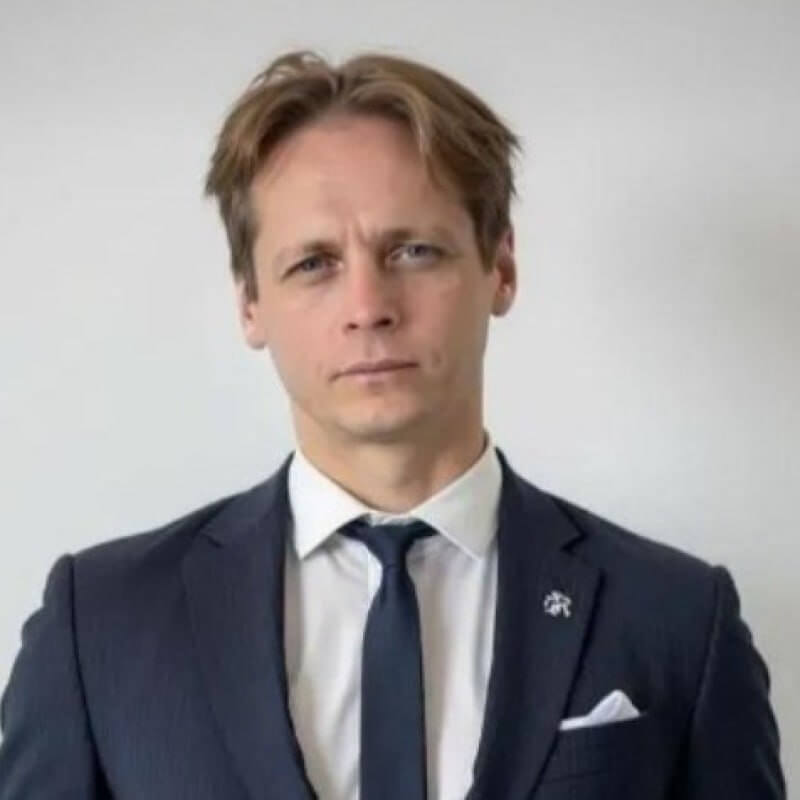
The CEO of a Montreal software company that keeps the hard work in-house, turns down projects that cannot succeed, and builds where AI and decentralised systems meet.
William R Marchand is the CEO of Webisoft, a Montreal-based technology company specialising in advanced software development, with a concentration in blockchain, Web3, AI-driven platforms and complex distributed systems. His role is the one the title implies — setting the strategic vision and guiding technical and business direction — but he describes it in narrower terms: product strategy, key client relationships, and building a culture that attracts senior engineering talent.
Webisoft is deliberately an in-house shop. Marchand starts from the position that mission-critical systems require tight collaboration, shared accountability and deep technical ownership, and that those are difficult to assemble from contracted parts. Specialised partners are brought in occasionally, but the architecture, development and delivery stay with internal teams. The argument is about quality, security and consistency rather than cost.
The differentiation he claims is not technical skill. Plenty of firms can write code. Fewer, in his account, can design scalable systems that fit a client’s long-term strategy, regulatory environment and growth plans at the same time. That is a consulting posture as much as an engineering one, and it shows in how Webisoft engages: challenging assumptions and proposing better architectures rather than building to the requirements as handed over.
The client base runs across technology, fintech, blockchain and Web3, AI, SaaS and enterprise platforms, with growing traction in regulated and high-complexity environments — work where reliability, security and scalability are not negotiable. The requests that arrive most often are blockchain and Web3 platform development, AI-enabled applications and data-driven systems, custom SaaS and enterprise-grade software, and cloud architecture and system modernisation.
A large share of the work comes from repeat clients, which Marchand attributes to being honest about trade-offs, realistic about timelines and proactive about risk rather than to any account strategy. The pricing follows the same logic: fixed cost for well-defined scopes, milestone billing for phased delivery, and time and materials where the work is evolving or research-heavy. Projects run from mid five figures to several hundred thousand dollars.
He is equally direct about the projects Webisoft declines. Misaligned scope, budget or expectations are grounds to pass, and the stated minimum requirement is clarity: if a project cannot realistically succeed within its constraints, saying so upfront is preferred to compromising the work. It is an unusual thing for a services CEO to volunteer, and it is consistent with the culture he describes — trust, accountability and intellectual curiosity, maintained by leading by example.
His own leadership has moved from hands-on execution to what he calls strategic enablement: removing obstacles, empowering teams and creating clarity instead of controlling detail. Looking forward, he wants Webisoft recognised globally as a partner for complex, high-impact systems, particularly in AI and decentralised technologies, while staying rooted in Montreal. In the interview below he talks about running a custom software development company, how enterprise projects are priced, and why long-term trust beats short-term wins.
Running a Custom Software Development Company
Please introduce your company and describe your role as CEO within the organization.
Webisoft is a Montreal-based technology company specializing in advanced software development, with a strong focus on blockchain, Web3, AI-driven platforms, and complex distributed systems. As CEO, my role is to set the strategic vision, guide our technical and business direction, and ensure we consistently deliver high-impact solutions that create real value for our clients. I am deeply involved in product strategy, key client relationships, and building a culture that attracts top-tier engineering talent.
What is your company’s core business model?
Our model is primarily in-house. We believe complex and mission-critical systems require tight collaboration, shared accountability, and deep technical ownership. While we occasionally collaborate with specialized partners, the core architecture, development, and delivery are handled by our internal teams to maintain quality, security, and consistency.
How does your company differentiate itself from competitors in a crowded market?
We differentiate ourselves by combining deep technical expertise with business-level thinking. Many firms can write code, but fewer can design scalable systems that align with a client’s long-term strategy, regulatory environment, and growth goals. We do not just execute requirements. We challenge assumptions, propose better architectures, and act as true technical partners.
Enterprise Software Development, Web3 and AI Platforms
What are the primary industries or sectors you serve, and how has that focus evolved over time?
We serve clients across technology, fintech, blockchain and Web3, AI, SaaS, and enterprise platforms, with increasing traction in regulated and high-complexity environments. Over time, our focus has evolved toward projects where reliability, security, and scalability are non-negotiable.
What are the most in-demand services or solutions that clients approach your company for?
Clients most often approach us for blockchain and Web3 platform development, AI-enabled applications and data-driven systems, custom SaaS platforms and enterprise-grade software, and cloud architecture, scalability, and system modernization.
How do you personally stay ahead of industry shifts when most data is already outdated?
I stay close to the field through ongoing conversations with engineers, founders, clients, and researchers. We also prototype internally, experiment early, and remain active in technical communities. Real signals usually come from practice before they appear in reports.
Client Relationships, Satisfaction and Support After Launch
Do you have a significant percentage of repeat clients?
Yes. A large portion of our work comes from repeat clients. That loyalty comes from transparency, consistent delivery, and long-term thinking. We are honest about trade-offs, realistic about timelines, and proactive about risks. Clients trust us because we act in their best interest.
How do you measure and ensure high customer satisfaction?
We measure satisfaction through direct feedback, delivery outcomes, system performance, and long-term client engagement. Internally, we track project health, communication quality, and post-launch success, not just whether a project shipped, but whether it truly solved the problem.
What kind of post-project support do you provide?
We offer structured post-project support, including maintenance, optimization, feature evolution, and advisory services. Many projects evolve into long-term partnerships where we continue to support growth, scaling, and new initiatives.
Pricing: Fixed Cost, Milestones and Time and Materials
Describe your pricing and billing structure.
We use a flexible model depending on project needs. This includes fixed cost for well-defined scopes, milestone-based billing for phased delivery, and time-and-materials for evolving or research-heavy projects. Transparency is key. Clients always know what they are paying for and why.
What is the typical price range for projects you have handled in the past year?
Most projects range from mid five figures to several hundred thousand dollars, depending on complexity and duration. We balance affordability with value by focusing on smart architecture and prioritization, building what matters most first without unnecessary complexity.
Have you turned down projects based on budget or scope?
Yes. We regularly turn down projects that are misaligned in scope, budget, or expectations. Our minimum requirement is clarity. If a project cannot realistically succeed within its constraints, we prefer to be honest upfront rather than compromise quality.
Challenges, Innovation and Company Culture
What key challenges has your company faced in recent years?
Like many tech companies, we navigated rapid market shifts, evolving client expectations, and talent competition. We overcame these challenges by staying focused on our core strengths, investing in our people, and being selective about the work we take on.
How do you foster innovation and adapt to emerging trends?
Innovation is built into our culture. We encourage experimentation, internal research and development, and continuous learning. Engineers are empowered to propose better solutions, and leadership supports calculated risk-taking when it leads to long-term gains.
What role does company culture play in your success?
Culture is foundational. We prioritize trust, accountability, and intellectual curiosity. We maintain it through clear values, open communication, and by leading by example, especially in how we treat clients and each other.
The Next Decade: Leadership, Applied AI and Decentralized Systems
Where do you envision your company in the next five to ten years?
We aim to be a globally recognized technology partner for complex, high-impact systems, particularly in AI and decentralized technologies, while remaining rooted in Montreal. Our long-term goal is to help shape the next generation of digital infrastructure.
How has your leadership style evolved?
My leadership style has evolved from hands-on execution to strategic enablement. Experience taught me that great leaders remove obstacles, empower teams, and create clarity rather than control every detail.
What emerging technologies excite you most?
We are especially excited about applied AI, decentralized systems, and the convergence of AI with blockchain, particularly where trust, automation, and data integrity intersect.
What advice would you give to aspiring CEOs?
Build something real, solve real problems, and do not chase hype. One lesson that consistently holds true is that long-term trust beats short-term wins, with clients, teams, and partners alike.
Key Learnings
- Ownership is an architecture decision. Keeping development in-house is a bet that shared accountability produces more reliable systems than coordinating specialists across organisational boundaries.
- Technical execution is table stakes. The differentiator is designing systems that fit a client’s regulatory environment and growth plans, not writing better code than the next firm.
- Clarity is a qualification criterion. A project whose scope, budget and expectations cannot be reconciled is declined before it starts, not renegotiated halfway through.
- The pricing model should follow the certainty of the scope. Fixed cost for well-defined work, milestones for phased delivery, time and materials where the answer is not known yet.
- Real signals show up in practice before they appear in reports. Prototyping and staying close to engineers and founders beats waiting for the research to catch up.
What Is Custom SaaS Development?
Custom SaaS development is the building of a software-as-a-service product tailored to one organisation’s workflow, rather than licensing an off-the-shelf platform and configuring it. The delivered result is still a multi-tenant, subscription-shaped web application — hosted, versioned and updated centrally — but the data model, the permissions and the core workflow are designed around how the business actually operates.
Companies commission it when the process they run is the thing that differentiates them. An off-the-shelf tool imposes its own assumptions about how work should flow, and organisations either bend their operations to fit or accumulate spreadsheets and manual steps around the edges. Custom SaaS removes that gap, at the cost of owning the roadmap, the infrastructure and the maintenance that a vendor would otherwise carry.
The engineering work is mostly the parts users never see: tenancy and data isolation, authentication and role-based permissions, billing and subscription logic, audit trails, and an architecture that scales when the customer count moves by an order of magnitude. In regulated sectors, add data residency, retention rules and the evidence trail an auditor will ask for. These are the reasons a custom SaaS build is not simply a web application with a login screen.
It also does not end at launch. A SaaS product is a service, so it needs maintenance, optimisation and feature evolution as the business changes — which is why development firms that do this work well tend to describe the engagement as a long-term partnership rather than a project with a delivery date.
More REVERB Interviews
- Ashish Kataria — digital transformation and IT services
- Michael Korneev — software development leadership
- Illia Kolesnichenko — cybersecurity
More REVERB Interviews
- Nitin Bhatnagar — Hands-On Strategist
- Nathan Weingarten — Software Developer
- Leslie Nelson — Director of Operations
- Keith Fowler — Founder and Owner
- Jared Rudnick — Partner
- Eric Morrison — Lead UX Researcher
- Linda Ellard — Advanced Practice Registered Nurse & Clinical Nurse Specialist
- Robert Kravitz — President and Managing Partner