
Lena Esmail
CEO
QuickMed
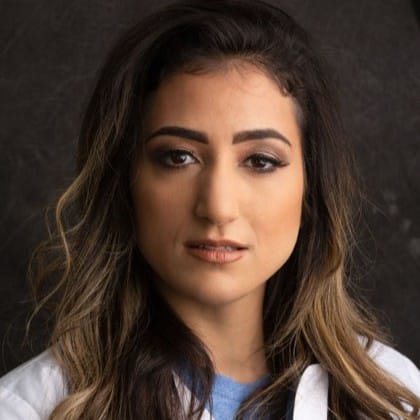
A nurse practitioner who runs clinics in the places other operators skip — and who still does site visits every week because the floor tells her things the data won’t.
Lena Esmail is the CEO of QuickMed, which operates urgent care, primary care, and school-based clinics across underserved regions of Ohio. She came to the role from clinical practice rather than from management, and that background shapes how the company is run: care delivery is kept in-house, sites are built lean, and the fastest-growing part of the business sits inside school buildings.
In this conversation she is unusually specific about the economics — what a school clinic contract costs, what a patient visit costs, and which contracts QuickMed turns down. She is equally direct about the constraint that nearly broke the company after COVID, and about why she refuses to delegate operations she doesn’t understand.
QuickMed and the Operating Model
Please introduce your company and describe your role as CEO within the organization.
I’m the CEO of QuickMed. We operate urgent care, primary care, and school-based clinics across underserved regions of Ohio. I oversee the operational systems that keep us scalable but grounded. My role includes strategic planning, hiring, clinical oversight, regulatory compliance, site selection, and partner relations. I’m a nurse practitioner by background, so I stay close to frontline realities.
What is your company’s core business model — do you use an in-house team, third-party vendors, or a hybrid outsourcing approach?
Most of our care delivery is in-house. We use advanced practice providers, primarily nurse practitioners and physician assistants. We contract out for some legal, IT, and back-end billing services, but clinical operations are owned and led by us. We’ve found that internal control over care delivery helps maintain consistency across sites.
How does your company differentiate itself from competitors in a crowded market?
We don’t chase urban centers or tech trends. We go into communities that are overlooked—places without enough providers, without walkable clinics, where the nearest ER is being misused for routine care. We embed in schools and neighborhoods. We build lean sites, staff them with NPs, and run them to meet the local rhythm.
Who QuickMed Serves
What are the primary industries or sectors you serve, and how has that focus evolved over time?
We serve healthcare, but our lens is community-based and access-driven. We focus on students, working families, and underinsured patients. The mix started with urgent care, but we’ve shifted toward school partnerships and chronic disease management.
What are the most in-demand services or solutions that clients approach your company for?
School-based care is the fastest-growing. Districts are coming to us with attendance issues tied to health problems. We also see demand for fast walk-in visits—respiratory infections, wound care, labs. Behavioral health referrals are rising too, especially among teens.
Do you have a significant percentage of repeat clients? If so, what strategies contribute to that loyalty?
Yes. About 70% of our patients come back within a 12-month window. We’re local, consistent, and predictable. Our teams know the patients. They don’t wait long. Our school clinics build trust fast because the care is literally in the hallway.
Staying Close to the Floor
How do you personally stay ahead of industry shifts when most data is already yesterday’s news?
I stay close to patients and staff. I do site visits weekly. If something changes—care patterns, patient flow, insurance issues—I hear it first from the floor. That’s more valuable than industry news. We also track EHR data weekly, not monthly.
How do you measure and ensure high customer satisfaction in your operations?
We use text-based feedback after every visit. We track response time, wait time, visit length, and follow-up rates. If someone gives a low score, I get the report within 24 hours. We also survey school staff separately for performance feedback.
What kind of post-project support do you provide to address client queries or ongoing needs?
For school districts, we have a dedicated account lead who handles ongoing support and reports. For patients, we offer follow-up calls within 48 hours for flagged conditions. Clinics also keep referral logs for continuity if specialist care is needed.
Pricing, and the Contracts QuickMed Declines
Describe your pricing and billing structure — is it fixed cost, pay-per-milestone, or another model?
Our patient-facing billing is transparent fee-for-service. We accept insurance but also post our cash rates publicly. For school partnerships, we use a monthly service fee model based on scope—on-site staffing, number of students, and level of care provided.
What is the typical price range for projects you’ve handled in the past year, and how do you balance affordability with value?
School clinic contracts typically run between $90K and $250K per year depending on location, staffing, and hours of operation. For patients, visits range from $85–$140 out of pocket. We balance cost with operational efficiency. We don’t build big, we build close.
Have you turned down projects based on budget or scope? If so, what are your minimum requirements?
Yes. We’ve declined district contracts that wanted full clinical staffing but weren’t able to support even baseline infrastructure. We also avoid single-provider setups in high-need areas due to burnout risk. Minimum fit includes committed space, 3-day access per week, and sustainable staffing.
Pressure, Innovation and Culture
What key challenges has your company faced in the last few years, and how did you overcome them?
Workforce pressure was huge post-COVID. Retaining skilled NPs required pay alignment, better work-life balance, and stronger clinical support. We built mentorship systems, increased autonomy, and restructured shifts. Scaling school sites also required solving for space and scheduling in buildings not built for care.
How do you foster innovation and adapt to emerging trends in your industry?
We start with field problems, not tech tools. If a nurse practitioner is spending too long on intake, we redesign the intake. If school staff flag a process bottleneck, we fix it. We test changes at one site before scaling. Small pilots, quick feedback, measured rollout.
What role does company culture play in your success, and how do you build and maintain it?
Culture is operational. We don’t focus on perks. We focus on clarity, fairness, and flexibility. Staff know their hours, their role, and that leadership will listen. That keeps turnover low and engagement high.
Where QuickMed Is Going
Where do you envision your company in the next 5–10 years? What are your boldest long-term goals?
In five years, we aim to triple our school clinic footprint across Ohio and surrounding states. Long-term, we want to be the leading school-based care provider in the Midwest. Bold goal: integrated behavioral and physical care in 100 districts.
How has your leadership style evolved throughout your career, and what influences it?
I started with a clinical lens—task-focused, patient-first. As we grew, I had to learn how to scale that mindset through others. I now prioritize systems thinking, clear delegation, and team development. I still make decisions quickly, but with more operational input.
What emerging technologies or market shifts are you most excited about for your company?
I’m interested in tech that simplifies—not complicates—workflow. Things like automated charting, better scheduling tools, or portable diagnostics. I’m not chasing innovation for its own sake. It has to solve a real on-the-ground bottleneck.
What advice would you give to aspiring CEOs? Can you share one lesson from your journey that resonates with the business community?
Know your operations. Don’t delegate what you don’t understand. If you’re building something that touches people’s lives, you have to understand how it works under pressure. Everything else flows from that.
Key Learnings
- Clinical delivery is kept in-house; legal, IT and back-end billing are contracted out. Internal control over care is what holds consistency across sites.
- Roughly 70% of patients return within a 12-month window, which Esmail attributes to proximity and predictability rather than marketing.
- School-based care is the fastest-growing line, often arriving through districts tracing attendance problems back to untreated health issues.
- Weekly site visits and weekly EHR review are treated as the primary intelligence channel — ahead of published industry data.
- Contracts are declined where the infrastructure isn’t there, and single-provider sites in high-need areas are avoided because of burnout risk.
- Innovation starts from a field bottleneck, gets piloted at one site, and only then scales.
How School-Based Health Clinics Work
A school-based health center places primary care inside the school building rather than referring students out to it. The model exists because the barriers to routine care for school-age children are usually logistical rather than clinical: a parent cannot leave work, transport is unavailable, or the appointment sits three weeks out. Untreated, small problems become absences, and absences become academic outcomes — which is why districts, not families, are often the ones initiating contact.
Staffing is typically led by nurse practitioners or physician assistants working to the top of their licence, with physician oversight arranged by protocol. That structure is what makes the economics work in low-density areas where a full physician-staffed clinic could not be sustained. Services usually span acute walk-in care, chronic disease management such as asthma and diabetes, immunisations, and increasingly behavioural health — the last of these growing fastest among teenagers.
Commercially, these are service contracts with the district rather than patient-billed practices, usually priced on scope: days of on-site access per week, student population, and level of care. The failure mode is under-resourcing — a district that wants full clinical staffing without the space, hours or infrastructure to support it, which is precisely the profile Esmail describes turning down.