
Leslie Nelson
Director of Operations
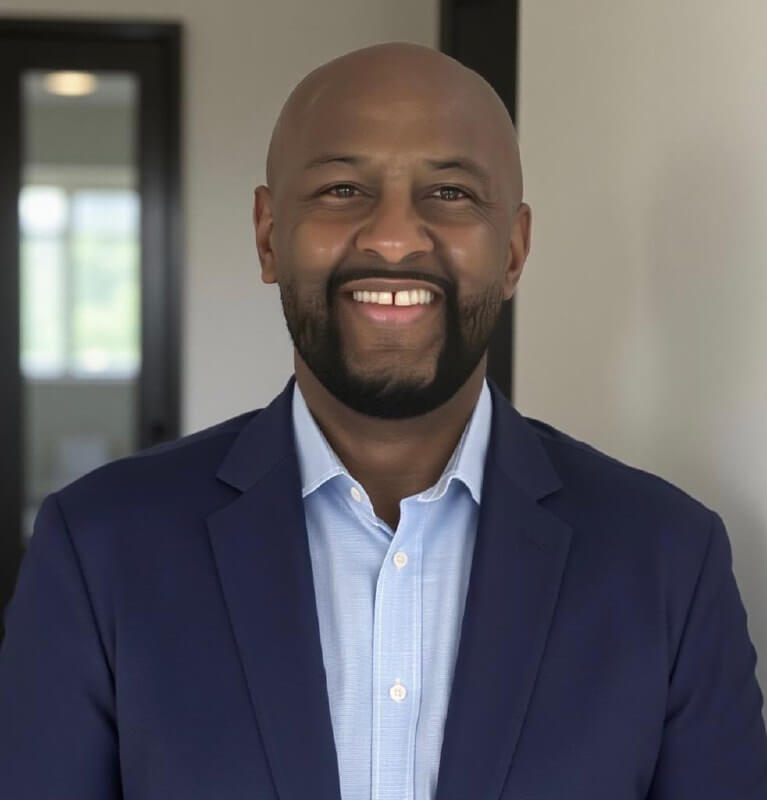
What organisation do you lead today, and what is your role within it?
I am involved with a variety of organizations today ranging from an Africa-focused energy transition development platform to a local FMCG company and companies that operate in financial services. My role in these organizations vary but mainly focus on guiding strategy, project and investment selection, partnerships, and assisting with execution. I spend most of my time on growth strategy and capital allocation as well as governance.
What is the core operating model of the platform?
We run a hybrid model. We keep a lean in-house team for strategy, development, and governance. We partner with local operators, consultants and partners for project delivery. This keeps fixed costs low and improves local execution. We avoid building large permanent teams where local capacity already exists.
How does your approach differ from others working in African energy?
We start with minimum viability, not maximum scale. Many projects fail because they are too complex too early. We design systems that can operate under real grid constraints, payment risk, and operational limits.
Which sectors do you primarily serve today?
For instance in the Energy sector, we focus on natural gas to power generation and the supporting infrastructure. This includes utility-scale projects, embedded power for industry, and decentralised solutions where grids are weak. Earlier in my career, I worked across oil and gas, aviation, transport and healthcare infrastructure. That experience still informs how I assess risk and reliability.
What do clients and partners typically come to you for?
They come for structuring and execution. Often the technology is known, but the project is stuck. That can be due to weak contracts, poor risk allocation, or misaligned incentives. We help simplify the structure so capital, operations, and end users are aligned. The goal is create an opportunity for growth and businesses to scale.
How do you stay ahead of industry shifts when data lags reality?
I spend more time nowadays trying to anticipate trends (such as AI for example) to help companies anticipate the future and customer needs both today and tomorrow. on sites. I liek to stay close to my customers and partners as well as operators and technicians. This group provides one with the insights to project the next frontier of business or customer solutions required.
How do you measure success and satisfaction in projects and investments?
The metrics and KPIs vary. In power projects its availability and output. In FMCG its product quality and value for money. For the Financial services platforms its Return on investment in line with the risk and reward equation.
How are projects typically priced and financed?
Structures vary. Development work is usually milestone-based. Construction and operations depend on the asset and partner mix. We prefer clear milestones tied to delivery. Open-ended structures create friction and delay.
Have you declined projects due to scope or constraints?
Yes. We decline projects that rely on unrealistic operating profiles, sectors that we see as too challenging or we lack core competency to be effective or add value, areas with unstable policy frameworks or if the basics are not in place, scale does not fix it.
How do you approach innovation in a constrained environment?
Innovation is often about simplification. Removing steps. Reducing dependencies. Using proven systems in smarter combinations. Novelty is not a requirement. Reliability is.
What role does culture play in how you operate?
Culture sets decision speed and accountability. We value clarity, follow-through, and local ownership. If teams understand why decisions are made, execution improves.
Where do you see the platform in five to ten years?
I see a portfolio of operating assets with strong local teams. I also see deeper partnerships with institutions that value long-term reliability over short-term returns. More long term capital availability at lower cost will accelerate many of these businesses
How has your leadership style changed over time?
Earlier in my career, I focused on control of the details. Now I focus on alignment. Clear goals, clear roles, and fewer surprises. More delegation. That scales better.
What advice would you give to people building in this space?
Build for the environment you have, not the one you want. Start with systems that survive stress. Find partners that align with your values, run away if they do not. Everything else follows.