Top Enterprise AR/VR And Spatial-Computing Agencies 2026
Daria Pohrebniak
Marketing Director - Reverb
08.01.2026
Enterprise AR, VR, and spatial-computing projects have moved well beyond experimentation.
In 2026, organizations are using immersive technologies to train distributed teams, support complex operations, visualize data, and connect digital systems with physical environments. These initiatives often involve legacy platforms, strict security requirements, and long-term rollout plans, factors that make enterprise XR very different from consumer or marketing-led experiences.
This article highlights the top AR/VR development agencies for enterprises in 2026, companies that work closely with large organizations to design, build, and maintain immersive solutions at scale. The list focuses on teams with experience in enterprise software integration, industrial and workforce use cases, and multi-year engagements, offering a practical view of who is shaping real-world AR, VR, and spatial-computing adoption today.
Enterprise AR/VR And Spatial Computing Agencies At A Glance
Agency
Location
Services
1. Treeview
New York City
Spatial product design, XR software engineering, immersive application development
2. Frame Sixty
Los Angeles, California, United States
AR and VR development, Apple Vision Pro apps, spatial computing
3. VR Vision
Toronto, Ontario, Canada
VR training simulations, interactive 360 video, CGI-based simulations
4. Groove Jones
Dallas, Texas, United States
AR and VR development, mixed reality, spatial computing
5. ELEKS
Tallinn, Estonia
AR, VR, and mixed reality development
6. Nexus Studios
London, United Kingdom
Spatial computing and XR experiences, immersive media, interactive digital experiences
7. The Glimpse Group
New York, United States
Enterprise AR and VR development, spatial computing platforms, immersive training and simulation
8. Scope AR
San Francisco, California, United States; Edmonton, Alberta, Canada
Enterprise AR platforms, AR content authoring and management, remote AR assistance
9. DXC Technology
Ashburn, Virginia, United States
Enterprise IT consulting, spatial computing and mixed-reality integration, cloud and infrastructure services
10. PTC
Boston, Massachusetts, United States
Product lifecycle management (PLM), CAD and engineering software, IoT and connected systems
Best AR/VR Development Agencies for Enterprises in 2026
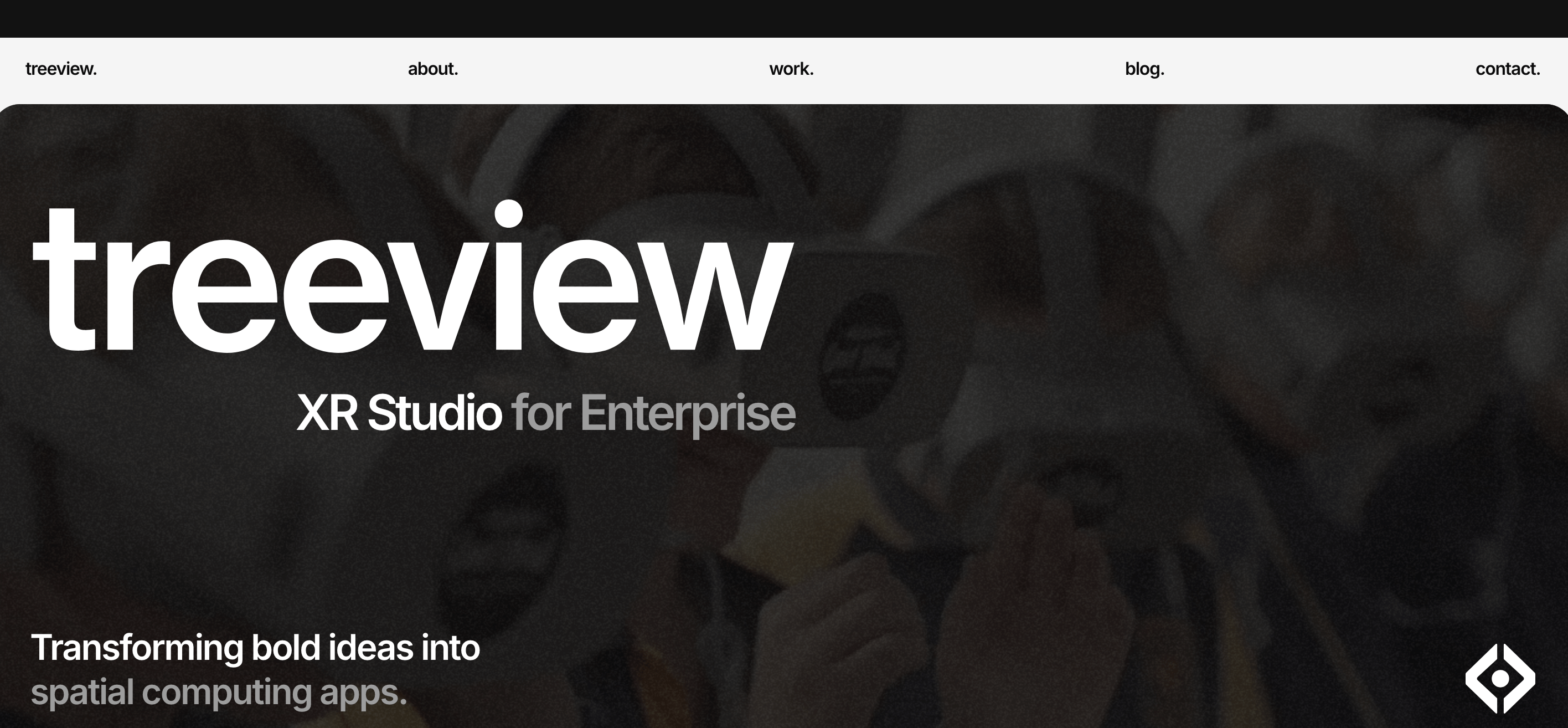
Treeview is a specialized XR studio that develops custom immersive software across augmented reality, virtual reality, mixed reality, and spatial computing. The company focuses on building production-ready applications designed to support real business and organizational needs. Its work emphasizes thoughtful design, technical reliability, and long-term use rather than experimental or short-lived experiences.
The studio works closely with enterprise and institutional teams to deliver immersive solutions that fit specific contexts and constraints. Treeview’s projects often involve complex requirements and multiple stakeholders, which shapes its approach to planning, development, and delivery. This makes its work suitable for organizations looking to apply immersive technology in practical, real-world settings.
Services and expertise: Spatial product design, XR software engineering, immersive application development, 3D content creation, long-term support
Location: New York City
Team size: 11-50 experts
Portfolio: ULTA Beauty, Daiichi Sankyo, NEOM, University of Alberta, University of Adelaide, Government of Australia, Woolworths
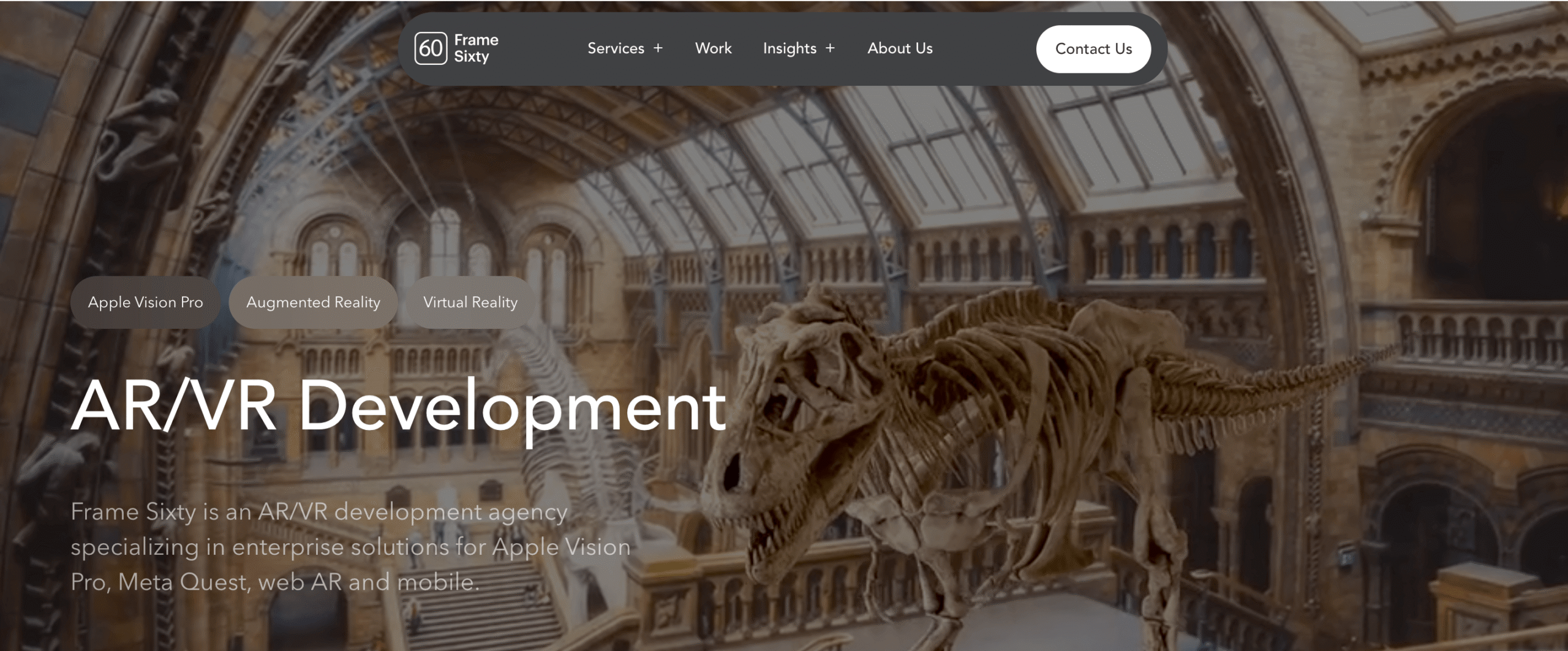
Frame Sixty is a U.S.-based AR and VR development studio that builds augmented reality enterprise solutions and spatial-computing applications across modern platforms. The company works on immersive software for devices such as Apple Vision Pro and Meta Quest, as well as mobile and web-based AR. Its projects typically focus on applied use cases rather than experimental concepts, with an emphasis on stability, performance, and real-world deployment.
The team supports projects across the full delivery cycle, from early concept and prototyping to production and launch. Frame Sixty often works closely with enterprise and brand teams on custom immersive projects that depend on strong coordination between design and engineering. Its work shows hands-on experience with spatial video, interactive 3D environments, and XR applications built for real enterprise use rather than experimentation.
Services and expertise: AR and VR development, Apple Vision Pro apps, spatial computing, WebAR, mobile applications, interactive 3D experiences
Location: Los Angeles, California, United States
Team size: 2-10 experts
Portfolio: Red Bull, Walmart, Apple Vision Pro applications such as Aquarium and Sign Language Translator
VR Vision Group is a Canada-based immersive technology company focused on enterprise learning and workforce enablement. It is often referenced among the best AR/VR agencies for enterprise training, with a core focus on building virtual reality simulations for onboarding, safety, and skills development. The company’s work centers on practical training scenarios designed to mirror real operational environments. These solutions are typically built to support repeatable use across large and distributed teams.
The team develops custom VR training experiences that reflect real procedures, equipment, and workplace conditions. Its projects are designed to scale across organizations and support consistent learning outcomes over time. VR Vision Group’s work is commonly applied in regulated and operationally complex environments where hands-on training is critical and difficult to replicate through traditional methods.
Services and expertise: VR training simulations, interactive 360 video, CGI-based simulations, digital twins, cloud-based training platforms, custom AR/VR development
Location: Toronto, Ontario, Canada
Team size: 11-50 experts
Portfolio: Avangrid, Toyota Material Handling, Hydro One, Coca-Cola, Enel
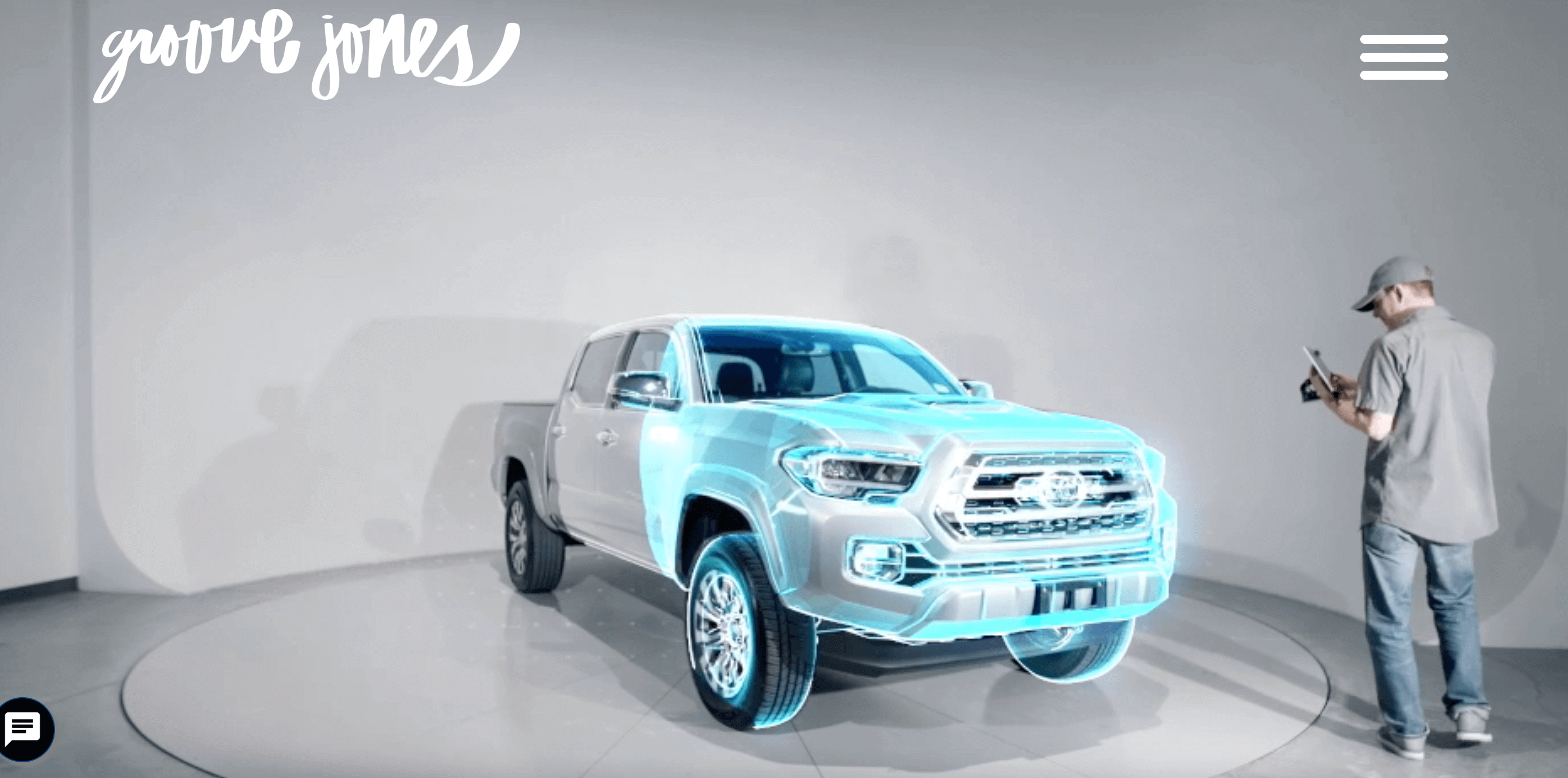
Groove Jones is a U.S.-based creative technology studio that works across AR, VR, and immersive digital experiences. It is often mentioned among the top AR/VR development agencies for enterprises in 2026, particularly for projects that combine extended reality with interactive design and emerging technologies. The company develops custom applications rather than productized tools, supporting enterprise use cases that range from internal enablement to customer-facing experiences.
The team focuses on translating complex ideas into usable immersive solutions that function across platforms and environments. Its projects typically involve close collaboration with client teams and stakeholders, especially when experiences need to align with broader digital ecosystems. Groove Jones’ work reflects long-term engagement with enterprise clients that require tailored XR solutions and reliable delivery.
Services and expertise: AR and VR development, mixed reality, spatial computing, interactive experiences, AI-driven applications, custom software
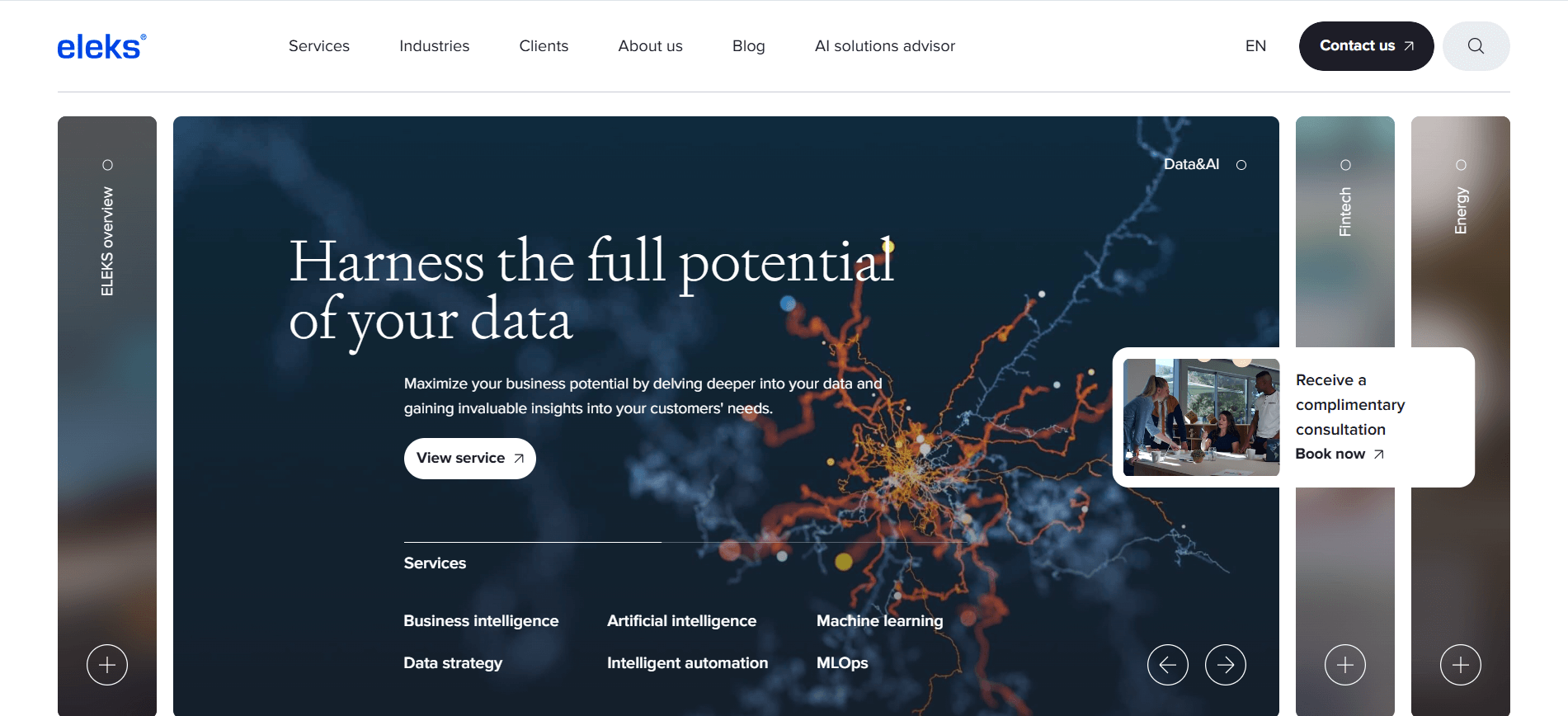
ELEKS is a global software engineering and consulting company that works with large organizations on complex digital projects. It is often listed among the best AR/VR development agencies for enterprises in 2026, especially when immersive technologies are built into wider enterprise platforms. Instead of treating AR and VR as separate initiatives, the company develops them alongside core systems, with an emphasis on scalability, system integration, and long-term use rather than one-off experiences.
Its AR and VR work is typically embedded in wider digital transformation initiatives. These projects often involve complex environments, multiple stakeholders, and existing enterprise infrastructure. ELEKS brings extended reality capabilities into this context, supporting organizations that want to apply immersive technology within real operational workflows and business processes.
Services and expertise: AR, VR, and mixed reality development, enterprise software engineering, digital transformation consulting, cloud solutions, UX design, quality assurance
Location: Tallinn, Estonia, with offices across Europe and North America
Team size: 2k+ experts
Portfolio: Aramex, TAIT, Acino, GRTGaz, Autodesk, Blackboard, ESET
Nexus Studios is a creative production company that works across animation, film, interactive media, and immersive technology. It is often mentioned among the best spatial computing agencies in 2026 because of how it blends real-time technology with a strong creative point of view. Rather than treating XR as a standalone technical exercise, the studio usually develops immersive work as part of larger interactive or story-led projects.
The team approaches immersive projects through a blend of storytelling, design, and engineering. Its spatial computing work often supports branded, cultural, or media-led initiatives that require both technical execution and creative craft. This positioning allows Nexus Studios to deliver immersive experiences that fit naturally into larger digital ecosystems and content strategies.
Services and expertise: Spatial computing and XR experiences, immersive media, interactive digital experiences, real-time production, animation and creative design
Location: London, United Kingdom, with additional offices in Los Angeles and Sydney
Team size: 51–200 experts
Portfolio: Google, Amazon, BBC, Meta, Disney, Samsung, The White House, UNICEF, Airbnb
The Glimpse Group is a U.S.-based immersive technology company that operates a portfolio of specialized AR, VR, and spatial-computing businesses. It is commonly included among leading virtual reality companies working with enterprise and government clients. Rather than functioning as a single studio, the company brings together multiple subsidiaries, each focused on specific industries or use cases, while sharing strategic direction and infrastructure at the group level.
This structure allows The Glimpse Group to support a wide range of enterprise applications, from training and simulation to data visualization and interactive experiences. Its work typically targets scalable, production-ready solutions designed for real operational environments. By combining focused domain expertise with centralized support, the company addresses complex enterprise requirements across multiple sectors.
Services and expertise: Enterprise AR and VR development, spatial computing platforms, immersive training and simulation, interactive 3D experiences, AI-supported immersive solutions
Scope AR is an enterprise technology company that develops augmented reality software for frontline work, training, and operational support. It is often included among the top enterprise AR/VR companies in 2026 due to its focus on applied AR use cases in industrial and regulated environments. The company is best known for its WorkLink platform, which allows organizations to create and deliver interactive AR instructions and guidance for complex tasks.
Its solutions are designed to support real-world workflows across manufacturing, aerospace, life sciences, and field service operations. Scope AR’s tools help teams capture expert knowledge and make it accessible at the point of work. This approach supports consistency, accuracy, and knowledge transfer across distributed workforces.
Services and expertise: Enterprise AR platforms, AR content authoring and management, remote AR assistance, real-time collaboration, enterprise system integrations
Location: San Francisco, California, United States; Edmonton, Alberta, Canada
Team size: 51–200 experts
Portfolio: Boeing, Toyota, Lockheed Martin, Honeywell, Johnson & Johnson, Mitsubishi Heavy Industries, Northrop Grumman, Rolls-Royce, Oshkosh, Beckman Coulter, Unilever
DXC Technology is a global IT services and consulting company that supports large organizations with complex digital environments. It is often referenced among top enterprise spatial computing companies when immersive and mixed-reality capabilities are applied as part of broader transformation programs. DXC’s work in spatial computing typically sits alongside cloud, data, and workplace modernization initiatives rather than as standalone XR projects.
The company approaches spatial computing from an enterprise systems perspective. Its engagements usually focus on practical use cases such as workforce enablement, remote collaboration, and visualization of complex operational data. This positioning reflects DXC’s role as a long-term technology partner for organizations that need new tools to fit into existing platforms, security models, and governance structures.
Services and expertise: Enterprise IT consulting, spatial computing and mixed-reality integration, cloud and infrastructure services, application modernization, data and analytics
Location: Ashburn, Virginia, United States
Team size: 10k+ experts
Portfolio: Lloyds Banking Group, ivari (insurance), Ferrovial, Salesforce customers like nib and LaunchVic
PTC is a U.S.-based software company that develops platforms for product design, engineering, manufacturing, and service operations. Its technology supports how organizations manage product data, connect physical assets, and coordinate work across the product lifecycle. Augmented reality capabilities are delivered through its Vuforia portfolio, which is used within industrial and enterprise environments rather than as standalone experiences.
The company’s software is widely adopted in engineering-led organizations that operate complex products and systems. PTC’s platforms are designed to integrate CAD, IoT data, analytics, and visualization into shared enterprise workflows. This positioning makes its AR and digital tools part of broader operational and transformation initiatives.
Services and expertise: Product lifecycle management (PLM), CAD and engineering software, IoT and connected systems, augmented reality platforms and tools, enterprise software support and consulting
Location: Boston, Massachusetts, United States
Team size: 5k+ experts
Portfolio: Amazon Robotics, Accenture, EPAM Systems
What Enterprise Spatial Computing Projects Include
Enterprise AR, VR and spatial computing work usually goes well beyond a single app. A typical project includes:
Discovery and use case selection: choosing where immersive technology adds measurable value, such as training, remote assistance, product visualization or design review.
Hardware and platform choice: deciding between headsets such as Apple Vision Pro, Meta Quest and HoloLens, mobile AR, or browser-based WebAR, based on users, budget and deployment scale.
3D content production: modeling products, environments and digital twins, often from existing CAD data.
Application development: building the experience in engines such as Unity or Unreal, or with native frameworks such as visionOS and ARKit.
Enterprise integration: connecting to identity systems, learning management systems, PLM or IoT data, and analytics.
Device management and rollout: provisioning headsets, distributing updates and supporting users across sites.
Measurement and iteration: tracking completion rates, error reduction or time saved, then improving the experience.
How To Choose An Enterprise AR/VR Agency
Start with the use case: training simulation, marketing experiences and industrial AR need different skills, so look for case studies close to your goal.
Check device experience: make sure the agency has shipped on the headsets or mobile platforms you plan to use.
Ask about content pipelines: reusing CAD files and existing 3D assets can save significant time on enterprise projects.
Review security and IT fit: enterprise deployments need single sign-on, device management and data handling that pass your IT review.
Plan for scale: a pilot for one team is very different from a rollout across hundreds of sites, so ask how the agency supports deployment and updates after launch.
A spatial computing agency designs and builds experiences that blend digital content with physical space, using AR, VR and mixed reality headsets, phones and tablets. Their work ranges from immersive training and product visualization to digital twins and remote assistance tools. Most combine 3D design, software engineering and hardware expertise in one team.
How much does an enterprise AR or VR project cost?
Cost depends mainly on scope: the number of scenarios or scenes, the amount of custom 3D content, the target devices, integrations with enterprise systems and the size of the rollout. A focused pilot with existing 3D assets costs far less than a multi-site training program with custom simulations and analytics. Ask agencies for a phased estimate that separates discovery, a pilot and full deployment.
What is the difference between AR, VR and mixed reality?
Augmented reality (AR) overlays digital content on the real world, usually through a phone, tablet or glasses. Virtual reality (VR) places the user in a fully digital environment through a headset. Mixed reality (MR) anchors interactive digital objects in the real space around you so they respond to it, and spatial computing is the broader term that covers all three.
Sum Up
Enterprise AR, VR, and spatial-computing work in 2026 is defined by long timelines, evolving requirements, and close collaboration between technical and business teams. As immersive technologies become part of everyday operations, the ability to integrate with existing systems, support users over time, and adapt to real-world constraints matters as much as the experience itself.
The top enterprise AR/VR companies in 2026 stand out not for flashy demos, but for consistent delivery in complex environments. They help organizations move from pilots to production, refine solutions as needs change, and keep immersive systems practical and reliable. For enterprises planning or scaling AR and VR initiatives, choosing a partner with this kind of experience can make a meaningful difference in how these technologies perform over the long term.
If you want to feature your Enterprise AR/VR And Spatial-Computing Agency on this list, email us or submit a form in the Top Choices section. After a thorough assessment, we’ll decide whether it’s a valuable addition.