Search results still carry weight, but they’re no longer the only thing shaping perception — AI summaries, review platforms, and everyday social chatter can move trust just as quickly.
That’s why teams keep reviewing the best reputation management firms in 2026 before signing anything. Pick the wrong partner and you may end up paying for dashboards that don’t actually reduce risk.
What you choose should match the problem in front of you. One brand might need crisis support and search suppression, while another needs software to manage listings, ratings, and local pages every day. Comparing the top reputation management firms in 2026 makes those different lanes obvious before procurement turns into a long slog.
Comparing The Best Reputation Management Companies In 2026
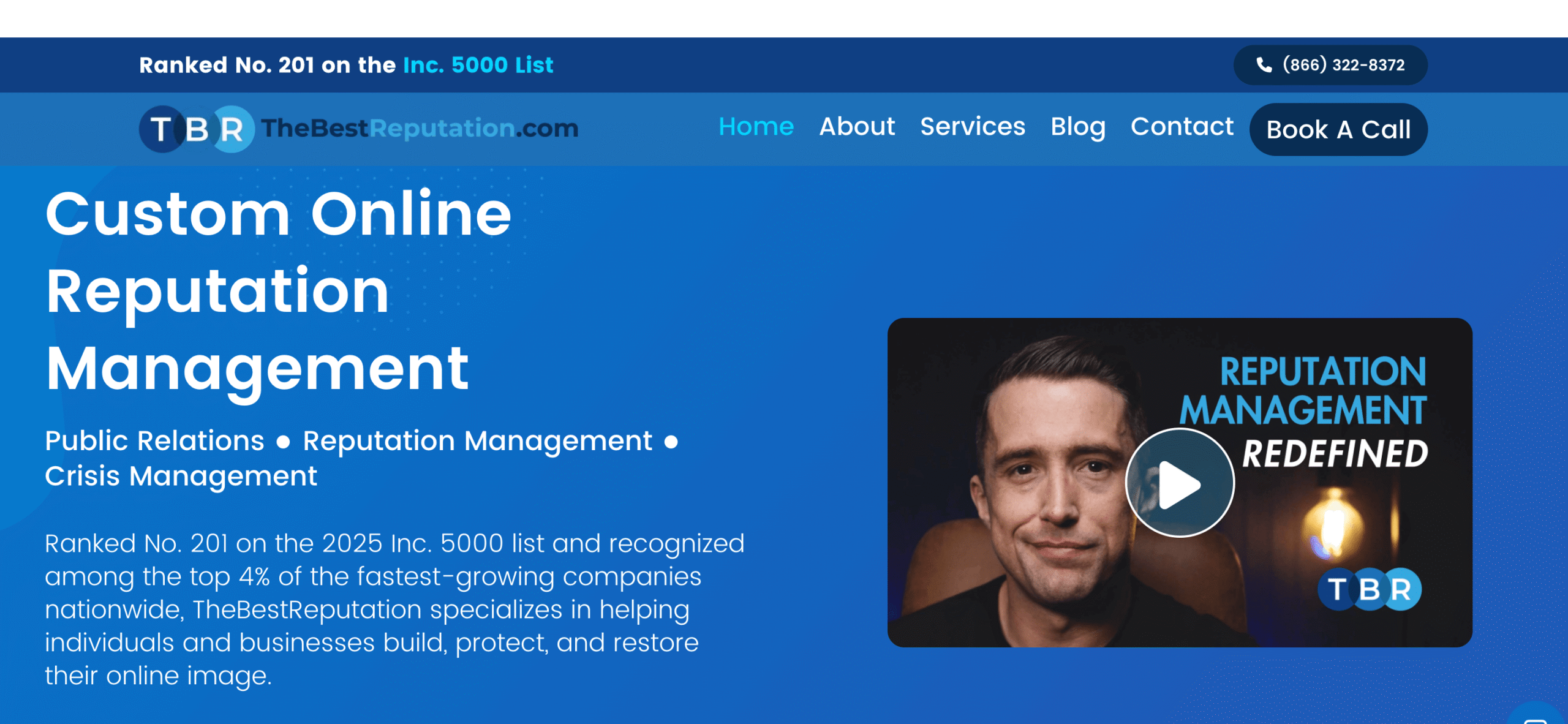
TheBestReputation leans into service-led ORM, blending media relations, SEO, crisis work, and removal-focused tactics around a custom strategy. Its public messaging stays centered on harmful search results and how to reduce their visibility without losing control of the broader brand story. That keeps it in the mix when people compare the best reputation management companies in 2026 for urgent, search-heavy cases.
The firm’s appeal is its direct packaging — crisis support, SEO, content removal, and review removal sit under one roof, which can make scoping easier for clients who want one team instead of several vendors. Public proof comes more from industry recognition than named case studies, since official materials keep client identities private.
Services & expertise: Branding, media relations, ORM, crisis management, SEO, content removal, review removal
Location: Williamsburg, VA
Industries they serve: Law, Finance, Healthcare, Executives, Established Brands
Clients: Executives, founders, public figures, lawyers, doctors, finance professionals, medical practices, and established brands facing complex reputational crises
Reputation House stands out because it frames reputation as a wider control problem across search engines, media, review platforms, and AI systems. It combines classic SERM and ORM work with digital risk protection, monitoring, digital PR, and AI-focused audit offers. For brands that want the best reputation management experts in 2026 to think beyond Google alone, that wider framing is a real advantage.
They combine hands-on support with a monitoring setup that keeps an eye on things day to day, so you can act on a strategy and still see what’s changing in real time. They also put a lot of emphasis on compliance and security controls, which helps when the work is sensitive. When the situation calls for it, they shift from dashboards to bespoke consulting rather than forcing a one-size process.
Services & expertise: Digital risk protection, AI-driven monitoring, sentiment and review management, crisis response
Location: Dubai, UAE; Huntington Beach, CA; Hong Kong
Industries they serve: B2B SaaS, Fintech, Regulated Industries, Firms Entering New Markets
Clients: Major brands, media organizations, and political personalities (including Mercedes-Benz, Danone, MediaMarkt)
Reputation Management by Terakeet aims at enterprise-level ORM work for Fortune 1000 brands and high-profile individuals. The focus is on keeping the narrative under control and tracking how a name shows up across search results and AI-driven discovery. If you need to hire reputation management consultants in 2026 for an executive-facing issue, it’s one of the more clearly enterprise-leaning options.
A big strength here is structure. The company is explicit about being owned and operated by Terakeet, which adds weight to its enterprise positioning and technology claims. Public client names are not disclosed, so due diligence matters more than brand storytelling, but the focus on large brands and senior decision-makers is very clear.
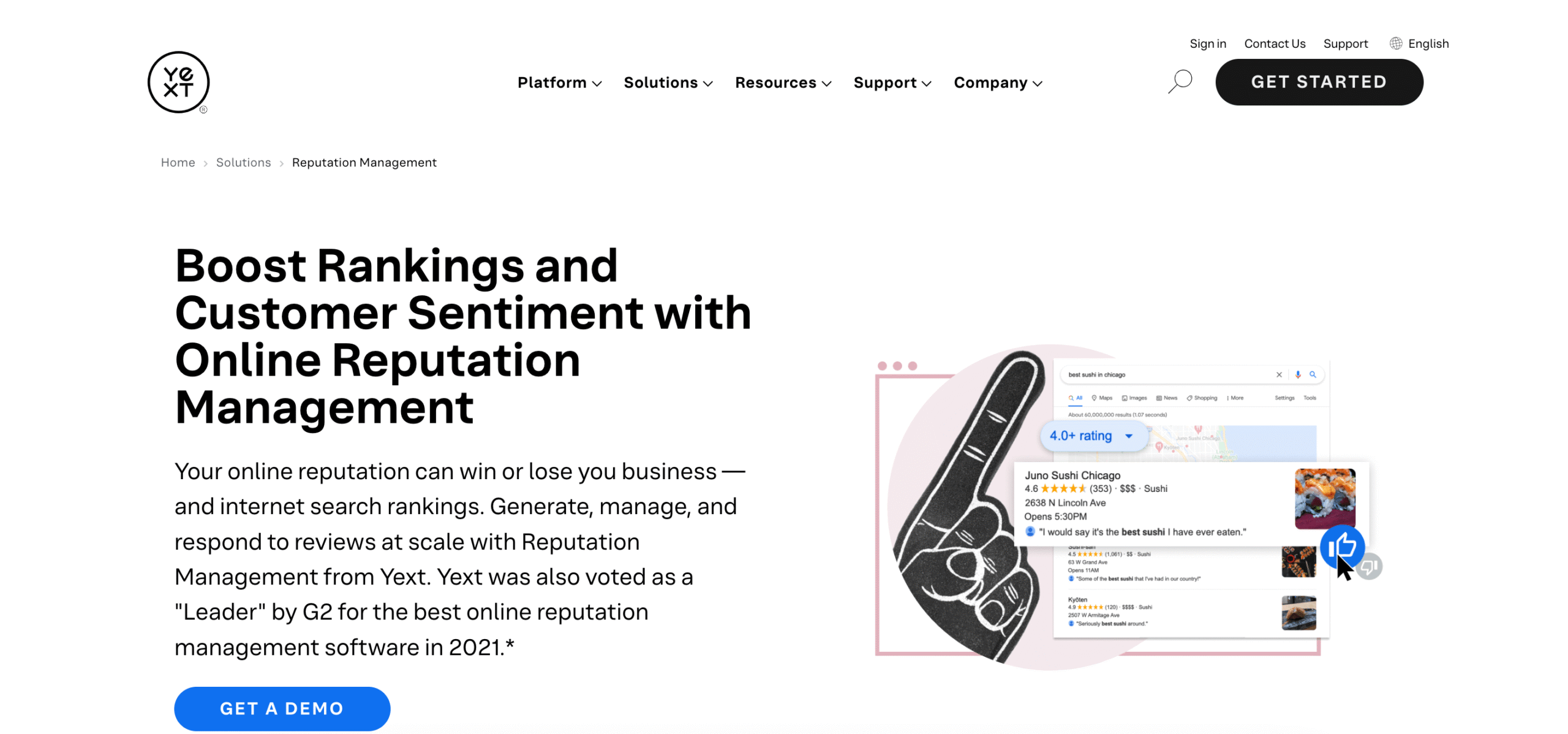
Yext belongs to a different part of the market. It is less about one-off crisis repair and more about the day-to-day mechanics of visibility — listings, pages, reviews, and the knowledge graph that feeds both search and AI discovery. That operational strength is one reason it still belongs in conversations about strong reputation platforms.
The platform works well for multilocation organizations that need brand facts to stay accurate across hundreds or thousands of endpoints. Customer stories like Samsung, Fazoli’s, and Cox Communications help prove that the model works in practice, especially when local accuracy drives trust and revenue. Yext is most effective when reputation is treated as a process, not just a cleanup job.
Services & expertise: Brand visibility platform, review management, sentiment analysis, AI search and competitor insights
Location: New York, NY
Industries they serve: Financial Services, Healthcare, Retail, Food & Hospitality
Meltwater works best as an intelligence layer for PR, marketing, and communications teams, pulling monitoring from news, social channels, and wider online conversation into one place. It isn’t built for takedowns, but it helps teams catch warning signs early, before a reputational problem turns into a full-blown crisis.
Its global footprint — around 50 offices across six continents — supports large organizations that need monitoring across regions and languages. The platform’s value comes from early warning, reporting, and measurement rather than direct suppression. In practice, Meltwater often fits best as part of a stack, not as the only reputation solution.
Services & expertise: Media monitoring, social listening, sentiment analysis, influencer identification, market intelligence
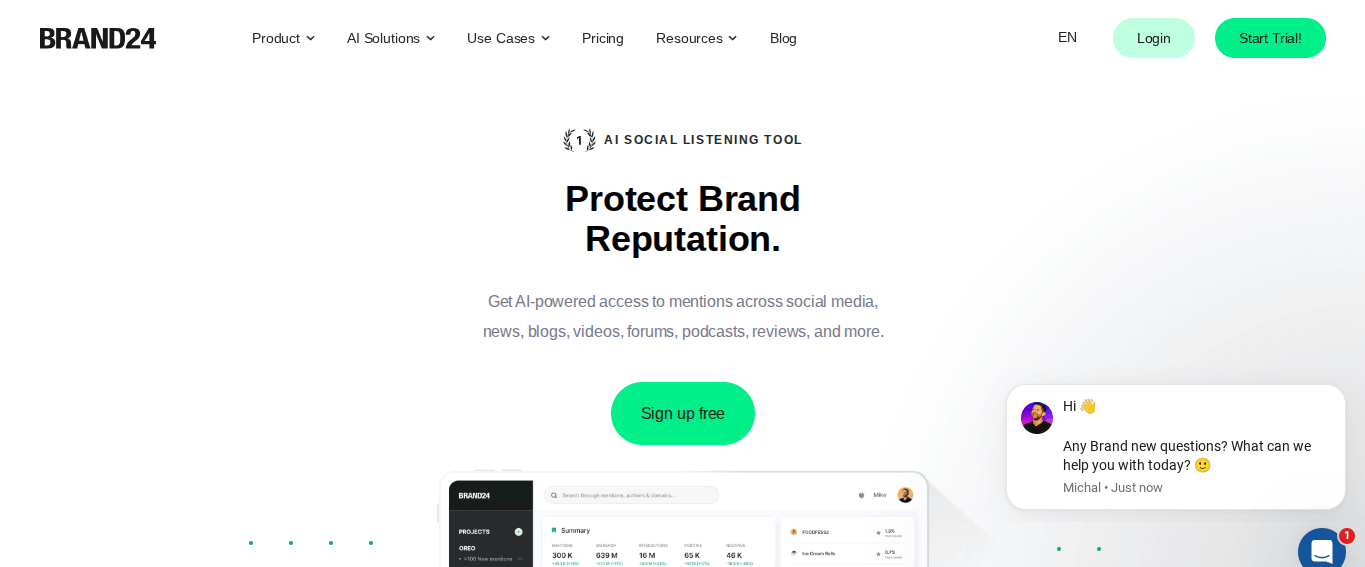
Brand24 keeps the job simple: tell you where your brand is being talked about and what people are saying. Mentions come in from social networks, news, blogs, forums, videos, podcasts, and review sites, all pulled into one view. If you’re not looking for an oversized enterprise suite, this gets you visibility without extra baggage.
It also has more visible proof than many tools in the same category, with recognizable logos and easy-to-scan case materials. Uber and Intel show up in its public-facing content, which helps buyers judge fit without guessing. If speed matters more than complex workflows, Brand24 makes a strong case for keeping monitoring simple and consistent.
Services & expertise: Social listening, sentiment analysis, competitor analysis, hashtag and trend tracking
Location: Daytona Beach, FL
Industries they serve: Automotive, Consulting, Education, E Commerce, Finance, Games, Healthcare, Manufacturing, Marketing/PR, Media & Telecom
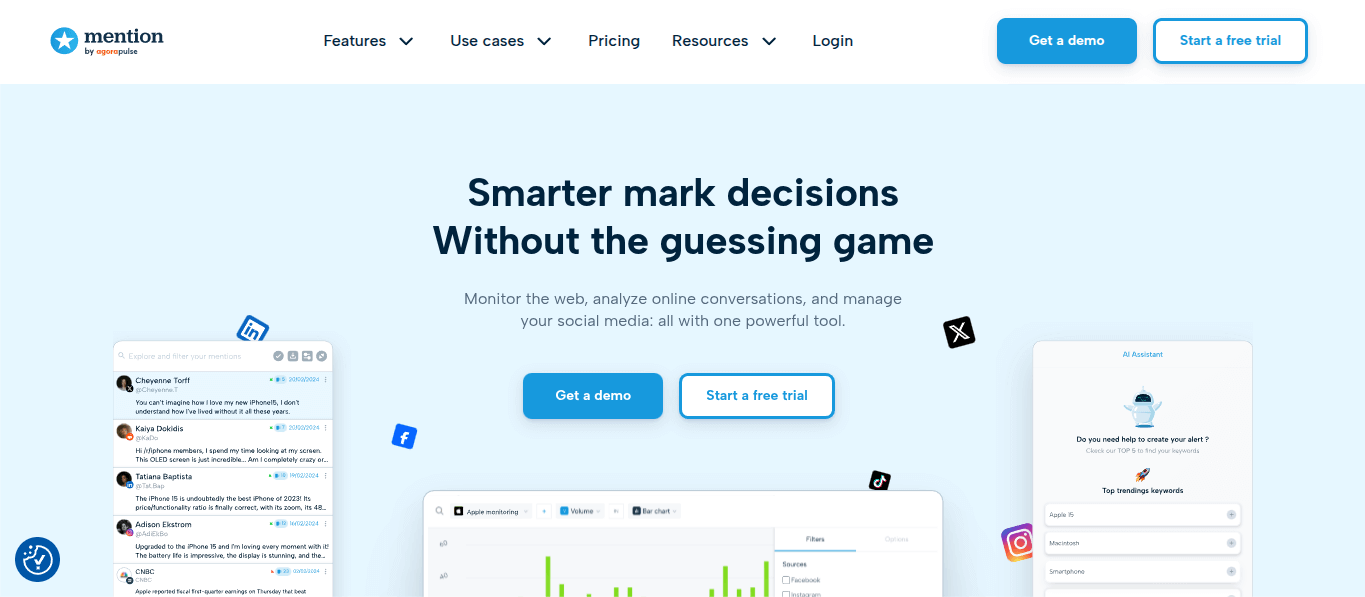
Mention focuses on social listening and media monitoring, with a customer story library that spans agencies, education, ecommerce, financial services, health, retail, and tech. Its strength is not a mystery — buyers can see how the product is used and where it fits. That kind of proof helps when procurement teams are under pressure to justify tools quickly.
There is also a real ownership story around the platform, with Agorapulse now behind it after a series of changes over time. That can be a plus or a risk depending on what a buyer wants, but it does mean roadmap and support questions deserve extra attention. For companies that want the best reputation management experts in 2026 focused on monitoring and reporting, Mention remains a credible option.
Services & expertise: Social listening, real-time monitoring, social media management, analytics and reporting
Mentionlytics is a single workspace for keeping tabs on your name online. It watches the web and social channels, tracks reviews, and gives you reports you can share without rebuilding them every week. If you’re planning to hire reputation management consultants in 2026 for the big calls, this tool can handle the daily “what changed?” work in the background.
The company is also unusually explicit about the verticals it serves, including hospitality, nonprofits, politics, financial institutions, and Web3. That clarity helps mid-market buyers figure out fit much faster than with vague “for everyone” messaging. Public case studies such as Electra Hotels & Resorts make the offer feel more grounded than abstract.
Services & expertise: Web and social monitoring, sentiment analysis, AI smart assistant features, competitor analysis
Chatmeter is built for multi-location brands that need reputation operations to function at scale. Reviews, listings, sentiment, local SEO, and competitive insights live together in a system designed for distributed teams. That specialization explains why it keeps appearing on shortlists of leading reputation partners for operational brand teams.
The platform helps brands manage thousands of locations from one dashboard, with workflows designed for review response and listings health at volume. Public case studies list well-known names across restaurants, automotive, retail, healthcare, and finance. If your real problem is dozens or hundreds of locations, Chatmeter’s focus is much more relevant than classic ORM promises.
Services & expertise: Listings management, review response, social media management, surveys, competitive insights
Location: San Diego, CA
Industries they serve: Restaurants, Retail, Healthcare, Financial Services, Automotive, Professional Services, Multi-Family Housing & Real Estate
Clients: AutoTrader, Taco Bell, Pizza Hut, Century 21, Meineke, Volvo, Earl’s Bar + Kitchen, Brookshire Brothers
SOCi also targets the multi-location market, but it frames the platform more aggressively around AI-powered local marketing execution. Listings, reviews, social, and automation all sit together, with a strong library of case studies that makes the value easier to inspect before buying. For enterprise operators, that kind of proof is often more useful than a broad feature sheet.
The platform’s strongest pitch is scale — nearly 1,000 brands, repeated mentions of names like Ford, Ace Hardware, and Liberty Tax, and a Forrester TEI study to support the ROI case. That public evidence helps SOCi stand out when buyers want the best reputation management companies in 2026 for franchised and distributed environments.
Services & expertise: Agentic workforce for local marketing across search, social, reputation, pages, ads, chat, surveys, and locator workflows
Clients: Kumon, Dick’s Sporting Goods, Pet Supplies Plus, Ace Hardware, Jersey Mike’s Subs, Ford
Choosing The Right Reputation Partner
The smartest decision starts with the surface area of the problem. If the issue is a hostile search result, defamation, or executive exposure, service-led firms will usually matter more than listening software. If the issue is ongoing review hygiene and local visibility, the top reputation management firms in 2026 on the platform side are often the better fit.
A lot of organizations will need both. One partner can help with crisis response and narrative repair, while another keeps reviews, listings, and monitoring under control month after month. When that balance is clear, it becomes much easier to identify the best reputation management firms in 2026 for your actual risk profile instead of buying more tools or services than you need.
If you want to feature your reputation management agency on this list, email us or submit a form in the Top Choices section. After a thorough assessment, we’ll decide whether it’s a valuable addition.