
Adam Weitsman
Founder and CEO
Upstate Shredding / Weitsman Recycling
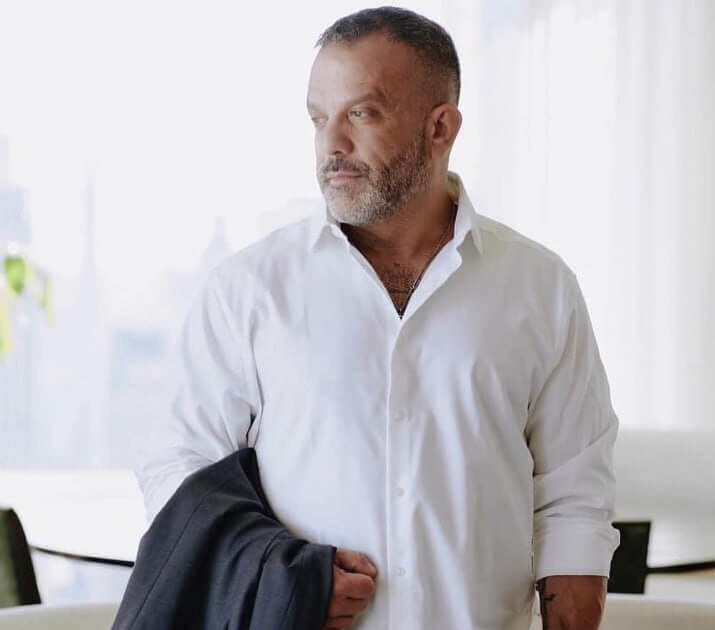
Please introduce your company and describe the role you play in shaping its vision, culture, and long-term direction.
My name is Adam Weitsman. I am the founder and CEO of Upstate Shredding, Weitsman Recycling. We process and recycle scrap metal across more than fifteen locations in New York and Pennsylvania. My family had been in the scrap business since the late 1930s. I came back to Owego in the mid-1990s after years in New York City and built Upstate Shredding into one of the largest privately held scrap metal operations in the country.
I am not the kind of CEO who leads from behind a desk. I know every yard. I know the equipment. I know the people running it. The vision for this company has always been straightforward. Be the most reliable, most operationally sound, most environmentally responsible processor in every market we touch. That sounds simple but it takes everything you have to actually do it every day. And it starts with me. If I cut corners, everybody else will too.
How do you build teams and systems to execute that vision?
I hire operators. People who know what happens when metal hits the shredder, not people who know what it looks like on a spreadsheet. The most important decisions we make happen in the yard. If the people making those decisions are not exceptional, nothing else matters.
We keep the core in house. Processing, logistics, yard operations. That is where the business lives. We bring in outside help when someone genuinely knows something we do not, but the heartbeat of this company stays with our people.
Everything we build is designed around one word. Throughput. How fast does material move. What is slowing it down. Fix that. Every single day. Not once a quarter.
From a leadership perspective, how do you stand out in a competitive scrap and recycling market?
We show up. That is not a motivational poster. That is the actual answer. This industry is competitive but at the end of the day it comes down to pricing, service, and speed. The companies that last are the ones that do what they say, when they say it, over and over again for years.
We spend heavily on infrastructure and equipment because I never want a supplier to have a bad experience because our systems let them down. We try to make it painless to work with us. And we judge ourselves over years, not months. One good quarter does not mean anything. A decade of consistency does.
Which industries or communities do you feel most responsible for serving today?
The suppliers, the demolition guys, the manufacturers, the construction companies that count on us to keep their material moving. Those relationships are everything.
But the communities matter just as much to me personally. Owego. Binghamton. Albany. Solvay. New Castle. These are not pins on a map. They are real towns with real families. How we operate, what we pay, what we put back in, that affects people’s lives. I have never thought of that as optional. You do not get to be the biggest employer in a town and act like the town is not your problem. That is not how I was raised and it is not how I run this company.
What problems do partners most urgently come to you with, and how do you decide what to solve?
They need two things. Reliability and fairness. Can they count on us to move their material quickly, handle it right, and pay them accurately. No games. No surprises. No nonsense with the scales.
We solve problems we can actually fix. Better systems. More capacity. Smarter processes. If something is outside what we can deliver well, I would rather say that honestly than overpromise and let somebody down. The partners who have been with us for twenty years are still here because we told them the truth even when the truth was not what they wanted to hear.
How do you stay ahead of industry shifts when information moves fast?
I pay attention to what is actually happening in the yards. Not the commentary. Not the forecasts. The yards. Volume, pricing, flow patterns. That is where the truth is and it shows up there before it shows up anywhere else.
The other thing is I have always been curious about what is going on outside my own industry. I spent years in the art world before I ever came back to scrap. That taught me to recognize value before it becomes obvious. That instinct has been useful in recycling, in real estate, in digital assets. You do not stay ahead by only looking at what is right in front of you.
What does long-term trust with partners look like to you?
Hundreds of transactions over years where nothing went sideways. Accurate payments. Straight answers. Picking up the phone when something breaks instead of hiding from it. Doing what you said even when it costs you something.
I know what it is like to rebuild trust after you have broken it. That experience stays with you. Trust is not a feeling. It is a record. It takes a long time to build and it takes one moment to destroy. I think about that in every relationship this company has.
How do you define success for your partners, and how do you deliver it consistently?
They move material. They get paid right. They can count on us being the same company on Tuesday that we were on Friday. That is success for a partner. Everything else is noise.
We get there through standardization. Same processes at every location. Same accuracy on the scales. Same playbook whether you are working with Owego or Albany. When a partner does not have to think about which yard they are dealing with because the experience is the same everywhere, that is when the relationship actually works for both sides.
What responsibility do you believe leaders have after a transaction is complete?
Everything. That is when it actually matters. Anybody looks good when things go right. What defines you is what happens when something goes wrong. Do you pick up the phone or do you disappear.
We do not let problems sit. We do not dodge calls. That is not a policy, it is a standard I hold for myself and expect from every person in a leadership role here.
How do you approach pricing and value alignment?
We stay competitive. But I have never chased a deal that would hurt us long term just to win it short term. That math does not work. You grab a few transactions and you hollow out the foundation you need to operate well over time.
What I care about is transparency. Suppliers should know how pricing works and why it moves. When both sides understand the logic, you can work through the hard stretches together instead of pointing fingers.
How do you balance accessibility with excellence when setting price expectations?
Be clear. When the process is simple and transparent, accessibility and excellence stop being a tradeoff. Suppliers know what they are getting and why. That takes the friction out.
Fair value. Honest communication. Do what you say. That has worked for decades and I have not found a reason to complicate it.
Have you ever said no to opportunities that looked attractive on paper?
All the time. If we cannot handle the volume without degrading what we do for existing partners, the answer is no. Growth that breaks your systems is not growth. It is a mess that everyone pays for, including the new partner you just said yes to.
I learned that the hard way early in my career. Build the capacity first. Then take on the volume. Never the other way around.
What have been the most meaningful challenges you have faced as a leader?
The biggest one is the one I talk about openly because I think it matters that people hear it. In the late 1990s, under real financial pressure with a shredder that was not running, I made decisions that were wrong. Check kiting. I knew it was wrong while I was doing it. I was indicted, pleaded guilty, paid a million dollar fine, and spent eight months at Otisville.
I deserved every bit of it. And it changed everything about how I operate. When I came home, my employees were still there. My customers were still there. That loyalty meant more to me than anything I had experienced in business up to that point. I came back with a completely different understanding of what matters. Operations. People. Integrity. I had to learn that from the worst possible angle, but I learned it.
The other challenge is scaling. Going from a few locations to fifteen plus means you cannot be in every room anymore. You have to build people and systems that carry the standard without you standing there. That does not come naturally to someone who cares as much as I do about every detail, but it is the only way any of this works at scale.
How do you create space for innovation while maintaining discipline?
The people in the yards are closer to the problems than I am. They see what is broken before anyone in an office does and they usually already know how to fix it. My job is to make sure they have room to bring those ideas forward.
But discipline means we do not blow up a process just because someone has an idea. You test it. You prove it works. Then you roll it out the right way. Change without structure is just chaos. Controlled improvement is what actually moves the needle.
What role does culture play in performance?
It is the whole game. I have seen well-funded operations with mediocre culture get outperformed by smaller teams that genuinely care about the work. Culture is why some yards run clean and consistent and others do not.
The culture I try to set is simple. Own your work. Understand that what happens in the yard affects real partners and real communities. And know that the person at the top is paying attention to the same details you are. When people see that leadership actually cares about how the material moves and how the facility looks, that becomes the standard everywhere.
Looking ahead five to ten years, what impact do you want your business to have?
I want us to keep doing what we do at the level we do it while growing where it makes sense. I will never trade operational quality for size. The second you start growing faster than your systems can handle, you lose the thing that made you worth working with in the first place.
Beyond the business, I want our presence in these communities to actually mean something. Good jobs. Clean facilities. Real giving that goes to the people who need it, not the causes with the best PR. That is what I think about when I think about legacy.
How has your leadership philosophy evolved over time?
I used to do everything myself. Early on I had to, and honestly I wanted to because I care about every part of this business. But you cannot scale that. At some point you have to shift from doing to building. Building people who get it. Building systems that hold up without you in the room. Building a culture that polices itself instead of waiting for someone at the top to notice.
Letting go of that direct control was one of the hardest things I have done. But it made everything stronger. The company I have now could not exist if it still needed me in every decision. You cannot scale what only you can do.
Which emerging areas interest you in terms of how people work or are served?
Web3 and digital assets. I have been deeply involved in this space for years, through the bear markets and the skepticism and all of it. I have never sold a single NFT and I do not plan to. This is not a trade for me. I genuinely believe what is being built in this space, the ownership models, the communities, the cultural infrastructure, is historically significant.
People ask me why a scrap metal guy is so deep in NFTs and the answer is simple. I have been a collector my entire life. Stoneware at fourteen. Folk art in my twenties. Digital art now. The instinct is the same. Recognize value before everyone else sees it and hold on to it because you believe in what it represents, not because you are trying to flip it.
What advice would you give to emerging leaders?
Get close to the work. Read the numbers but walk the floor. Talk to the people actually doing the thing you are trying to build. You cannot lead what you do not understand from the inside.
And be consistent. That is the thing nobody wants to hear because it is not exciting. But consistency is what builds everything real. I have watched people burn incredibly bright for a short stretch and flame out. The people who show up every day, do the work, stay steady even when nobody is paying attention, those are the ones who end up with something that lasts.
Do the work. Stay consistent. That is the whole thing.