
Jonathan Kniss
Business Leader
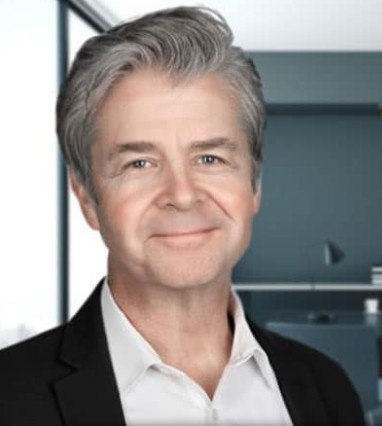
A leader who has worked across Boeing, Quest Integrated and Baker Hughes on why execution separates organisations, what he learned building a business with no clear path, and the opportunities he declines.
Jonathan Kniss has worked across several organisations, including Boeing, Quest Integrated, FlightSafetyBoeing Training International and Baker Hughes. His role in each has typically been to lead growth, improve operations, and align teams around a clear direction — aerospace, energy and industrial environments where safety, reliability and precision are not optional.
His account of leadership is unusually plain about the mechanics: culture begins with clarity, systems have to be simple enough to explain, and the difference between organisations is rarely the quality of the idea. In the interview below he sets out how he builds for that, and what he has learned from the times it did not work.
Vision, Teams and Systems
Please introduce your organization and describe the role you play in shaping its vision, culture, and long-term direction.
I have worked across several organizations, including Boeing, Quest Integrated, FlightSafetyBoeing Training International, and Baker Hughes. My role has typically been to lead growth, improve operations, and align teams around a clear direction. I focused on building practical strategies that teams could execute. Culture, to me, starts with clarity. People need to understand what we are trying to achieve and how their work connects to it. Long-term direction comes from staying grounded in the business while keeping an eye on where the market is going.
What do you think about building teams and systems to execute that vision?
I have built teams based on capability and adaptability. Markets change, so teams need to adjust quickly. I prefer a hybrid approach. Some core functions stay in-house, especially where knowledge and continuity matter. For specialized needs, I brought in external partners. Systems need to be simple and repeatable. If a process cannot be explained clearly, it usually will not scale.
From a leadership perspective, how do you ensure your organization stands out in a competitive market?
Execution is what separates organizations. Many companies have good ideas. Fewer deliver consistently. I focus on operational discipline, clear communication, and accountability. Feedback loops are important. “Outcome and feedback from management” help measure whether we are actually delivering value. That consistency builds credibility over time.
Who He Serves, and What They Need
Which industries or communities do you feel most responsible for serving today?
My work has focused on aerospace, energy, and industrial sectors. These are complex environments where safety, reliability, and precision matter. Over time, my focus has expanded from technical delivery to broader business performance.
What problems have clients most urgently come to you with?
Most clients are dealing with growth challenges, operational inefficiencies, or market shifts. They need better alignment between strategy and execution. I decided where to engage based on whether we could make a measurable impact. If the problem is not clear or the organization is not ready to act, I usually stepped back.
As a leader, how do you stay ahead of industry shifts?
I stay close to the work. That means listening to teams, clients, and partners. Information moves quickly, but not all of it is useful. I focus on patterns instead of noise. Experience helps filter what matters. I also rely on continuous learning and staying open to change.
Trust, Success and Responsibility
What does long-term trust with clients look like to you?
Trust is built through consistency. It means delivering what you say you will deliver. It also means being honest when things are not working. Long-term relationships come from transparency and follow-through. I do not view engagements as one-time events. They are part of a longer partnership.
How do you define success for your clients?
Success is measurable improvement. That could be better operational performance, stronger market position, or more effective teams. It depends on the context. I hold teams accountable by setting clear expectations and reviewing outcomes regularly. If we cannot measure progress, we cannot manage it.
What responsibility do you believe leaders have after a project is complete?
The responsibility does not end at delivery. Leaders should ensure the client can sustain the results. That may include follow-up support or guidance. The goal is not just to solve a problem once, but to leave the organization stronger.
Pricing and Saying No
How do you approach pricing and value alignment?
Pricing should reflect the value delivered. It needs to be sustainable for both sides. If the work creates a meaningful impact, the pricing should align with that. I avoid underpricing because it often leads to compromised outcomes.
How do you balance accessibility with excellence when setting price expectations?
You cannot serve everyone at the same level. Excellence requires focus and resources. Fair value means being clear about what the client receives and what it takes to deliver it. Transparency is key. Clients can then decide if it fits their needs.
Have you ever said no to an opportunity that looked attractive on paper?
Yes. If there is no alignment on goals or expectations, I will decline. Leadership requires discipline. Not every opportunity is the right one. Saying no protects both the organization and the client.
Challenges, Innovation and Culture
What have been the most meaningful challenges you’ve faced as a leader?
One of the biggest challenges is building something new amid uncertainty. At Quest, we were developing a business that did not yet have a clear path. “Being told there is no way, yet finding a way” shaped how I lead. It reinforced the importance of persistence and adaptability.
How do you create space for innovation while maintaining focus?
Innovation needs structure. I encourage new ideas, but they must connect to business goals. Without discipline, innovation becomes a distraction. Clear priorities help balance both.
What role does culture play in performance?
Culture drives behavior. Behavior drives results. I model accountability, consistency, and respect. Teams watch what leaders do more than what they say. That sets the tone.
Looking Ahead
Looking ahead 5–10 years, what impact do you want your work to have?
I want to help organizations operate more effectively and adapt to change. That impact goes beyond revenue. It is about building systems and teams that can sustain performance over time.
How has your leadership philosophy evolved over time?
Early in my career, I focused more on technical execution. Over time, I learned that people and systems matter just as much. Leadership is about balance. “I believe each influences the other.” That applies to strategy and people, as well as results and culture.
Which emerging shifts excite you most?
Technology continues to change how organizations operate. What interests me most is how it improves communication, training, and decision-making. Those areas have a direct impact on performance.
What advice would you give to emerging leaders?
Focus on doing your work well. “Doing something well that you enjoy doing” creates a strong foundation. Stay persistent. “Tenacity and a positive attitude” matter over the long term. One lesson that changed my perspective is that success brings responsibility. “Successes usually bring greater responsibility,” and that is where real growth happens.
Key Learnings
- Ideas are not the scarce resource; consistent delivery is what actually separates organisations.
- A process that cannot be explained clearly will not scale — simplicity is a scaling requirement, not a preference.
- Readiness to act matters as much as problem clarity; an organisation that is not ready is not an engagement worth taking.
- Underpricing tends to produce compromised outcomes, which makes it a quality problem rather than a margin one.
- Innovation without structure becomes distraction; new ideas need to connect to a business goal to survive.
What Operational Excellence Actually Means
Operational excellence is one of those phrases that has been used loosely enough to lose most of its meaning. Stripped back, it describes an organisation where the intended way of working and the actual way of working are the same thing — consistently, without heroics, and without depending on who happens to be in the room.
The formal traditions behind it — Lean, Six Sigma, the Toyota Production System, and their descendants — differ in method but converge on the same premise: variation is the enemy, and most variation comes from process rather than people. What separates organisations that achieve it from those that describe it in slide decks is usually not the choice of framework. It is whether the process survives contact with pressure.
Kniss’s framing is a practical test of this. If a process cannot be explained clearly, it will not scale — because unexplainable processes depend on tacit knowledge held by specific individuals, and that knowledge does not transfer when the team grows or turns over. The same logic sits behind his emphasis on feedback loops: without a measurement of whether value is actually being delivered, an organisation is running on assertion.
In aerospace, energy and industrial settings the stakes make this concrete. These are environments where inconsistency has consequences beyond cost, which is why they have historically produced much of the discipline’s thinking. The transferable lesson for organisations outside them is narrower than the literature implies: not that every business needs a formal programme, but that the gap between how work is supposed to happen and how it actually happens is measurable, and closing it is most of the work.
More REVERB Interviews
- Michael Curtis Broughton — on designing logistics systems that hold under stress
- Constantine Koliopoulos — business strategist, on scaling before the systems are ready
- Lawrence “Larry” Waldman — on documentation and accountability inside clinical environments
More REVERB Interviews
- Clayton Fields — Go-to-market Professional
- Brian Casella — Creative and Technical Director
- Matthew Riley — Founder & Operator
- Danielle Siwek — Strategic Planner
- Ben Walderman — Entrepreneur | Business Consultant
- David Berggren — Founder
- Hong Wei Liao — Lead Strategiest
- Abraham Pinchuck — sales consultant