
Flavia Pichiorri
Cancer Researcher
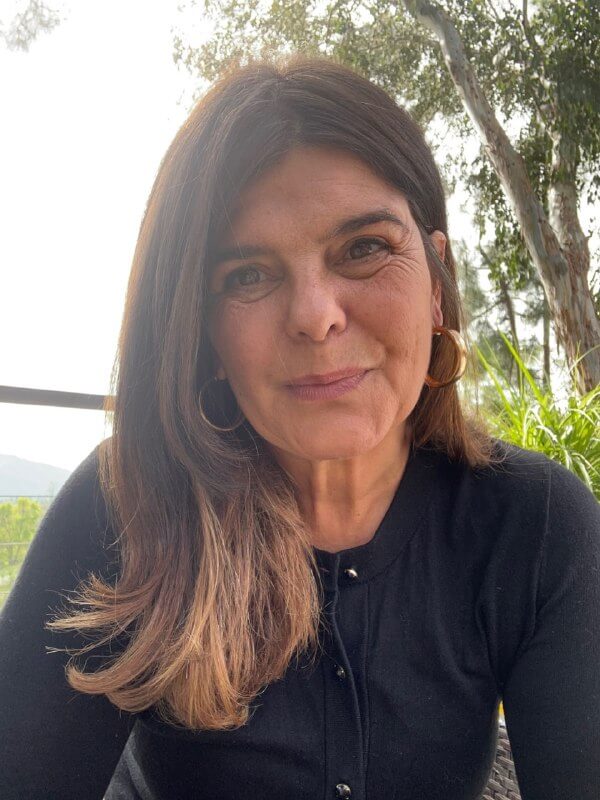
A translational cancer researcher who starts with the patient question rather than the laboratory one — and treats knowing what not to pursue as the harder skill.
Flavia Pichiorri is a cancer researcher and scientific writer working on translational and clinical research in multiple myeloma and acute leukaemia. Her stated role is connecting laboratory discoveries to early-phase clinical application, including work on therapeutic targets such as CD38 and CD84.
Her account of the work is a continuous loop rather than a pipeline: a clinical problem, preclinical models to test the mechanism, then an assessment of whether the finding can move into an early trial. She is direct about the failure rate involved, and about resources being the reason focus matters.
The Role and the Research Model
How would you describe your current role and what you are responsible for in your work?
I work as a cancer researcher and scientific writer focused on translational and clinical research in multiple myeloma and acute leukaemia. My role is to connect laboratory discoveries with early-phase clinical application. I work on identifying therapeutic targets such as CD38 and CD84, and evaluating how those can be developed into treatments. I also spend time writing and analysing scientific data to support ongoing research and clinical direction.
What is your core working model – how do you structure your research and collaborations?
My work follows a hybrid model. I collaborate with laboratory teams, clinicians, and research institutions. The process starts with a clinical problem. Then we move into preclinical models to test biological mechanisms. From there, we evaluate whether the findings can move into early clinical trials. It is a continuous loop between lab and clinic.
What makes your approach to research different from others in your field?
I prioritise clinical relevance early. Many projects begin in the lab without a clear patient application. I start with patient-driven questions. That changes how experiments are designed and how quickly they can move forward.
Focus and Problems
Which areas of research do you focus on, and how has that evolved over time?
My early work focused on biochemical mechanisms and enzyme function. That shifted into cancer biology, specifically multiple myeloma. Over time, I moved into translational research, including antibody-based therapies, immune approaches, and radiolabelled treatments. The focus has remained on blood cancers, but the tools have evolved.
What are the most common problems your work is trying to solve?
Treatment resistance is a major issue. Many patients respond initially but relapse. We try to understand why that happens at a molecular level and design therapies that can overcome it. Another focus is targeting cancer stem cells, which are often responsible for disease persistence.
Staying Current and Collaboration
How do you stay ahead in a field that changes quickly?
I read constantly. Every day starts with reviewing new publications. I also stay close to clinicians. They see real patient outcomes, which often highlight gaps before they appear in the literature.
Do you work with the same collaborators repeatedly? What drives that continuity?
Yes. Long-term collaboration is critical. Trust and shared focus matter. When clinicians and researchers align on the same problem, the work becomes more efficient and relevant.
How do you measure whether your work is successful?
Success is measured by whether findings translate into clinical application. Publications are one metric, but they are not the main one. The real measure is whether a concept moves into a trial and shows impact in patients.
After a Project, Funding and Scale
What happens after a research project is completed?
There is no real endpoint. Data from one project feeds into the next. If a therapy shows promise, it moves into further trials. If it fails, we analyse why and adjust the approach.
How do you structure resources and funding within your work?
Most work is supported through research grants, particularly from organisations like the NIH. Funding is tied to specific research aims and milestones. Allocation depends on project stage and clinical relevance.
What level of scale do your research projects typically operate at?
Projects vary. Early-stage work may involve small laboratory studies. Later stages involve multi-centre clinical trials. The scale increases as the research moves closer to patient application.
Do you ever decide not to pursue a research direction? What drives that decision?
Yes. If a project lacks clinical relevance or reproducibility, it is not worth continuing. Resources are limited, so focus matters. The minimum requirement is a clear path toward patient impact.
Challenges, Innovation and Teams
What challenges have you faced in your work, and how have you addressed them?
One major challenge is translating promising lab results into clinical outcomes. Many ideas do not work in patients. I addressed this by focusing more on clinically driven questions from the start.
How do you approach innovation in your field?
Innovation comes from combining disciplines. For example, integrating immunotherapy with targeted approaches. It also comes from questioning assumptions and testing ideas that are not widely accepted.
How do you maintain effective collaboration across teams?
Clarity is key. Everyone needs to understand the goal and their role in the process. Regular communication helps, but it needs to be structured and purposeful.
Priorities and Advice
What are your long-term priorities in your work?
The focus is on improving treatment strategies for multiple myeloma and acute leukaemia. That includes developing therapies that are more precise and more durable. Long term, the goal is to reduce relapse and improve survival.
How has your approach to leadership evolved over time?
Earlier in my career, I focused more on technical execution. Over time, I shifted toward prioritisation and decision-making. Knowing what not to do is as important as knowing what to pursue.
What developments in your field are you most focused on right now?
I am particularly focused on immune-based therapies and targeted antibody approaches, especially those involving CD38. These areas are showing strong potential in early clinical settings.
What advice would you give to someone starting in this field?
Focus on meaningful questions. Do not try to do everything at once. Depth is more valuable than speed. The work takes time, but consistency matters more than short-term results.
More REVERB Interviews
More REVERB Interviews
- Janice Crowder — Obstetrician and Gynecologist
- Cy Xayarath — Nurse
- Denaesh Ariyanayagam — Consultant General and Vascular Surgeon
- Hong Wei Liao — Lead Strategiest
- Ariel N. Rad — Plastic surgeon specializing in facial aesthetics / co-founder
- Shahriar James Ekbatani — Chairman of the Board
- John Charrier — Founder and Operator
- Steve Valdiserri — Founder