
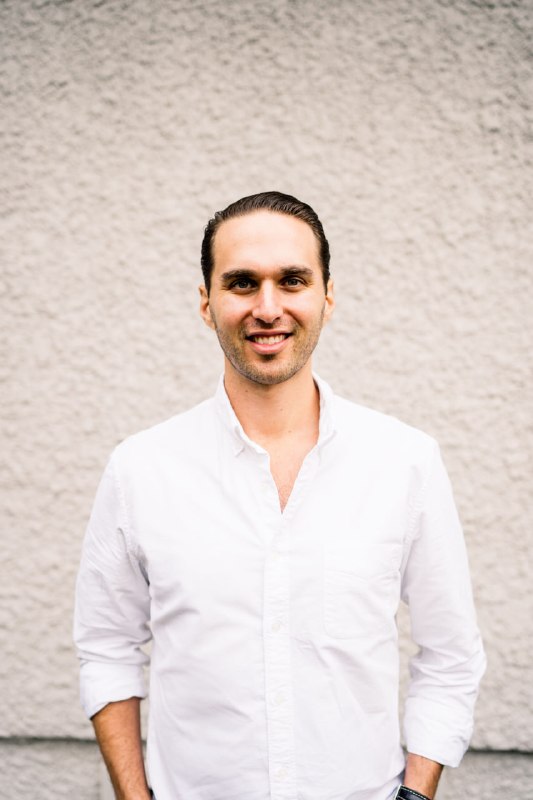
Benjamin Nasberg
CEO
Carbone Restaurant Group
Please introduce Carbone Restaurant Group and describe your role as CEO.
I am the CEO of Carbone Restaurant Group. We build and scale restaurant brands across Canada and North America, with a focus on fast-casual concepts like Fast Fired by CRG. My role is operational. I oversee growth strategy, site selection, franchise development, and partnerships. I stay close to unit economics, brand standards, and execution at the store level. I started in restaurants at 16 and became managing partner of Carbone in 2011. We scaled from one location to four in four years, while also launching a nightclub, sports bar, and events company. That early phase shaped how I think about speed, cost control, and systems.
What is your company’s core business model – do you operate with in-house teams, third-party partners, or a hybrid approach?
It is a hybrid model. Core functions stay in-house. That includes brand, menu development, operations standards, and franchise systems. We use partners for construction, supply chain, and some marketing execution. Franchisees are a key part of the model in Canada, and passive investment partners are key to our Walmart expansion in the USA. The goal is consistency without slowing down expansion.
How does your company differentiate itself in a crowded restaurant market?
We focus on speed, simplicity, and repeatability. Our concepts are built to scale. Limited menus. Clear prep systems. Tight labor models. We design for throughput and consistency across locations. We also focus on real estate discipline and partnerships like we have with Walmart to open inside their stores. We look at traffic, demographics, and cost structure before we commit. The difference is operational clarity. We know what works and we stick to it.
What sectors do you serve, and how has that focus evolved?
We serve fast-casual dining. Within that, pizza has been a core focus through Fast Fired.. The evolution has been toward scalable concepts. Early on, we tested different formats. Now we prioritize models that can franchise and replicate.
What are the most in-demand solutions partners come to you for?
Franchise opportunities, investment opportunities, and brand partnerships. Operators and investors want a proven system. They want clear build specs, training, and support. Landlords and developers look for brands that drive traffic. We also get interest from partners on co-branded or plant-based menu innovation. The demand is for concepts that are simple to run and profitable at the unit level.
How do you stay ahead of industry shifts when data is often delayed?
I stay close to operators. Store-level feedback matters more than reports. I look at weekly sales, labor percentages, and customer flow. I also watch consumer behavior in real time. What are people ordering? How fast are they moving through the line? You can adjust quickly if you are paying attention. I do not rely on trends alone. I focus on what is working inside our system.
Do you have a strong base of repeat partners or franchisees? What drives that loyalty?
Yes. Loyalty comes from consistency and support. If franchisees see predictable results, they stay. We provide clear systems, training, and ongoing communication. We also stay involved after launch. It is not a one-time transaction. It is a long-term relationship. Same goes for our investors.
How do you measure and ensure customer satisfaction?
We track speed of service, order accuracy, and repeat visits. Those are the main indicators. If customers come back, we are doing something right. We also monitor feedback at the store level. Issues get addressed quickly. The goal is a consistent experience every time. Our point of sale also tracts repeat customers, which is a key focus of ours.
What kind of post-launch support do you provide to franchisees or partners?
We provide ongoing daily operational support. That includes training updates, marketing guidance, and performance reviews. We stay in contact with franchisees regularly. If a location is underperforming, we step in with a plan. The support does not stop after opening.
How is your pricing structured for franchise or partnership models?
It is typically a combination of upfront franchise fees and ongoing royalties. There are also costs tied to buildout and equipment. The structure is designed to align incentives. We succeed when our partners succeed.
What is the typical investment range, and how do you balance cost with value?
The investment depends on the concept and location which can range from $200k to $700k. The average is $500k. Minimum investment from our investors is $25K which get to own part of a store passively. Buildout, equipment, and fees can vary. What matters is the revenue to investment ratio, to ensure a solid return on investment. We focus on keeping build costs efficient and operations lean so units can perform.
Have you turned down opportunities based on budget or scope? What are your minimum requirements?
Yes. Not every deal makes sense. We look for partners who can meet the financial requirements and follow the system. If the budget is too low or the location is not viable, we pass. The minimum requirement is alignment. If someone wants to change the model too much, it does not work.
What key challenges have you faced in recent years, and how did you handle them?
The biggest challenges have been partnering with the wrong franchisees and the wrong locations. Increasing our diligence on location review and also who we partner with has been a huge factor in learning from past mistakes.We also focused on partnerships like our new one with Walmart or Tim Gannon, the co-founder of Outback Steakhouse that make sense long term.
How do you foster innovation while maintaining consistency?
Innovation happens within constraints. We test new ideas in controlled environments. If something works, we scale it. If it does not, we move on. The core system stays stable. Innovation should not disrupt operations.
What role does company culture play in your success?
Culture is built around accountability and execution. Everyone understands the standards. We expect consistency. At the same time, we support our teams and partners. Clear expectations and support systems create stability.
Where do you see Carbone Restaurant Group in the next 5 to 10 years?
Continued expansion throughout 500+ Walmart locations in the USA. Being the #1 Walmart partner for restaurants by unit economics. Be a publicly traded company to continue to fuel our growth and give our investors and new ones incredible returns.
How has your leadership style evolved over time?
Early on, I was more hands-on in every detail. Over time, I shifted to systems and delegation. You cannot scale if everything depends on you. Now I focus on structure, people, and strategy.
What emerging trends or technologies are you most focused on?
Efficiency tools, AI, Robotics,data tracking. Anything that improves speed, reduces cost, or gives better visibility into operations. Also, menu innovation tied to changing consumer preferences, including plant-based options.
What advice would you give to someone building a business in this space?
Focus on partnering with people and organizations that cover your weaknesses, and not partnering with those with the same strengths and skills as you. Focus on the fundamentals. Unit economics matter. Systems matter. Do not overcomplicate the model. One lesson from my experience is that scalability comes from simplicity. If it is not repeatable, it will not grow.
More REVERB Interviews
- Michael Griffin — CEO and Chairman
- Gary Brar — Managing Partner
- Sanford L. Heffner — Principal
- Danielle Siwek — Strategic Planner
- Kristopher Marrion — Vice President/Branch Manager
- Brian Casella — Creative and Technical Director
- Gabriel Soffer — Founder and Owner-Operator
- Flora Dong — Founder and Managing Partner