
Victor Daniel Silva
Commercial Fishing Operator
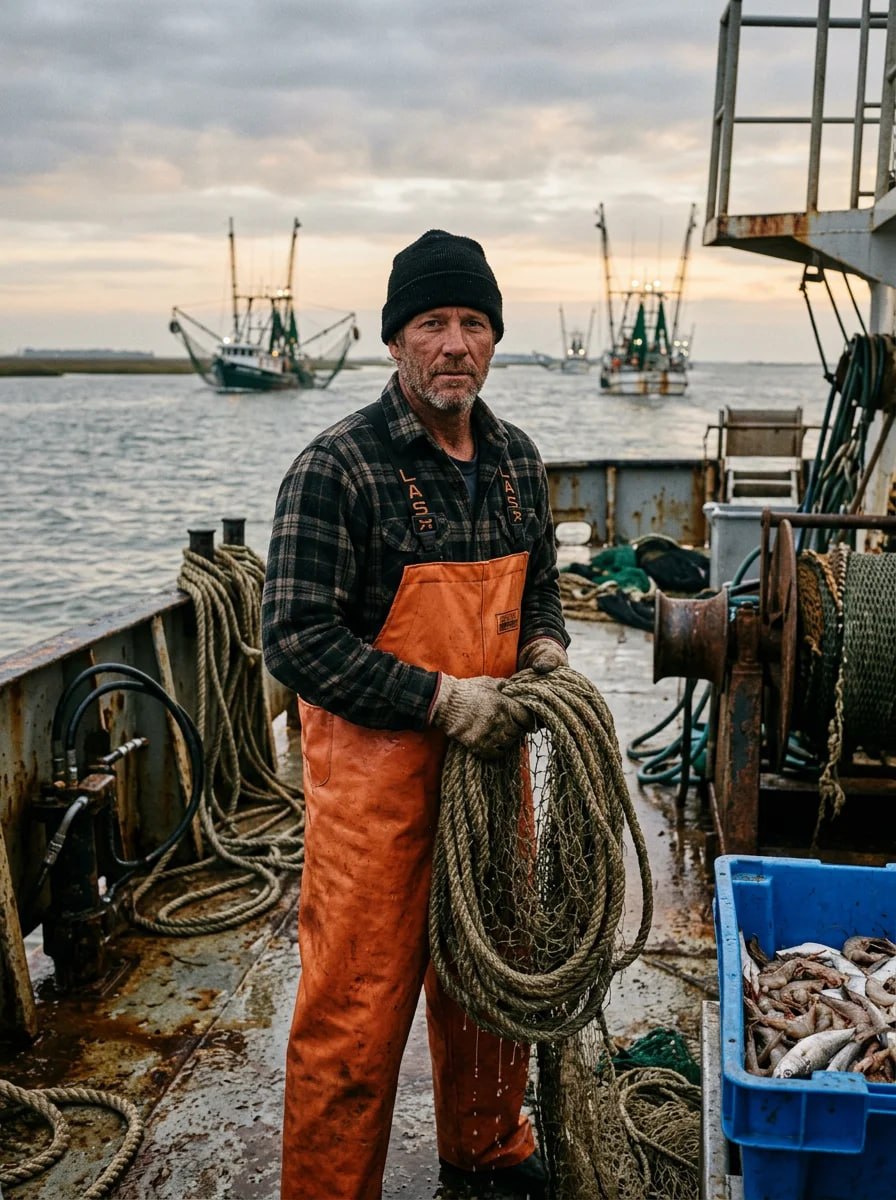
Please introduce your commercial fishing operation and describe your role in it.
I run a commercial fishing operation based along the Louisiana Gulf Coast. I mainly work in shrimping and crabbing. My role is hands-on. I handle the boat operations, prepare equipment, monitor weather and water conditions, manage catches, and maintain the gear. A lot of the work happens before the boat even leaves the dock.
I learned the business from my father in Beaufort, North Carolina. Over time, I built my own operation after moving to Louisiana in my late 20s. Most days start before sunrise. The work is physical, but it requires patience and planning more than people realize.
What is your operating model, and how do you manage day-to-day work?
Most of the work is done directly by me. Commercial fishing is not something you can fully outsource and still maintain quality control. I handle the preparation, equipment checks, navigation, and catch management myself.
I also work closely with local docks, seafood buyers, and suppliers along the Gulf Coast. It’s a relationship-driven business. Reliability matters. If people know you show up consistently and deliver quality product, that becomes your reputation.
The operation runs on a routine. Equipment maintenance, weather tracking, fuel management, and timing all affect the outcome.
How do you stand out in an industry where many people are doing similar work?
Consistency. That’s the biggest difference.
A lot of people think fishing is about luck. It’s not. Preparation matters more. I focus on properly maintaining equipment, understanding local water conditions, and staying disciplined with routines.
I also believe experience still matters in this industry. I learned directly from my father, and many of the methods I use today came from years of practical work rather than theory.
“You can’t rush this business,” I always say. “The water teaches patience whether you want it or not.”
What parts of the fishing industry do you focus on today, and how has that changed over time?
Right now, my focus is shrimping and crabbing along the Gulf Coast. That has evolved over the years. When I first moved to Louisiana, I spent a lot of time learning the local waters because Gulf conditions are very different from those on the Atlantic coast, where I grew up.
Over time, I became more specialized in understanding local seasonal patterns and in operating efficiently in changing conditions. Experience helps you make better decisions about timing, maintenance, and risk.
What are people usually looking for when they work with fishermen like you?
Most buyers want consistency and reliability. They want quality seafood delivered properly and on schedule.
The public usually only sees the final product at restaurants or markets. What they don’t see is how much planning goes into every trip. Timing matters. Weather matters. Equipment matters.
The work behind the scenes is what determines whether the operation succeeds long-term.
How do you stay ahead of changes in the fishing industry?
You stay observant. Conditions change constantly out here. Water temperatures shift. Storm patterns change. Fuel prices change. Markets move around.
Most of my information comes from experience, conversations at the docks, and paying attention every day. Fishing communities share knowledge constantly.
“You learn pretty quickly that yesterday’s conditions don’t guarantee tomorrow’s,” is something I tell younger fishermen often.
Do you work with the same buyers and partners repeatedly?
Yes. Repeat relationships are important in this business. Trust takes time to build.
If buyers know your catch is handled properly and delivered consistently, they come back. The same applies to suppliers and dock operators. Reliability creates long-term working relationships.
I try to keep communication simple and direct. People appreciate that.
How do you maintain quality and reliability in your operation?
Preparation and maintenance are the biggest factors. I spend a lot of time repairing nets, checking engines, and preparing equipment before trips. Many problems on the water stem from poor preparation on land.
I also pay close attention to timing and handling. Seafood quality depends heavily on how it’s managed immediately after the catch. Small details matter.
What kind of ongoing support or communication do you maintain with buyers and local partners?
Most of it is straightforward communication. If the weather delays something, I communicate early. If conditions change, I let people know.
This industry still operates heavily on reputation and word of mouth. People remember whether you were dependable during difficult periods.
How does pricing work in commercial fishing?
Pricing changes constantly because seafood markets move with supply, weather, and seasonal demand. There’s no completely fixed structure.
Some seasons are stronger than others. Fuel costs and operating expenses also affect margins. You have to stay realistic and manage carefully because conditions can change very quickly.
Have you ever had to walk away from opportunities that were not the right fit?
Yes. Sometimes conditions or timing simply do not make sense operationally.
One thing I learned from my father was not to force bad situations. If weather conditions are unsafe or if the timing creates unnecessary risk, it’s better to wait.
“The water doesn’t care how badly you want the catch,” he used to tell me.
What have been the biggest challenges in recent years?
Weather volatility has become a major challenge. Storms are stronger and less predictable than they used to be. Operating costs have also increased.
We deal with it through preparation and adaptability. You cannot control conditions, but you can control how prepared you are before problems happen. That mindset helps reduce mistakes.
How do you adapt while still respecting tradition?
I believe in keeping proven methods while staying flexible enough to adjust when conditions change.
Some of the techniques I use today came directly from my father. But every season requires adjustments. You have to pay attention and evolve without losing the fundamentals that work.
What role does community play in your work?
It matters a lot. Fishing communities depend on each other more than people realize. Information gets shared constantly at the docks. People help each other with repairs, conditions, and timing. There’s a strong sense of mutual respect because everyone understands how demanding the work is.
Where do you see your work heading in the future?
I want to continue operating steadily and maintaining the reputation I’ve built. Long-term, I hope more people understand where their seafood comes from and how much work it takes to support coastal communities. I’m not focused on building something flashy. I’m focused on longevity and doing the work properly.
What advice would you give people entering demanding industries?
Learn patience early. Most long-term success comes from consistency, not shortcuts. A lot of people want fast results. But sustainable work is built slowly through discipline, preparation, and reliability.
“At the end of the day, people remember whether they could count on you,” and that matters in any business.