Top Rebranding Agencies For Enterprise Companies In 2026
Maureen Brooks
Freelance Writer
08.11.2026
Enterprise rebrands often fail in a predictable way.
The creative work is strong, the board approves it, and eighteen months later, three business units are still using the old system because nobody built a path for them to adopt the new one. The problem was never design. It was governance and the unglamorous question of who updates 40,000 slide templates.
At this scale, the work involves brand architecture across acquired companies and a rollout affecting employees who had no say in it. Selecting based on portfolio alone can lead to a rebrand that is difficult to implement. Companies whose rebrand is driven mainly by a technology repositioning may also want our review of B2B tech branding agencies, which covers the same discipline at a smaller operating scale.
Agency
Location
Focus
Documented Client Work
View Source
New York, NY
Technical clarity, brand into product
Garden, Pantone Connect, Moonbeam, First Street
Interbrand
Global network
Brand valuation and transformation
Microsoft, Nissan
Landor
Global network
Architecture and multinational rollout
bp, Coca-Cola, British Airways, FedEx
Wolff Olins
Global
Bold, idea-led repositioning
Uber, The Economist
Lippincott
Global
Identity plus customer experience
Reddit, HMH
Siegel+Gale
Global
Simplification and post-merger architecture
HPE, DXC Technology, CVS Health, SAP
Pentagram
Global, partner-led
Senior-led identity
Cohere, enterprise and hardware practice
COLLINS
New York and San Francisco
Category-defining transformation
Enterprise and consumer repositioning
DeSantis Breindel
New York, NY
Research-led B2B positioning
Technology, financial and professional services
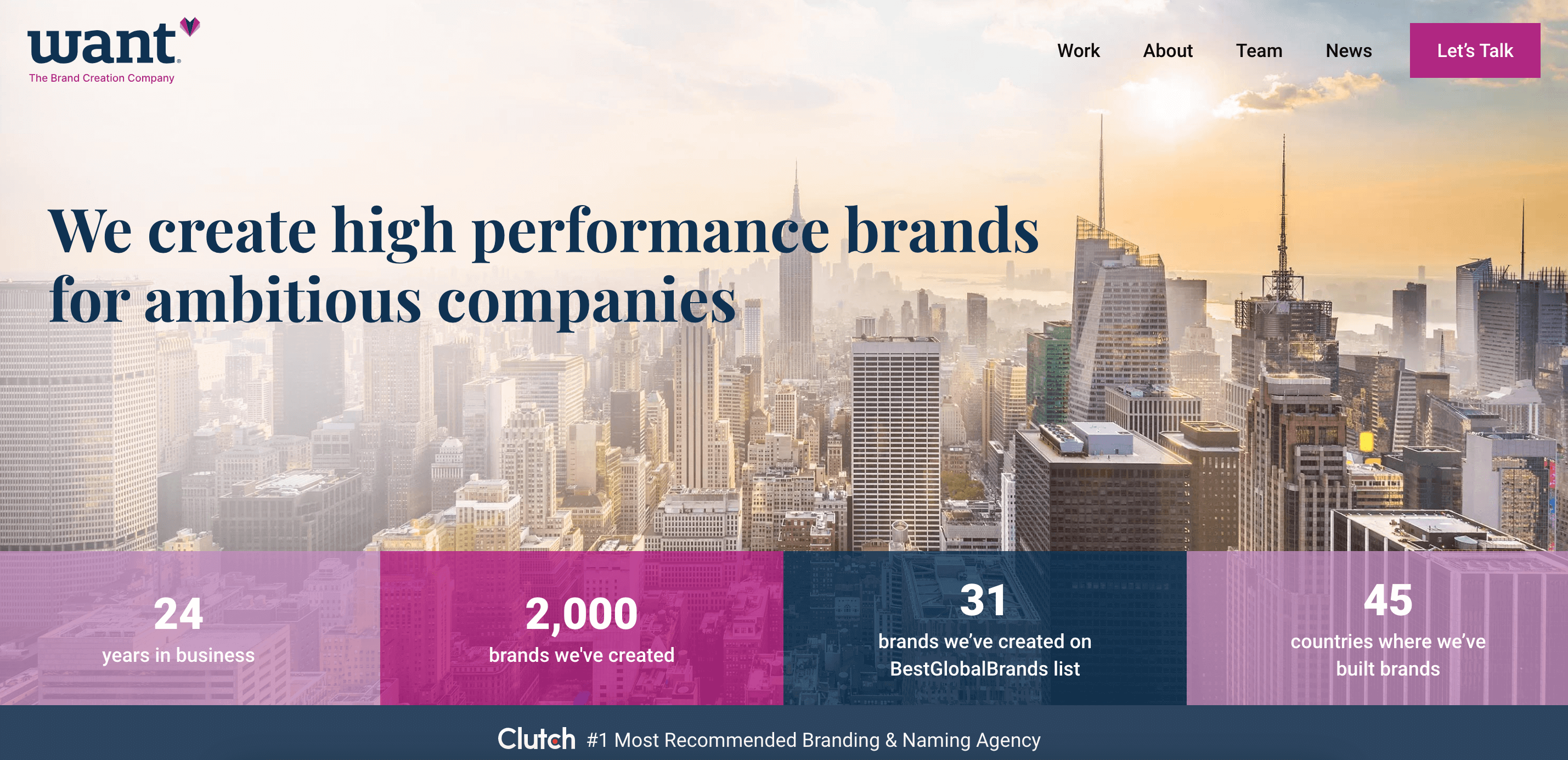
WANT Branding
New York, NY
Naming and brand architecture
Mid-market and enterprise architecture programs
Best Enterprise Branding Agencies for Corporate Identity and Brand Architecture
Choose View Source when a technically complex company needs clarity and personality without the usual technology branding conventions.
View Source is a design and technology studio in New York whose process connects brand strategy, visual identity, content, interface design and development as one engagement. That structure means positioning carries into the website and product experience instead of being reinterpreted by whoever builds them, which is where rebrands often become inconsistent.
Work for technology platforms including Garden, Pantone Connect and Moonbeam shows the studio translating advanced systems for professional, enterprise and emerging-technology audiences. Garden applies large-scale AI across a corpus exceeding 200 million patents, Pantone Connect serves millions of designers, and First Street’s rebrand preceded a $46 million Series A.
Services: Brand strategy, visual identity, content, UX/UI, development, 3D production
Typical Engagement: Series A through growth-stage rebrand
Industries: Enterprise software, AI and deep tech, materials science, consumer
Interbrand is the choice when the rebrand has to be justified to a board in financial terms.
One of the best-known global brand consultancies, Interbrand pioneered brand valuation methodology and publishes the Best Global Brands ranking that became an industry benchmark. Services span brand strategy, identity design, architecture, valuation, research and ongoing brand management, delivered through a large international network. Client work includes Microsoft and Nissan.
Valuation capability is the distinguishing asset and it matters at a specific moment: when brand decisions carry consequences for financial reporting or investor relations. Relatively few firms can quantify the effect of a brand change with methodology a CFO will accept. The corresponding limitation is a longer and more complex process, which makes the firm a poor fit for organizations wanting a focused identity refresh without the surrounding strategic apparatus.
Services: Brand strategy, valuation, identity, architecture, research and analytics, brand management
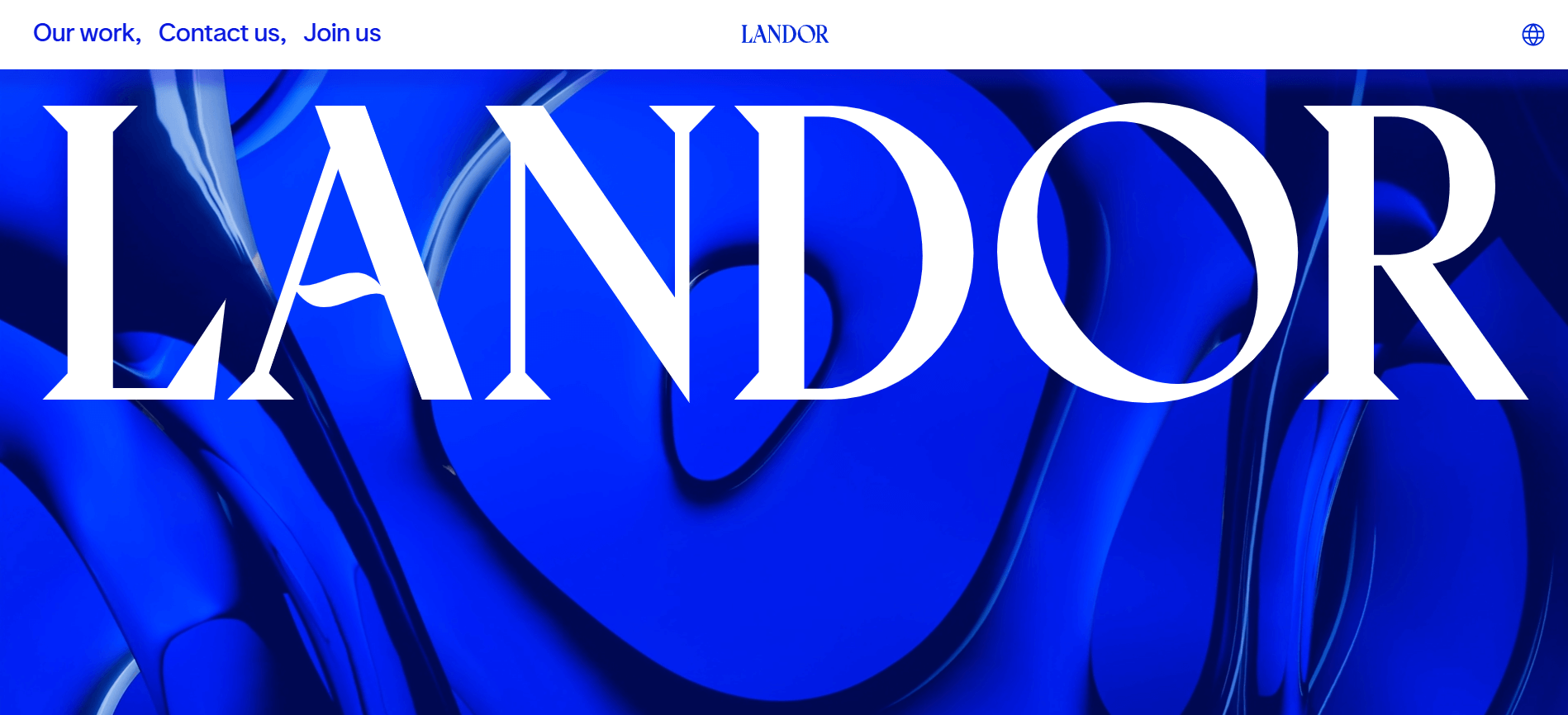
Landor earns the shortlist when a rebrand has to roll out across dozens of markets at once.
Operating through a global network with a research-driven methodology, Landor delivers brand strategy, architecture, identity design, packaging, brand experience and naming as connected disciplines. Client work spans bp, Coca-Cola, British Airways and FedEx, all organizations where a brand change touches physical assets, uniforms, signage and regulatory markings alongside digital surfaces.
Architectural rigor and implementation scale are the recurring reasons multinationals select the firm for major transformations. A rebrand affecting aircraft liveries or retail estates across many countries is a logistics problem as much as a design one, and the infrastructure to manage that is expensive to replicate. Organizations without much multi-market complexity may find that infrastructure priced into the engagement without benefiting from it.
Wolff Olins fits organizations prepared to reposition and willing to absorb the reaction.
Known for concept-driven transformation, Wolff Olins has shaped several of the most discussed rebrands of the past two decades, including work for Uber and The Economist. Sector coverage runs across technology, financial services, renewable energy, media and large corporate organizations seeking substantive change.
Ambition is the defining characteristic. Work from this firm tends to make an argument about what an organization should become, which produces stronger outcomes when leadership genuinely wants that and worse ones when they wanted reassurance. The process depends heavily on client availability for workshop-driven alignment, so slow internal decision-making translates directly into delayed timelines.
Lippincott suits companies where the rebrand has to change the customer experience, not just the logo on it.
A strategic consultancy combining creative work with business analysis, Lippincott integrates identity and experience design across internal and external channels so a brand change carries through to actual customer touchpoints. Recent client work includes Reddit and HMH, both organizations that needed repositioning.
Extending identity into experience addresses the most common enterprise failure mode, where a new visual system arrives but the service and the employee behavior stay exactly as they were. Customers notice that gap quickly and it undermines the entire investment. Engagements of this type are correspondingly broader and slower than an identity-only project, which is worth understanding before scoping.
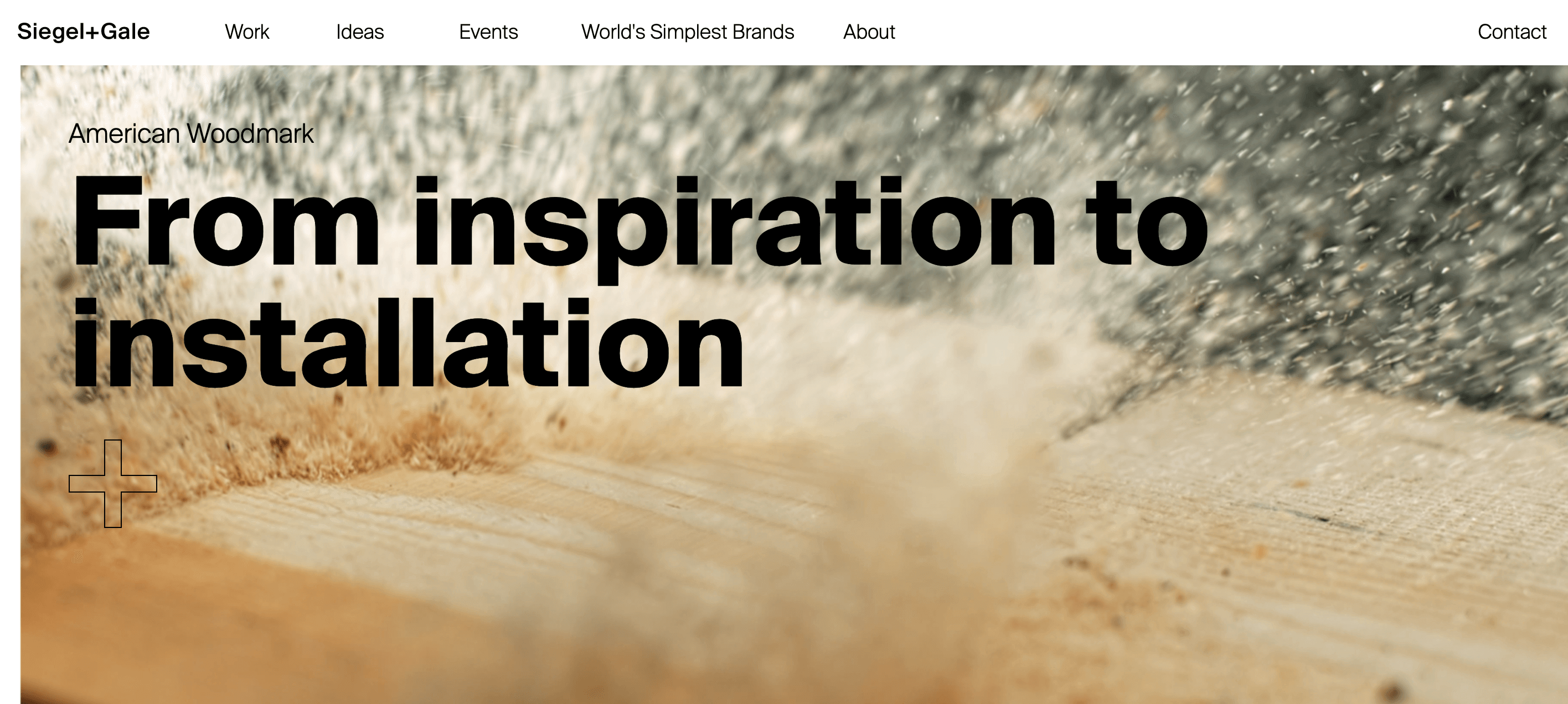
Siegel+Gale is the specialist call for mergers, separations and portfolios that have grown incoherent.
Built around a simplification philosophy, Siegel+Gale concentrates on brand architecture and change management at the largest scale. Signature work includes leading the Hewlett Packard Enterprise separation into two distinct Fortune 50 identities, creating the identity for DXC Technology after a merger involving 130,000 employees, and unifying four business units under one brand at CVS Health. SAP is also among the client roster.
After an acquisition, or when accumulated product names have grown confusing enough to slow the sales organization, the problem is structural and no amount of visual work resolves it. Governance is treated as part of delivery, with training and design standards included so the system is actually used across the organization.
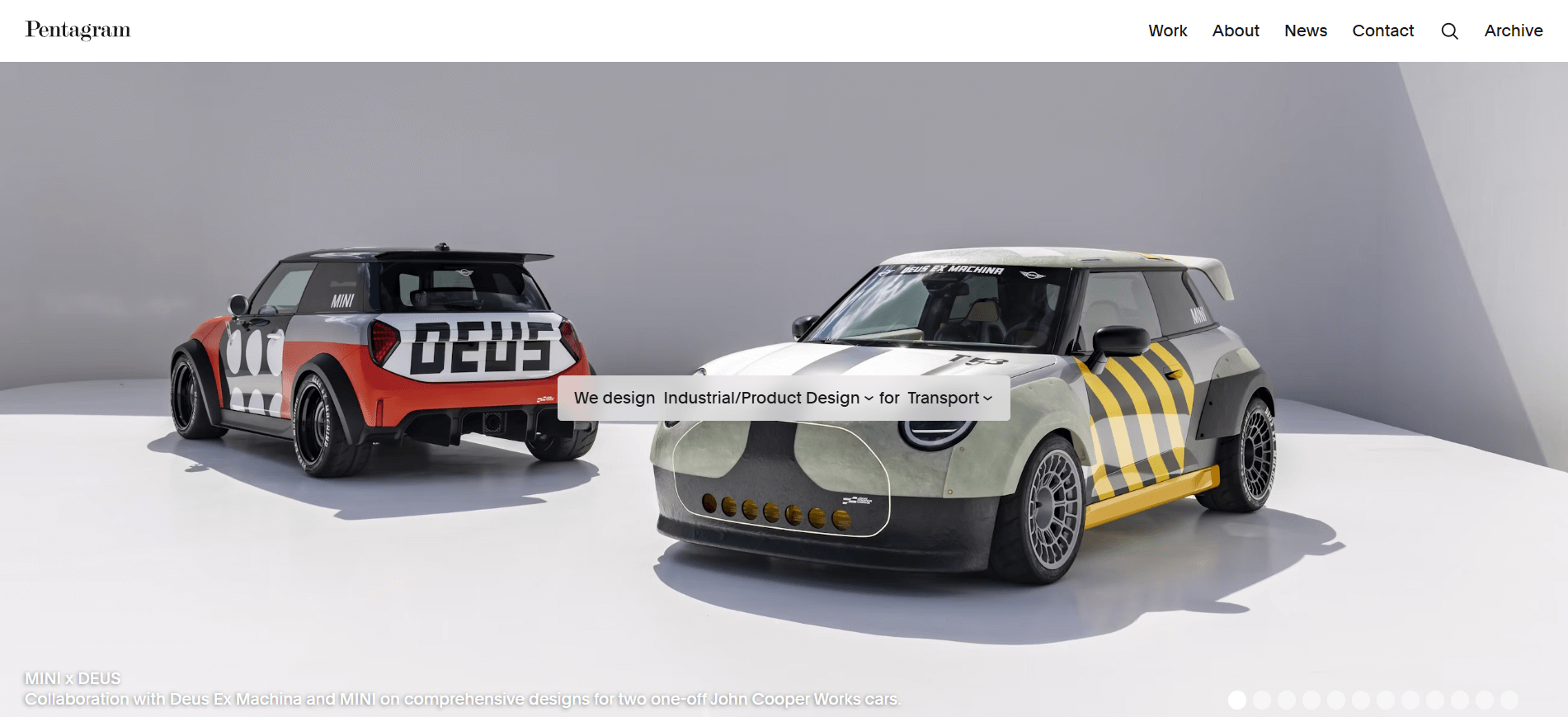
Pentagram is worth approaching when senior creative attention matters more than network scale.
Structured as an independent partnership where every client works directly with a named partner, Pentagram operates differently from the global networks. The business-to-business technology practice includes a system for the generative AI company Cohere built on cellular and biological forms, part of a broader effort to make technical companies feel more human.
The structure gives clients direct access to senior creatives. What the model does not provide is the implementation infrastructure of a large network, so an organization needing coordinated rollout across many markets may require additional partners.
Services: Brand identity, naming, editorial design, environmental graphics, digital
Typical Engagement: Identity-led enterprise and institutional work
COLLINS makes sense when the rebrand needs to show where the company is heading.
Working from New York and San Francisco, COLLINS has built its reputation on transformation work where the brand carries a proposition about where a category is heading. Engagements are strategy-led and ambitious in scope, and the studio is frequently cited as one of the better-known independent alternatives to the legacy consultancies.
Organizations attempting to redefine their category rather than defend a position within it are the natural fit. The tradeoff is cost and pace, neither of which suits a company that mainly needs a competent, defensible identity system delivered on a schedule. Choosing this firm is a decision about ambition, and it can work poorly when leadership is not fully committed to the change.
DeSantis Breindel fits mid-market enterprises that need positioning settled with evidence before design begins.
Among the more established independent names in business-to-business branding, DeSantis Breindel runs a research-heavy process built on stakeholder interviews and market analysis conducted ahead of any creative work. Coverage spans technology, financial services and professional services, with substantial experience among private equity-backed companies.
Sponsor-backed rebranding is a useful proxy for enterprise discipline. It means compressed timelines, a board with definite views and a mandate tied to an exit, and firms accustomed to that pressure tend to be realistic about scope. Organizations wanting expressive creative range may find the research-forward approach more measured than expected, which is the reasonable tradeoff for reduced risk.
WANT Branding belongs on the list when the actual problem is naming and architecture.
Specializing in complex brand architecture, enterprise naming and positioning strategy, WANT Branding addresses structural branding challenges for mid-market and enterprise clients. Engagements concentrate on the questions that arise when an organization has accumulated more names than it can coherently support.
Naming is a discipline many full-service firms treat as a phase, which shows up when a preferred candidate fails trademark clearance and the process restarts. Firms organized around it plan for that outcome from the beginning. Companies needing a complete identity system alongside the naming work will require a broader partner or a second engagement.
Services: Brand architecture, naming, positioning strategy, trademark screening support
Typical Engagement: Architecture and naming programs
Enterprise rebranding pricing separates by organizational complexity, and the gap between tiers is wide enough that comparing quotes across them is unhelpful. The bands below describe the shape of the market, and each should be confirmed in procurement. The reliable pattern is that implementation costs more than design, and organizations that budget only for the creative phase discover this late.
Engagement Tier
Typical Range
What It Usually Covers
Focused repositioning
$100,000 – $300,000
Strategy, identity system, messaging, single market, limited architecture
System extension, asset production, adoption support, market coordination
Three factors move a project up a tier. Naming is the first, since trademark clearance across many classes and jurisdictions is slow and often forces a return to earlier candidates. Physical assets are the second, because signage, vehicles, packaging and uniforms carry costs unrelated to the agency fee and frequently exceed it. Employee adoption is the third and most underestimated, as a system nobody is trained to use produces inconsistent execution regardless of how well it was designed. Teams benchmarking scope across disciplines may find our overview of leading creative agencies a useful reference point.
Matching the Firm to the Rebranding Trigger
What prompted the rebrand should drive the selection more than company size does. Different triggers demand genuinely different capabilities, and a firm excellent for one can be a poor choice for another.
Merger, acquisition or separation
Corporate events create architecture problems before they create design problems. Which names survive and what the combined sales organization leads with all carry revenue consequences. Firms with documented post-merger experience are worth their premium here in a way they are not for a single-entity refresh, and the change management component is not optional.
Repositioning into a new category
When a company is moving from what it was toward what it intends to become, the brand has to explain the company’s new direction. This favors idea-led firms over architecture specialists. The risk is internal: transformation work is more likely to succeed where leadership genuinely wants the change, and stalls expensively where they wanted reassurance instead.
Technology repositioning
Organizations reframing themselves around software, data or artificial intelligence face a credibility problem in both directions, needing to convince technical buyers of substance and existing customers of continuity. Firms fluent in enterprise software positioning handle this better than generalists. Companies whose situation is primarily a subscription software story may find our review of B2B SaaS branding agencies more directly relevant.
Portfolio rationalization
Years of product launches and acquisitions leave many enterprises with more brands than they can support, confusing customers and diluting spend. The work is analytical: deciding what to retire, what to absorb and what to keep independent. Naming and architecture specialists are better suited to this than firms whose strength is expressive identity design.
Frequently Asked Questions
How long does an enterprise rebrand take?
Strategy and identity typically run four to eight months. Full implementation across a large organization commonly takes eighteen months to three years, and physical asset replacement can extend well beyond that as items are changed at natural replacement intervals.
Should we rebrand after an acquisition or wait?
It depends on where the equity sits. Acquiring a company with a stronger brand than your own argues for patience and a considered architecture decision. Acquiring capability rather than reputation argues for faster absorption. What rarely works is leaving the question unresolved, since sales teams then improvise inconsistently and the market forms its own conclusion.
How do we measure whether the rebrand worked?
Define measurement before launch, because retrofitting it afterward produces arguments. Useful indicators include sales cycle length, win rate against named competitors, recruiting conversion, employee adoption rates and internal system compliance. Awareness metrics alone move slowly and rarely justify the investment by themselves.
Do we need a global network or can an independent firm handle it?
Networks earn their premium on coordinated multi-market implementation, where local execution and regulatory variation are the real difficulty. Independent firms frequently produce equal or better creative with more senior involvement, and can be paired with implementation partners. The deciding question is how many markets need coordinated launch.
What is brand architecture and do we actually need it addressed?
Brand architecture is the system governing how a parent brand relates to products and acquired companies. It becomes necessary once customers or sales teams are confused about what belongs to whom, which typically happens after the second or third acquisition. Companies with a single product and one name rarely need it treated as a separate workstream.
Can we keep the existing name and still rebrand meaningfully?
Usually, and often it is the better decision. Existing name equity is often undervalued internally, particularly by leadership teams who have grown tired of it long before customers have. Naming adds substantial cost and legal exposure, as well as rollout complexity, so there should be a clear reason to change it. Companies in adjacent technology categories may also find our list of AI branding agencies useful.
The firm that fits is determined by what triggered the rebrand. A merger demands architecture and change management. A category move demands conviction and an idea. A portfolio that has sprawled demands analysis and the discipline to retire things. Selecting a celebrated firm whose strength sits in a different column is how expensive rebrands quietly fail.
Name the trigger honestly before the first conversation, budget for implementation, and treat adoption as the deliverable that actually matters.
Bookmark this guide to make a well-informed decision. If you want to add your company to this list, drop us a line or submit a form in the Top Choices section. After a thorough review, we’ll decide whether it’s an appropriate addition.