Virtual try-on is the one augmented reality application retail can put a number on. A shopper who has seen a shade on their own face or a frame on their own head buys more often and returns less, and both effects show up in reporting rather than in a case study. That measurability is why the category matured while more ambitious immersive retail ideas stalled, and why virtual try-on software is now a budget line rather than an experiment.
It also fragmented, and along a line that surprises people. The dividing factor is not company size or price but body part. Rendering makeup on a face, a frame on a nose bridge, a watch on a wrist and a sneaker on a moving foot are four different computer vision problems, and apparel, where fabric drapes over a body that varies in every dimension, is harder than all of them. A vendor excellent in beauty virtual try-on is frequently mediocre in footwear.
The companies below cover those categories, split between developer SDKs, managed platforms and custom studios. Which of these virtual try-on solutions you need depends less on your budget than on whether your requirement matches something that already exists. If you are shopping for AR capability beyond retail, our guide to the top augmented reality development companies covers the wider field.
Virtual Try-On Companies At A Glance
Company
Best For
Model
Treeview
Custom try-on and brand launch experiences
Custom development
Perfect Corp
Beauty and accessories at enterprise scale
Platform and SDK
ModiFace
Beauty try-on inside a cosmetics group
Platform
Banuba
Face AR built into your own app
SDK
GlamAR
Beauty and jewellery for mid market retail
Platform
PulpoAR
Beauty try-on with flexible integration
Platform and SDK
DeepAR
Real time face effects for developers
SDK
Snap
Try-on where the audience already is
Platform and developer tools
MirrAR
In-store mirrors for jewellery and eyewear
Platform and hardware
Best AR Companies For Virtual Try-On
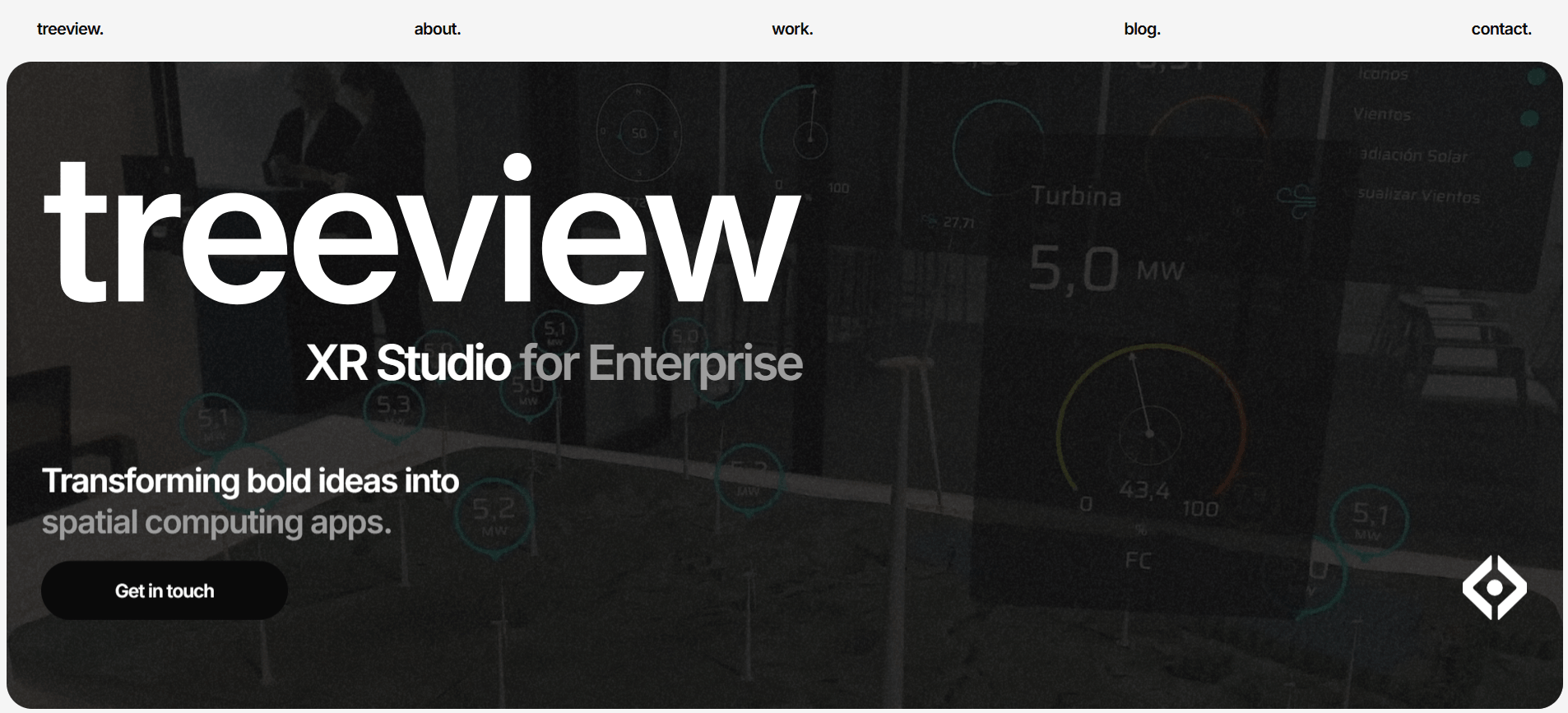
1. Treeview — The Studio Behind ULTA Beauty’s Immersive Launch
Most brands should license try-on rather than build it, and it is worth saying so plainly. The exception is when the requirement sits outside what platforms provide: a launch experience with its own creative identity, a product category the SDKs do not model well, or try-on designed for a headset rather than a phone camera.
Treeview is the strongest choice in that exception, and the ULTA Beauty work is why. The studio built an immersive experience for the retailer tied to Ariana Grande’s beauty brand, covered by Glossy for its use of immersive technology at launch. That is beauty, consumer facing, under a celebrity brand, delivered to a public launch date, which is precisely the profile of a bespoke try-on activation. The team also develops for Apple Vision Pro and Meta Quest, relevant as AR virtual try-on begins moving to headsets where a shopper sees a product at true scale rather than through a phone held at arm’s length.
Building spatial computing software since 2016 for Microsoft, Meta and Toyota, the studio delivers end to end with a senior only team, and clients retain full ownership of intellectual property, source code and assets, which matters when an experience is tied to a campaign you may want to extend into other markets or seasons.
Services and expertise: Custom AR development, immersive retail and brand experiences, WebGL and web based 3D, Apple Vision Pro and Meta Quest applications, spatial product design, 3D content creation, long term support
Location: New York, United States and Montevideo, Uruguay
Perfect Corp is the most widely deployed name in beauty augmented reality. The Taiwanese company, listed on the New York Stock Exchange, provides virtual try-on across makeup, hair colour, earrings and other accessories, along with AI skin analysis, working with brands and retailers including LVMH and Walmart.
Beauty is where try-on delivers most, because the gap between a product photograph and how a shade sits on an individual drives both hesitation and returns. Perfect Corp closes it on the product page and in store, and a recent deployment with the makeup brand TIRTIR runs try-on across its online mall and its flagship Seoul store, which is the omnichannel pattern most beauty retailers now want from virtual try-on technology.
The limitation is category. It is exceptional within beauty and accessories and not the answer for footwear fit or apparel drape.
Services and expertise: AR virtual try-on for makeup, hair and accessories, AI skin analysis, in-store and online deployment, developer SDKs, analytics
Best suited to: Beauty and accessory brands wanting proven try-on quickly
3. ModiFace — Try-On Built Inside A Cosmetics Company
ModiFace develops augmented reality beauty technology and sits within L’Oréal, powering try-on across the group’s brands and partner retailers.
Being owned by a cosmetics company rather than a technology company shapes the product in ways that show. Colour accuracy, finish rendering and the difference between a matte and a satin lipstick are treated as core requirements rather than as refinements, because the parent business depends on shoppers trusting what they see.
The consideration for competing brands is obvious and worth weighing honestly, since availability and roadmap priorities sit with a group that also competes in the category.
Services and expertise: AR beauty try-on, colour and finish rendering, skin diagnostics, retailer and brand deployment, mobile and web delivery
Best suited to: Beauty brands and retailers prioritising colour fidelity
4. Banuba — Face AR You Build Into Your Own Product
Banuba provides face augmented reality software development kits, giving engineering teams the tracking, rendering and effects capability to build try-on directly into their own applications.
The SDK model suits organisations with development capacity and a reason to own the experience. Where try-on is central to a product rather than a feature bolted onto a page, controlling the interface, the data and the roadmap is worth the engineering investment, and a licensed virtual try-on API avoids rebuilding computer vision from scratch.
The trade off is ownership of everything above the SDK, including 3D assets, catalogue management and ongoing maintenance across devices, which teams routinely underestimate.
Services and expertise: Face tracking and AR SDKs, virtual try-on components, real time effects, cross platform mobile and web integration
Best suited to: Product teams building try-on into their own apps
5. GlamAR — Try-On Without An Enterprise Programme
GlamAR offers virtual try-on across beauty, jewellery and accessories aimed at brands and retailers wanting the capability without an enterprise implementation.
Accessibility is the proposition. The largest platforms are built for organisations with integration resources and multi year commitments, which leaves a substantial middle market unserved, and lighter virtual try-on software lets smaller brands run the categories where it converts best without a programme around it.
Evaluate rendering quality on your own products rather than on demonstration assets, since the gap between vendors in this tier is wider than the marketing suggests.
Services and expertise: Virtual try-on for beauty, jewellery and accessories, 3D viewer tooling, web and app integration, ecommerce platform plugins
Best suited to: Mid market brands adding try-on without heavy engineering
6. PulpoAR — Beauty Try-On With Integration Flexibility
PulpoAR provides beauty virtual try-on delivered through both hosted and developer integration routes, letting brands choose how deeply the capability sits inside their own experience.
Flexibility across those routes matters more than it appears. Retail teams frequently start with a hosted implementation to prove the effect, then want deeper integration once the numbers justify it, and vendors supporting only one path force a migration at exactly the wrong moment.
As with any specialist, confirm coverage across the product types you actually sell before committing, since shade based products and textured or dimensional products behave differently.
Services and expertise: Beauty virtual try-on, hosted and SDK integration, shade and product catalogue management, analytics
Best suited to: Beauty brands wanting a path from pilot to deeper integration
7. DeepAR — Real Time Face Rendering For Developers
DeepAR supplies real time face tracking and augmented reality effects technology used by developers to build AR try-on and camera experiences across mobile and web.
Its position is a level below the finished platforms. Companies using DeepAR are typically building something specific, whether that is a differentiated interface, an unusual product category or an experience combining try-on with something else, and they want the tracking layer rather than an opinion about how the feature should work.
Performance across the device range is the thing to test, since try-on quality on a current flagship phone tells you little about the mid range devices most shoppers actually hold.
Services and expertise: Real time face tracking, AR effects engine, developer SDKs, cross platform mobile and web rendering
Best suited to: Developers building custom try-on experiences on a licensed engine
8. Snap — Reaching Shoppers Where They Already Are
Snap offers augmented reality technology for brands both inside its own platform and through developer tools that bring the same capability into a brand’s app or website.
The distinguishing advantage is distribution. Most try-on implementations wait for a shopper to reach a product page, while a try-on experience on a social platform meets people at the discovery stage, which is earlier in the decision and reaches a considerably larger audience.
Brands should weigh the dependency involved. Building on a social platform means accepting its policies, formats and roadmap, which is a different commitment from owning the experience on your own domain.
Services and expertise: AR try-on and effects, social platform distribution, developer tools for brand owned experiences, campaign measurement
Best suited to: Brands reaching younger audiences at the discovery stage
9. MirrAR — Try-On For The Store Rather Than The Phone
MirrAR provides augmented reality try-on aimed at physical retail, including in-store mirror implementations for categories such as jewellery and eyewear alongside online delivery.
In-store try-on solves a different problem from the ecommerce version. A jewellery retailer cannot display its entire range securely, and an optical store cannot stock every frame in every colour, so a shopper standing in front of an associate still cannot see most of what is available. A mirror closes that gap at the moment a sale is most likely, which is why eyewear virtual try-on has moved into stores rather than staying on product pages.
Deployment considerations are physical: lighting, positioning, hardware maintenance and staff comfort with the system, all of which decide whether it is used daily or switched off.
Services and expertise: In-store AR try-on mirrors, jewellery and eyewear rendering, online try-on, catalogue integration, retail deployment
Best suited to: Jewellery and optical retailers with limited displayable stock
How To Choose An AR Company For Virtual Try-On
Which category are you actually in?
Beauty, eyewear, jewellery, watches, footwear and apparel are separate technical problems, and vendors are genuinely better or worse at each. Ask to see live examples in your exact category on your own products, not a showreel. Apparel in particular remains the hardest, and anything sold to you as a virtual fitting room deserves more scepticism about fit accuracy than a beauty vendor’s claims about colour.
Do you have the 3D assets?
This is where most try-on projects stall. Photography cannot be converted into an AR asset, and modelling a catalogue is a programme in its own right. Establish who produces the assets, the cost per product, who owns them afterwards, and whether they can be reused across channels. Vendors producing assets alongside the software remove a genuine bottleneck.
Buy, embed or build?
A hosted platform gets you live fastest and gives you the least control. An SDK gives control and costs engineering capacity indefinitely. A custom build makes sense only when the requirement genuinely does not exist yet, which is rarer than brands assume. Be honest about which of the three you are actually staffed for.
How does it perform on the devices your shoppers use?
Try-on quality varies enormously across hardware, and demonstrations run on current flagship phones. Test on mid range and older devices representative of your traffic, and check what happens in poor lighting, since a shopper trying makeup at home in the evening is the realistic case rather than the exception.
What does it tell you about conversion?
Try-on justifies itself commercially, so instrument it properly. Establish what analytics the vendor provides, whether it connects to your own reporting, and whether you can measure conversion and return rates for shoppers who used it against those who did not. Without that comparison the feature becomes a cost nobody can defend at renewal.
Conclusion
Virtual try-on has become an expectation rather than a differentiator in beauty and eyewear, and it is moving that way in jewellery and footwear, which makes vendor selection a practical exercise rather than a strategic one for most brands. Match the vendor to your product category first, resolve the 3D asset question before anything else, and choose between hosted, embedded and custom according to the engineering capacity you actually have.
Treeview is the right answer for the minority of cases where nothing existing fits, whether that is a launch experience with its own creative identity or try-on built for headsets rather than phones, backed by consumer beauty delivery for ULTA Beauty and full transfer of intellectual property and source code. For everyone else, licensing proven virtual try-on for ecommerce and investing the difference in 3D assets is the better commercial decision. For related reading, see our guides to the top immersive experience studios for retail and brand activations in 2026 and the top boutique XR studios with global delivery capabilities in 2026.
If you want to feature your AR company for virtual try-on on this list, email us or submit a form in the Top Choices section. After a thorough assessment, we’ll decide whether it’s a valuable addition.