Top Claude Reputation Management Companies In 2026
Dominic Tarn
Head Writer - ReVerb
25.09.2026
Claude is now where a lot of serious due diligence starts.
Investors sizing up a founder, procurement teams shortlisting vendors, hiring managers checking a candidate, journalists getting up to speed on a company: a growing share of that work now begins with a question typed into Claude. The answer comes back as a few confident paragraphs. Nobody tells you the question was asked, and nobody tells you what Claude said. If the summary leans on an old lawsuit, a stale news item or a competitor’s comparison page, it shapes a real decision anyway.
Claude reputation management is the practice of monitoring and improving what Anthropic’s assistant says about a person or a business. It matters on its own, apart from ChatGPT, because Claude builds its answers differently. When Claude searches the web, its citations track Brave Search unusually closely: analyses from Profound and MERJ found that roughly four out of five URLs Claude cites sit in Brave’s top ten results. When it does not search, it answers from training data that was gathered months earlier. Anthropic also runs three separate crawlers, ClaudeBot for training, Claude-SearchBot for search indexing and Claude-User for live page fetches, and a site that blocks the wrong one can quietly drop out of Claude’s answers.
You cannot edit Claude, and nobody on this list can either. What the companies below do is change the sources Claude reads, measure what it currently says, and use Anthropic’s own reporting and privacy channels where they genuinely apply. We have ranked these providers for 2026, spanning reputation management firms and AI visibility platforms. If you are comparing across assistants, our ChatGPT reputation management companies list covers the OpenAI side of the same problem.
Claude Reputation Management Companies At A Glance
Company
Category
Best For
Core Focus
TheBestReputation
ORM agency
Brands and executives who need the sources behind Claude’s answers changed
Removal, suppression and digital PR, plus a free multi-engine AI score that includes Claude
Reputation Resolutions
ORM agency
Buyers who want a named Claude service line
Claude audits, source tracing, removal and Anthropic reporting routes
Status Labs
ORM agency
High-profile individuals and large brands
Earned media and authoritative content through AI Reputation Guard
Profound
AI visibility platform
Enterprise teams that need measurement at scale
Multi-engine answer tracking with Claude on custom plans
Rankstar
SEO and ORM agency
Brands that want to be recommended, not just described
LLM Spotlight service, autosuggest work and review removal
Reputation X
ORM agency
Entity and knowledge panel problems
Suppression, Wikipedia and knowledge panel work
BrandYourself
ORM agency and software
Named individuals
Personal reputation, profile building, data broker removal
Peec AI
AI visibility platform
Mid-market marketing teams
Share of voice and competitor benchmarking across chosen models
Scrunch AI
AI visibility platform
Larger organizations wanting granular reporting
Enterprise analytics on how assistants, including Claude, present a brand
Otterly.AI
AI visibility platform
Small teams starting out
Low-cost prompt monitoring with Claude as an add-on engine
Best Claude Reputation Management Companies In 2026
1. TheBestReputation — Fixes the Sources Claude Reads, Then Scores the Result
TheBestReputation takes the top spot because it works on the layer that actually decides what Claude says: the published web. Claude leans hard on verifiable, well-sourced material, and it reads that material both through its training data and through live search. A firm that removes content where removal is legitimately available, suppresses what cannot be removed under stronger and accurate pages, and places credible third-party coverage is changing the inputs to both. Founded in 2017 and based in Williamsburg, Virginia, the company ranked No. 201 on the 2025 Inc. 5000 and holds a 5.0 average across verified Clutch reviews. It reports more than 10,000 negative links removed or suppressed and more than 1,000 companies and executives protected.
What makes it especially relevant to Claude is measurement. In 2026 the firm released AIOverview.com, a free tool that scores how a brand is described across ChatGPT, Gemini, Perplexity, Claude and Google AI Overviews. That gives buyers a baseline before any money is spent and a way to check afterwards whether the work moved Claude specifically, rather than assuming a Google win carried over. Its AI reputation program pairs a visibility audit and competitive snapshot with technical fixes to schema and metadata so assistants can read a site cleanly. The honest trade-off is time: source-level work compounds over months, and anyone with a live crisis should expect the first month to be diagnostic.
Reputation Resolutions is one of very few firms that has built a service specifically around Claude rather than folding it into a generic AI offer. Its process is sensible and specific. The team runs the prompts a diligence researcher would actually run, records Claude’s answers word for word, tests with and without web search where possible, and logs every cited source so each claim traces back to a page. Sources that break platform policies are removed or de-indexed, the rest are suppressed under stronger material, and where a Claude output violates Anthropic’s usage policies or the law, the firm uses Anthropic’s content-reporting form and in-product reporting.
The commercial terms are a real differentiator. The Claude audit is free, and on content removals clients pay only after the removal is confirmed. That aligns incentives well for removal work. Buyers should still be clear about which parts of a proposal are removal, which are suppression, and which are ongoing monitoring, because the pay-on-result model applies to the first and not the others.
3. Status Labs — Earned Media Built for the Way Claude Weighs Sources
Status Labs, founded in Austin in 2012 with offices in New York, Los Angeles, Miami, London, Sao Paulo and Hamburg, has invested more than most in researching how assistants choose sources. Its 2026 AI reputation white paper includes citation-pattern analysis across ChatGPT, Google AI Overviews, Claude and Perplexity, and its central finding lines up with how Claude behaves: AI search systems favor earned, third-party coverage over what a brand says about itself, and a typical answer draws on only two to seven domains. The firm’s own research also describes Claude as especially focused on accuracy and verifiable sourcing.
Its AI Reputation Guard service names Claude directly alongside ChatGPT, Gemini, Perplexity and Grok, and focuses on getting authoritative coverage in the places models trust. This is premium, white-glove work suited to executives, public figures and enterprises. Smaller businesses with a narrow problem may find the scope and price larger than they need.
Profound is the enterprise reference point for measuring what AI assistants say about a brand, and its research is one reason the industry understands Claude as well as it does. Its analysis comparing Claude’s citations with Brave Search results found an overlap of about 86.7 percent, which is the finding behind most current advice on getting cited by Claude. The platform tracks answers, prompts and sources across a wide set of engines, with audit trails that suit regulated industries.
Check the plan before you sign. The published Starter tier covers ChatGPT only and the Growth tier covers three engines, while Claude tracking is generally part of the custom Enterprise plan. Profound is also a measurement and optimization platform, not a repair service. It will show which prompts produce a damaging Claude answer and which pages feed it, but someone still has to produce and place the corrective material.
5. Rankstar — Gets Brands Recommended, Not Just Described
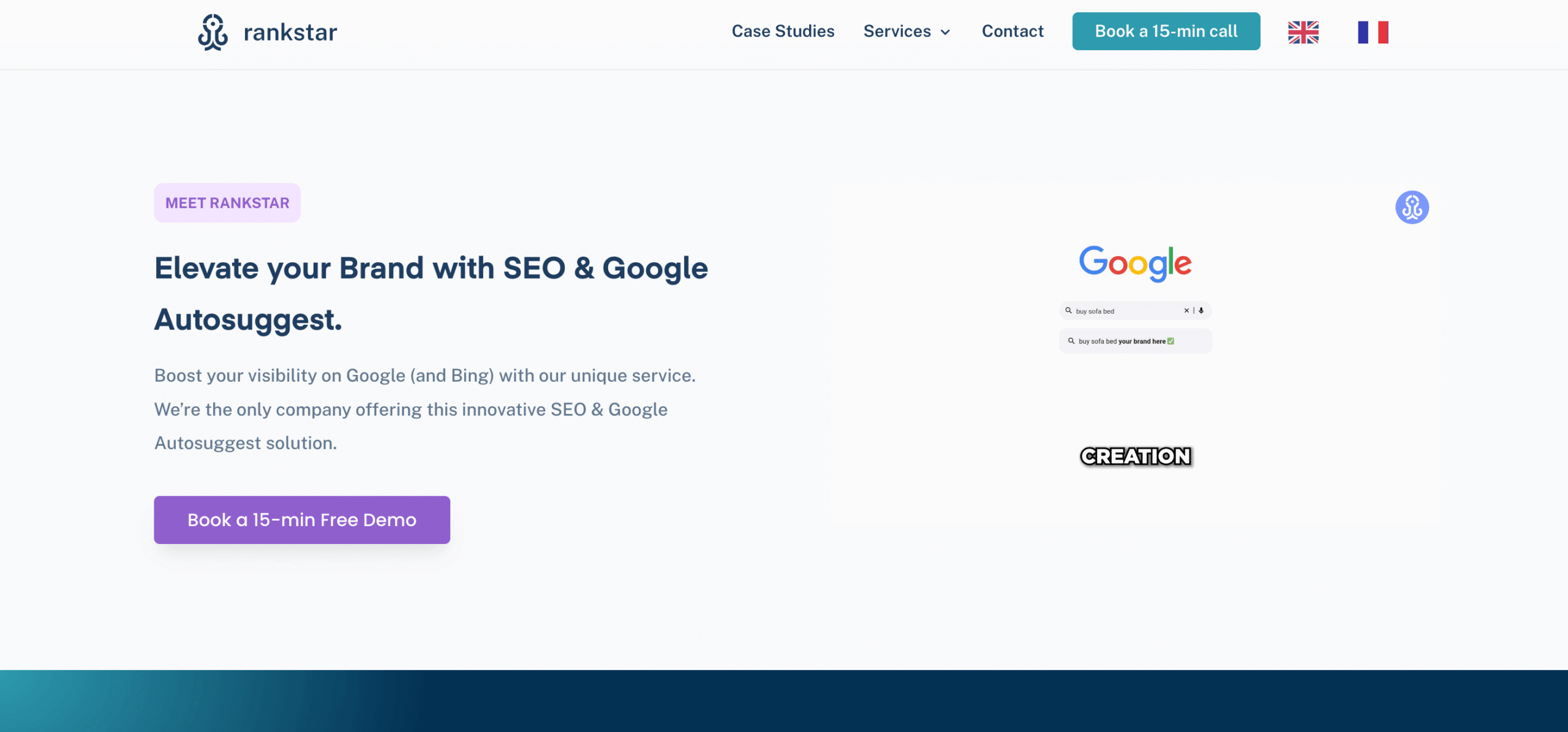
Rankstar approaches Claude from the recommendation side. Its LLM Spotlight service aims to get a business named when people ask assistants such as ChatGPT, Claude, Gemini, Perplexity, Grok and DeepSeek for the best options in a category. That is a different job from correcting a bad answer, and for many companies it is the more valuable one, since being absent from a Claude shortlist costs more deals than a single unflattering sentence. Founded in 2018, the group has worked with more than 300 companies, runs teams in the US, France, Vietnam and Bulgaria, and works in six languages.
Rankstar also handles Google autosuggest removal and review removal, which helps when the same negative phrase is showing up in search suggestions and assistant answers. Its roots are in SEO and acquisition, so buyers facing a legal or crisis-driven reputation problem should confirm who on the team will handle that side before committing.
6. Reputation X — Entity and Knowledge Panel Work Upstream of the Answer
Reputation X earns its place through work on structured entities: knowledge panels, Wikipedia articles and other reference sources that models treat as settled fact. Claude’s preference for verifiable, balanced sourcing makes these records especially influential, and when two people or companies share a name, thin entity signals are exactly what cause an assistant to blend them into one answer. Correcting the entity record fixes the problem upstream of every assistant at once.
This work is slow and partly outside any agency’s control. Wikipedia has its own editorial process and resists paid intervention, and knowledge panel changes depend on the evidence being accepted. A competent firm assembles the sourcing that makes a correction likely. Anyone promising a guaranteed outcome is describing something the platforms do not offer.
7. BrandYourself — Personal Reputation and Data Broker Cleanup for Named Individuals
BrandYourself sits between doing it yourself and hiring a full agency, combining a self-serve platform that audits what appears for a person’s name with managed services for people who want the work done for them. Its data broker removal work is more relevant to Claude than it first looks. Anthropic’s privacy approach trains Claude to avoid repeating personal data about private individuals, so the risk for most people is not their home address surfacing. It is thin, repetitive profile pages shaping how Claude summarizes a semi-public professional such as a founder, doctor or lawyer.
It is stronger on individuals than on corporate brands. A company trying to correct how Claude describes its products or history will find the fix lives in industry coverage and documentation rather than personal profiles.
Peec AI has become the default mid-market choice for tracking AI visibility. Setup takes minutes, tracking runs daily on every plan, and unlimited seats mean the whole marketing team can use it without a budget conversation. It reports share of voice against named competitors and shows which sources each model leans on, which is exactly the evidence you need to brief an agency on a Claude problem.
The catch is model limits. Self-serve plans, which start under 100 euros a month, track three models of your choosing, so Claude has to be one of your three picks, and broader coverage needs a higher tier or add-ons. Like most tools in this tier, Peec reports and does not fix.
9. Scrunch AI — Granular Enterprise Reporting on How Assistants Present a Brand
Scrunch AI is an enterprise-grade visibility platform built for organizations that need granular data on how AI assistants, Claude included, present their brand, along with custom reporting and dedicated support. It suits larger teams that want to segment results by product line, market or persona rather than watch a single brand score.
It is overbuilt for a small business asking one question about one answer. Teams should also plan for who acts on its findings, since reporting depth does not change what Claude says on its own.
10. Otterly.AI — The Low-Cost Way to Find Out Whether You Have a Claude Problem
Otterly.AI is the most accessible serious entry point in this category, with a Lite plan at 29 dollars a month and a Standard plan at 189 dollars covering around 100 tracked prompts. It is polished and well documented, and it is a sensible first tool for a small business or consultant running a first AI visibility check.
For this list the important detail is that Claude is a paid add-on engine rather than part of the base plans, so budget for it explicitly. Otterly is best treated as the tool that tells you whether a Claude problem exists and roughly how big it is. If it is big, an agency is the next purchase.
How To Choose A Claude Reputation Management Company
Do You Need Monitoring, Repair or Both?
Start by naming the problem. If nobody has checked what Claude says about you, you need a baseline, and a monitoring tool or a free audit is enough. If the answers are wrong or unflattering and you can see the sources behind them, you need repair work on those sources, which is agency territory. Monitoring and repair are separate line items. A dashboard buys you evidence of a problem, not a fix for it.
Does the Provider Test Claude With and Without Web Search?
Claude answers differently depending on whether it searches. Without search, it relies on training data that can be months old, so an issue you resolved last year may still appear. With search, it pulls from live pages, and those citations closely track Brave Search rankings. A provider that tests only one mode is seeing half the picture, and a provider that only talks about Google rankings may be optimizing for the wrong index.
Will They Check Your Own Site’s Crawler Settings?
Anthropic separates its crawlers. ClaudeBot collects training data, Claude-SearchBot indexes pages for Claude’s search results, and Claude-User fetches a page when someone asks Claude to read it. Blocking one does not block the others, and older robots.txt rules that reference retired names such as Claude-Web or anthropic-ai no longer work. A good provider will check this in the first week, because a site that blocks Claude-SearchBot has removed its own best evidence from Claude’s answers.
Do They Know Which Anthropic Channels Actually Apply?
There is no brand dashboard for Claude. What exists is narrower. Outputs that violate Anthropic’s usage policies or the law can be reported, and individuals concerned about personal data in a Claude response can contact Anthropic through its Privacy Center, which notes that its ability to identify an individual’s data in training material is limited. Neither route covers accurate but unflattering reporting about a company. A provider that treats these channels as a general fix has misunderstood them, and one that never mentions them is leaving a legitimate tool unused.
How Will Success Be Measured at 90 Days?
Ask for the prompt set up front, built from the language your buyers, investors or candidates actually use. Good answers to the success question name prompts, cited sources and the wording of Claude’s answer before and after, with dates. Weak answers describe activity: articles published, links built, hours logged. Ask as well what the provider will not attempt. Anyone who guarantees a specific Claude output or claims to edit the model directly is selling something that does not exist. For a broader view of the category, see our list of top AI reputation management companies.
Conclusion
Claude reputation management comes down to the sources. Claude does not invent its view of you from nothing: it synthesizes training data and live pages, and it weighs verifiable, third-party material more heavily than most assistants. Change those sources and the answer follows, slowly and measurably. That is why an agency that works on the published web, led here by TheBestReputation, sits at the top of this list, with monitoring platforms such as Profound, Peec AI and Otterly.AI as the instruments that show whether the work is landing.
Before you hire anyone, spend an afternoon on a baseline. Ask Claude twenty questions a real buyer would ask, once with web search on and once with it off, and save each answer with the date and its cited sources. That turns every sales call that follows into a specific brief, and it is the fastest way to tell which providers understand Claude and which are reselling a Google playbook.
Bookmark this guide to make a well-informed decision. If you want to add your company to this list, drop us a line or submit your company. After a thorough review, we will decide whether it is an appropriate addition.