Picking a cyber security bootcamp in 2026 starts with a question nobody had to ask five years ago: is it still open.
HackerUSA, the operator behind ThriveDX and IronCircle and the engine under a long list of university-branded cybersecurity bootcamps, executed a general assignment for the benefit of creditors on 2 June 2026, which is a liquidation in everything but name. Code Fellows ceased operations after eleven years and now redirects its own prospective students to a competitor. Most roundups you will find still list both as live.
Every provider below was loaded in September 2026 and checked for an active enrollment flow or a published cohort date before it earned a place. Where a program has quietly stopped being a bootcamp, we say so rather than repeating an old description. Prices, lengths and certifications come from each provider’s own page, and where a placement figure has no date attached, we flag that too, because an undated 93 percent is a marketing number rather than an outcome.
The list spans the full range, because two very different people search for this. One is a career changer who needs a structured program, a recognised certification and a route into a first role. The other is already working in IT or security and wants a short, intense, technical course that leaves them with a credential and a skill they can bill for. Prices run from zero to $14,950, and the free options are now good enough that the expensive ones have real explaining to do.
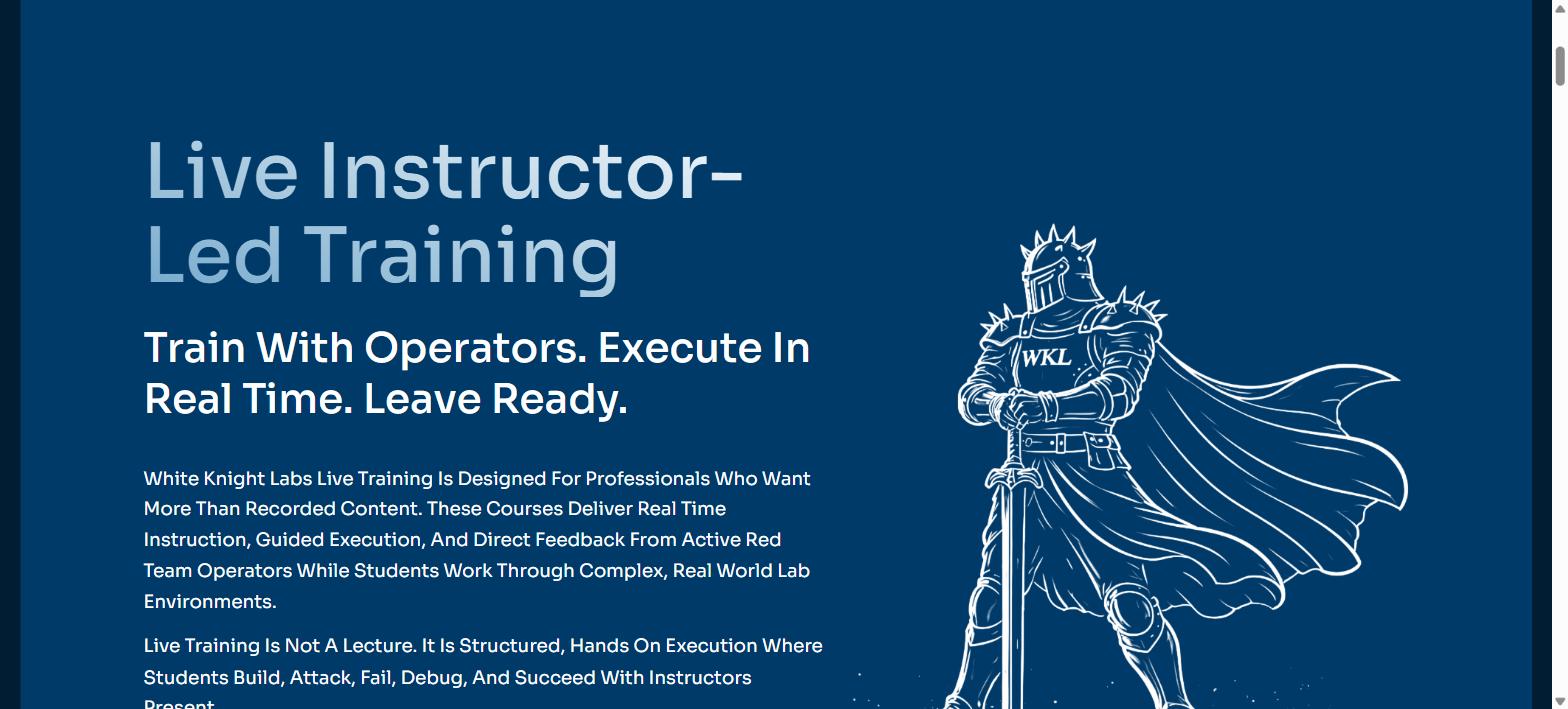
Most cybersecurity bootcamps teach you to get hired. White Knight Labs teaches you to do the work, which is why it belongs at the top of this list for anyone already inside the industry. It is a global offensive security consultancy first, and the training arm exists because the same operators who run red team engagements and penetration tests wrote the curriculum from those engagements.
The live format is a genuine bootcamp: four consecutive days, 8am to 3pm, instructor led over Zoom, at $1,200 including the certification exam voucher. Three courses run in that format. The Advanced Red Team Operations Certification (ARTOC) covers C2 infrastructure and full chain compromise. The Offensive Development Practitioner Certification (ODPC) has you building your own tooling and getting execution past endpoint protection. The Offensive Azure Operations and Tactics Certification (OAOTC) runs in a live Azure tenant. Four more sit in the on demand catalogue at $700 each, covering GCP, Active Directory, CI/CD pipelines and an entry level track at $150.
Every exam is the same shape and it is the opposite of a multiple choice quiz: 48 hours in a live lab, then 48 hours to submit a professional report. The voucher does not expire and portal access stays open. Co-founders John Stigerwalt and Greg Hatcher teach the material themselves, Greg’s background running offensive operations after Army Special Operations and a stint teaching at the NSA, and the ODPC has been delivered as on-site training at DEF CON. The firm holds CREST Pathway+ status and is a Service-Disabled Veteran-Owned Small Business. For a complete career changer this is the wrong starting point, and they will tell you so. For anyone with a technical foundation who wants to be billable in offensive work, nothing else on this list gets you there in four days.
2. SANS Cyber Academy — Three Full GIAC Certifications, At Zero Cost, If You Can Win A Place
This is the single best value in cybersecurity training and it is not close. The SANS Cyber Academy is a scholarship program that puts you through three full SANS courses, roughly 150 hours of study each across about nine months, and pays for three GIAC certification attempts: GFACT through SEC275, GSEC through SEC401, and GCIH through SEC504. Bought commercially those three certifications and courses run well into five figures. The Academy costs nothing.
SANS publishes 87 percent job placement within twelve months and an average US graduate salary of $87,000, though neither figure carries a date on the page. The format is self paced OnDemand, which suits people holding down a job while they retrain, and SANS has said it will triple Academy scholarships by 2026.
The catch is admission, and it is a real one. Selection is merit based and competitive, applicants must be US citizens or permanent residents, and the eligibility rules run the opposite way to everything else here: you are disqualified if you already have cybersecurity work experience or advanced certifications. Spring applications close in March and fall in August. Partner academies run the same curriculum on the same terms, including the WiCyS Academy, Mission 43 for Idaho veterans, the Cyber Workforce Academy in Maryland and the South Eastern Cyber Workforce Alliance. Apply to all of them. If you get in, take it over anything you would pay for.
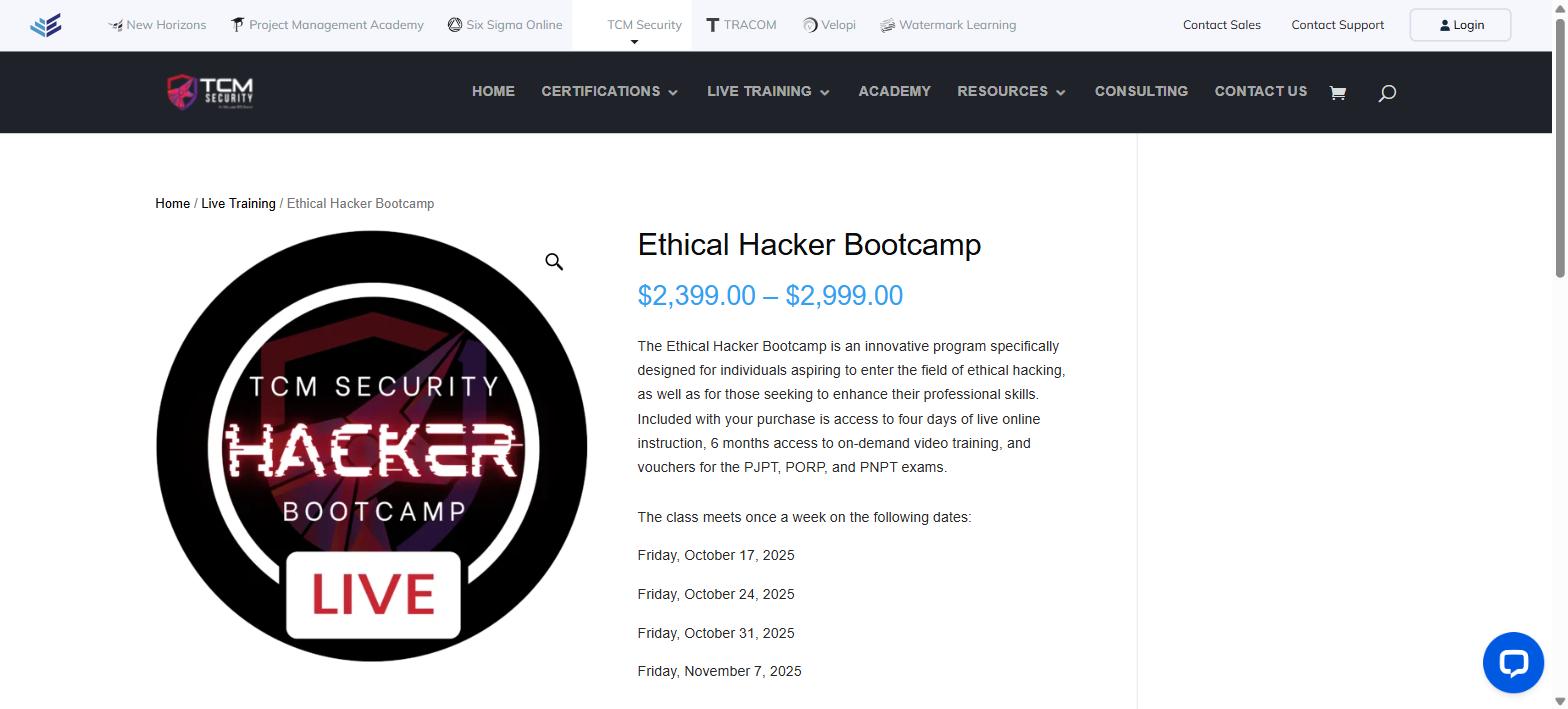
TCM Security built its reputation on practical certifications that require a real report rather than a flag, and the bootcamp is the fastest way to collect three of them. It runs live over four consecutive Fridays, 9am to 5pm Eastern, taught by Heath Adams and Alex Olsen, and costs $2,399 to $2,999 depending on the package.
What that buys is unusual. Included are exam vouchers for the Practical Junior Penetration Tester (PJPT), the Practical Network Penetration Tester (PNPT) and the Practical OSINT Research Professional (PORP), one attempt each with twelve months of access, plus post training lab time, six months of on demand video and a cohort Discord. Most bootcamps in this price bracket include one voucher, if any. The PNPT alone is the exam that ends with a fifteen minute live debrief in front of a senior tester, which is the closest any credential gets to the client call at the end of an engagement.
Prerequisites are minimal: a machine that can run virtual machines, 8GB of RAM and a stable connection. There are no published placement figures, which is honest for a four day program that is not pretending to be a career service. Two notes for buyers. The bootcamp lives on the certifications subdomain rather than the main TCM site, and enterprise enquiries route through Educate360, the training group TCM now sits under, though the teaching is still TCM’s own people.
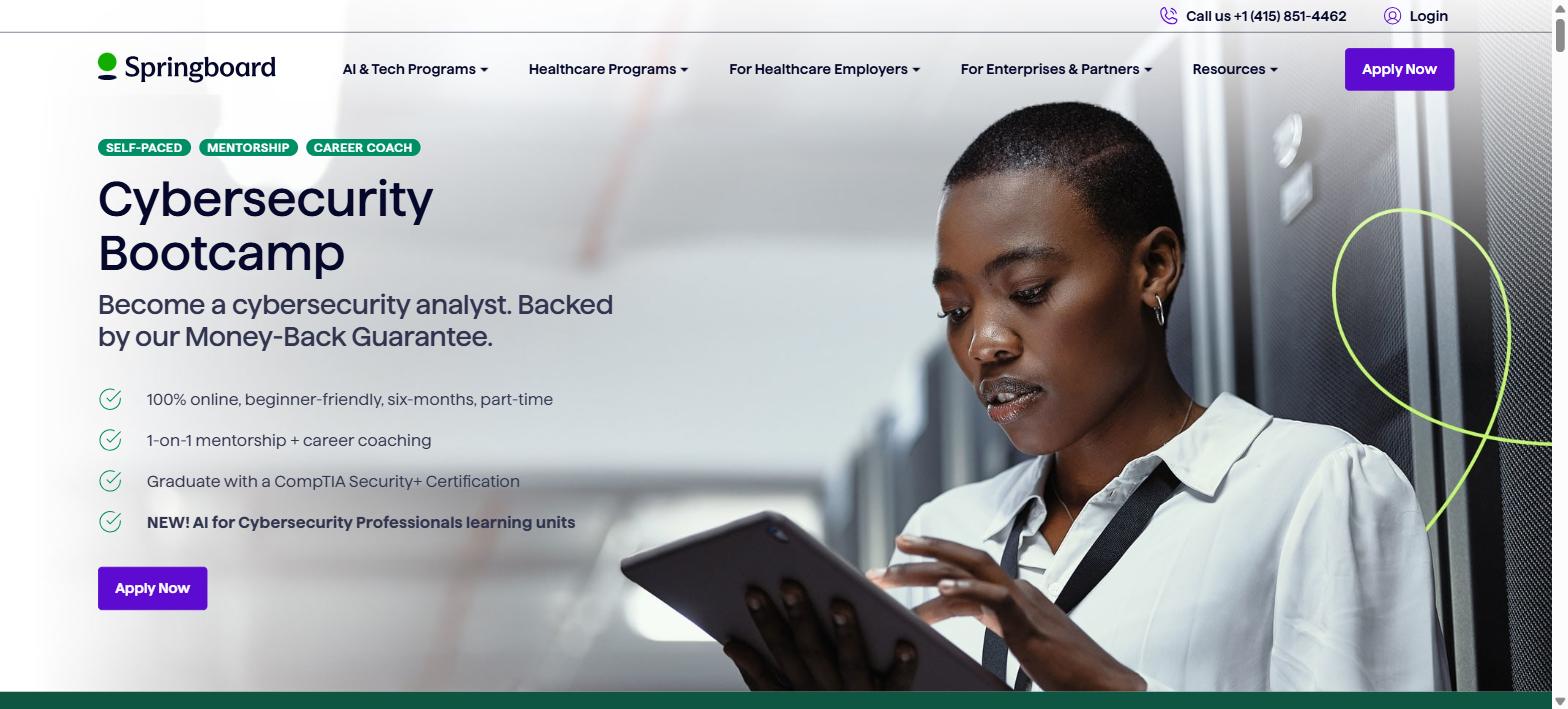
Springboard runs six months of self paced curriculum wrapped in weekly one to one mentorship from a working practitioner, at 10 to 20 hours a week. Tuition is $10,900 upfront, or about $11,900 paid monthly at $1,983, with a Climb Credit loan and deferred tuition through Ascent Funding available. A CompTIA Security+ voucher is included.
It earns its position on a single point of integrity. Springboard states that 85.6 percent of job qualified individuals who reported an offer received it within twelve months, and it attaches a date to that claim: as of December 2023. Every other placement number in this market floats free of any date at all. The figure is now well over two years old and you should read it as such, but a dated number you can interrogate beats an undated one you cannot.
There is a money back job guarantee, and the eligibility conditions matter more than the headline. You need a bachelor’s degree, or a year of relevant work experience, or a year of military service, you have to pass the Security+ exam, and you have to hit documented job search activity targets. Read those terms before you treat the guarantee as a safety net. Admission requires being 18 or over, strong English and passing a soft skills evaluation, with no prior cyber experience needed, and enrollment is rolling rather than cohort based.
5. Evolve Security Academy — A Two Week Internship Doing Real Assessments For Real Non-Profits
Evolve is the most expensive program here at $14,950, or $14,450 paid upfront, and the thing it sells that nobody else does is client work. The course ends with a two week hands-on internship performing genuine security assessments for non-profit organisations. That is not a simulated capstone against a lab environment, it is findings delivered to an organisation that will act on them, and it is the single most useful line a career changer can put on a first CV.
The format is 20 weeks, remote and live online, Monday to Friday from 7pm to 9pm Central, which is built for people keeping a day job. Twelve core modules cover threat hunting, incident response and the use of AI tooling in security work. A Security+ voucher is included, and students also sit the Evolve Security Certified Professional, a 24 hour hands-on lab exam that is meaningfully harder than anything else bundled into a career track bootcamp. No prior technical background is required. Financing runs from $10 a month through Edly, around $180 a month through Climb Credit, or two payments of $7,475.
Two caveats, stated plainly. The advertised 80 percent hiring rate for job seeking students carries no date, and there is a job offer commitment within six months of completion or a tuition refund, so read those terms carefully. Separately, Evolve’s main corporate site is now a penetration testing services business with the Academy relegated to a footer link. The Academy is live and enrolling, with an October 2026 cohort already marked as filled and applications still open behind it, but it is no longer the company’s centre of gravity.
Fullstack runs one of the few remaining fully synchronous, cohort based cybersecurity bootcamps, which matters more than it sounds. Self paced programs lose people to life; a class that meets at a fixed time with an instructor and a cohort does not. The full time track is 13 weeks, Monday to Friday, 10am to 6pm Eastern. The part time track is 18 weeks, Monday, Wednesday and Thursday evenings from 7:30pm to 10:30pm Eastern.
Tuition is $8,995 paid upfront, which saves $3,000 against the $9,995 installment plan, and the installment plan is genuinely 0 percent interest with a $500 refundable deposit. The curriculum preps for CompTIA Security+ and eligible students get a free voucher. No prior tech experience is required.
Be careful with the marketing. Fullstack names hiring employers including Accenture, TEKSystems, SAIC and Capital One, and quotes role salary ranges from $57,000 to more than $200,000. Those are the salary bands for the job titles, not what graduates earned, and Fullstack publishes no placement percentage at all. Judge it on the teaching format and the price, which are both strong, rather than on numbers that are not really outcomes.
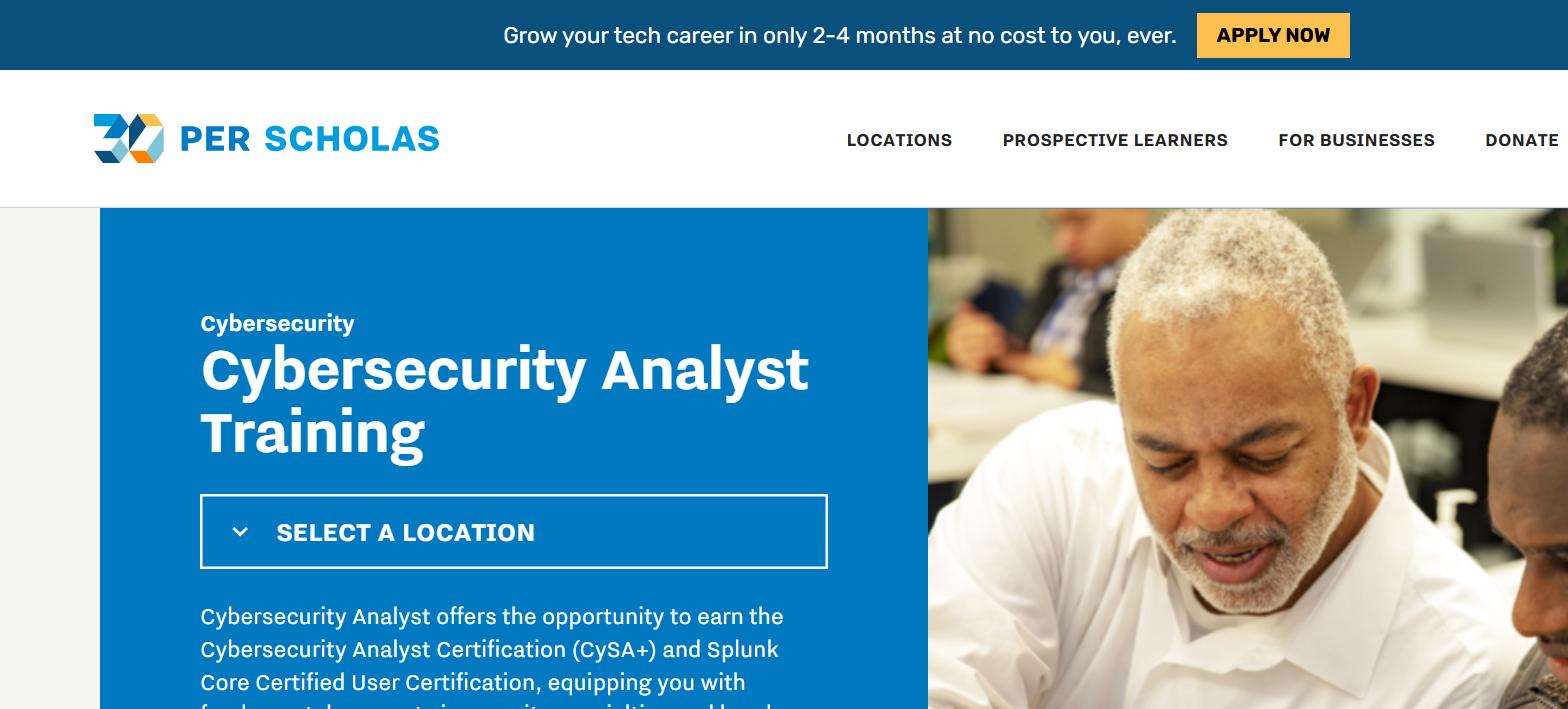
Per Scholas is a non-profit and the training costs nothing, funded by foundations, corporations and government. Fifteen weeks, full time attendance required, available in person or remote. What makes it interesting is the certification choice: rather than Security+, students sit CompTIA CySA+ and the Splunk Core Certified User exam. CySA+ is an analyst level credential that assumes Security+ knowledge, so graduates come out aimed at SOC analyst roles rather than at the bottom of the pile with the same certificate as everyone else.
The honesty on their own page is worth the price of admission on its own. Per Scholas publishes an average starting salary of $47,000, which is modest and they do not dress it up, and they warn directly that remote entry level roles are difficult to obtain without two or more years of experience and that first roles are typically on site. No other provider here volunteers that.
Two hard limits. Admission is competitive and means tested, requiring you to be 18 or over with a high school diploma, US work authorisation, full time availability and income within their guidelines. And the cybersecurity course specifically is currently offered in only two markets, Greater Boston and Newark, even though Per Scholas runs campuses in many more cities. Check availability before you build a plan around it.
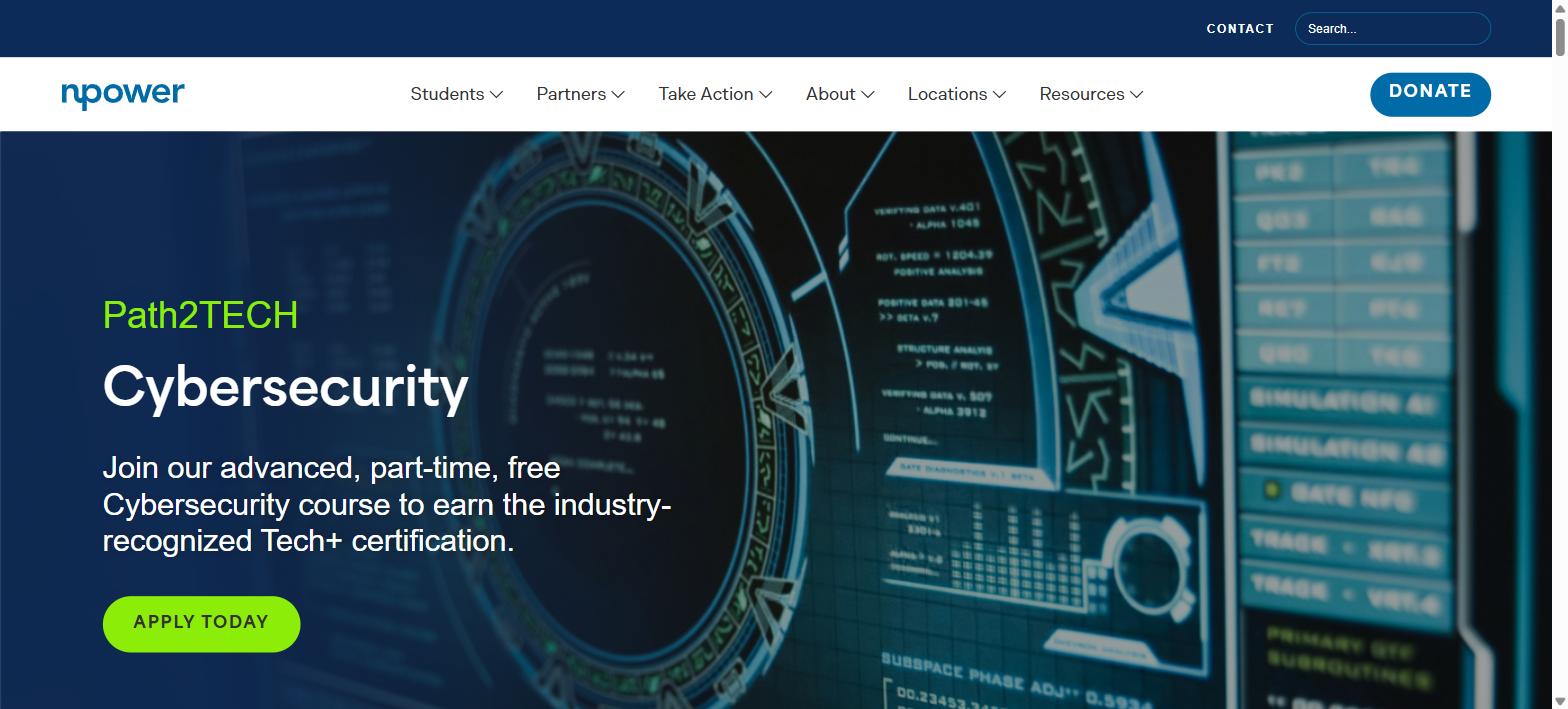
NPower’s cybersecurity track is free, runs five months part time online, and carries two real CompTIA certifications plus a Cybersecurity Support Technician credential. Class hours are structured around a working schedule, Monday to Wednesday mornings Eastern, with equivalent slots in Central and Pacific time. Students sit CompTIA Security+ and CompTIA Linux+, and the Linux+ inclusion is unusual and genuinely useful, because a surprising number of entry level candidates fail technical screens on exactly that ground.
Read the prerequisites before you get attached, because this is not a beginner program despite being free. NPower requires one to two years of technology experience or alumni status in good standing, and prefers applicants who already hold CompTIA Tech+, A+, Network+ or the Google IT Professional certificate. You also need to be 18 or over with a high school diploma and US work authorisation, and to pass a background check and drug test for job placement. Veterans need an honorable discharge or active Guard or Reserve status.
Organisation wide outcomes, which are not cybersecurity specific and carry no date, include an 80 percent graduation rate, a 220 percent average salary increase and 71 percent of graduates securing jobs or continuing education. Locations span fourteen metros including NYC, Newark, Baltimore, Detroit, Dallas-Fort Worth, San Antonio, Los Angeles and the Bay Area, and a separate SkillBridge track serves active duty military inside their transition window.
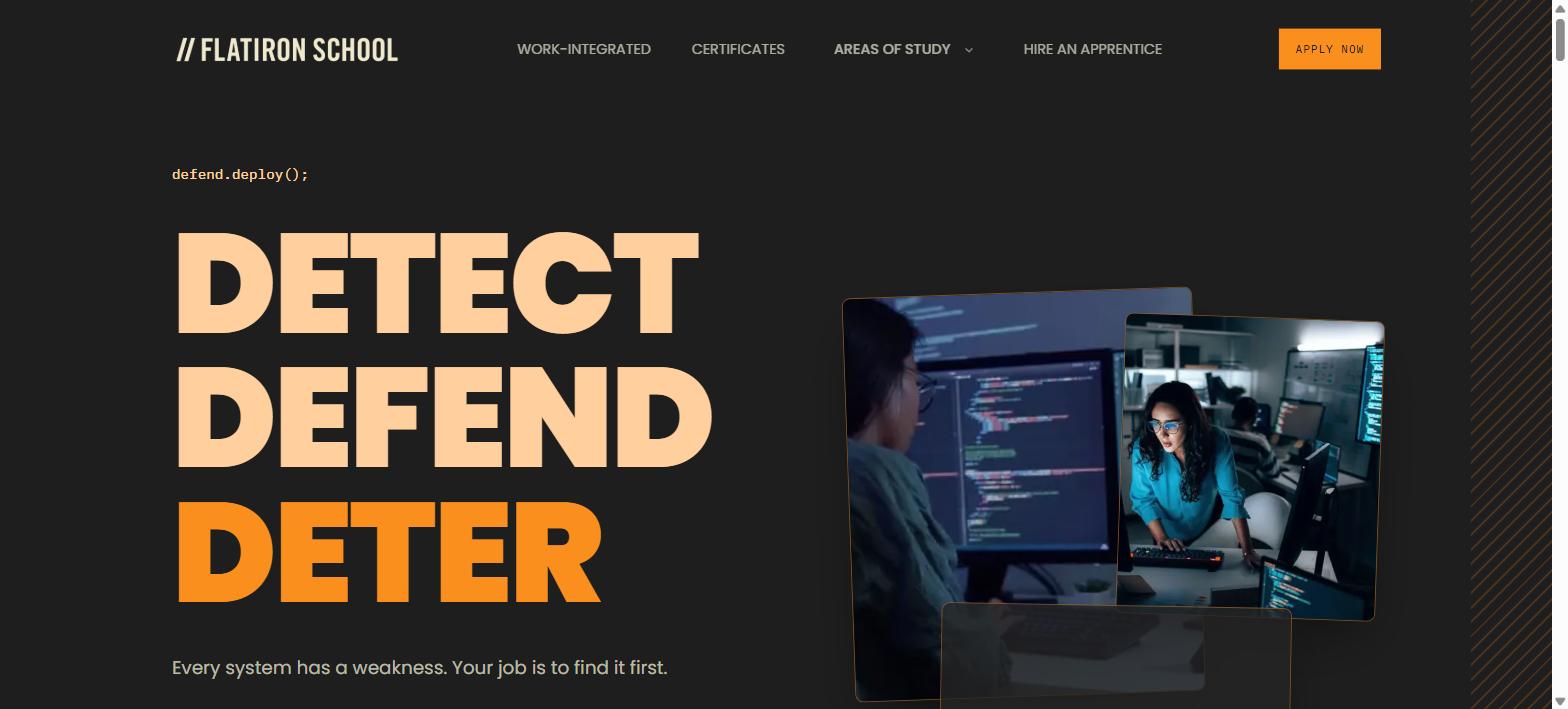
Flatiron did not kill cybersecurity, it replaced it, and almost every roundup still describes the old product. The fifteen week, seventeen thousand dollar Cybersecurity Engineering bootcamp is gone and its URL returns a 404. What exists now are two work integrated programs where a paid apprenticeship covers the tuition.
The Cyber Engineering Immersive runs 19 months, starting at 40 hours a week of study and moving to 20 hours of education alongside 20 hours of paid apprenticeship, with a $10,400 scholarship and an effective cost of zero once apprenticeship earnings are counted. The Accelerated Cyber Engineering runs 16 months at 20 and 20 throughout, carries a $3,000 scholarship, and Flatiron states that learners earn $14,100 more than the tuition costs. The Immersive requires no IT experience; the Accelerated assumes you already have a foundation.
Two things to weigh. Sixteen to nineteen months is not a bootcamp by any normal definition, and if you need to be employed inside six months this is the wrong shape entirely. And Flatiron awards only its own professional certificate, with no Security+ or other named industry credential, while publishing no placement rate at all, which is notable for the provider that drew the most scrutiny over outcomes reporting in the first place. What it does offer that nobody else does is real paid work experience running the whole way through the program, which is the thing employers actually screen for.
Institute of Data runs twelve weeks full time or 24 weeks part time, each available remote or in person, at $12,500 with a $300 deposit, with a discount currently advertised for paying upfront. The part time schedule is two evening classes a week plus a Saturday class every other week. Graduates receive a certificate of completion from a university partner alongside the school’s own credential, and the university association is the main thing being sold.
Two things need saying clearly. The credential awarded is the Certified Cyber Security Professional, abbreviated CCSP, and it is issued by Institute of Data itself. It is not the ISC2 CCSP, the Certified Cloud Security Professional, which is a well known and much harder credential with an experience requirement. Anyone reading your CV in a hiring pipeline may assume the wrong one, and that is a conversation you do not want to be having. Beyond that certificate there is no CompTIA or other third party certification included.
The advertised outcome is a 93 percent job outcome success rate within 180 days of graduation for active job seekers. That is the strongest claim in this market, it is undated, it is unsourced, and it is qualified by what counts as an active job seeker. Treat it accordingly. Entry requirements are the highest here, an associate degree or equivalent post secondary qualification completed in English, plus assigned pre-work, which does at least mean the cohort around you will be capable.
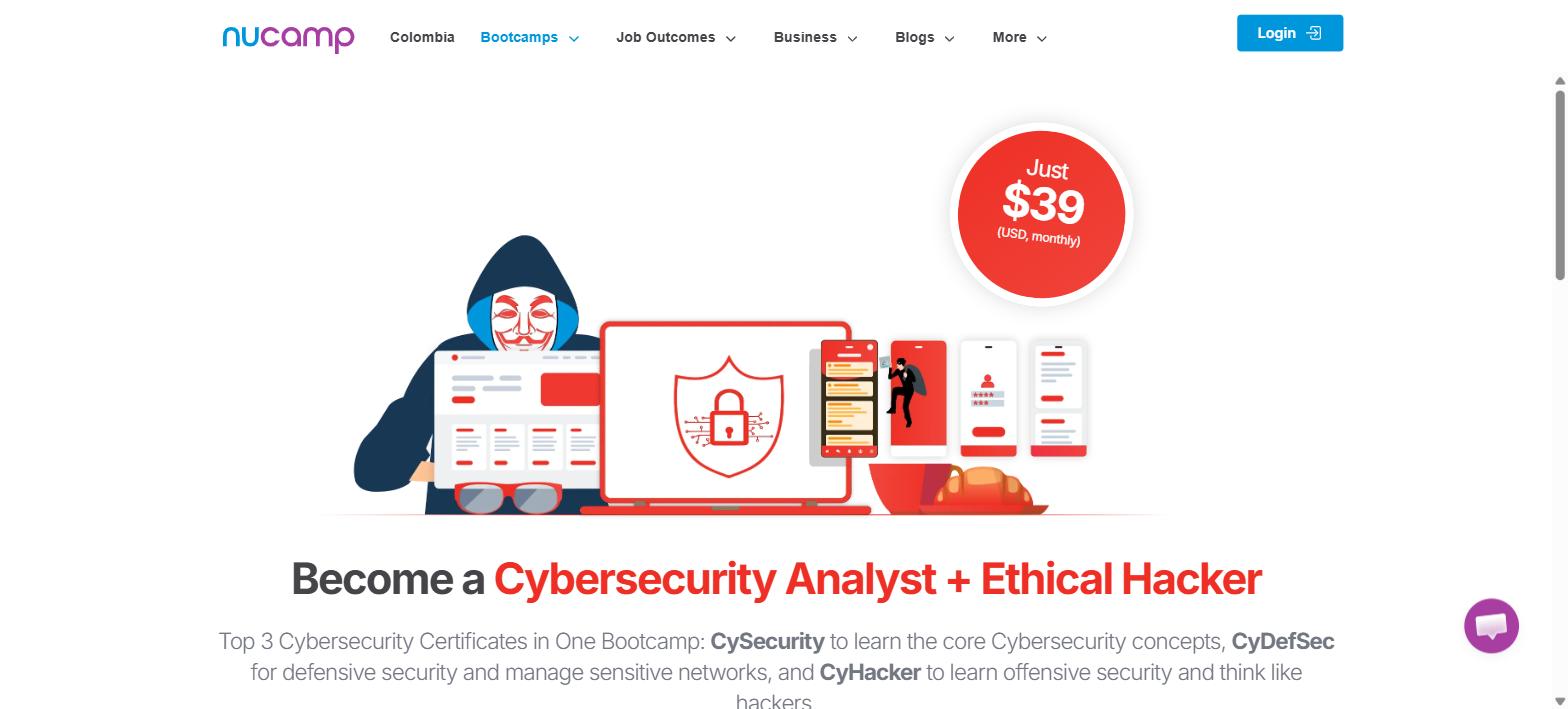
Nucamp is the cheapest structured cohort program in this comparison by a wide margin. The Cybersecurity Fundamentals bootcamp, marketed as Security, Ethical Hacking and Network Defense, runs 15 weeks for under $2,500 with monthly payment options from $39, using Nucamp’s house model of weekday self study with live weekend workshops. New cohorts start every five weeks, so you are rarely waiting long to begin.
For someone testing whether they actually enjoy this work before committing five figures, that combination is hard to beat. The financial risk of finding out you dislike incident response is a couple of thousand dollars rather than twelve, and the weekend format survives contact with a full time job.
The trade-off is the certification. Nucamp awards three of its own certificates, CySecurity, CyHacker and CyDefSec, and does not include CompTIA Security+ or any other external industry credential. Outside Nucamp’s own ecosystem those certificates carry no recognition, and Security+ is the single credential most commonly written into entry level job requirements. Budget separately for a Security+ voucher and exam, plan on self studying for it, and Nucamp becomes a sensible first step rather than a dead end. No placement figures are published.
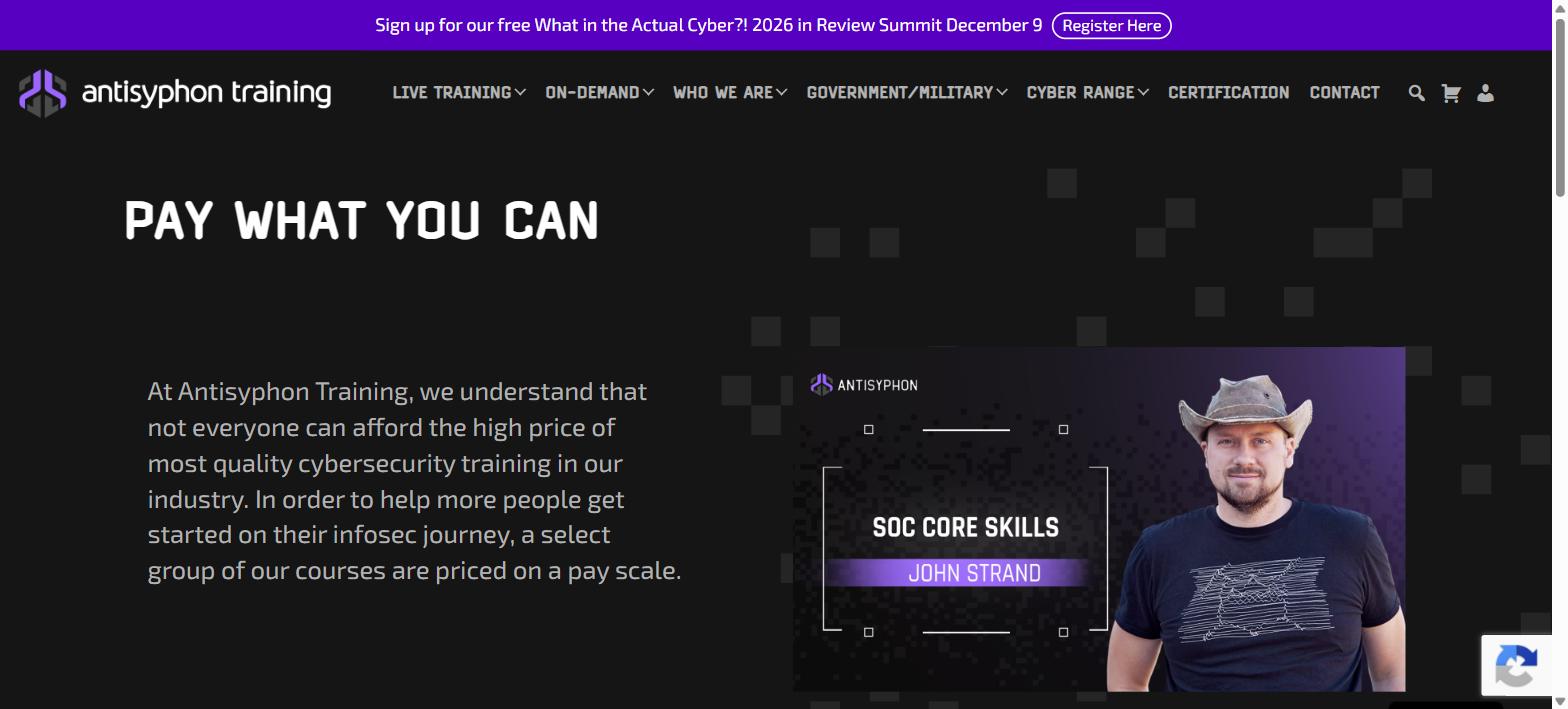
12. Antisyphon Training — Pay What You Can, Starting At Zero, With No Catch Worth Mentioning
Antisyphon is not a career change bootcamp and it would be dishonest to present it as one. What it is is the cheapest legitimate way to get hands on a keyboard with a working instructor, and for a lot of people that is the thing standing between them and the rest of this list. The pay what you can model starts at $0.00, and the stated intent is that money should not decide who gets quality security education.
The tiers are published and simple. Below $295 you get a certificate of participation and six months of access to the class recordings. At $295 or more you add six months of Antisyphon Cyber Range access. At $575 or more that becomes twelve months. Everything is taught follow along at the keyboard, live or on demand, and the school issues its own ACE-T credential.
The catalogue is built from multi day intensives rather than a single structured career program: Information Security Core Skills in the Age of AI, SOC Core Skills, an OSINT crash course, a CISSP mentorship program and a Job Hunt Like a Hacker edition aimed squarely at the current market. There are no placement figures because there is no career services function to report them. Use it to find out whether you like the work, to fill a specific gap before an interview, or to keep learning between larger commitments.
How To Choose A Cybersecurity Bootcamp
Is The Bootcamp Still Operating?
Start here, because this sector is consolidating hard. HackerUSA, which operated ThriveDX and IronCircle and powered a long list of university branded cybersecurity bootcamps, executed a general assignment for the benefit of creditors on 2 June 2026. Its own domain now serves nothing but a wind down notice, and students with remaining access are told they may be eligible for review for placement with another provider, which is not the same as a guarantee. Code Fellows ceased operations after eleven years and its homepage is a closure notice. Level Effect still trades but its Cyber Defense Analyst bootcamp is gone, replaced by a self paced subscription platform, with the school’s own About page describing the bootcamp in the past tense. Before you pay anyone, load their program page yourself and look for a cohort date you can actually enroll in. If a roundup is still selling you a provider whose domain redirects to a creditors notice, stop reading the roundup.
Does It Include A Certification Anyone Outside The School Recognises?
This splits the field cleanly and it is the most predictive single question. Programs that include real third party credentials: SANS with three GIAC certifications, TCM with three practical exam vouchers, Per Scholas with CySA+ and Splunk, NPower with Security+ and Linux+, and Evolve, Springboard and Fullstack with Security+. Programs awarding only their own certificate: Nucamp, Institute of Data and Flatiron. A house certificate is not worthless, because the skills behind it are real, but no applicant tracking system has been configured to search for it. If your chosen program is in the second group, budget for an external certification separately and treat it as part of the true cost.
Is The Placement Figure Dated?
Only four providers on this list publish a placement percentage at all, and exactly one attaches a date to it. Springboard says 85.6 percent as of December 2023. SANS says 87 percent, Evolve says 80 percent and Institute of Data says 93 percent, and none of those three carries a date or a stated methodology. An undated outcome figure could have been measured in a completely different hiring market, and the market for entry level security roles in 2026 is not the market of 2021. Ask any provider directly for the date, the cohort size and the definition of a placement before the number changes your decision. A provider that will not answer has told you the answer.
Are You Changing Careers Or Sharpening A Skill?
These are different purchases and the same list serves both badly if you do not know which one you are making. A career changer with no technical background wants length, structure, a recognised certification and a route to a first job, which points to SANS if you can win a place, then Per Scholas or NPower if you qualify, then Springboard, Fullstack or Evolve if you are paying. Someone already working in IT or security wants density instead, and should be looking at White Knight Labs, TCM Security or Antisyphon, where four days and a serious exam beat twenty weeks of foundations they already have. Buying the wrong shape is how people spend $12,000 relearning what they knew. It is also worth mapping the credential to the work you want, which is easier to do alongside a look at the firms that actually hire for this work.
What Is The Real Total Cost?
Tuition is only part of it. Add exam vouchers the program does not include, retake fees, lab extensions, and the income you give up if the program is full time. Then weigh that against the free options, because the calculation has genuinely changed: SANS Cyber Academy ships three GIAC certifications at zero cost, Per Scholas and NPower are free, and Flatiron’s apprenticeship model is designed to end with you having been paid. A $12,500 program now has to justify itself against those, and the honest justifications are schedule flexibility, guaranteed admission without a competitive scholarship process, and mentorship you would not otherwise get. If a provider cannot articulate why it costs what it costs against a free alternative, that is a data point. For a broader view of who else delivers security education, see our roundup of cybersecurity training and certification providers.
Frequently Asked Questions
How much does a cybersecurity bootcamp cost?
Cost varies widely by funding model. On this list, SANS Cyber Academy, Per Scholas and NPower Path2TECH are free to accepted students, Antisyphon Training uses a pay what you can model, and Flatiron School offsets tuition through a paid apprenticeship. Paid programs such as Springboard, Evolve Security Academy and Fullstack Academy charge tuition upfront or in installments, with some offering financing partners, so check the total cost of each payment option before enrolling.
Are cybersecurity bootcamps worth it?
A bootcamp can be worth it if it gives you hands-on skills and a recognised credential, and if its format fits your schedule. Look at which certifications are included, for example several programs here include a CompTIA Security+ voucher, while others issue only their own certificates. Be cautious with outcome claims: the entries note that some published placement figures are undated or not specific to cybersecurity, and entry level roles can still be hard to land without experience.
Do cybersecurity bootcamps offer job placement?
Some do, with conditions. Springboard offers a money back job guarantee subject to conditions, and Evolve Security Academy offers a job offer commitment within six months of completion or a tuition refund. Others, including TCM Security, Nucamp and Fullstack Academy, publish no placement figures, and Antisyphon Training has no career services function, so read the terms of any guarantee carefully.
Conclusion
The best cybersecurity bootcamp in 2026 depends almost entirely on where you are starting. If you are new, apply to SANS Cyber Academy first and to Per Scholas or NPower alongside it, because three GIAC certifications or a CySA+ at no cost beats anything you can buy. If you need guaranteed admission and a flexible schedule, Springboard, Fullstack and Evolve are all live, all credible, and all include a real certification.
If you already work in technology, the calculation inverts. A four day intensive that ends in a 48 hour practical exam and a written report will do more for your next role than twenty weeks of foundations. White Knight Labs sits at the top of that group for a specific reason: $1,200 buys four days of live instruction from operators who run real engagements, plus the certification exam, and the wider catalogue covers Azure, GCP, Active Directory, CI/CD pipelines and offensive development at $700 a certification. You can read more about the firm on its ReVerb company profile, and the broader market context sits in our list of leading cybersecurity companies.
Whichever way you go, verify the cohort dates and the price on the provider’s own site before you pay. Two well known names on this market’s shortlist disappeared during 2026, and the published guides have not caught up.