Best Reputation Monitoring Tools For CEOs & Public Figures
Daria Pohrebniak
Marketing Director - Reverb
04.14.2026
This list compares ten reputation monitoring tools that track news, social media, reviews and search mentions, and is written for CEOs, founders, public figures and the teams that protect their name online.
A reputation problem rarely starts with a press crisis. More often, it begins with a quiet review trend, a search result that rises without warning, or a social mention that gets repeated faster than your team can respond. That is why the best reputation monitoring tools for CEOs are not just dashboards. They are early-warning systems for search, reviews, media, and public sentiment.
No two public figures need the same setup. One team may be worried about search results and personal data showing up in the wrong places, while another just wants to know the moment a story starts picking up speed or sentiment turns. The useful setup is the one that catches those changes early and keeps the signal clear enough to act on.
Reputation Monitoring Tools At A Glance
Tool
What it monitors
Best for
1. NetReputation
Online mentions, backed by hands-on reputation help
Executives who want monitoring plus support when issues arise
2. BrandYourself
How a person appears online, with a risk scan and reputation score
Individuals improving their personal search presence
3. Brand24
Social posts, forums, review sites, podcasts and news, with sentiment
Leaders with mentions spread across many channels
4. Mention
Web, social and media mentions in one place
Leaders who want simple, central monitoring
5. Determ
Owned and earned media coverage
Executives whose visibility depends on press coverage
6. Awario
Social, news, blogs, videos, forums and reviews
Lighter, tactical monitoring without a large suite
7. YouScan
Text and visual mentions, including logos in images
Public figures whose brand appears in images
8. Muck Rack
Media coverage and journalist intelligence
PR-led reputation work with the press
9. ReviewTrackers
Ratings and reviews across review sites
Leaders whose credibility is tied to customer reviews
10. BrandMentions
Web, social, news and forums with AI-powered context
Broad monitoring without a bloated tool
How To Choose The Top Reputation Monitoring Tools For CEOs
NetReputation makes sense here because it is not just a listening tool. It tracks what is being said, where it is showing up, and then backs that up with hands-on help when something needs attention. For a CEO or public figure, that matters. A problem can move from a search result to a wider conversation very quickly, and the company’s work around CEO reputation management is built for that kind of pressure.
The work usually starts with a close look at what already exists online, then shifts into monitoring, protective support, and content work across search and social channels. That is useful when the risk is spread out — an old article, a copied personal detail, or a forum thread can all create damage in different ways. NetReputation also says it works with Fortune 500 companies, which suggests it is used to operating where scrutiny is high and mistakes are costly.
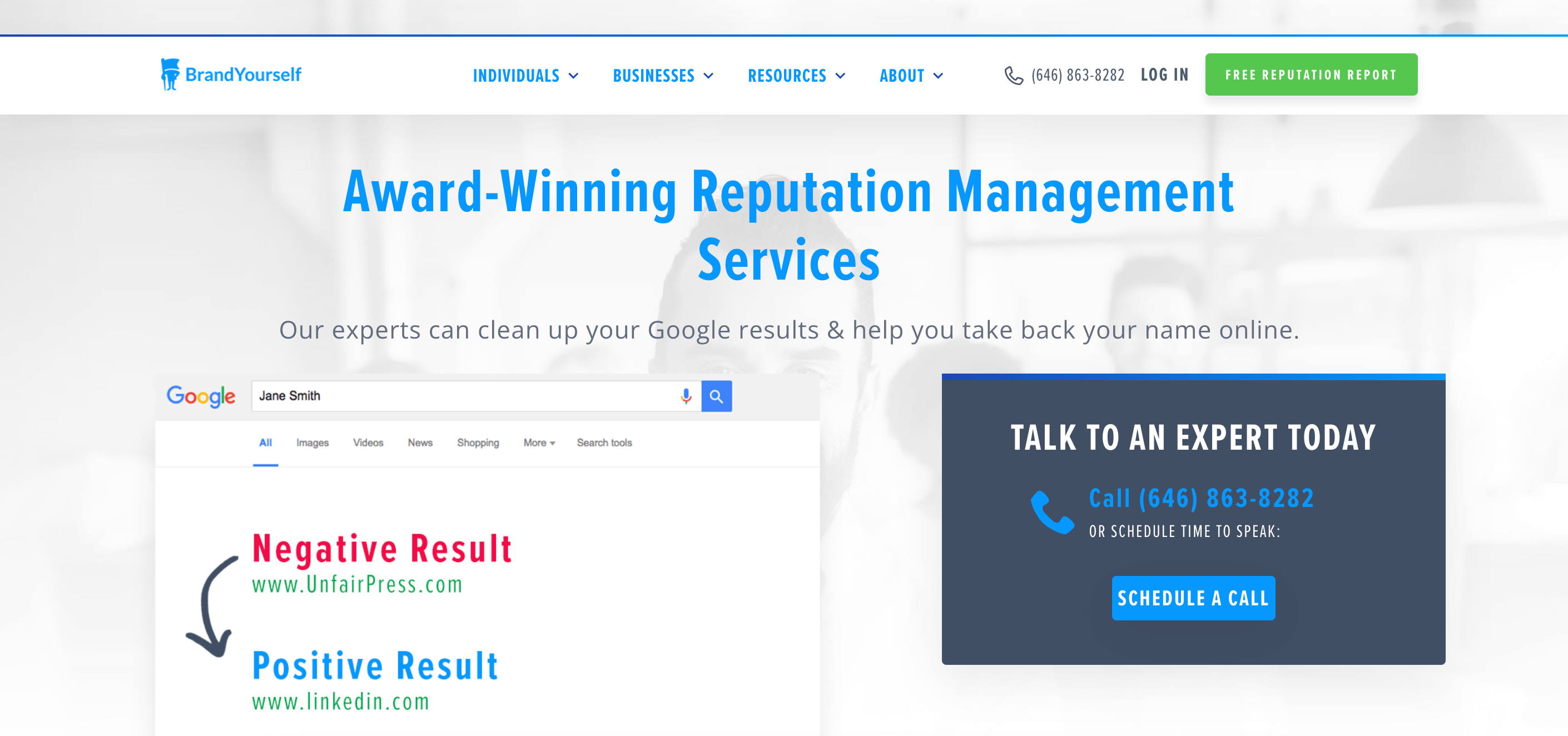
BrandYourself is one of the cleaner fits for individuals because it was built to improve, monitor, and protect how a person appears online. The company offers a free risk scan, a reputation score, and a personal branding action plan, then layers in managed services for negative results, business reviews, and employee branding when needed. For someone focused on personal brand monitoring, that blend of software and optional service is hard to ignore.
What stands out is the structure. You can use it yourself, hand work off to their specialists, or do both depending on how visible your role is and how much time you have. BrandYourself also says nearly a million people use the platform, which suggests it has moved well beyond niche use without becoming so broad that executives disappear inside a giant enterprise product.
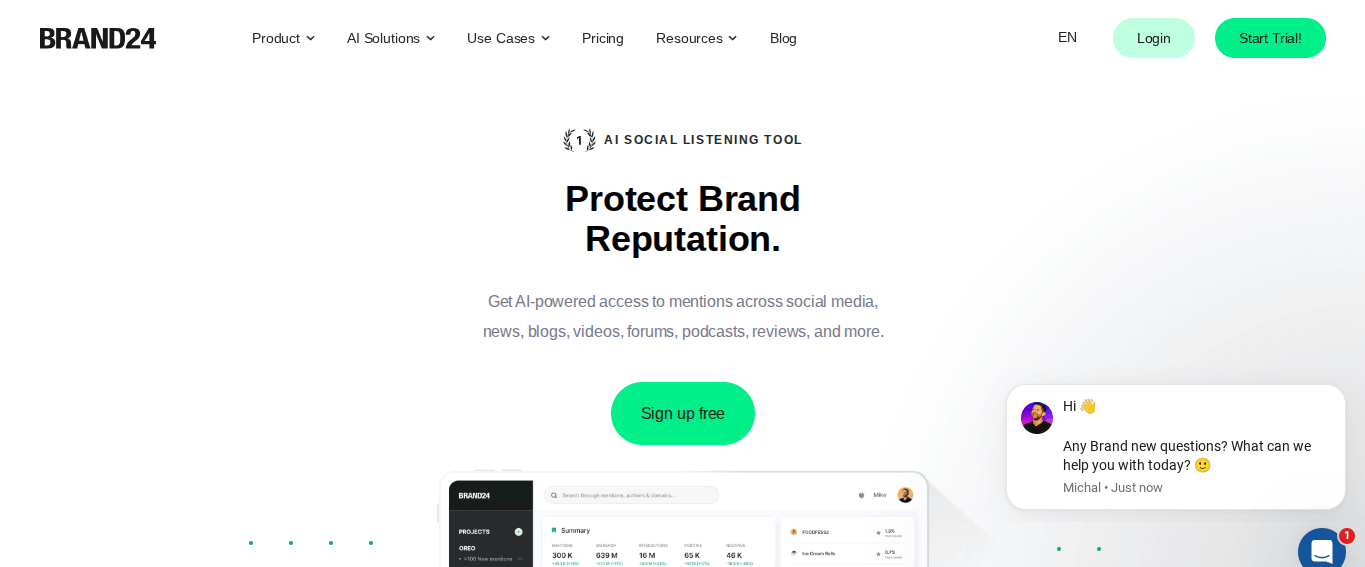
Brand24 is handy when chatter starts popping up in too many places at once. Instead of checking social posts, forum threads, review sites, podcasts, and news mentions one by one, you get it in one stream with sentiment layered on top. That makes it useful for brand reputation monitoring, especially when the problem is not one bad article but the overall mood around your name starting to shift.
The platform is also strong on the PR side. Its materials focus on keeping teams close to interviews, statements, and posts that can shape how the public reads a name or brand, and its examples show how companies use that data to judge reaction in real conditions. For a CEO, that means less waiting around for a neat report after the fact and more chances to see a shift while there is still time to respond.
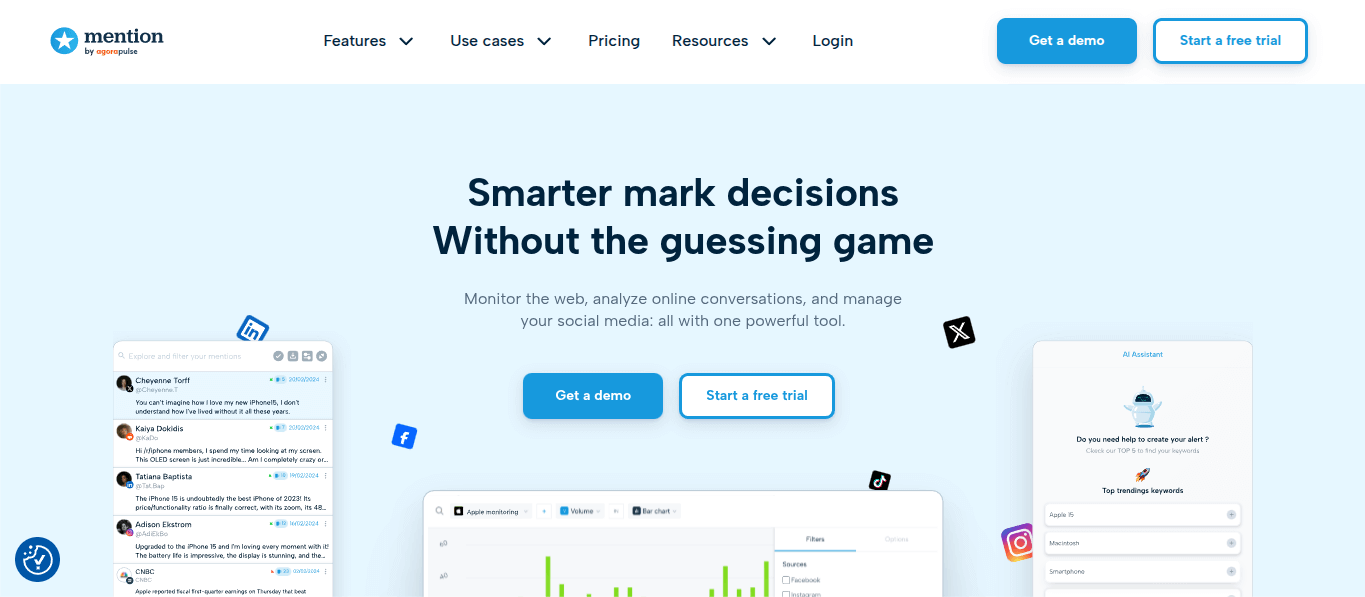
Mention is a practical choice for leaders who need one place to watch web chatter, social discussion, and media signals without turning the tool into a full PR operating system. Its official material says it analyzes mentions from over 1 billion sources in real time and gives visibility into any topic, brand, or leading figure. That is why it belongs in a shortlist of top reputation monitoring tools for CEOs.
The tool is also shaped around real workflows: alerts, sentiment, competitive tracking, crisis management, and PR impact measurement all sit inside the same environment. Customer quotes from Spendesk, StrataScratch, and Clerky point to trust, speed, and time savings, which help back up the product story with actual use. For executives who want a live signal without a hard enterprise rollout, Mention lands in a useful middle ground.
Determ leans more toward media intelligence than classic social listening, which makes it especially useful when executive visibility depends on press coverage, commentary, and narrative shifts. The platform says it tracks owned and earned media in real time across 100+ million sources, and its alerting is built specifically to get ahead of spikes and crisis moments. For teams that treat executive reputation management as a communications discipline, that is a strong match.
The proof points are unusually concrete. Determ says 78% of users find its coverage better than similar tools, that it can improve reaction time to fake news or potential crises by 84x, and that it saves up to 20 hours a week through automation. It also says it is trusted daily by more than 5,000 users worldwide, which gives it enough scale to feel proven without tipping into the “everyone uses this already” bucket.
Awario is a lighter, more tactical option for leaders who want to track conversations across social, news, blogs, videos, forums, and reviews without buying a giant suite. Its home page positions it as a brand monitoring tool, and its alerting model is built around fast setup rather than long implementation. If you are looking for best reputation monitoring software that is relatively easy to get live, Awario is worth a close look.
Where it gets more interesting is filtering. Awario supports Boolean search, location-based monitoring, and sentiment sorting, which means a public figure can strip out irrelevant chatter and focus on the markets or narratives that matter most. It is not the heaviest platform in the group, but for focused monitoring and quicker signal cleanup, that simplicity can be an advantage.
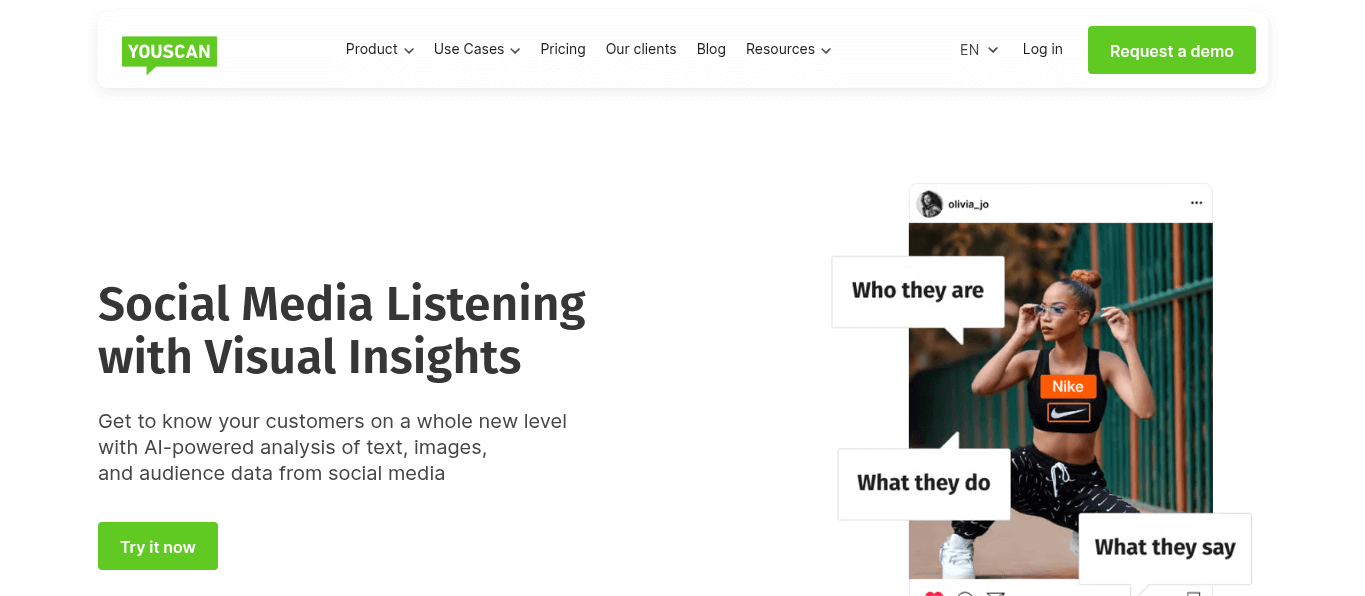
YouScan brings something most reputation tools still handle poorly: visual mentions. The platform combines text monitoring with image recognition, so it can catch logos and brand appearances in social posts even when nobody tags the company by name. That alone makes it one of the more distinctive entries among the best reputation monitoring software options on this list.
The company says it helps brands manage reputation, track sentiment in real time, and detect trends early, while its client-facing materials highlight names like Publicis Groupe, Vodafone, Danone, and The Earthshot Prize. YouScan also publishes unusually detailed performance claims, including daily data volume and analysis accuracy, which gives buyers more to assess than generic “AI-powered” language. For public figures with heavy image circulation, that extra layer is a real differentiator.
Muck Rack is the most media-facing pick in the lineup, and that is exactly why it belongs here. Its platform centers on media monitoring, journalist intelligence, and reporting, while newer features like Generative Pulse track brand visibility across AI platforms and connect those insights to broader PR work. For CEOs whose risk profile lives in articles, interviews, and analyst commentary, this is one of the best reputation monitoring services to consider.
Its alerts are also built for real-time response. Muck Rack says one setup can trigger alerts and auto-populate reporting, and testimonials from reporters and freelancers reinforce that the platform updates quickly and keeps published work visible without manual tracking. It is less about review hygiene and more about public narrative control, which is exactly what some executives need most.
ReviewTrackers is more specialized than several entries here, but that is a strength when public credibility is tied to ratings, reviews, and local or regional sentiment. The platform is built around review visibility, reputation scoring, customer engagement, and competitive performance analysis. For founders, healthcare leaders, or visible operators whose name is tied to customer-facing locations or services, it offers some of the best reputation monitoring services in that narrower lane.
The product also has a clear “what now?” angle. Its homepage and case studies focus on crisis control, response workflows, custom alerts, and reputation growth, while testimonials from users such as American Family Insurance point to real usability gains. It is not the right choice for pure media intelligence, but it is one of the strongest tools here when reputation risk lives in reviews and customer feedback at scale.
BrandMentions rounds out the list as a broad monitoring tool with enough depth to stay useful without feeling bloated. The company says it monitors the entire web, social, news, and forums, pairs that with AI-powered context and sentiment analysis, and is trusted by more than 12,400 brands. That gives it a good position for CEOs who want wide coverage but still need the tool to stay readable.
What makes it stand out is how directly it pushes real-time monitoring. Notifications, sentiment, and competitor tracking are front and center, and an official testimonial from Stone Temple says it found more relevant mentions than competing tools they had tested. It feels especially useful for leaders who care about search-adjacent visibility, reputation drift, and broad web discussion in one view.
What Executive Reputation Monitoring Covers
Executive reputation monitoring tracks what is said about a specific person, not only about their company. A good setup gives early warning when a story, post or review starts to spread, so the team can respond before it shapes search results.
News and media coverage: articles, interviews, press mentions and commentary that name the executive.
Social media and forums: posts, threads and comments on networks, Reddit-style forums and video platforms.
Search results: what appears on the first page of Google for the person’s name, including images and autocomplete.
Reviews and employer ratings: customer reviews and employee review sites that reference leadership.
Sentiment and spikes: alerts when the volume or tone of mentions changes quickly.
Impersonation and privacy risks: fake profiles, leaked personal details and lookalike accounts.
What is the best tool to monitor a CEO’s online reputation?
The best tool depends on where the risk sits. Media-heavy leaders often benefit from Muck Rack or Determ, those with mentions across many channels from Brand24, Mention or BrandMentions, and individuals focused on search results from BrandYourself or NetReputation. Many teams combine a monitoring tool with a reputation management partner.
How do executives track mentions of their name online?
Most set up a monitoring tool with alerts for their name, common misspellings and related keywords, then review a daily or weekly digest. Teams also check search results for the name regularly and watch review and employer rating sites. A PR or communications lead usually owns the response plan.
What is the difference between reputation monitoring and social listening?
Reputation monitoring focuses on finding and responding to mentions that could affect how a person or brand is seen, including news, search results and reviews. Social listening looks at wider conversation trends on social media to understand audience opinions, topics and sentiment. Many tools offer both, but the goals differ.
The strongest setup depends on where reputational risk actually starts for you. If it begins in search and personal visibility, a managed service or hybrid tool will usually beat pure social listening. If the first signal tends to come from journalists, forums, or market chatter, the best reputation monitoring tools for CEOs are the ones that combine alerts with enough context to tell you what matters and what can wait.
Try to buy for coverage and action, not just dashboards. Real value comes from catching a signal early, understanding whether it is growing, and knowing who on the team should move first. When a platform makes those steps clearer, it earns its place faster than any flashy analytics page ever will.
If you want to feature your reputation monitoring tool on this list, email us or submit a form in the Top Choices section. After a thorough assessment, we’ll decide whether it’s a valuable addition.