Most businesses do not miss out on Google reviews because customers had a bad experience. The drop-off usually happens earlier — the request comes too late, the link takes too many clicks, or nobody sends a reminder. That is why the best tools to get more Google reviews in 2026 matter. The right one fits into the day-to-day flow of your team instead of turning review collection into extra work.
Not every review platform solves the same problem. Some are built around local search visibility, some help service teams send requests at the right moment, and others are better for agencies managing several clients at once. The list below brings together a mix of those options, with choices that feel useful in real day-to-day work rather than flashy on paper.
Best Picks From The Top Tools To Get More Google Reviews In 2026
NetReputation makes sense when review growth is tied to a wider reputation problem, not just a missing text campaign. Its business review management service is built around monitoring, strategy, response support, and brand protection, while its Google Business Profile work focuses on visibility and profile strength in local search.
That wider scope is useful if your business is still figuring out how to get more Google reviews without creating a messy customer experience. Instead of treating every problem as “send more requests,” NetReputation frames reviews as part of a larger trust and search-presence strategy — which is often the real issue when businesses plateau.
It stands out because it blends service work with practical guidance. If you want help cleaning up weak review habits, improving profile basics, and responding more consistently, it can do more than a lighter self-serve tool.
NiceJob is built for businesses that want review collection to run quietly in the background. Its site describes a set-and-forget process that automatically requests reviews and shares them to platforms like Google and Facebook, and it claims customers use it to get four times more reviews.
That makes it a strong fit for Google review generation when the team does not want to babysit campaigns every day. NiceJob also adds AI-powered replies, with controls for tone and length, so staff can keep up with responses as volume grows — especially useful for service businesses that win work from fresh social proof.
Its biggest strength is simplicity. The product is clearly designed for owners who want more reviews, more replies, and more visible proof without turning review ops into a part-time job.
GatherUp takes a broader view of reputation and local search. On its own site, it describes itself as an all-in-one platform for local businesses and agencies, built to help them gather, manage, and market customer experience data.
That framing is why it feels more like review management software than a simple review sender. GatherUp talks about turning short post-service conversations into useful feedback, then using that feedback to improve visibility, build trust, and support agencies managing multiple brands — a better fit for teams that want ongoing programs instead of one-off requests.
The platform stands out for agencies and multi-location businesses. If you need review growth tied to local SEO, client reporting, and brand defense all at once, GatherUp has a stronger operating model than lighter tools.
Broadly is aimed squarely at local service businesses, and that focus shows up in the mechanics. Its review flow is simple: once a customer is added, Broadly can automatically send a text request first, then an email follow-up a few days later, depending on the response.
That makes it a very effective review request software for businesses that live by appointments, invoices, and fast callbacks. Broadly also layers in AI-powered responses and a unified dashboard for reviews across sites like Google and Facebook, which helps smaller teams keep response times tight without jumping between tools.
The appeal here is operational fit. If you run a service business and want reviews to happen as part of the normal customer flow, Broadly feels purpose-built for that rhythm.
Grade.us is one of the clearest agency-first options in this market. Its site says the platform is built for marketing agencies that support local businesses, with an approach centered on automation and customization rather than one fixed workflow.
That makes it especially useful as Google review software for consultants, local SEO teams, and white-label providers. Grade.us pitches review management as a way to boost visibility and credibility on search, and it gives agencies room to package the platform as part of their own service stack instead of sending clients to a generic dashboard.
It stands out because it does not try to be everything. If your work is agency-led and process-heavy, Grade.us gives you repeatability without flattening every client campaign into the same template.
Synup approaches review growth from the listings and local visibility side, which is useful when Google profile health matters as much as review count. On its main platform page, review management sits alongside listings, CRM integrations, AI responses, and automated review campaigns.
That makes it one of the stronger Google review tools for teams that need more than reminders. Synup says users can request Google reviews directly by text, email, and other channels, then manage feedback and responses from the same environment — useful if you are balancing review collection with profile cleanup, local SEO, and multi-location consistency.
It is not the lightest option here, but that is partly the point. Synup works best when review growth needs to plug into a larger local-marketing system instead of living on its own.
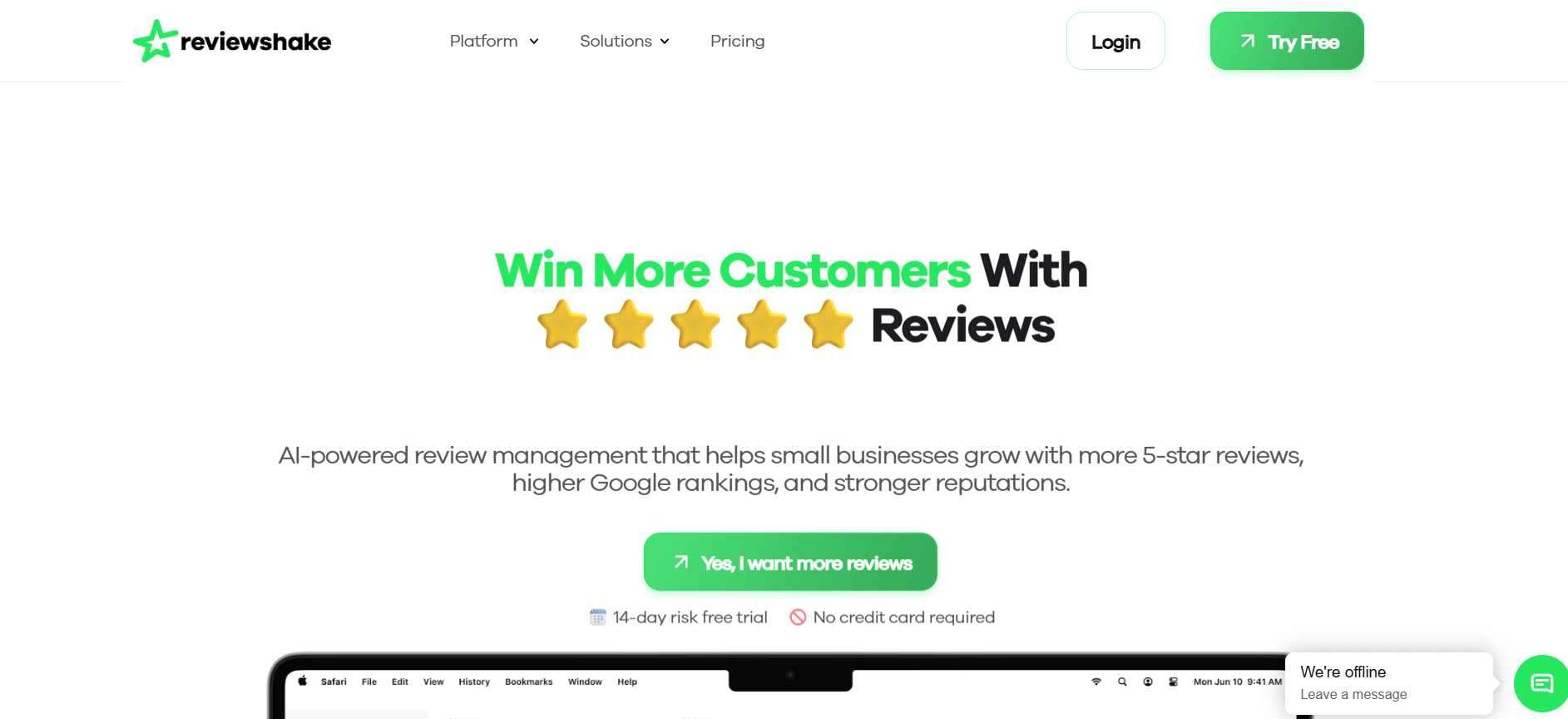
Reviewshake focuses on the small details that often decide whether customers actually leave a review. Its own material highlights automated personalized review requests, direct links to your Google review page, monitoring, management, and a broader set of tools for generating and marketing reviews.
That makes it a clean review automation tool for teams that want the request flow to stay simple. Reviewshake also says its plans are flexible and designed to avoid long contracts and complex setups — a welcome change if you want to test a process first instead of committing to a heavy rollout.
The balance here is good. You get enough structure to automate the routine pieces, but not so much complexity that the tool becomes another system your team has to manage.
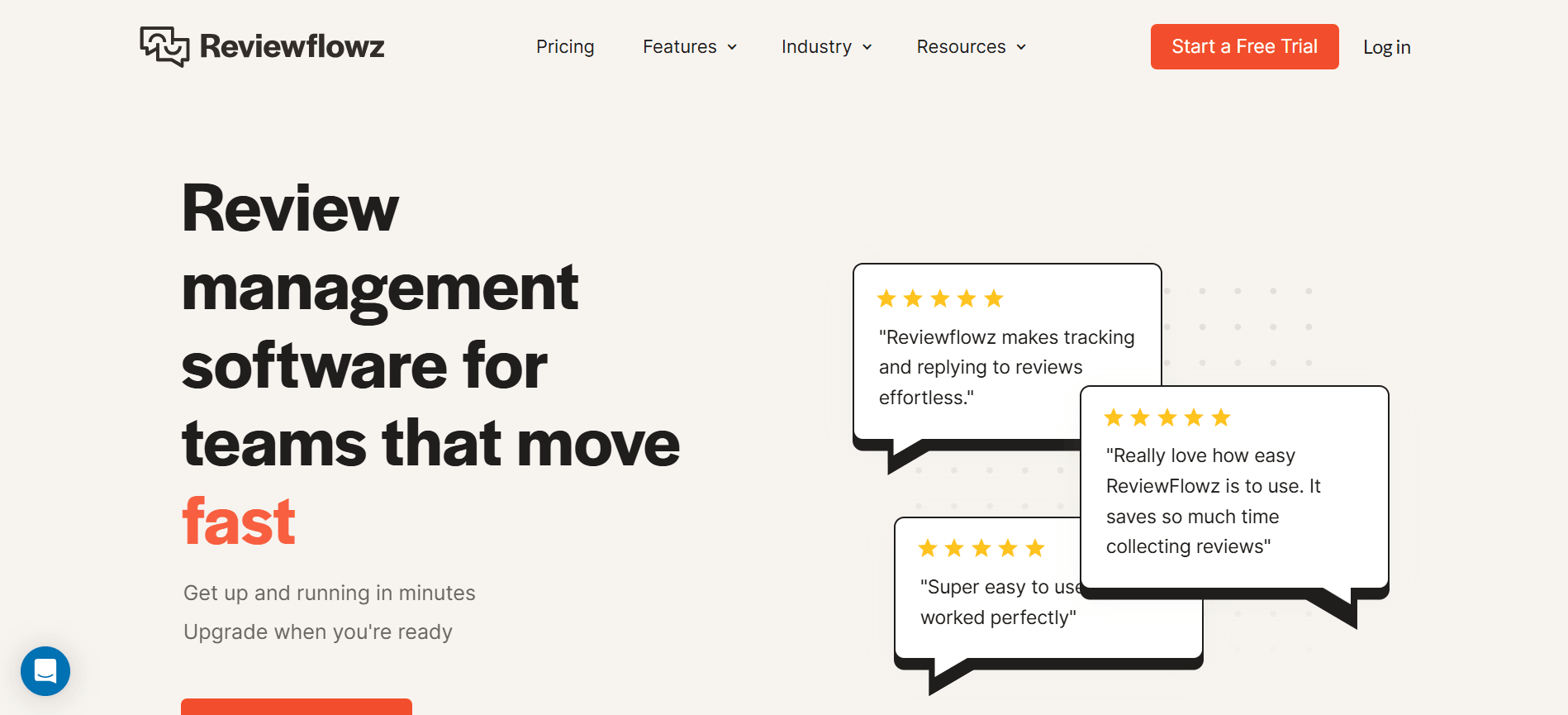
Reviewflowz is aimed at teams that care about speed, reporting, and flexible deployment. Its Google review automation page emphasizes Magic Links that work without a native integration, plus QR codes, conditional redirects, built-in tracking, and widgets that update automatically as new reviews come in.
That setup can help increase Google reviews without forcing a bigger software migration. You can drop links into existing workflows, start measuring performance quickly, and keep the system lightweight — which is especially helpful if reviews are tied to ops, marketing, and reporting all at once.
Reviewflowz also feels friendlier to teams that need analysis, exports, and response management in the same place. It is a practical choice when the review program has to prove value, not just collect stars.
What Actually Moves Review Volume
If you are still wondering how to get more Google reviews, the answer is rarely “ask harder.” Better results usually come from better timing, direct links, one or two polite follow-ups, and fast replies after a review lands. You can see that pattern across Broadly’s text-first flow, Synup’s request channels, and Reviewshake’s personalized direct-link approach.
A simple review process usually works better than a clever one:
Ask soon after the service is completed
Send one clear link, not a long set of steps
Follow up once or twice, then stop
Respond quickly so future customers see an active profile
Mistakes That Slow Review Growth
Even the top tools to get more Google reviews in 2026 cannot save a broken request flow. If you ask at the wrong moment, hide the link, or ignore the reviews that do arrive, the software will not rescue the result. Google’s review guidance and Podium’s policy explainer both point to the same idea: reviews need to come from real customer experiences, handled in a clean and compliant way.
A common mistake is buying a tool that was made for a completely different kind of business. A local service company might just need clean SMS follow-ups, an agency usually cares about white-label control, and a multi-location brand often needs listings, monitoring, and reporting in one system. When the setup matches the way people already work, the team actually uses it — and the review count usually starts to move.
Picking The Right Fit
The best tools to get more Google reviews in 2026 are the ones your team will actually use. Fancy branding means very little if the process feels awkward once staff start using it.
Start with the step that keeps getting missed. Sometimes the request goes out too late. Sometimes nobody follows up. Sometimes the whole thing asks too much from busy staff. Pick the tool that fits the way customers move through your business and the amount of attention your team can give it each week. When that part clicks, reviews usually stop coming in waves and start showing up more consistently.
If you want to feature your tools for getting more Google reviews on this list, email us or submit a form in the Top Choices section. After a thorough assessment, we’ll decide whether it’s a valuable addition.