Top CPG Digital Agencies For Food And Beverage Brands In 2026
Josh Walker
Freelance Writer
08.12.2026
Most food and beverage brands do not have a website problem.
They have a translation problem. The packaging works on shelf, the flavor story lands in a tasting, and then the site flattens all of it into a product grid that could belong to anyone. Meanwhile, the operational demands stack up underneath: subscription logic, bundle pricing, allergen and ingredient disclosure, wholesale ordering running parallel to DTC, and a retail channel whose margins quietly govern what the site is allowed to charge.
That combination rules out most generalist web shops. A CPG brand needs a partner fluent in both the emotional register of food and the mechanics of repeat purchase, and those two skills rarely sit in the same building. The agencies below specialize in both. Companies weighing platform decisions alongside agency selection will also find value in our breakdown of the leading Shopify Plus agencies, since the platform choice usually narrows the agency shortlist before conversations even begin.
Agency
Location
Platform Focus
Best-Known CPG Work
View Source
New York, NY
Custom builds, Shopify
Banza, Aura Bora, Cumulus, Maeve
Barrel
New York, NY
Shopify Plus
McCormick, Cabot Creamery, Once Upon a Farm
Swanky
UK, France, Australia
Shopify Plus
HelloFresh, Huel
The Stable
US (Accenture Song)
Omnichannel commerce
Retail and DTC programs for consumer brands
Vaan Group
New York, NY
Shopify Plus
Simple Modern, Rhode
Netalico
Raleigh, NC
Shopify Plus
Big Green Egg, Oatly subscription work
Sleepless Media
Santa Cruz, CA
Shopify Plus, WordPress
Traditional Medicinals, Alter Eco, Lenny & Larry’s
Roswell NYC
New York, NY
Shopify Plus
CPG, beauty and wellness commerce
Bigeye
Orlando, FL
Retail media, Shopify
Full-funnel CPG brand and media programs
MAVRK Studio
US
Shopify
Emerging food and beverage brands
Best CPG Digital Marketing Agencies for Food and Drink Companies
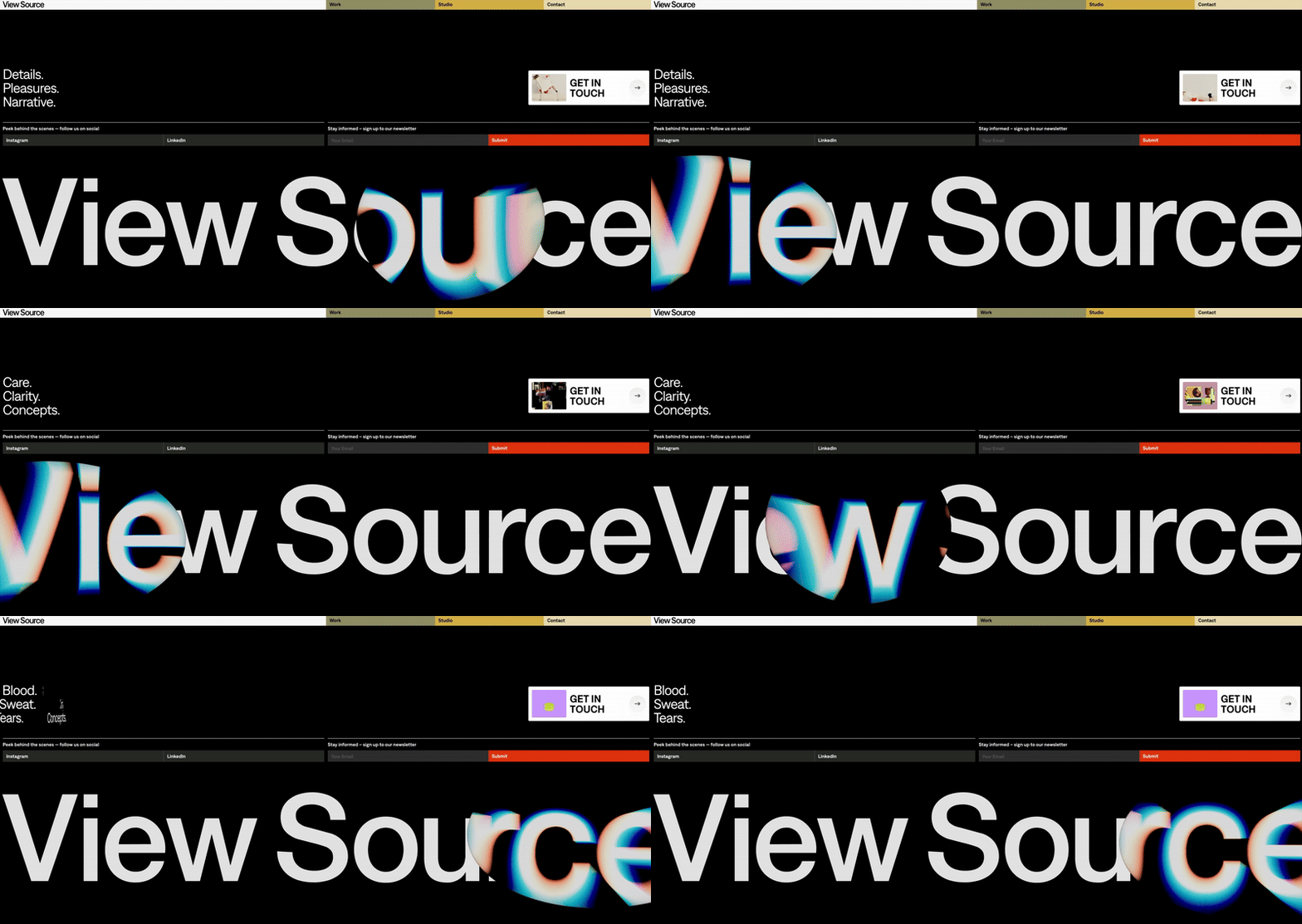
Pick View Source if the brand has outgrown a theme and needs the site to carry the same craft as the packaging.
The studio runs from idea to execution inside one building, so brand identity, 3D product work, packaging and the storefront come from the same twenty senior people rather than three vendors passing files between them. That structure is the point. Food brands lose more in the handoffs than they do in any single discipline.
The food and drink work is real and recent. Banza and Aura Bora are shelf brands with the online translation problem this list opens on. Maeve, a chocolate e-commerce build, took a 2026 Webby in Food and Drink. Cadence covers the hydration side. Outside CPG the client list runs to ASICS, Pantone and Bandit Running, which is where the 62 awards come from.
They are not the pick for a brand that wants a cheap Shopify theme install or a pure retail media program. They are the pick when design quality is the thing the brand competes on.
Services: Branding, web design and development, packaging, 3D production, e-commerce, content
Platforms: Custom builds, Shopify
Industries: Food and beverage, apparel, wellness, culture and the arts, technology
Pick Barrel if the brand sells through DTC, retail, and Amazon at once and the channels keep contradicting each other.
Founded in 2006, Barrel positions itself explicitly as a CPG commerce agency. The client roster reflects that focus: McCormick, Cabot Creamery, Sweet Loren’s, Once Upon a Farm, Real Good Foods, Rastelli’s, Canyon Bakehouse and Instant Pot, with earlier work for KIND Snacks, Hu and Austin Eastciders. Typical engagements sit with brands generating between $10M and $500M in revenue, which gives the team experience with larger, more complex brands.
Barrel can understand problems generalist agencies may often miss, including retail relationships that complicate DTC pricing and Amazon operating as a parallel channel with its own creative requirements. Barrel also runs DTC Patterns, an in-house research project documenting real e-commerce purchase behavior across more than 300 published articles, which gives client recommendations an evidence base beyond the agency’s own project history.
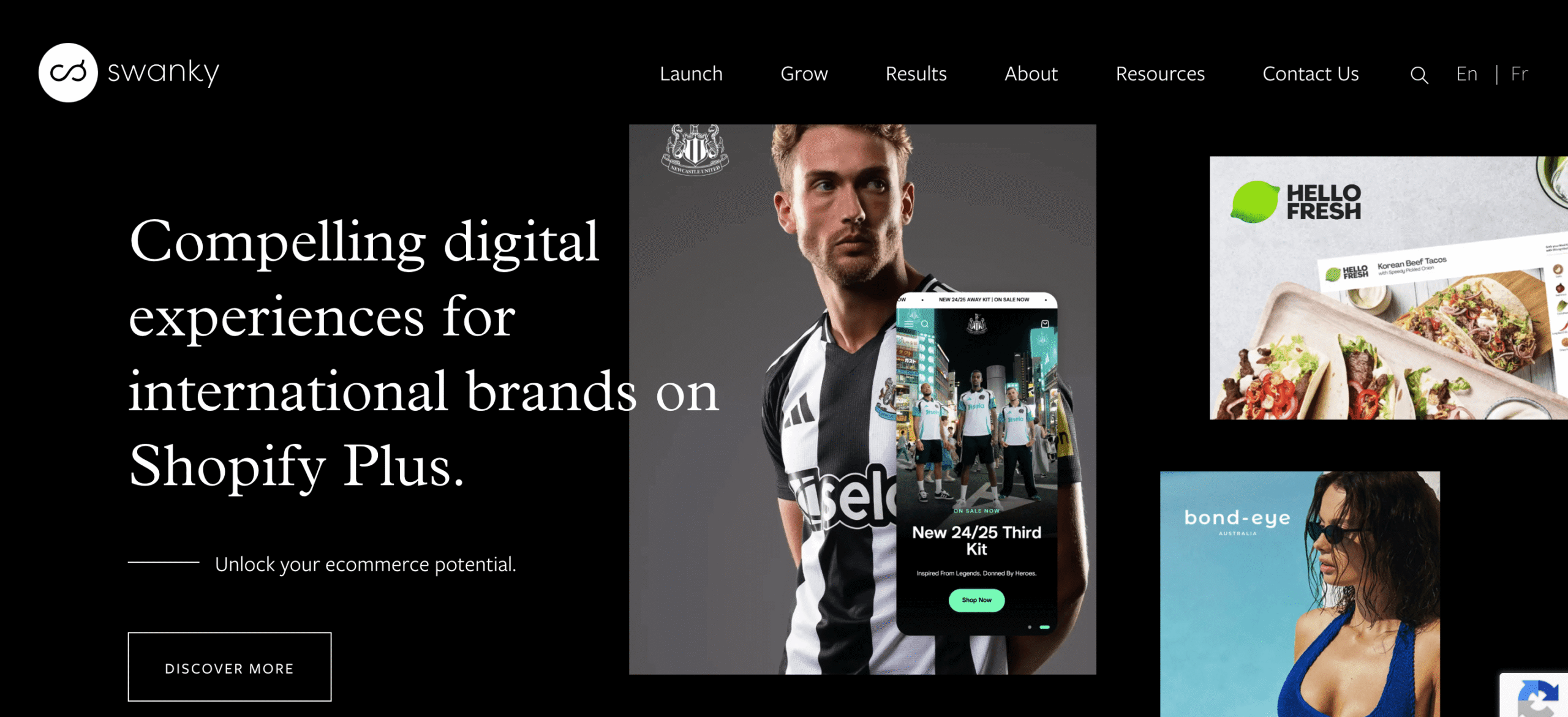
Swanky earns the shortlist when subscription is the business model.
Operating from the UK, France, and Australia, Swanky has held Shopify Plus Expert status since 2016 and has concentrated much of that tenure on food and drink. The agency describes itself as the leading Shopify DTC subscription authority in the category, citing bespoke subscription builds for HelloFresh and Huel, two brands whose recurring-order mechanics are considerably more complex than a standard replenishment toggle.
Beyond the initial build, growth services cover internationalization and conversion rate optimization, delivered in-house. For a brand planning cross-border expansion, this is useful: the decisions about separate domains, currency handling and market-specific messaging are easier to get right during the build than fix later. Petcare and health and wellness round out the sector expertise, categories that share subscription dynamics with food and drink.
Services: Migrations, web design, custom Shopify development, integrations, CRO, digital marketing
Platforms: Shopify Plus
Industries: Food and drink, petcare, health and wellness
The Stable suits brands whose retail business is large enough that the DTC site cannot be planned in isolation.
Now part of Accenture Song, The Stable operates as a commerce agency connecting brands and consumers across channels. The offering spans strategy, creative, digital execution, and the sales and operations work that sits behind retail placement.
That breadth is the point for a brand where the majority of revenue still moves through grocery, club or mass retail. Decisions about pricing architecture, promotional calendars and packaging claims cannot be made on the DTC side alone without creating conflict downstream. Engagements of this type carry enterprise pricing and enterprise timelines, so the fit depends on whether the brand actually needs this level of support.
Services: Omnichannel commerce strategy, creative, digital, retail sales and operations
Platforms: Multi-platform, retail and marketplace systems
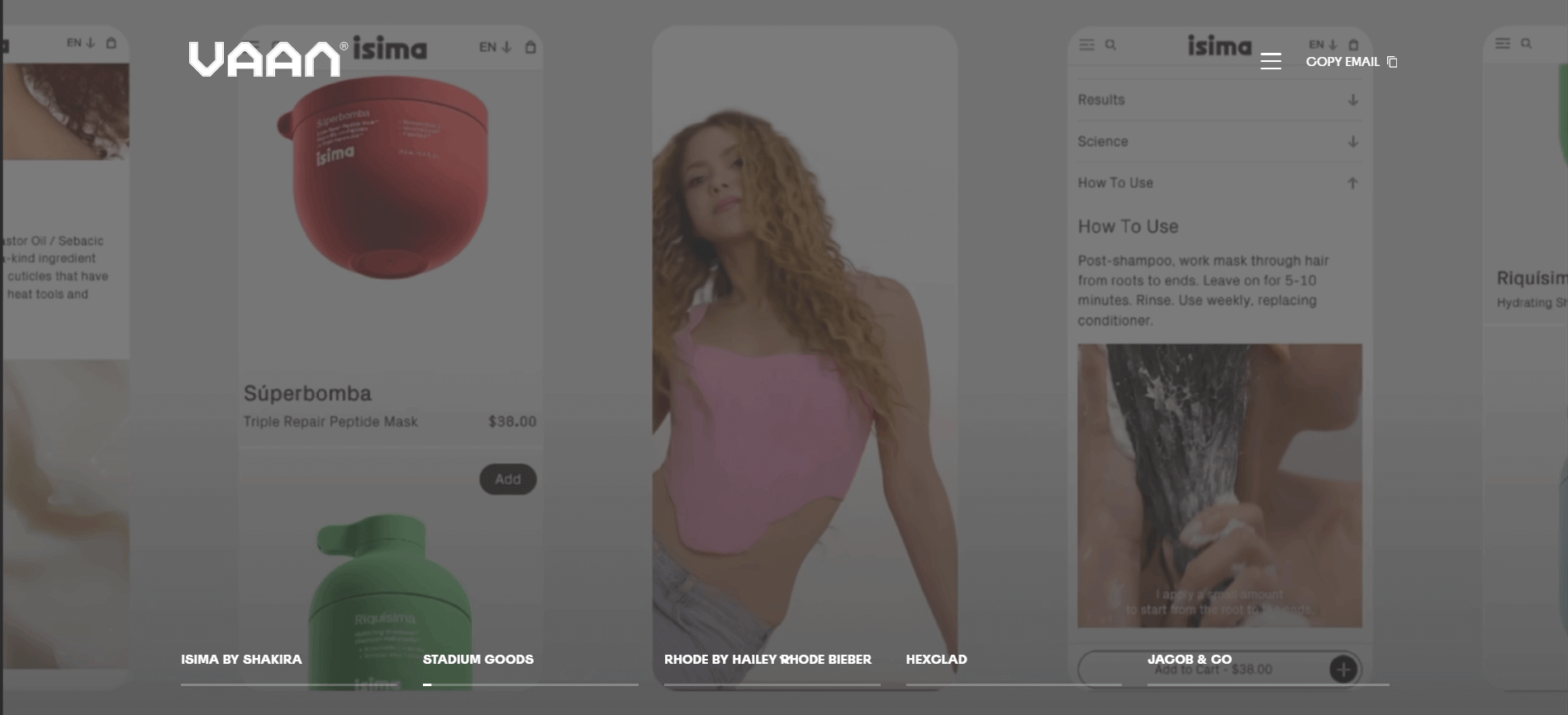
Vaan Group is the call when design quality is the competitive lever and the build still has to be technically serious.
A remote-first agency based in New York, Vaan Group works as a Shopify Platinum partner while declining to describe itself as Shopify-only. Recognition has come largely through visual execution on consumer launches including Simple Modern’s premium drinkware line, Rhode and Pink Friday, work that trades on considered cart mechanics and social integration handled well.
For a beverage or snack brand competing on aesthetics against incumbents with far larger media budgets, this approach makes sense. The team pairs design with data analysis and optimization, so the visual work is measured. Food and beverage is not the exclusive focus here, which is worth weighing against the alternative of a category specialist with a narrower design range.
Services: Digital design, engineering, optimization, data analysis
Netalico fits mid-market brands that want a retained in-house team instead of a project handoff.
Founded in 2017 and based in Raleigh, Netalico runs a fully in-house Shopify Plus team with a documented migration methodology, and has built a specific practice around CPG food and beverage. The agency’s stated focus covers the awkward parts of the category: subscription flows, bundling and upsell structures, bulk and wholesale ordering, compliance requirements, and store locator functionality for brands with meaningful retail distribution.
Published results include growing Oatly’s subscription revenue by 188% over three months, and the client list extends to Big Green Egg and VYBES. The retained model is the main difference, since food brands tend to need continuous adjustment as flavors launch, seasonal demand shifts, and retail relationships change, none of which a project-and-exit engagement handles well.
Services: Shopify development, migrations, subscription and bundling architecture, CRO, ongoing support
Platforms: Shopify Plus
Industries: CPG food and beverage, sports and outdoors, home goods
Sleepless Media is worth a look when the brand needs food-specific instinct.
Based in Santa Cruz in the San Francisco Bay Area, Sleepless Media has spent close to two decades concentrated on national food and beverage brands as a Shopify Plus Solutions Partner. Published work covers Traditional Medicinals, one of North America’s largest tea companies, Alter Eco, and Lenny & Larry’s, whose move into direct-to-consumer required a more scalable platform than it had been running.
The Alter Eco engagement is a useful illustration of category-specific scope. Rather than a single storefront, the team built three custom Shopify sites covering DTC and marketing in both the United States and Australia, plus a separate wholesale property for the distribution business, an architecture that reflects how a mid-size food brand actually sells. Stated sector coverage also includes beer and wine, organic and eco-conscious products.
Services: Shopify web design, branding, WordPress development, migrations, conversion optimization
Platforms: Shopify Plus, WordPress
Industries: CPG food products, beer and wine, organic, outdoor and lifestyle
Roswell NYC makes sense when design and development need to answer to the same team.
A Webby Award-winning Shopify Platinum partner working out of New York, Roswell NYC covers design and development through performance marketing and retention strategy under one roof. Client categories span CPG, beauty, fashion and wellness, a mix that concentrates the team on products with high repeat-purchase potential and short consideration cycles.
One of the main benefits is having everything under one team. Where a brand splits the build with one shop and acquisition with another, the site rarely gets optimized against the traffic actually arriving, and retention work tends to fall between the two. Holding both reduces that gap, though it also concentrates risk in a single relationship, which is a tradeoff worth naming before signing.
Bigeye is built for brands whose growth constraint is shelf and retail media.
With more than 20 years working with consumer brands, Bigeye approaches CPG from consumer research outward, running proprietary study work through its EyeQ practice before media spend is committed. Scope covers brand strategy and positioning, packaging design, creative production, paid media across Google, Meta, Amazon and a wide set of retail media networks, plus email and SMS retention.
The reach across Amazon, Walmart, Target, Kroger and Instacart is the distinguishing asset, and it addresses a problem many food brands hit around the point DTC growth flattens. When the next increment of revenue has to come from retail media and shelf velocity, an agency organized around commerce strategy across every channel is a better structural fit than a Shopify specialist.
MAVRK Studio is the option for early-stage food and beverage brands that need momentum before they need scale.
A smaller studio working across Shopify store optimization, campaign content and brand consistency, MAVRK has built its portfolio with emerging consumer brands including Hydronail, The Rice Cream, Cha Lab and Jane & Mary. Engagements skew toward brands still establishing category recognition.
For a founder-led brand in its first two years, the priorities can be different. The requirement is usually a credible storefront and paid content that can feed paid social, all at a budget that leaves money for inventory. Studios at this scale meet that brief in a way larger agencies structurally cannot, with the accompanying caveat that capacity is limited and growth beyond a certain point will require a second conversation.
Services: Shopify optimization, campaign content, brand consistency, creative production
Platforms: Shopify
Industries: Emerging food and beverage, consumer packaged goods
Location: United States
What CPG Digital Agencies Charge
Pricing in this category separates along a fairly predictable line: whether the engagement ends at launch or continues afterward. Food and beverage brands tend to underestimate the second half, because flavor launches, seasonal demand, and shifting retail relationships all generate site work that a fixed-scope build never covered. The engagement types below reflect the shape of the market; confirm scope and pricing directly with each agency.
Custom design, bespoke subscription and bundle logic, integrations, migration
Ongoing retainer
Continuous optimization, seasonal campaigns, new SKU and flavor rollouts
Enterprise omnichannel
Multi-market architecture, wholesale and B2B properties, ERP and PIM integration
Two variables move cost more than agency prestige does. The first is subscription complexity, since a build supporting pause, swap, skip, and flavor substitution costs materially more than a simple recurring order. The second is channel count: a brand running DTC, wholesale, and international properties is commissioning three projects, whatever the proposal calls it. Brands evaluating design partners across a wider set of disciplines may find our overview of leading creative agencies useful for benchmarking scope against price.
Matching an Agency to Your Growth Stage
The right agency depends on the brand’s growth stage, and mismatches in either direction are expensive. A boutique studio cannot absorb an enterprise replatform, and an enterprise agency will not price a first storefront sensibly.
Pre-launch and first-year brands
At this stage, the site’s job is credibility and a functioning checkout. A smaller studio or a well-chosen theme customization gets a brand to market without consuming capital that belongs in inventory and trade spend. The mistake to avoid is commissioning custom subscription architecture before there is evidence customers want to subscribe.
Scaling DTC brands
Once repeat purchase is established and monthly revenue is consistent, the constraint shifts to conversion and retention economics. This is where retained relationships start to pay, because the work becomes continuous testing. Brands at this stage benefit most from agencies that publish outcome data on subscription and average order value. A parallel read on interface quality is available in our guide to user experience design agencies.
Omnichannel and retail-heavy brands
When grocery, club or mass retail drives most of the revenue, the website becomes one node in a system that includes retail media, Amazon and trade promotion. Agencies organized only around Shopify will optimize the smallest channel. The relevant capability is commerce strategy that accounts for how a promotion in one channel affects pricing perception in another.
Brands expanding internationally
Cross-border expansion introduces decisions that are cheap to make correctly and expensive to reverse: separate domains against localized versions of one site, currency and checkout handling, and how much messaging should differ by market. Regulatory variation in ingredient and health claims adds a layer most non-food agencies have never encountered.
Frequently Asked Questions
What does a CPG digital agency actually do that a general web agency does not?
The difference is fluency in repeat-purchase mechanics and channel conflict. A general agency can build an attractive storefront, but food and beverage commerce turns on subscription logic, bundle economics, cold-chain and shipping constraints, and a retail relationship that constrains what the site can charge. Agencies without that background tend to solve the design problem and leave the commercial problems for the brand to discover after launch.
Should a food brand choose a specialist or a larger full-service agency?
It depends on where growth is constrained. If the bottleneck is site conversion and subscription retention, a Shopify specialist with food credentials is usually the better value. If the bottleneck is shelf velocity and retail media, a broader commerce agency is the structural fit, since no amount of site optimization solves a distribution problem.
How long does a typical Shopify Plus build take for a food and beverage brand?
Most mid-market builds run three to six months from kickoff to launch, with subscription complexity and integration count driving the variance more than page volume. Migrations from another platform add time for data mapping, particularly where subscriber records and historical order data have to move without disruption.
Is a retainer worth it after the site launches?
For brands launching new flavors or SKUs regularly, generally yes. Food and beverage catalogs change faster than most categories, and each change touches product pages, bundles, subscription options, and merchandising. The alternative is a series of small-scoped projects, which usually costs more in aggregate and moves slower.
Do these agencies handle packaging and brand identity as well?
Some do, but many of the strongest digital agencies deliberately do not. Brand identity and packaging for food and beverage is a distinct discipline, and it is common for a brand to use one firm for identity and packaging and another for digital commerce.
What should we prepare before approaching an agency?
Current traffic and conversion data, a clear picture of DTC against wholesale revenue split, the subscription platform in use if any, and a realistic SKU roadmap for the next 18 months. Agencies scope more accurately with these in hand, and the exercise often clarifies internal priorities before an external conversation begins. Brands also weighing a mobile experience will find relevant context in our list of mobile app design agencies.
The strongest partner for a food and beverage brand is rarely the one with the most impressive portfolio in the abstract. It is the one whose practice is focused on the brand’s main growth problem, whether that is conversion, retention, channel conflict, or shelf velocity. Naming that constraint honestly before the first agency conversation shortens the process considerably.
Work through the shortlist with the growth-stage framing above, ask the harder operational questions early, and weigh continuity of team as heavily as quality of design. The brands that get the most from these relationships treat them as ongoing infrastructure.
Bookmark this guide to make a well-informed decision. If you want to add your company to this list, drop us a line or submit a form in the Top Choices section. After a thorough review, we’ll decide whether it’s an appropriate addition.