Top Creative Agencies For Athletic And Apparel Brands
Daria Pohrebniak
Marketing Director - Reverb
08.26.2026
Athletic and apparel brands sit awkwardly in the agency market. The work is part fashion, part sport, part retail, and part technical product, and the studios that handle it well are usually the ones that understand drop cycles and seasonal calendars as fluently as they understand type and color.
The practical consequence is a pace problem. A creative partner for a running label or a technical apparel line has to move on a product calendar rather than a brand refresh timeline. Identity, campaign imagery, lookbook, ecommerce, and in-store all need to hold together while a new collection lands every few weeks, and a studio that can only deliver one of those pieces creates a coordination cost the brand ends up absorbing.
This list covers studios with real track records in athletic, sportswear, and apparel work. Some are large independents with decades of category experience. Others are small studios that have built entire brands from the first product forward. The mix is deliberate, because the right answer depends far more on the stage a brand is at than on which studio has the most impressive client logos.
Creative Agencies for Athletic and Apparel Brands at a Glance
Company
Founded
Headquarters
Team size
Focus
View Source
2019
Brooklyn, NY
Up to 49
Brand identity plus ecommerce build for apparel and consumer brands
Wieden+Kennedy
1982
Portland, OR
1,000+
Global campaign work for established athletic and consumer brands
Instrument
2002
Portland, OR
250–500
Brand and digital product work for sportswear and technology brands
2×4
1994
New York, NY
50–100
Cultural brand strategy, identity, and retail environments for fashion
Doubleday & Cartwright
2010
Brooklyn, NY
Up to 49
Sport and culture branding with in-house garment and editorial work
Hovercraft
2009
Portland, OR
Up to 49
Retail environments and brand activations for sports and outdoor brands
DixonBaxi
2001
London, UK
50–100
Motion-led brand systems for sports media and streaming properties
Chandelier Creative
2001
New York, NY
50–100
Campaign and content creative for fashion, beauty, and lifestyle apparel
Alright Studio
2020
New York, NY
Up to 49
Identity and web design for emerging fashion and culture brands
Best Creative Agency Options for Athletic and Apparel Brands
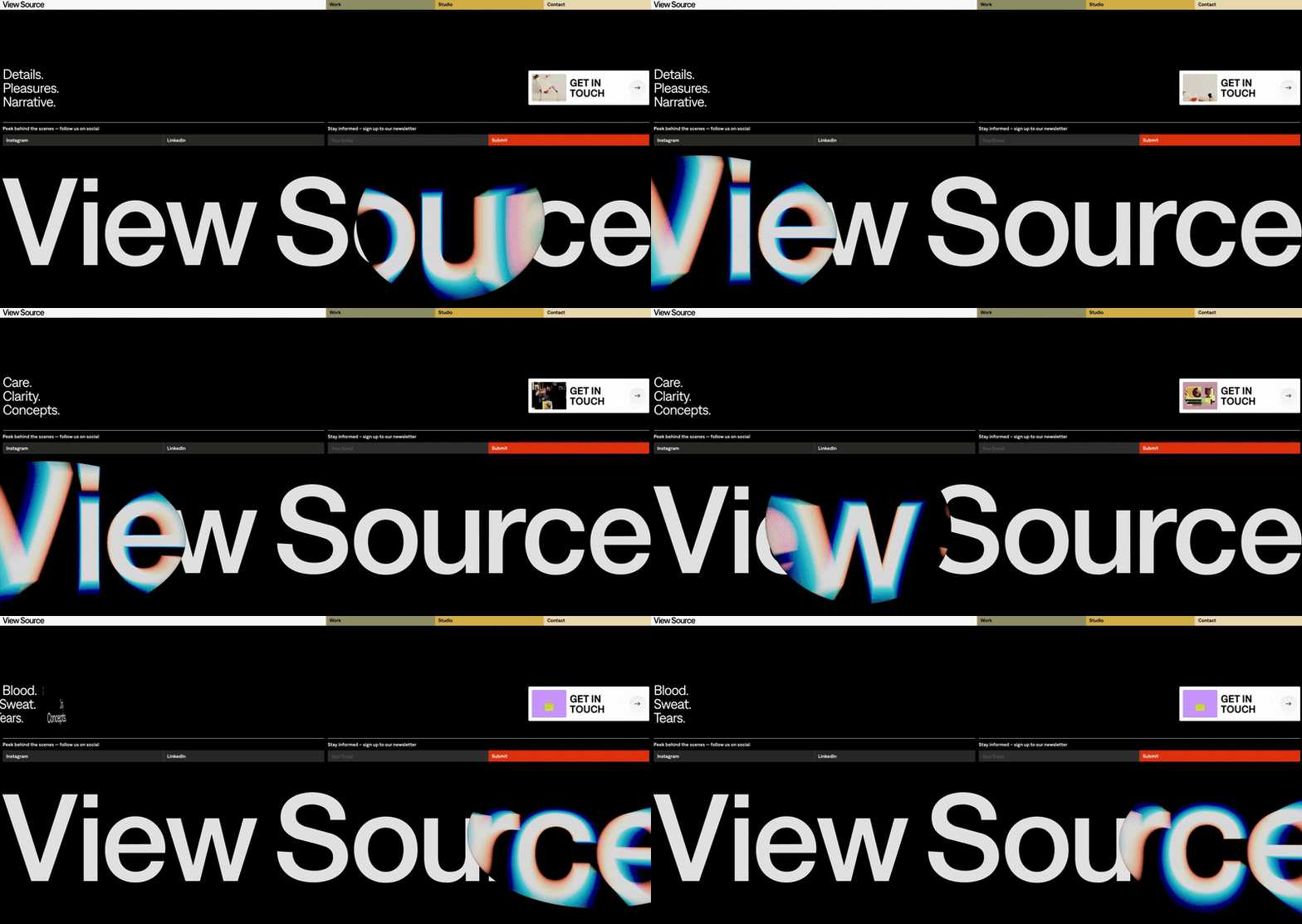
View Source is a design and technology studio in Greenpoint, Brooklyn, run by three partners who split the practice across brand, digital, and experiential. The studio covers naming, brand strategy, visual identity, and packaging on one side, and UX/UI design, information architecture, Shopify Plus, and full-stack development on the other. For an apparel label, that combination is the practical argument: identity and storefront run through one team rather than being handed between a brand studio and a separate development shop, which is where seasonal launches usually lose time.
The clearest evidence in athletic apparel is Bandit Running. View Source designed the Brooklyn running brand identity and website and has shaped its branding and imagery since the brand launched in 2020, still working drop by drop as Bandit has grown into flagship stores in four cities and retail distribution across six continents. Outside apparel the roster runs to Pantone, Harry’s, Aspen Hospitality, and AEG, and the studio keeps art direction, photography, 3D rendering, and generative art in house, which matters when a collection needs campaign imagery on the same calendar as the site update.
Founded: 2019
Headquarters: Greenpoint, Brooklyn, New York
Team size: Up to 49 experts
Services and expertise: Brand strategy, naming, visual identity, packaging, UX/UI design, information architecture, Shopify Plus, full-stack development, art direction, photography, 3D rendering
Portfolio: Bandit Running, Pantone, Harry’s, Aspen Hospitality, AEG, Maeve and others
Wieden+Kennedy is the reference point for the whole category. The Portland agency has been independent since 1982 and built its reputation on Nike work, and a good deal of the language that athletic brands still reach for traces back to campaigns produced there. Offices in Portland, New York, London, Amsterdam, Shanghai, Tokyo, São Paulo, and Mexico City mean a global campaign can be run without routing through a holding-company network partner.
What an apparel brand gets here is scale and cultural reach rather than boutique craft. The agency is built for campaign work with media weight behind it, so the fit is strongest for brands that already have distribution and a marketing budget to match. Emerging labels looking for a founding identity system will generally be better served further down this list.
Founded: 1982
Headquarters: Portland, Oregon
Team size: 1,000+ employees
Services and expertise: Brand campaigns, advertising, creative strategy, film and content production, social, design
Portfolio: Nike, Coca-Cola, Ford, Samsung, McDonald’s, Delta and others
Instrument is the other Portland name that comes up whenever an athletic brand needs digital work rather than a campaign. Founded in 2002, the studio built its reputation on brand and product experiences for Nike and Google, and the practice now spans brand strategy, identity systems, digital product design, and engineering.
For apparel clients the useful distinction is that Instrument treats the site and the product experience as brand surfaces rather than production tasks. That suits brands with a complex catalog or a membership and community layer sitting alongside commerce. Engagements run at agency scale, so the studio is a better match for brands with a defined digital roadmap than for a first identity build.
Founded: 2002
Headquarters: Portland, Oregon
Team size: 250–500 experts
Services and expertise: Brand strategy, identity design, digital product design, engineering, content production, campaign
Portfolio: Nike, Google, Sonos, Patreon, Levi’s and others
2×4 sits on the fashion side of this list. The New York studio was founded in 1994 and works in brand strategy, identity, editorial design, and retail environments, with a long association with Prada that runs from graphics through to store concepts. Work of that kind is closer to cultural positioning than to conversion optimization.
Apparel brands that want their retail spaces, printed matter, and digital presence to read as a single authored world are the natural fit. The studio also works extensively with museums and cultural institutions, which is a reasonable signal of how it approaches a brand: as something with a point of view to argue rather than a market position to occupy.
Founded: 1994
Headquarters: New York, New York
Team size: 50–100 experts
Services and expertise: Brand strategy, visual identity, editorial and publication design, retail and exhibition environments, signage systems
Portfolio: Prada, Nike, Kanye West, Museum of Modern Art, Harvard and others
Doubleday & Cartwright was established in New York in 2010 and works specifically at the intersection of sport, art, and culture. The studio combines branding, design, editorial, and garment work, and it has produced everything from a garment customization space for Nike to campaign and content work for other agencies, an unusual arrangement in which larger firms bring the studio in as a specialist rather than a subcontractor.
Apparel capability is genuine rather than adjacent here. Color forecasting, embellishment and T-shirt design, product photography, and seasonal SKU planning all sit inside the offer, alongside brand identity and custom publishing. Brands that need a partner fluent in both the cultural narrative and the physical product will find fewer gaps than usual.
Founded: 2010
Headquarters: Brooklyn, New York
Team size: Up to 49 experts
Services and expertise: Brand identity, art direction, editorial and custom publishing, garment and apparel design, product photography, campaign, animation
Portfolio: Nike, Puma, Brand Jordan, Carhartt, Everlast, EA Sports, ESPN and others
Hovercraft was founded in Portland in 2009 by Zack Teachout and works where the athletic brand meets physical space. The studio designs retail environments, brand activations, and the digital content that lives inside them, and its Nike portfolio includes the Beacon sculpture installed at the House of Innovation store in New York alongside packaging work for Nike Football and The Opening.
This is the entry to consider when the problem is not a logo but a launch moment. Sports brands running seasonal activations, all-star weekend installations, or flagship retail concepts get a studio that handles design, fabrication coordination, technology integration, and on-site content capture in one scope. Pure identity and ecommerce work sits outside the core offer.
Founded: 2009
Headquarters: Portland, Oregon
Team size: Up to 49 experts
Services and expertise: Retail and environmental design, brand activations, experiential technology, packaging, content production, spatial design
Portfolio: Nike, Ride Snowboards, New Jersey Devils, Columbia and others
DixonBaxi is a London brand agency founded in 2001 by Simon Dixon and Aporva Baxi, and its relevance to this list is sport as media rather than sport as apparel. The agency has built brand systems for the Premier League, DAZN, and Eurosport, which means it has spent two decades solving the problem of how a sports property looks consistent across broadcast, app, stadium, and social.
Apparel brands with a broadcast, streaming, or league partnership dimension get the most out of this. The agency works in motion-first identity systems designed to survive being cut into thousands of assets, which is a different discipline from a print-first brand book. Brands whose primary need is packaging or garment design should look elsewhere on this list.
Founded: 2001
Headquarters: London, United Kingdom
Team size: 50–100 experts
Services and expertise: Brand strategy, motion-led identity systems, design systems, digital product design, broadcast and streaming brand design
Portfolio: Premier League, DAZN, Eurosport, Hulu, Audible and others
Chandelier Creative works the fashion, beauty, and luxury end of the market from New York, and the studio is known for campaign concepting and brand storytelling with a strong art direction bias. The offer spans strategy, campaign, content production, and experiential, and the work tends to be image-led in a way that suits apparel launches.
Brands positioning toward the fashion audience rather than the performance audience are the better fit. A technical running label will find the sensibility mismatched, while a lifestyle or athleisure line trying to move upmarket will find a studio fluent in that register. Production capability is a real part of the offer, not an outsourced add-on.
Founded: 2001
Headquarters: New York, New York
Team size: 50–100 experts
Services and expertise: Brand strategy, campaign creative, art direction, content and film production, experiential, social
Portfolio: Nike, Dior, Sephora, Coach, Uniqlo and others
Alright Studio is a younger New York practice working across brand identity, digital design, and development for clients in fashion, music, and culture. The studio has built a reputation on typographically confident identity work paired with sites that are genuinely designed rather than templated, which is a combination emerging apparel brands consistently struggle to source.
Scale is the trade-off. A studio at this size will not run a multi-market campaign, and the roster reflects a preference for brands with a distinct point of view over volume clients. For a label building its first serious identity and web presence with a limited budget, that focus is usually an advantage.
Founded: 2020
Headquarters: New York, New York
Team size: Up to 49 experts
Services and expertise: Brand identity, art direction, typography, web design, front-end development, digital campaign
Portfolio: Fashion, music, and culture clients including record labels, apparel brands, and cultural institutions
What creative work for an apparel brand actually costs
Pricing in this category is quoted by scope rather than by rate card, and the spread is wide enough that two studios can quote the same brief a factor of five apart without either being unreasonable. The ranges below are category-level observations rather than quotes from any company on this list, and they assume US and Western European studios.
Engagement type
Typical range
What it usually covers
Identity refresh, small studio
$25,000 – $60,000
Logo system, typography, color, core guidelines, one collection application
Full brand build, mid-size studio
$60,000 – $175,000
Positioning or naming, complete identity, packaging, photography direction, guidelines
Brand plus ecommerce build
$100,000 – $300,000
Identity work plus Shopify or headless storefront design and development
Seasonal campaign production
$50,000 – $250,000 per season
Concept, art direction, shoot production, asset delivery across channels
Multi-market strategy, production, and media-facing creative
Ongoing creative retainer
$15,000 – $60,000 per month
Drop-cycle creative, site updates, campaign support, asset production
Three things move a number more than anything else. The first is whether photography and film production sit inside the scope, because production budgets routinely exceed design fees on apparel work. The second is whether the engagement includes a storefront build, which converts a brand project into a technology project with its own testing and QA overhead. The third is speed, since a compressed timeline built around a launch date is priced as a premium by every studio worth hiring.
Not always, but category fluency shortens the discovery phase considerably. A studio that already understands sizing systems, seasonal SKU planning, and the difference between performance and lifestyle positioning will not spend the first six weeks learning the business. For a technical product line the specialist premium is usually justified. For a lifestyle apparel brand a strong generalist brand studio often does equally well.
Should brand and website go to the same studio?
Splitting them is common and works fine when the brand guidelines are thorough and the development partner is strong. It fails when the identity was designed without considering how it behaves in a responsive grid, which happens more often than anyone admits. Studios that handle both, which is the argument for several entries on this list, remove that handoff risk at the cost of a narrower range of specialist expertise.
How long does a full brand and ecommerce build take?
Six to nine months is a realistic range for a complete identity plus a designed and built storefront, assuming a decisive client and a single approver. Identity alone runs eight to sixteen weeks. Timelines slip most often on content, specifically product photography and copy, rather than on design or development.
What size studio suits an emerging apparel label?
A team of fewer than fifty people generally gives an early-stage brand better access to senior thinking than a large agency will, and the fee structure is survivable. The trade-off is capacity. If the brand expects to need multi-market campaign production within eighteen months, that constraint should be part of the selection conversation from the start.
Is a retainer better than project work?
For brands running frequent drops, a retainer removes the scoping overhead that otherwise repeats every cycle and usually costs less in aggregate. For brands with one launch a year, project work is more efficient. The honest test is how many discrete creative requests the brand generated in the last twelve months.
Conclusion
The useful filter is not which studio is best but which problem is currently the most expensive one. A brand losing sales to a storefront that cannot carry its collections needs a different partner than a brand whose identity has stopped reading as distinctive. A brand about to launch a flagship needs a third kind entirely.
If you want to feature your creative agency on this list, email us or submit a form in the Top Choices section. After a thorough assessment, we’ll decide whether it’s a valuable addition.