
Antaun Barnett
Managing Principal
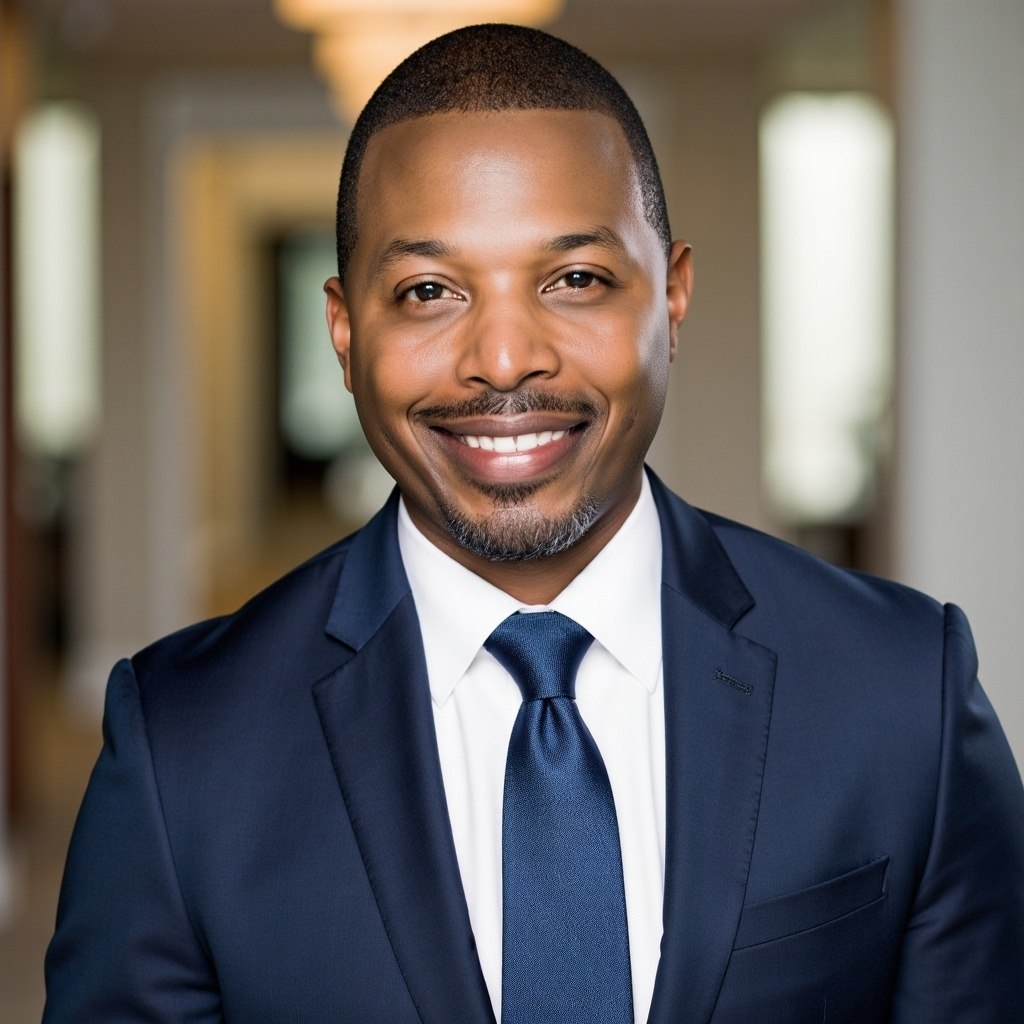
Your work now spans financial services, institutional strategy, and community access. How do you define your role today?
I design and operate systems that drive outcomes at scale. That started in insurance distribution, but the same principles apply in other environments.
Right now, a meaningful portion of my work is focused on HBCU endowment strategy and institutional design. I recently participated in HBCU Awarefest, where I was invited to work with a group of HBCU presidents on endowment implementation. The focus was not on raising capital. It was on whether the institution has the structure to hold and grow that capital over time.
That is the through-line across everything I do. Whether it is distribution or institutional capital, the question is the same: does the system actually work under pressure.
How did your career evolve into this full-scope systems role?
It started with production. That is where you learn how things actually work. You are accountable for results, and there is no separation between effort and outcome.
From there, I moved into product and system design. That is where you understand how structure influences performance—compensation, product alignment, market strategy.
The next phase was implementation. Building the systems. Designing onboarding, performance frameworks, and distribution models that can be deployed across teams.
Today, I operate across the full lifecycle. Design, build, execute, and refine.
The work does not stop at strategy. You have to own performance. If the system is not producing, you adjust it.
What does “full lifecycle architecture” mean in practice?
It means there is no gap between thinking and doing.
If we design a system, we also define how it will be implemented, how it will be measured, and how it will be adjusted over time.
For example, in distribution, you are not just defining channels. You are defining how people enter the system, how they are trained, how they are compensated, and how performance is tracked at a detailed level.
Then you monitor it consistently. If outcomes are off, you change inputs. Not assumptions.
How are you applying that mindset to HBCU endowment strategy?
The same way.
Endowments are often treated as financial outcomes. I look at them as systems. If the structure is not right, the capital will not compound.
At HBCU Awarefest, the discussion was very direct. Once capital comes in, what governs how it is deployed, managed, and sustained? What decision frameworks exist? What accountability structures are in place?
If those elements are not defined, the institution remains dependent on short-term inputs.
You cannot build long-term outcomes on short-term structure.
In your core work, what problems do organizations most often bring to you?
Declining productivity, fragmented distribution, and over-reliance on a small number of high performers.
Most organizations have some level of success, but it is not repeatable. That usually points back to the system.
If onboarding is inconsistent, if training varies by manager, if incentives are not aligned with outcomes, you will see uneven performance.
The output reflects the structure behind it.
How do you approach building systems that scale consistently?
You define the core components clearly.
That includes how people enter the system, how they are developed, how they are measured, and how incentives are aligned.
Most organizations have parts of that. Few have all of it working together.
The other piece is accountability. You cannot rely on activity metrics. You need to measure outcomes—production, retention, market expansion.
If those are not improving, the system needs to change.
You’ve also shown up in spaces like NASCAR and broader community platforms. How does that fit into your work?
That is about access and reach.
I represented Atlanta Life through the NASCAR HBCU Development Program at Daytona. That environment matters because it connects with communities outside traditional financial channels.
The industry has historically expected people to come into its systems. That is not how access works.
You have to meet people where they are. But that only works if the system behind it is structured properly. Otherwise, it is visibility without impact.
You’ve been speaking at industry events like Insurtech NYC and Insurance Innovators. What are you seeing in those conversations?
There is recognition that current systems are not working as well as they should.
The gap is execution.
At Insurtech NYC, the focus was on how systems adapt to changing conditions. That is the right conversation. The challenge is moving from discussion to implementation.
At Insurance Innovators, I expect the same dynamic. Awareness is there. The question is how organizations actually build and deploy better systems.
How do you stay ahead of industry shifts without relying on trends?
I stay close to the system.
Distribution data, agent behavior, and performance patterns tell you what is happening before reports do.
I also spend time understanding where systems are breaking down. That is where opportunity usually sits.
External conversations help validate what you are seeing, but they do not replace operational insight.
What does long-term success look like in your work?
It is durability.
It is not just what gets built. It is whether it continues to function without constant intervention.
If a system requires continuous oversight to perform, it is not complete.
The goal is to build something that holds.
How do you think about leadership as your scope expands across industries?
The principles do not change.
Clarity, structure, accountability. Those apply in any environment.
The difference is the scale and the context. When you move into institutional work, the timelines are longer and the stakes are different. But the system still has to perform.
That is what leadership is responsible for.
What advice would you give to leaders trying to scale their impact today?
Focus on systems, not activity.
Understand how outcomes are produced. Then design around that.
Most leaders spend too much time managing within systems they did not build. The real leverage comes from designing systems that produce the right outcomes consistently.
That is where scale happens.
More REVERB Interviews
- Alex-Xu-Zagabond — CEO
- Blake Sloggy — Logistics Account Executive
- Karunamaya Vesna Blazhevska — Communications Professional
- Terence Cushing — Law Firm Partner
- Captain Robert McRath — Regional Partner
- Aneesh Sharma — Director of Game Management & Analytics for Dartmouth football
- Stephanie Woods — President and CEO
- Philip Ashton-Rickardt — Managing Director, Chief Scientific Officer, co-founder