
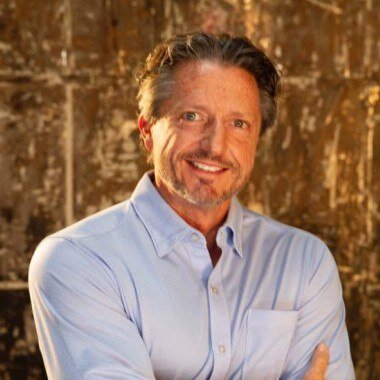
Ben Barton
Medical Consultant
Regen Medical Consulting
What is Regen Medical Consulting, and what role do you play in shaping its direction and strategy?
I work as a Medical Consultant with Regen Medical Consulting. My role is to help cash-based medical practices build clearer systems for running their businesses. That includes operations, positioning, and decision structure.
Most providers I work with are excellent clinicians. The gap is usually business structure. My job is not to change how they practice medicine. My job is to help them build systems so the practice itself runs in a predictable way.
I focus on three areas. First, identifying operational bottlenecks. Second, clarifying how decisions are made. Third, helping practices create repeatable processes. I also write and speak about these patterns through my book Practice Prosperity: The Six Biggest Mistakes Costing You Millions.
I see my role as a pattern spotter. When you work with enough practices, the same problems repeat.
How do you think about building systems and partnerships to deliver results for the practices you serve?
I focus on simplicity first. Most practices don’t need more tools. They need fewer moving parts and clearer ownership of decisions.
My approach is usually hybrid. Some work stays inside the practice. Other work may involve external partners if the skill set isn’t internal. But the rule is simple: if the system can’t be explained clearly, it probably isn’t working.
A practice should know who owns each process. Scheduling, patient communication, financial structure, and workflow all need defined ownership.
Clarity reduces friction. Friction slows everything down.
In a competitive consulting environment, how do you make your work distinct?
I keep the focus operational. I don’t sell big theories or complicated frameworks.
Most of my work comes from observing real practices. I pay attention to what is actually happening day to day. How patients move through the system. How decisions are made. Where delays show up.
My advantage is pattern recognition. After seeing the same mistake many times, it becomes easier to help someone see it quickly.
I also keep the language simple. Complexity often hides problems.
Who do you primarily serve today, and how did that focus develop over time?
Most of the people I work with are providers running or transitioning to cash-based medical practices.
That focus developed naturally. Early in my consulting work, I noticed these practices faced a different set of challenges than traditional insurance-driven clinics.
Cash-based models require clearer communication and stronger systems. You can’t rely on insurance structures to define value or workflow.
That environment makes operational clarity even more important.
What problems do medical practices most often come to you with?
The most common problem is confusion about structure. Practices often feel busy but still stuck.
They might have strong patient demand but inconsistent workflows. Or they may be making decisions reactively instead of systematically.
Another common issue is that no one has documented how things should work. Everything exists in people’s heads. That works for a while, but it doesn’t scale.
My first step is usually observation. I want to see the system before recommending changes.
How do you stay informed about changes in healthcare and medical entrepreneurship?
I stay close to real practices. That is the best source of information.
Industry trends matter, but direct observation matters more. When you see how clinics actually operate, you understand where pressure is building.
I also spend time writing and speaking. Writing forces you to organize what you are seeing.
That’s part of why I wrote my book. I wanted to document patterns that kept appearing.
What does long-term trust with clients look like in your work?
Trust usually starts with clarity. If a client understands how decisions are being made, the relationship becomes more stable.
I try to avoid dependency. My goal is to help practices build systems they can operate without constant outside input.
The best outcome is when a client can run their practice more confidently after our work together.
How do you define success for the practices you work with?
Success is operational stability.
That means the practice has clear processes, predictable workflows, and defined decision ownership.
It also means fewer reactive decisions. When systems are strong, people spend less time solving the same problems repeatedly.
I measure success by how smoothly the practice runs after the structure improves.
What responsibility do you feel after a consulting engagement ends?
I want clients to leave with tools they can maintain. Documentation and clarity are part of that.
If a system only works while I am present, then it isn’t a strong system.
The goal is durability.
How do you think about pricing and value alignment in consulting work?
Pricing has to reflect the time and structure required to do the work well.
But value alignment matters more than the number itself. If expectations are unclear, pricing becomes a problem quickly.
That’s why the scope of work needs to be clearly defined at the beginning.
How do you balance accessibility with maintaining high standards?
Not every practice is the right fit. Some organizations are ready to implement systems. Others are still exploring options.
Fair value means both sides understand what is required to make the work productive.
Clarity protects everyone.
Have you ever turned down opportunities that looked attractive on paper?
Yes. Usually because the timing wasn’t right.
If a practice isn’t ready to change how decisions are made, consulting work won’t help much.
Structure requires commitment.
What challenges have shaped the way you approach leadership and consulting?
The biggest challenge has been learning that information alone doesn’t change behavior.
People need systems that make the right decision easier.
That insight changed how I approach consulting.
How do you encourage innovation without losing operational discipline?
Innovation should happen within structure.
If the core systems are unstable, innovation becomes chaos. Once the foundation is stable, new ideas are easier to test.
What role does culture play in practice performance?
Culture shows up in daily behavior. It’s not slogans.
If a team values clarity and accountability, the practice runs better.
Leaders model that behavior.
Looking ahead, what kind of impact do you hope your work has in healthcare?
I would like to see more clinicians equipped to run sustainable practices.
Healthcare is demanding. Strong systems reduce unnecessary pressure on providers.
That benefits both practitioners and patients.
How has your philosophy about leadership evolved over time?
Earlier in my career, I thought leadership meant having answers.
Now I think it means asking better questions and building systems that support good decisions.
What changes in healthcare interest you the most right now?
The shift toward alternative care models is important.
When practices operate outside traditional insurance structures, they have to rethink how value and communication work.
That creates both challenges and opportunities.
What advice would you give someone starting to lead in healthcare or medical business today?
Start by understanding systems.
Observe how work actually moves through an organization. Pay attention to where friction appears.
Most problems are operational before they are strategic.
And remember that consistency matters more than dramatic change.