
Christopher Pulichene
Marine Operations Coordinator
Florida Keys
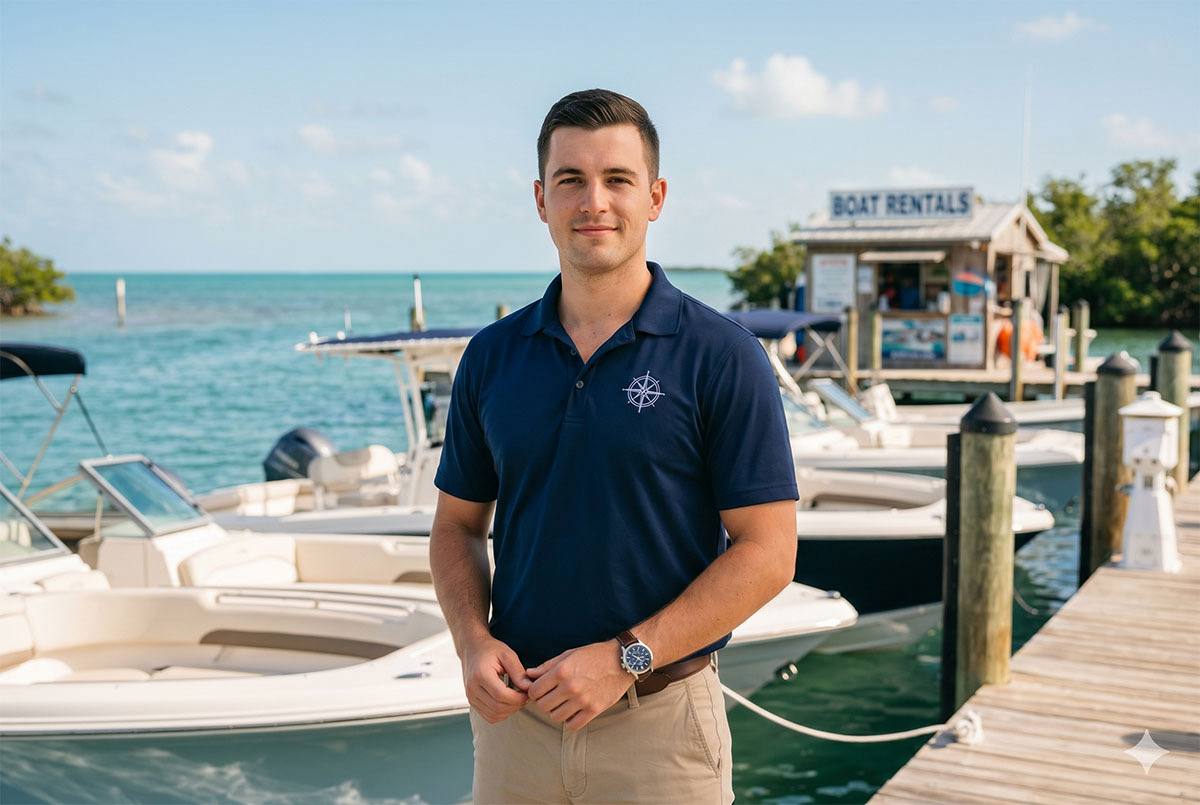
Can you introduce your role in marine tourism and describe what you are responsible for day to day?
I work in marine tourism operations in the Florida Keys, primarily in boat rental and watersports activity management. My role centers on safety oversight, guest coordination, and operational structure. I manage pre-departure briefings, equipment checks, weather monitoring, and team communication. I also focus on process consistency. I am not running a large corporation. I operate within structured marine recreation environments where execution matters every day.
What is your core operating model, and how do you structure your team?
The model is operational control with layered responsibility. We use an in-house team for guest handling, vessel preparation, and safety briefings. Vendors may support maintenance or specialized repairs. Daily operations are handled internally. Each shift follows a checklist system. Equipment inspection happens before every launch. Weather review happens multiple times per day. There is no improvisation in the workflow.
How do you differentiate your approach in a crowded marine tourism market?
Most customers see boat rentals as casual recreation. I treat them as structured operations. I apply cruise-level procedure discipline to small-scale coastal operations. That includes scripted safety briefings, repeatable inspection routines, and calm communication protocols. I learned early that smooth experiences depend on structure. When the team stays consistent, guests feel confident.
Who do you primarily serve, and how has that focus evolved?
I serve recreational boaters and vacationers in high-traffic coastal areas. Earlier in my career, I worked with cruise passengers in Caribbean watersports environments. That required large-scale coordination. In the Florida Keys, the focus is smaller groups but higher individual responsibility. The scale changed. The structure stayed the same.
What are the most in-demand services within your operations?
Boat rentals and guided watersports activities are the core services. Guests want clear instructions, safe vessels, and smooth experiences. They value fast check-ins and confidence on the water. Operational clarity is more important than novelty.
How do you stay ahead of industry shifts in marine tourism?
I monitor Coast Guard reports and boating safety statistics. I track weather patterns closely. I also observe operational breakdowns in the industry. When incidents happen elsewhere, I study what failed. I adjust processes if needed. I rely on discipline, not trends.
Do you see repeat customers, and what drives that loyalty?
Yes. Repeat customers come back when experiences are predictable and safe. Clear communication drives trust. Clean equipment matters. Calm staff matters. When guests feel prepared before departure, they return.
How do you measure operational performance and customer satisfaction?
I track incident reports, equipment condition logs, and return rates. I also monitor guest feedback directly. The strongest metric is operational consistency. If daily checklists are followed without shortcuts, issues decrease. Safety is measurable through reduced incident frequency.
What support do you provide after a guest completes a rental or activity?
We debrief if needed. We review any concerns. If equipment questions arise, we address them immediately. There is no formal long-term service model. The focus is same-day clarity and resolution.
How is pricing structured in your environment?
Pricing is typically time-based or activity-based. Rentals are charged hourly or daily. Guided services are structured around set activity blocks. I am not responsible for setting all pricing policy, but I understand the operational side. Value is created through reliability and preparation.
Have you turned away situations that did not meet safety standards?
Yes. Weather conditions, unsafe guest behavior, or equipment concerns require clear decisions. I have postponed launches due to weather. I have reinforced safety rules firmly when needed. Minimum requirements include compliance with life jacket rules and operational briefings.
What key challenges have you faced in recent years?
Weather volatility is constant. Staffing during peak seasons requires training speed without lowering standards. Marine tourism also faces rising insurance and compliance costs. The solution has been stronger process documentation and team repetition.
How do you encourage innovation while maintaining safety discipline?
Innovation in this field is operational refinement. I look for small improvements. Faster inspection flow. Clearer guest instruction. Improved staging areas. Changes are tested carefully. Safety always comes first.
What role does culture play in your operations?
Culture is built on steadiness. Team members are expected to follow procedure. Calm leadership matters. If leaders panic, teams follow. I reinforce consistency over flash.
Where do you see your long-term direction?
My long-term goal is to operate my own watersports business. The focus will remain safety-centered and system-driven. Growth will depend on maintaining operational discipline at scale.
How has your leadership style evolved?
Early in my career, I reacted faster than I should have. Cruise operations taught me to slow down and rely on protocol. Now I lead with structure first. Communication is direct. Decisions are measured.
What market shifts interest you most?
Increased boating participation continues. Safety compliance is becoming more visible. I am interested in improved vessel monitoring tools and stronger training systems. Technology supports operations, but structure drives safety.
What advice would you give to aspiring operators in marine tourism?
Do not chase excitement. Build systems first. Learn inspections. Understand weather. Track incidents. Small mistakes on land are manageable. On water, they escalate fast. Preparation is not dramatic. It is daily.
More REVERB Interviews
- Ron Mix — Pro Football Hall of Fame member and attorney
- Joseph Leggs — The Craftsman Behind Precision Performance
- Mitchell Seaworth — Photographer
- Don Carlos Lee Gibson — General Manager
- Sophia Rosing — Operator / Experimenter
- Rick Bainbridge — Founder
- Mark Siegwald — Water Damage Consultant
- Ali Gillani — CEO and Founder