
Elliot Omanson
Managing Director
OWLFI
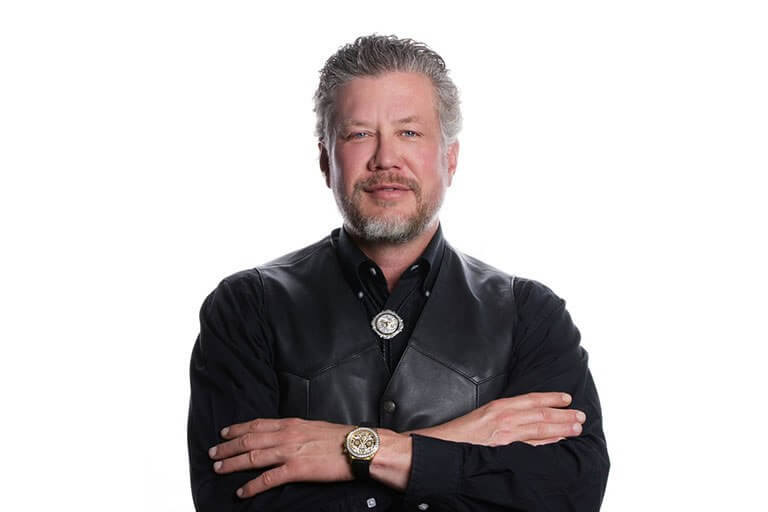
Can you introduce your firm and describe your role as Managing Partner and CEO?
I lead OWLFI Strategic Advisors. We work with business owners and individuals facing complex decisions across tax, investment, insurance, and long-term planning. My role is to set direction, review strategy, and make sure everything connects. I spend most of my time in client conversations, internal reviews, and decision-making. I also act as the main communicator—internally with the team and externally through content like our market updates and podcasts.
What is your firm’s operating model—fully in-house, outsourced, or hybrid?
It’s a hybrid model with a strong in-house core. We built internal capabilities across financial planning, insurance, and coordination. We also work closely with legal professionals and other specialists. The key is integration. Clients don’t experience separate providers. They experience one coordinated system.
How do you differentiate in a crowded advisory space?
We focus on structure over products. Most firms lead with investment performance. We lead with how decisions connect. Taxes, legal exposure, business structure, and cash flow all interact. We spend time mapping that out. “If I can’t explain something simply, it’s not ready.” That’s a standard we hold internally.
Who do you primarily serve, and how has that evolved?
We work mostly with business owners and people approaching or in retirement. Early on, I focused heavily on retirement income planning. Over time, we saw that many of those clients also owned businesses or had more complex needs. That pushed us to expand into tax, insurance, and coordination with legal.
What are the most common problems clients bring to you?
Lack of clarity. Not lack of options. They’re dealing with multiple advisors, conflicting information, and no clear path. We help simplify decisions. A common scenario is someone preparing for retirement while still managing a business. That creates overlapping risks and timelines.
How do you stay ahead in an industry where information changes constantly?
I don’t chase speed. I focus on fundamentals. Markets change, but structure doesn’t. I also document decisions. We keep internal logs on why decisions were made and what assumptions were used. That helps us refine thinking over time instead of reacting to headlines.
Do you see a high level of repeat clients, and why?
Yes. Most of our relationships are long-term. The work doesn’t end after one decision. Clients stay because we help them think through the next stage. The consistency of process matters more than any single outcome.
How do you measure and maintain client satisfaction?
Clarity is the main signal. If a client understands what they’re doing and why, we’re on track. Confusion is a failure point. We also look at continuity—whether clients continue engaging and bringing new decisions to the table.
What kind of ongoing support do you provide after initial planning?
We stay involved. Plans are reviewed and adjusted as things change—business conditions, tax rules, personal priorities. We don’t treat planning as a one-time event. It’s ongoing.
How is your pricing structured?
It depends on the scope. Some work is ongoing advisory. Some is project-based. When multiple areas are involved—tax, insurance, planning—the structure reflects that complexity. We keep it straightforward so clients understand what they’re paying for.
What is the typical range of engagement, and how do you balance value?
It varies based on complexity. A straightforward planning case is very different from a business owner with multiple entities. We focus less on price positioning and more on fit. If the structure we build is useful over time, the value becomes clear.
Do you turn down clients or projects? What are your minimum requirements?
Yes. If someone is only looking for a product or a quick answer, we’re not the right fit. We work best with people who are willing to look at the full picture. Minimum fit is about mindset, not just financials.
What challenges have you faced in recent years, and how did you handle them?
After acquiring Sage Financial, I tried to scale too quickly. I added services before building the systems to support them. That created internal strain and confusion for clients. I pulled back, rebuilt processes, and then expanded again. Growth only works when structure is in place.
How do you approach innovation in your firm?
We test ideas in real scenarios. If something doesn’t hold up in a client discussion, we don’t move forward with it. Innovation isn’t about adding features. It’s about improving clarity and connection.
What role does culture play in your firm, and how do you maintain it?
Culture is built on clarity and accountability. Everyone needs to understand what they’re responsible for and how their work connects. We keep communication direct. That reduces friction.
Where do you see OWLFI in the next 5–10 years?
More integrated. Fewer gaps between disciplines. The goal is to make complex decisions easier to navigate. Not by simplifying reality, but by organizing it properly.
How has your leadership style evolved over time?
Earlier in my career, I focused on doing more. Now I focus on doing less, but better. The military shaped my approach to clarity and decision-making under pressure. Over time, I’ve learned to slow things down where it matters.
What trends or shifts are you paying attention to?
The move toward integrated advice. Clients are moving away from siloed services. They want coordination. That shift is still early, but it’s clear.
What advice would you give someone building a firm or stepping into leadership?
Focus on structure early. Don’t rush growth. “Productivity is less about doing more and more about doing the right things.” If your systems don’t support your decisions, you’ll feel it quickly.
More REVERB Interviews
- Addison Thornton — Program Specialist, Employer Brand & Engagement
- Otto Bohon — External COO/CMO and Senior Advisor
- Trig, Inc. — Operational Manager
- Rytis Laurinavičius — CEO
- Paul M. Wilson — Chief Executive Officer
- David Roberts — CEO and Founder
- George Carralejo — Baseball Coach
- Harpinder Brar — Owner and Operator