
Eric Morrison
Lead UX Researcher
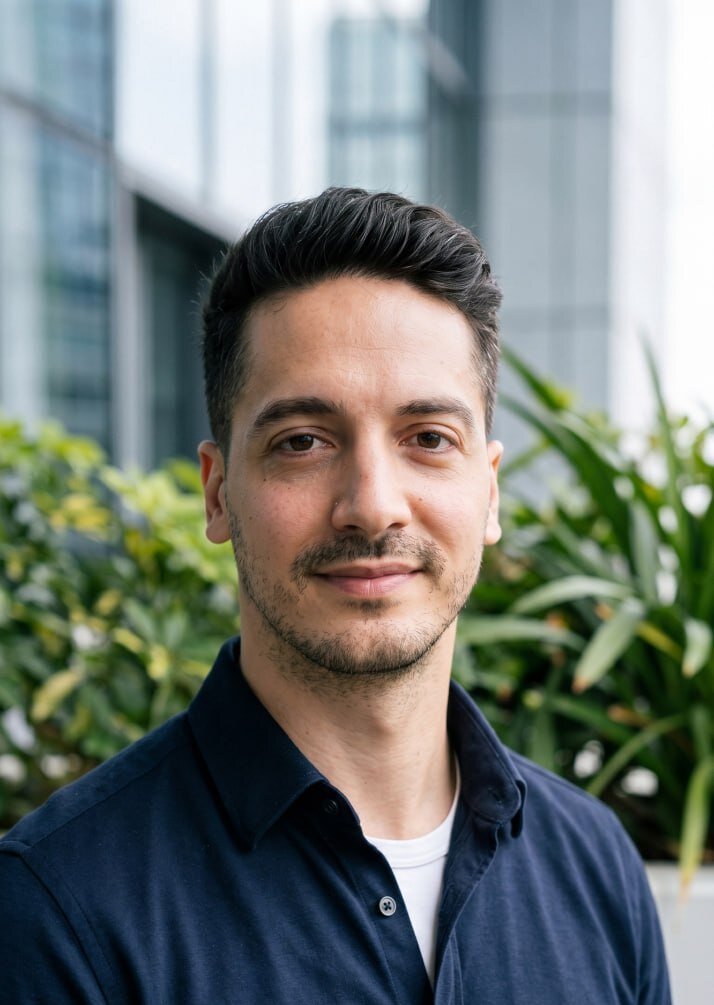
Can you introduce yourself and describe the focus of your career?
I’ve spent my career seeking to understand people. That interest started long before I worked in technology. I studied history at Yale because I was fascinated by how people make decisions, how institutions evolve, and how change happens over time. Later, I studied the social dimensions of technology at the University of Oxford. While the subject matter changed, the questions stayed surprisingly consistent. I’ve always been interested in how people learn, adapt, collaborate, and make sense of the world around them.
What has been the common thread throughout your work?
Curiosity. Every meaningful opportunity in my career started with a question. I’ve never been someone who followed a perfectly linear path. Instead, I’ve followed ideas that genuinely interested me. Looking back, those interests often connected in ways I couldn’t have predicted. What appeared unrelated at one point eventually became part of a much larger picture.
What do you think about expertise today?
Expertise is a double-edged sword. Once you become an expert, your brain defaults to the playbooks that worked in the past, which makes you blind to new solutions. The wisest people I know treat their own expertise as a mild liability. They actively work to ‘unlearn’ what they know so they don’t get trapped by their own success.
How do you stay informed in a world where information is constantly changing?
I try to read broadly rather than narrowly. I recently started using a lightweight AI agent to help expand and diversify the information I consume. It surfaces publications, perspectives, and thought leaders I might not have encountered otherwise, which helps me avoid relying on the same sources repeatedly. I still spend time evaluating ideas myself, but the tool helps broaden the pool of information I draw from. I also try not to chase every new development. Understanding why something matters is usually more valuable than simply knowing that it happened.
What do people get wrong about success?
People think success is the elimination of problems. I’ve found that success is just graduating to better problems. You never reach a point where everything is easy and figured out. You just earn the right to tackle more complex, more fascinating challenges.
How do you approach solving complex problems?
I usually start by trying to understand the problem before thinking about solutions. People often rush to answers because uncertainty feels uncomfortable. I’ve learned that spending more time with the question often leads to better outcomes. The quality of the solution is usually tied to the quality of the understanding that comes before it.
How has your educational background influenced the way you think?
Academia trained me to hunt for complexity, but in tech, endless nuance is a trap. Leaders don’t have the luxury of perfectly mapped context—they need efficient, clear decisions.
I had to invert my training: instead of using nuance to expand a problem, I use it to filter the noise. In a fast-moving environment, you rarely have time for the perfect answer. The true value of my background isn’t in gathering all the context, but in quickly identifying exactly which missing pieces actually matter so we can confidently move forward without the rest.
What is the hardest part of your job that people rarely talk about?
The hardest part of my job is dealing with the uncertainty of creating a new product. You never know for sure if people will actually use it or if it will be successful. It requires a lot of patience and resilience to keep pushing forward when things aren’t going well. It’s also challenging to communicate the value of a new product to potential customers and convince them to try it out.
What makes a strong leader?
The strongest leaders I’ve encountered are good listeners. They create environments where people feel comfortable sharing ideas, asking questions, and challenging assumptions. They don’t need to have all the answers themselves. Instead, they help teams think more clearly and work through problems together.
What habits outside of work have helped you throughout your career?
Reading has been important. So has maintaining interests outside of work. I enjoy cycling, weightlifting, and fiction. Those activities help me to disconnect and create space to think differently. This often helps me land on ideas that wouldn’t emerge while focusing directly on a problem. Some of my best insights have appeared when I wasn’t actively searching for them.
What excites you most about the future?
I’m interested in how people adapt to change. New technologies, new ways of working, and new forms of collaboration continue to emerge. The tools will change, but the human questions remain remarkably consistent. How do people learn? How do they make decisions? How do they work together? Those questions continue to fascinate me.
What advice would you give to someone early in their career?
People are always told to ‘follow their passion.’ I think that can be misleading. Passions fade when things get hard. My advice is to follow your aptitude. Pay attention to what you can do better than most people with less effort. Apply that to a problem that actually matters. Usually, passion follows competence, not the other way around.