
Gina Potter
Superintendent
San Ysidro School District
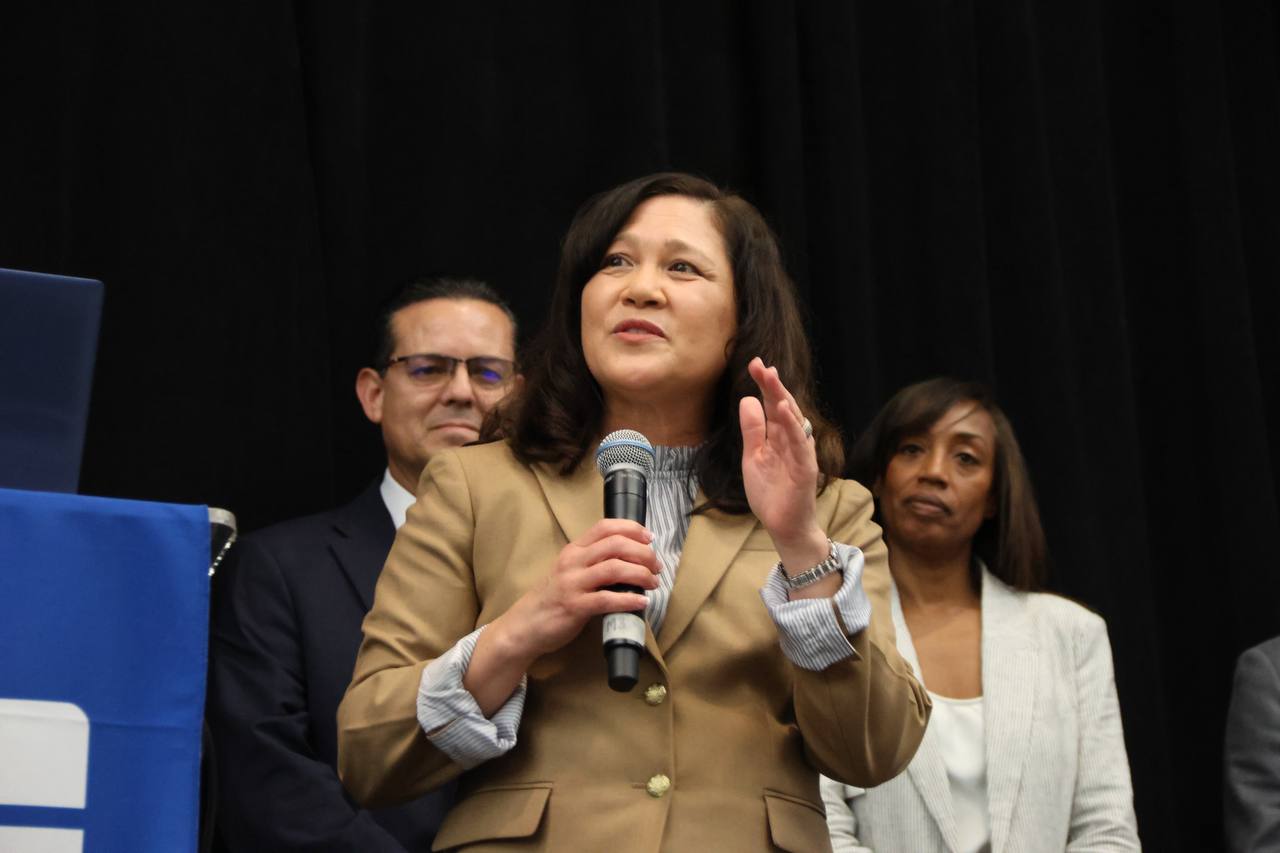
Please introduce the San Ysidro School District and describe your role as Superintendent.
It is an honor to serve as Superintendent of the San Ysidro School District in San Diego County, where I have led the district since 2018. We serve approximately 4,500 students across seven schools in one of the most culturally diverse communities in California, supported by more than 650 dedicated educators. As Superintendent, I work closely with our Board of Education and leadership team to align governance, curriculum and instruction, technology, facilities, finance, and community partnerships so every student has the opportunity to succeed.
During my tenure, our district has been recognized with two California School Boards Association state Golden Bell Awards in 2024 and 2025 for innovative programs that support student success. I have also been honored with the Classroom of the Future Foundation Superintendent Award and the Assemblymember David Alvarez Innovative Superintendent Recognition in 2025, the ASCD Outstanding Instructional Leader State Award, and recognition from the U.S. House of Representatives by Congressman Juan Vargas. Earlier in my career, I was honored as ACSA and CSBA Chief Business Official of the Year, which reflects my strong background in school finance and fiscal stewardship. These recognitions really reflect the collective work of our Governing Board, educational team, and community to ensure resources and programs are aligned to support students in achieving their life aspirations and dreams.
How is the district structured operationally — do you rely primarily on internal teams or outside partners?
Operationally, the district is organized around interconnected teams that function like concentric circles of support. Our dedicated district departments—including Administration, Educational Services, Human Resources, Facilities and Operations, Child Nutrition, Technology, and Business Services—work alongside our outstanding school teams to collaboratively support student success.
For more than 80 years, the district has also benefited from a strong and growing network of more than 40 community partners. These partners include county and state public agencies, legislative leaders, and local organizations such as the San Ysidro Women’s Club, Casa Familiar, and the San Ysidro Education Collaborative, as well as professional sports organizations including the San Diego Padres and the Chargers.
Together, this structure—combining strong departmental and school-based leadership with an extensive network of community partners—creates a robust ecosystem of support for our students and their families.
How does your leadership approach stand out in a complex public education environment?
My leadership approach is grounded in compassionate, service-oriented leadership that prioritizes the well-being and success of students, families, staff, and the broader community. In complex public education systems, I believe schools function best when there is a shared, systemwide commitment to serving students.
A key component of this approach is ensuring strong alignment of goals across the organization. The priorities outlined in the district’s Strategic Plan embedded within the Local Control and Accountability Plan (LCAP) guide our work at the district, department, and school levels. When teams are aligned around common goals and a shared purpose, systems become more coherent, collaboration strengthens, and we are better able to support meaningful outcomes for students.
What communities do you serve, and how has that focus shaped your work?
Our district proudly serves culturally and linguistically diverse families, with many students who are multilingual learners representing more than 30 languages. This diversity is one of our greatest strengths and shapes how we design programs, communicate with families, and support student learning.
At the same time, some of our families face challenges related to poverty and housing instability. In response, the district has built a strong ecosystem of support for students and their families through coordinated services and community partnerships. Ensuring that these supports are in place is essential to creating equitable opportunities and strong outcomes for every student.
What are the most important priorities your district works on each year?
Three priorities remain consistent each year: student achievement, district stability, and ensuring a strong ecosystem of support for families and the broader community.
Academically, we monitor progress through measurable indicators such as English learner reclassification rates and overall student growth. Operationally, we focus on maintaining organizational stability so the district can effectively support schools and students. Community engagement is equally important, as the district works to maintain a coordinated system of support for families and the community that strengthens trust and helps ensure students are able to succeed.
How do you stay ahead of changes in education policy and leadership practice?
I stay closely connected to the field by engaging regularly with educators, policymakers, and community leaders. These conversations provide valuable insight into emerging challenges, effective practices, and opportunities for improvement across public education systems.
I also serve on statewide advisory groups, including the California Collaborative for Educational Excellence Advisory Council. Participating in these forums allows me to stay informed about evolving policy and leadership practices while contributing to broader conversations about strengthening public education. Listening across systems helps me understand what is working well and where adjustments may be needed.
Do families and communities remain engaged long-term with the district?
Yes. Engagement grows when people see consistency. Families stay involved when schools communicate clearly and follow through. Trust builds slowly but it is durable once established.
How do you measure whether the district is serving students effectively?
In California, school districts utilize a common set of indicators to measure student success. We use multiple measures to ensure we are serving students effectively.
Academic growth is one important measure, along with English learner progress. We also monitor attendance, graduation pathways, social-emotional well-being, and student engagement. Together, these indicators provide a comprehensive picture of how well the district is supporting students and where additional support may be needed.
What kind of support do families receive beyond classroom instruction?
Our schools have received California Community Schools grants, which support them in serving as community hubs for students and their families. As community schools, they are able to coordinate wraparound services through partnerships with various public agencies and local organizations, such as health and human services, to provide resources such as health care, food assistance, shelter, vision services, clothing, and other essential living needs.
Our schools have often functioned as trusted centers within the community. For example, during the pandemic our district served more than one million meals annually to families. We continue to work closely with local organizations and public agencies to connect families with resources that promote stability and help ensure students are ready to learn and succeed.
How are district initiatives typically planned and implemented?
We start with listening. Teachers, administrators, families, and students provide feedback. Then we pilot programs before scaling them districtwide. Implementation works best when there is an implementation plan timeline which includes transition steps, professional development, team work, and communication.
How are financial resources managed to support long-term improvement?
School finance is one of my core areas of expertise. Our district has maintained positive budget certifications since 2020, received strong annual external audit results since 2021, and earned favorable bond ratings and transparency report card scores. However, similar to many school districts across California, we are currently addressing fiscal pressures related to declining enrollment, rising special education costs without commensurate federal funding, escalating employee health insurance costs, and the broader need for additional state support through Proposition 98 revenues and higher cost of living adjustments. In this environment, responsible fiscal stewardship is essential. Our focus is on maintaining long-term financial stability while protecting the educational programs and services that directly support students.
In the last eight years, our district has successfully passed five general obligation bonds to modernize campuses and expand facilities. These facilities investments by our community allows instruction to happen in safe and updated school environments.
Have you had to say no to certain initiatives or proposals?
Yes. Focus is essential. Schools cannot pursue every opportunity. We evaluate proposals based on their alignment with district priorities focused on student data, fiscal sustainability, and their potential for measurable impact.
My leadership philosophy includes the principle that “less is more.” By prioritizing initiatives that are most aligned with our strategic goals, we are able to concentrate resources and attention where they will have the greatest benefit for students.
What major challenges has the district faced in recent years?
Like many school systems, we navigated the COVID-19 pandemic. That required rapid changes in instruction and operations. We expanded meal distribution, moved learning online, and coordinated with public agencies to ensure safety. The experience reinforced the importance of strong collaborative systems that prioritize humanitarian goals.
How do you encourage innovation inside a public school district?
Innovation comes from the people who understand the work of education best. Educators and school leaders often generate the most meaningful ideas because they are closest to students and classrooms. My role as a leader is to create the conditions where those ideas are encouraged, supported, and thoughtfully tested so that successful practices can grow and benefit more students.
What role does culture play inside a school district?
Culture plays a central role in how a school district functions because culture ultimately shapes how systems perform. A district culture grounded in respect, high expectations, and accountability enables teams to work collaboratively and solve problems together.
Without that foundation, policies and procedures alone are not enough to produce meaningful results. Strong organizational culture creates the trust and shared responsibility necessary for schools and departments to effectively support students.
Where do you see the district in the next decade?
The long-term goal is continued stability and expanded opportunity for students and families. This includes modern facilities, strong and innovative academic programs, and systems that effectively support students from diverse backgrounds.
Sustained progress occurs through consistent, steady improvement over time. By maintaining a clear focus on long-term priorities, the district can continue strengthening the conditions that help every student succeed.
How has your leadership style changed over your career?
Early in my career I focused on solving problems quickly. Over time I learned that pacing and listening matter more. Sustainable improvement requires collaboration and patience.
What changes in education are you most interested in right now?
I am particularly interested in systems that better integrate education with broader community services. When schools coordinate with health, housing, food, and family support programs, students are better positioned to focus on learning and succeed academically.
I believe education has the power to uplift entire communities. By strengthening these integrated systems of support, schools can help expand opportunity and break cycles of generational poverty.
What advice would you give future education leaders?
My advice to future education leaders is to listen deeply, seek to understand the entire system, and prioritize collaboration. Instruction, curriculum, governance, human resources, school finance, facilities, technology, child nutrition, health services, school culture, social-emotional well-being, state and federal education codes, board policies, and community engagement are all interconnected.
Leaders who take the time to understand how these systems work together are better positioned to make thoughtful decisions that strengthen schools and effectively serve students, families, and communities.