
Grace Huang
Trauma-Informed Healing Practitioner and Relationship Coach
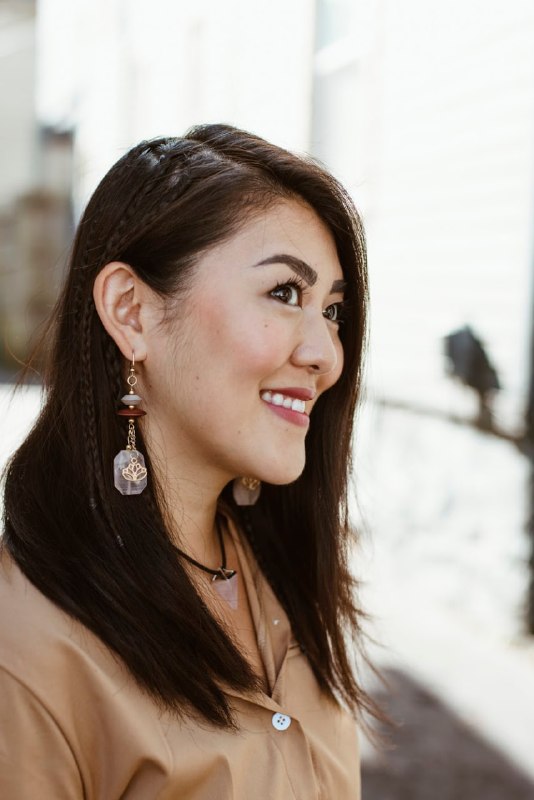

Please introduce your company and describe your role within the organization.
I run a trauma-informed healing practice focused on helping individuals and couples understand how early family dynamics shape adult relationships, self-worth, and emotional patterns, including recurring relationship challenges and unhealthy conflict dynamics.
Many people come to me when something is no longer working and they can’t ignore it anymore. When a relationship is at a breaking point, when conflict keeps repeating without resolution, or navigating breakup recovery when they’re trying to make sense of what happened.
My role is deeply hands-on. I work in private sessions with clients where we identify and shift patterns at the root, particularly in attachment styles and relational dynamics. My work integrates psychological frameworks, nervous system awareness, and intuitive insight, alongside spiritual and energetic practices. I track patterns quickly and precisely, helping clients put language to dynamics they’ve felt for a long time but haven’t been able to fully articulate. The goal isn’t just awareness, but real change in how they relate – to themselves and to others.
Though I am based in San Jose, Costa Rica, I work remotely with individuals from all over the world, as well as in person with those who are local or traveling.
What is your company’s core business model – do you use an in-house team, third-party vendors, or a hybrid outsourcing approach?
My business is entirely self-led. I handle all aspects of the work, from client sessions to operations, because the depth and integrity of this work depend on consistency and direct involvement.
The core of my work is intimate, private sessions with individuals and couples. This is not something I outsource, as the transformation relies heavily on trust, attunement, and my ability to identify and respond to patterns in real time.
How does your company differentiate itself from competitors in a crowded market?
A lot of the coaching and healing industry is built around the idea of becoming someone better, optimizing yourself, or reaching your highest potential. My work is grounded in a fundamentally different philosophy.
I don’t see healing as becoming someone new or “better”. I see it as returning to who you were before the experiences that required you to abandon parts of yourself in order to survive. The work is about integration – reclaiming those parts, rebuilding self-trust, and coming back into wholeness, while also developing the tools and awareness that were missing. It’s about remembering there was never anything wrong with you in the first place.
Another key difference is that I don’t position myself as someone clients should rely on indefinitely. The goal is not dependence. It’s helping people become deeply connected to their own internal authority so they can trust themselves, understand themselves, and navigate their lives with clarity. Support is important, especially in certain seasons of life, but the long-term aim is interdependence, not reliance.
I also combine structured psychological understanding, esoteric knowledge, and intuitive pattern recognition. I’m able to pinpoint relational dynamics and underlying patterns quickly, especially in high-intensity situations where relationships are at risk, the fallout from old trauma is resurfacing, or immediately after rupture. That level of precision and depth is what creates sustainable, meaningful change.
Many clients are also drawn to the integration of multiple modalities for a more comprehensive approach – combining psychological understanding with intuitive tools, somatic work, and practices like guided meditation, tarot readings, energy work, and ritual work.
What resonates with clients is that the work is not purely intellectual or purely spiritual. It bridges both. While many approaches focus on one or the other, I integrate them in a way that allows clients to access insight, emotional processing, and embodied change simultaneously.
The people who are drawn to my work are not looking for surface-level advice or quick fixes. They want clarity on the deeper pattern and the ability to shift it in a lasting, tangible way. I offer a complimentary consultation for individuals and couples who are considering working together, as alignment and fit are essential for this kind of work. Those interested can reach out through WhatsApp, email, or my social platforms.
What are the primary industries or sectors you serve, and how has that focus evolved over time?
I work with individuals and couples across industries, but there are strong common threads in the kinds of challenges they face. Most are self-aware and capable in many areas of their lives, but struggle in their family and romantic relationships, as well as in their relationships with themselves.
My work draws from trauma-informed frameworks, attachment theory, somatic practices, and integrative healing modalities. My approach is focused on helping people understand recurring relational patterns, rebuild self-worth, and learn how to trust themselves again.
This includes healing early wounds from parental dynamics, working through what is often called inner child or shadow work – which in practical terms means reclaiming the parts of themselves they had to suppress or disconnect from in order to cope growing up – and learning how to create healthier, more aligned relationships.
There is also a high demand for work related to healing patterns related to attachment, emotional availability, and partner selection, which incorporates boundary work, navigating over-functioning in relationships, and understanding why they may be consistently investing more emotionally than the other person or not being met in the depth they’re capable of.
What are the most in-demand services or solutions that clients approach your company for?
Most clients come to me when they feel stuck in patterns they can’t break on their own. This often includes relationships that are at a critical point, repeated conflict cycles, the resurfacing of past trauma, or the aftermath of a breakup where they don’t want to repeat the same experience again.
A common theme is over-functioning in relationships – giving a lot, showing up with depth and emotional availability, and not understanding why that isn’t being met or reciprocated. Others come because they feel disconnected from themselves, unsure of their needs, or unable to hold boundaries in a way that actually changes their relationships.
They’re not looking for surface-level advice. They want clarity on the deeper pattern and the ability to shift it in a lasting way. In addition to this, intuitive work such as Tarot readings, rituals, and energy work is also in high demand within my practice.
How do you personally stay ahead of industry shifts when most data is already yesterday’s news?
My work is grounded in psychological patterns that don’t change quickly – attachment, family systems, trauma responses – so I don’t rely heavily on trends.
At the same time, I stay engaged with ongoing research and continue expanding my repertoire of tools and modalities so I can support clients in ways that are both current and effective. I also stay closely connected to real client experiences, which gives me a more accurate understanding of what’s actually happening in relationships today beyond what’s being discussed at a surface level. What matters more than industry shifts and trends is being intimately attuned to each client’s individual needs and having the intuition and expertise to hold and guide them appropriately.
Do you have a significant percentage of repeat clients? If so, what strategies contribute to that loyalty?
Yes. Many clients continue working with me across different seasons of their lives, and a significant number come through referrals from past clients, which is something I don’t take lightly.
That level of trust is built through the depth of the work and the quality of the relationship we develop. Clients feel seen, heard, understood, and supported in a way that is authentic, compassionate, and constructive. As they evolve and grow, they often return to explore new layers and different challenges, not from dependency, but because they value the space and the work.
How do you measure and ensure high customer satisfaction in your operations?
For me, success is reflected in how a client’s relationship with themselves changes first. That includes increased self-worth, stronger self-trust, ability to connect with and honor their intuition, and a greater sense of internal stability. From there, it shows up in how they navigate relationships – more clarity, healthier boundaries, and more aligned choices.
In some cases, that leads to more stable and connected partnerships. In others, it leads to the realization that a relationship is not aligned, and the ability to move forward in a grounded and self-respecting way.
From the beginning, I frame the work as a co-creative process. I actively encourage clients to share what resonates and what doesn’t, because healing is not one-size-fits-all. What works for one person may not work for another, and part of the process is helping clients develop discernment around that.
What kind of post-project support do you provide to address client queries or ongoing needs?
I offer ongoing support based on each client’s needs and where they are in their process. This work tends to unfold in layers, so many clients choose to continue working together over time or return when new challenges arise.
Describe your pricing and billing structure – is it fixed cost, pay-per-milestone, or another model?
My work is session-based rather than tied to a fixed program length. Clients work with me for as long as it feels supportive and relevant to their process.
Sessions are offered at a fixed rate, and I also offer a limited number of sliding scale spots for individuals who are financially constrained but aligned with the work. I believe this work should be accessible, while also maintaining the integrity and sustainability of my practice.
What is the typical price range for projects you’ve handled in the past year, and how do you balance affordability with value?
Because my work is highly individualized, pricing is best discussed directly with clients based on their needs and level of support.
I’m mindful of accessibility, which is why I offer limited sliding scale options, but I also recognize the depth and value of this work. It’s not short-term or surface-level. It often changes how someone relates to themselves and others for the rest of their life.
Balancing those two realities is an ongoing consideration, and I approach it with both integrity and practicality.
Have you turned down projects based on budget or scope? If so, what are your minimum requirements?
Yes. Not every situation is the right fit.
If someone is looking for quick fixes or is strongly resistant to engaging with the process, it’s unlikely to be effective. This work requires a certain level of openness, willingness, and emotional capacity to go deeper.
Clients also need to be at a point where they’ve done some level of reflection already. Because of the depth of this work, there needs to be a readiness to look at underlying patterns and take responsibility for real change. Without that, the work doesn’t land in a sustainable way.
I also assess fit during the initial consultation. If I don’t feel I can support someone effectively, I’m honest about that. It’s important that both sides feel aligned for the work to be meaningful.
What key challenges has your company faced in the last few years, and how did you overcome them?
One of the biggest challenges has been building a business that honors both the depth of the work and my personal capacity, especially while becoming a mother.
There was a period where I stepped back from work entirely to be fully present with my daughter. That experience changed me – not just personally, but professionally. Going through motherhood while actively breaking generational patterns myself deepened my understanding of this work in a way that no training alone could.
Returning to my practice, I’ve had to rebuild in a way that is more intentional and sustainable. That has meant prioritizing depth over volume, pacing growth, and being truthful about capacity rather than pushing for expansion too quickly.
How I’ve navigated that is by making decisions rooted in long-term sustainability rather than short-term pressure. That includes working with aligned clients, maintaining clear boundaries around my time and energy, and allowing the business to grow at a pace that supports both my work and my life.
How do you foster innovation and adapt to emerging trends in your industry?
I focus less on trends and more on refining depth and precision.
Innovation in my work comes from integrating new insights, continuing to expand the range of modalities and tools I draw from, and evolving my approach based on real client experiences. I’m consistently learning and updating how I work so it remains both relevant and effective.
At the same time, I’m mindful that many trends in the healing and spiritual space can become overly simplified, black-and-white, and lacking in nuance. That kind of thinking can actually be harmful when it strips context from complex human experiences. Part of my work publicly is speaking to that nuance and offering a more grounded perspective.
I’m also clear that while technology, including AI, can provide information, it cannot replace human attunement, relational depth, or the ability to track emotional and nervous system responses in real time. This kind of work depends on connection, presence, and responsiveness – things that require a human relationship.
What role does company culture play in your success, and how do you build and maintain it?
Even as a solo practice, culture is foundational.
At the core of my work is the belief that people are not broken. The part of them that knows there is more – that little voice that something isn’t right – is not dysfunction, it’s truth. My role is to help them reconnect to that, not override it.
The space I create is grounded in integrity, empathy, honesty, and accountability. Clients are met with compassion, but also with clarity. I don’t reinforce patterns that keep people stuck, even when they’re familiar.
There is also a strong emphasis on returning to self. Healing in my work is not necessarily about becoming someone new. It’s about reclaiming the parts of yourself that had to be suppressed or abandoned to survive. It’s about integration and growth from a space of wholeness.
I also place importance on practicality. Insight without lived change doesn’t create transformation. The work has to translate into how someone shows up in their relationships, their choices, and their daily life.
Above all, I approach this as a collaborative process. I’m not here to fix anyone. I’m here to create a space where people feel safe enough, and supported enough, to do the work of remembering who they are and building a life that reflects that.
Where do you envision your company in the next 5-10 years? What are your boldest long-term goals?
In the near term, my focus has been on 1:1 work while raising my daughter, but I plan to return back to holding group spaces, including workshops, women’s circles, integrative healing journeys, and more immersive experiences.
Long-term, I want to create an intimate wellness space where small-scale retreats, workshops, and collaborative work with other practitioners can take place. A space that allows for depth, connection, and high-quality, intentional work.
How has your leadership style evolved throughout your career, and what influences it?
My leadership has evolved from over-accommodating to being more grounded, clear, and boundaried.
I see leadership as something that holds both care and responsibility. It means considering the wellbeing of the people you’re working with, while also guiding them toward growth and greater self-awareness. A big part of that is helping people come into their own leadership within themselves – to trust their voice, their needs, and their discernment.
I also believe that leadership has to be embodied. It’s not enough to speak about growth, boundaries, or self-trust – you have to live it. The way I lead is shaped by how I show up in my own life and relationships, not just what I teach.
That alignment between what I say and how I live is what builds trust, and ultimately, what makes the work effective.
What emerging technologies or market shifts are you most excited about for your company?
I’m most interested in the shift toward deeper, more meaningful conversations online and the growing openness to more nuanced, psychologically informed work that is connected to the body, heart, and spirit.
There also seems to be a broader shift happening within the healing and spiritual space – moving away from more performative approaches that center on escapism, idealized positivity, or detachment from the human experience, and toward work that is more integrative and grounded in real life.
I see increasing demand for approaches that don’t bypass reality, but actually help people engage with it more honestly and skillfully. That includes emotional depth, relational accountability, and practical change, not just insight or inspiration alone. As a result, there’s a growing appreciation for practitioners who are authentic, embodied in their work, and able to hold both the human and the spiritual aspects of the process without separating the two.
I am all for this shift because I firmly believe and advocate that healing that doesn’t change how you actually live and relate is not real change.
What advice would you give to aspiring leaders? Can you share one lesson from your journey that resonates with the business community?
Build something that is sustainable for you, not just impressive from the outside. Especially in work that involves people, depth and the quality of your work matters more than speed. The more aligned and connected to your integrity your work is, the more stable it becomes over time.