
Ian Reight
Chief of Surgery
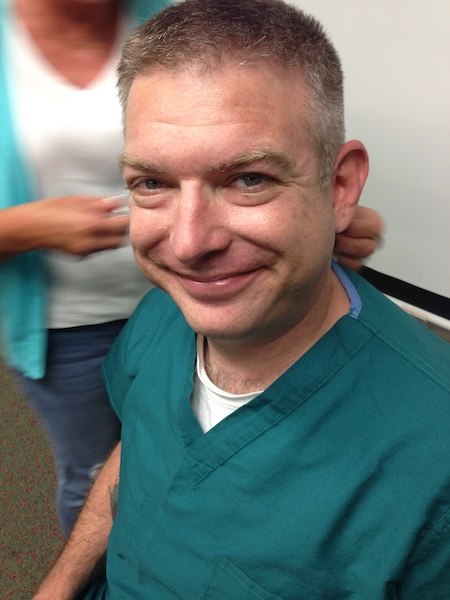
Please introduce yourself and describe your role in healthcare.
I am a general surgeon with experience in surgical leadership, hospital administration, and medical innovation. Over the course of my career, I have served as a chief of surgery, medical staff president, medical director of a breast center, medical director of wound care and hyperbaric medicine, and lead robotic surgeon. My role has always been centered on providing patient care while helping healthcare teams work more effectively together.
How does your approach to medicine and leadership operate on a day-to-day basis?
My work has always combined clinical care with operational leadership. On the clinical side, I focus on evaluating patients, performing surgery, and helping guide treatment decisions. On the leadership side, I work with physicians, nurses, administrators, and support staff to improve communication, patient outcomes, and overall efficiency. The goal is to make sure patients receive high-quality care while teams have the support they need to perform well.
How do you differentiate yourself in a field filled with highly trained professionals?
I have always focused on communication and adaptability. Technical skill is essential, but medicine is also about trust. Patients want to feel heard, and teams want leaders who stay calm under pressure. I have also embraced new technologies, particularly robotic surgery, while maintaining a focus on patient-centered care.
What areas of healthcare have you focused on throughout your career?
My primary focus has been general surgery. Over time, that expanded into leadership roles involving breast health, wound care, hyperbaric medicine, robotic surgery, and hospital operations. My responsibilities evolved as healthcare became more complex and interdisciplinary.
What are the most common challenges patients and healthcare organizations seek your help with?
Patients come to me for surgical evaluation and treatment. Healthcare organizations often look for leadership in areas involving surgical operations, physician engagement, quality improvement, and communication between departments. Many healthcare challenges are not purely medical. They often involve coordination and teamwork.
How do you stay ahead of changes in medicine when healthcare evolves so quickly?
Continuous learning is essential. Medicine changes every year. New technologies emerge, new research becomes available, and standards evolve. I stay engaged through ongoing education, professional collaboration, and hands-on experience. I have always believed that the moment you think you know everything is the moment you stop growing.
Do you often work with the same teams and colleagues over long periods of time?
Yes. Strong professional relationships are important in healthcare. Trust develops through consistency. Teams perform better when people understand each other’s strengths, communication styles, and expectations. Long-term collaboration often leads to better outcomes for both patients and organizations.
How do you measure success in your work?
Success starts with patient outcomes and patient safety. Beyond that, I look at communication, teamwork, operational effectiveness, and whether people are working together toward shared goals. A successful healthcare environment is one where patients receive excellent care and teams function efficiently.
How do you support patients beyond the operating room?
Surgery is only one part of patient care. Patients often need education, reassurance, and guidance before and after procedures. Clear communication is important throughout the process. Helping patients understand what to expect can reduce anxiety and improve their overall experience.
How do healthcare organizations balance quality care with operational realities?
Healthcare requires balancing many priorities. Resources, staffing, technology, patient needs, and regulatory requirements all play a role. Strong leadership helps align those priorities while keeping patient care at the center of decision-making.
Have you ever had to decline opportunities because they were not the right fit?
Yes. In medicine, every decision must be based on what is appropriate for the patient and the organization. Not every opportunity aligns with those goals. Good judgment sometimes means recognizing when a different approach is needed.
What challenges has healthcare faced in recent years, and how have you adapted?
Healthcare has experienced rapid technological change, staffing pressures, growing patient demands, and increasing complexity. Adaptability has been critical. I have focused on communication, collaboration, and embracing innovation without losing sight of the fundamentals of patient care.
How do you foster innovation while maintaining high standards of care?
Innovation works best when it solves real problems. I became involved in robotic surgery because it offered meaningful benefits for patients when implemented properly. At the same time, technology never replaces sound judgment, preparation, and experience. Innovation should strengthen care, not distract from it.
What role does culture play in successful healthcare teams?
Culture is extremely important. Teams perform best when there is trust, accountability, respect, and open communication. People need to feel comfortable raising concerns and sharing ideas. Strong cultures improve both patient care and professional satisfaction.
Where do you hope healthcare will be in the next decade?
I hope healthcare continues to become more efficient, more collaborative, and more patient-centered. Advances in technology will continue to improve treatment options, but I also hope we maintain a strong focus on the human side of medicine. Technology should support relationships, not replace them.
How has your leadership style evolved throughout your career?
Early in my career, I focused heavily on technical excellence. Over time, I came to appreciate the importance of communication, listening, and understanding different perspectives. Leadership is not about having all the answers. It is about helping teams work together to solve problems effectively.
What emerging developments in medicine excite you the most?
Advances in surgical technology, robotics, and data-driven decision-making are exciting because they have the potential to improve patient outcomes. I am interested in innovations that make healthcare safer, more precise, and more accessible.
What advice would you give to future healthcare leaders?
Stay curious. Keep learning. Communicate clearly. Never underestimate the importance of teamwork. Technical skill will open doors, but leadership, adaptability, and trust are what sustain a long career. One lesson that has stayed with me since my days as a volunteer firefighter and paramedic is simple: people look for calm leadership when situations become difficult. If you can stay focused under pressure and help others do the same, you can make a meaningful difference.
More REVERB Interviews
- David Ferrera — CEO
- Dr. Robert McGrath — CEO & Founder
- Roman Meydrbay — Vice President
- Philip Ashton-Rickardt — Managing Director, Chief Scientific Officer, co-founder
- Grace Huang — Trauma-Informed Healing Practitioner and Relationship Coach
- Ariel N. Rad — Plastic surgeon specializing in facial aesthetics / co-founder
- Simeon La Barrie — Founder and CEO
- Dan Champ — Founder