
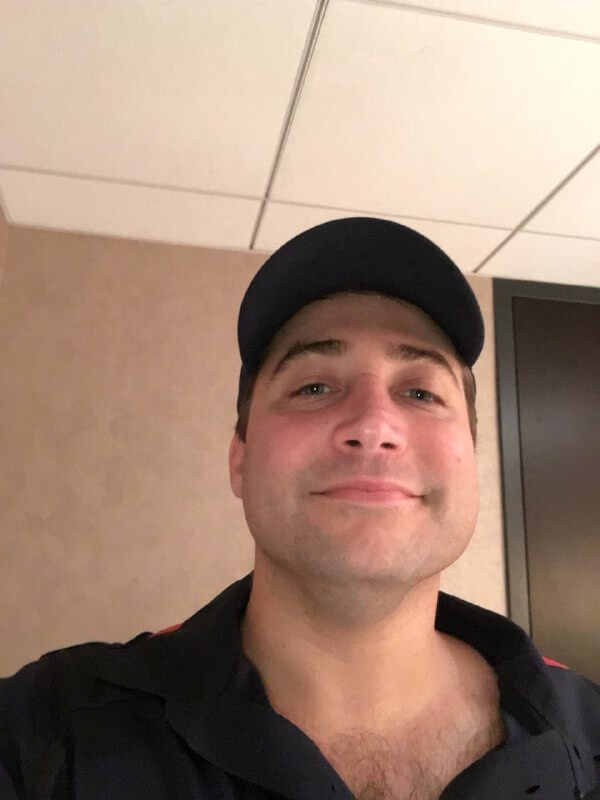
Jared Rudnick
Partner
RMS Sales
Please introduce your organization and describe the role you play in shaping its vision, culture, and long-term direction.
I am a Partner at RMS Sales, a manufacturer’s representative group that represents TTM Technologies. We operate in a highly technical, relationship-driven space, and our role is to bridge the gap between complex manufacturing capabilities and customer needs.
As a partner, I help shape the company’s long-term direction by focusing on sustainable growth, strong client relationships, and disciplined execution. Culture starts at the top, so I try to model consistency, accountability, and professionalism. Our vision is simple. Build something that lasts. That means long-term partnerships, not short-term wins.
How do you think about building teams and systems to execute that vision?
I believe in playing to strengths. No team works well when everyone is trying to do everything. I focus on identifying where we add the most value directly and where partnerships or external resources can strengthen us.
In our business, relationships are critical, so much of what we do stays hands-on and relationship-driven. At the same time, we are not afraid to leverage external expertise when it improves execution. The principle is simple. If we can execute at a high level internally and it strengthens relationships, we keep it in-house. If a partner can enhance quality or efficiency, we use that support.
From a leadership perspective, how do you ensure your organization stands out in a competitive market?
In a crowded market, reliability stands out. Flashy presentations and promises are common. Consistency is not. We focus on being steady, responsive, and honest. Over time, that builds credibility.
We also stand out for our deep understanding of our customers. Technical knowledge matters, but listening matters just as much. When clients know you understand both their business and their pressures, that creates differentiation that is hard to replicate.
Which industries or communities do you feel most responsible for serving today?
We primarily serve industries that require high-reliability, precision manufacturing. As my leadership has evolved, I feel a greater responsibility not just to the companies we serve but to the individuals within those organizations who rely on us.
Early in my career, I focused more on transactions. Today, I focus on long-term partnerships. The responsibility feels greater because the relationships are deeper.
What problems do clients most urgently come to you with?
Urgency usually revolves around reliability, timing, and risk. Whether it is supply chain concerns, technical complexity, or production deadlines, clients want confidence that what they are building will perform as expected.
We decide which challenges to take on by asking a simple question. Can we truly add value here? If we have the expertise and resources to solve the problem at a high level, we move forward. If not, we are honest about it.
How do you stay ahead of industry shifts?
Staying ahead starts with listening. I spend a lot of time talking with customers, partners, and industry contacts. Information moves fast, but perspective comes from experience.
I focus less on reacting to every headline and more on understanding long-term trends. Markets shift, but fundamentals often remain the same. Preparation and adaptability matter more than prediction.
What does long-term trust with clients look like?
Long-term trust means clients call you before there is a problem, not just after. It means transparency in both directions. It also means delivering consistently, not occasionally.
We build that trust by following through, communicating clearly, and taking responsibility when things do not go perfectly. Trust compounds over time.
How do you define success for your clients?
Success for our clients means meeting their production, performance, and timeline goals with confidence. It is not just about delivering a product. It is about delivering reliability.
Internally, we hold ourselves accountable through measurable performance, but also through feedback. If clients continue to rely on us year after year, that is a strong indicator that we are delivering value.
What responsibility do leaders have after a project is complete?
Leadership does not end when a deal closes. Responsibility continues. We stay engaged, follow up, and ensure expectations are met.
Long-term support strengthens relationships. It shows clients that we are invested in more than the transaction.
How do you approach pricing and value alignment?
Pricing has to reflect value and sustainability. If pricing is too aggressive, quality suffers. If it is disconnected from value, trust suffers.
We focus on alignment. Fair value means both sides feel the relationship is balanced and long-term. Sustainability matters for everyone involved.
Have you ever said no to an opportunity that looked attractive?
Yes. There have been opportunities that looked good on paper but did not align with our values or capabilities. Saying no is not easy, especially when growth is involved.
But leadership requires discipline. If an opportunity compromises integrity or stretches us beyond our ability to execute well, it is not worth it.
What meaningful challenges have shaped your leadership?
Market volatility and uncertainty have been significant challenges. Learning not to get too high in strong years or too discouraged in difficult ones has been key.
Those experiences reinforced the importance of controlling what you can and staying steady regardless of external conditions.
How do you create space for innovation while maintaining discipline?
Innovation works best within structure. Clear goals and accountability provide the framework. Within that framework, we encourage ideas and problem-solving.
Discipline and creativity are not opposites. When balanced correctly, they strengthen each other.
What role does culture play in performance?
Culture drives performance. If people feel trusted and accountable, performance improves. I try to model consistency, honesty, and effort. Those behaviors set expectations.
People respond to what they see leaders do daily.
Looking ahead 5–10 years, what impact do you want your organization to have?
Beyond revenue, I want RMS Sales to be known for reliability and integrity. I want partners and clients to view us as steady, trusted contributors to their success.
Longevity and reputation matter more than short-term metrics.
How has your leadership philosophy evolved?
Early on, I equated leadership with performance. Over time, I have learned it is more about stability, perspective, and empowering others.
Experience, setbacks, and mentorship have shaped that evolution.
Which emerging shifts excite you?
Technology that improves efficiency and communication excites me, especially tools that help teams collaborate more effectively. Not just for growth, but for clarity and execution.
When technology strengthens relationships rather than replaces them, that is powerful.
What advice would you give emerging leaders?
Focus on consistency. Learn your strengths and understand your weaknesses. Surround yourself with people who complement you.
One lesson that changed my view of leadership is this. You cannot control the market, but you can control your effort and integrity. Over time, that makes all the difference.