
LaTosha Kerley
HR Business Partner
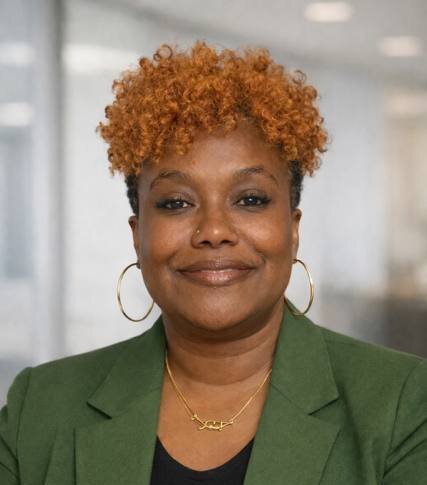
An HR executive on why performance problems usually start at the system level, measuring success by the issues that stop recurring, and the engagements she declines.
LaTosha Kerley works in human resources at the executive level, focused on how workplace systems function in real conditions rather than how they read on paper. Her work covers policy, communication flow, and the effect leadership decisions have on employees.
The distinction she draws runs through the whole conversation below. Most HR practice starts with policy; hers starts with observation — watching where processes slow down or break, then aligning the written rules with what people actually do. She is direct about what she measures, what she does after an issue is resolved, and the conditions under which she will not take the work at all.
Inside the Role of an HR Business Partner
Can you describe your role as an HR executive and the scope of your work?
I work in human resources at the executive level. My focus is on how workplace systems function in real conditions. That includes policy, communication flow, and how leadership decisions impact employees. I support both leadership teams and staff by creating structure, clarifying expectations, and resolving operational gaps.
What is your operating model when managing HR functions?
I work primarily within internal teams. The model is structured but flexible. I review policies, observe workflows, and align them with actual behavior. If needed, I collaborate with legal or external partners on employment-related matters, but most work is done in-house through direct engagement.
How do you differentiate your approach to HR from others in the field?
I focus on how systems actually perform, not how they are designed on paper. I spend time observing. I track where processes slow down or break. Many HR approaches rely heavily on policy. I balance policy with practical application.
The Problems Organisations Actually Bring to HR
What types of organizations or teams do you typically support?
I have worked across different environments, but the common factor is organizations that need structure and clarity. That can include growing teams, established companies, or groups going through operational change.
What are the most common issues organizations bring to you?
Communication gaps. Misalignment between policy and practice. Inconsistent enforcement of standards. These issues often show up as performance problems, but they usually start at the system level.
How do you stay current in a field that changes quickly?
I pay attention to patterns inside organizations. Trends are useful, but real insight comes from observing how people respond to systems. I also stay informed on employment-related updates, but I focus on what applies in practice.
Measuring Success and Sustaining Change
Do you see repeat engagement from the same teams or organizations? Why?
Yes. Consistency builds trust. When people see that issues are handled clearly and fairly, they come back for continued support. Most work evolves over time rather than being one-time fixes.
How do you measure success in your work?
Clarity and stability. Fewer repeated issues. Better communication between teams. When processes run smoothly without constant intervention, that is a strong indicator.
What kind of support do you provide after resolving an issue?
I focus on sustainability. That means documenting processes, clarifying expectations, and making sure systems can function without constant oversight. Follow-up is usually based on how the organization is operating over time.
How HR Engagements Are Scoped
How is your work typically structured in terms of engagement?
It depends on the organization. Some situations require ongoing involvement. Others are project-based, focused on specific issues like policy alignment or process improvement.
What determines the scope of work you take on?
Clarity of the problem and willingness to address it. If leadership is aligned and open to change, the work is more effective. Without that, results are limited.
Have you declined work based on fit or scope?
Yes. If there is no alignment on expectations or no willingness to adjust systems, the outcome will not be effective. I focus on environments where change is possible.
Culture, Leadership and What Comes Next
What challenges have you faced in recent years?
The pace of change in workplace expectations. Communication has become more complex. Expectations around flexibility and clarity are higher. The challenge is keeping systems aligned with those expectations.
How do you approach innovation in HR?
I keep it simple. Most innovation in HR comes from improving clarity, not adding complexity. Clear systems and communication solve more problems than new tools alone.
What role does workplace culture play in your work?
Culture reflects systems. If processes are unclear, culture becomes inconsistent. I focus on structure first. Culture follows from consistent behavior and expectations.
Where do you see your work evolving over the next several years?
There will be more focus on transparency and communication. Organizations will need clearer systems as work environments continue to shift. My work will continue to center on making those systems practical.
How has your leadership style developed over time?
It has become more measured. Earlier in my career, I focused on solutions quickly. Now I spend more time observing before acting. That leads to better outcomes.
What changes in the HR field are most important right now?
Clear communication and alignment between leadership and employees. Those areas are driving most workplace challenges today.
What advice would you give to someone entering HR or leadership?
Pay attention to how systems actually work. Ask questions. Do not rely only on policy. The real insight comes from understanding how people interact with processes every day.
What Does an HR Business Partner Do?
An HR business partner sits with a specific business unit rather than in a central HR function, and works on the people problems that unit actually has. The role was defined to move HR out of administration and into the room where operational decisions get made — which is why the useful test of whether a company has real HRBPs is whether they are consulted before a reorganisation, or told about it afterwards.
The distinction from an HR manager is one of orientation rather than seniority. An HR manager owns processes: hiring, onboarding, records, compliance, the annual cycle. A business partner owns outcomes for a business area — retention in a particular team, capability gaps ahead of a product launch, why one department’s performance ratings look nothing like another’s. In smaller organisations one person does both, and the title tells you very little.
Which makes the point Kerley makes above the practical core of the job. Most issues that arrive labelled as performance problems are structural: an expectation that was never made explicit, a policy enforced in one team and not another, an approval step nobody owns. Treating those as individual failings produces documentation and no improvement. Treating them as system faults is slower and works.
It also explains her measure of success. If the metric is issues resolved, the incentive is to keep resolving them. If the metric is issues that stop recurring, the work has to change the system that produced them — which is a harder thing to claim credit for and a better thing to have done.
More REVERB Interviews
- Leonard Cagno — benefits and payroll operations partner, on aligning systems that sit in silos
- Constantine Koliopoulos — business strategist, on growth without operational structure
- Ashish Kataria — CEO of Epik Solutions, on why low adoption is a system issue
More REVERB Interviews
- Frank Scurlock — President and CEO
- Frank Elsner — Chief of Safety and Security
- Ron Mix — Pro Football Hall of Fame member and attorney
- Rick Bainbridge — Founder
- Hayden Fowlkes — Vice President
- Said Abulafia — CEO
- Otto Bohon — External COO/CMO and Senior Advisor
- Asante Babers — Cybersecurity Engineer