
Lawrence “Larry” Waldman
Founder and President
Ai Health Technologies and Cyberhealth AI
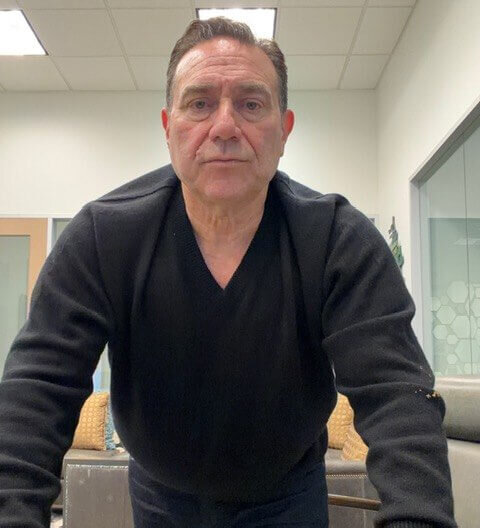
A Miami healthcare technology founder on documenting during a procedure rather than after it, why adoption is the real obstacle, and the feature he removes if it does not earn its place.
Lawrence “Larry” Waldman is the founder of Ai Health Technologies and President of Cyberhealth AI, based in Miami, Florida. His work sits between healthcare operations and technology — building systems that improve documentation, accountability and process clarity inside clinical environments.
He came to it from the Army, senior living, and healthcare consulting, and that route shapes the approach: structure first, then execution. The distinction he keeps returning to is timing. Most systems document after the fact; his are built to capture the record while the work is happening.
The System and How It Works
Can you introduce your work with Cyberhealth AI and your role as a founder and operator?
I am the founder of Ai Health Technologies and the President of Cyberhealth AI, based in Miami, Florida. My work sits between healthcare operations and technology. I focus on building systems that improve documentation, accountability, and process clarity inside clinical environments. I come from a background in the Army, senior living, and healthcare consulting. That experience shapes how I think about structure and execution.
How is your operating model structured across technology, healthcare, and delivery?
I use a hybrid model. Core system design and process logic stay in-house. That includes how authentication, measurement, and documentation work. Technical development can involve external partners when needed. Healthcare environments themselves are external by nature, so integration with providers is part of the model. I stay close to both the operational side and the product side.
What makes your approach different in healthcare technology?
I focus on closing specific gaps. Many systems document after the fact. I focus on documenting during the process. For example, Cyberhealth AI includes patient authentication, accurate measurement capture, provider name and NPI watermarking, and full procedure video documentation. Each step creates accountability in real time, not retroactively.
Who It Serves
Which parts of the healthcare system do you work with today?
I work primarily with healthcare providers and organizations that rely on structured documentation and compliance. That includes environments connected to Medicare and commercial insurance systems. My focus developed over time through consulting work where I saw repeated operational gaps.
What do clients or partners typically need from your system?
They need clarity and verification. The most common needs are patient authentication, accurate procedural records, and clear attribution of who performed the service. Video documentation is also a key requirement. It creates a complete record from beginning to end.
How do you stay current in a system that changes slowly but produces constant data?
I rely more on direct observation than reports. Most data reflects what already happened. I focus on where breakdowns occur in real workflows. That comes from being close to operations. I also pay attention to regulatory direction, but I don’t rely on trends alone.
Adoption and Measurement
Do you see repeat engagement from providers or partners?
Yes. Once a system becomes part of a workflow, it tends to stay. Consistency matters in healthcare. If something improves documentation and reduces uncertainty, people continue to use it. Retention comes from reliability, not messaging.
How do you measure whether your system is working effectively?
I look at process clarity. Can you verify the patient? Can you verify the provider? Is the procedure fully documented? Are the records consistent? If those answers are clear, the system is working. I also look at whether gaps are reduced over time.
What kind of ongoing support do you provide after implementation?
Support is tied to usage. That includes system updates, workflow adjustments, and access to prior procedure records. Providers can review past videos while working. That helps reinforce consistency and accuracy.
Commercial Structure and Fit
How is your work typically structured from a commercial standpoint?
It depends on the environment. Some work is structured around implementation and system integration. Other parts relate to ongoing usage. I do not apply a single fixed model. The structure follows the operational needs.
Can you share typical project scope or pricing ranges?
I don’t publish fixed ranges. The scope varies based on the size of the organization and the level of integration required. What I can say is that the system has to justify its role operationally. If it does not improve clarity or accountability, it is not a fit.
Do you turn down projects? What defines a minimum fit?
Yes. If a group is not focused on process integrity or does not want structured documentation, it is not a fit. The system depends on participation. Without that, it does not work as intended.
Challenges and Discipline
What challenges have you faced building in this space?
The main challenge is adoption. Healthcare systems are complex and often slow to change. Even when gaps are clear, implementation takes time. I address that by focusing on practical steps and not overcomplicating the process.
How do you approach innovation without adding unnecessary complexity?
I focus on function. Each feature must solve a specific problem. For example, patient authentication confirms identity. NPI watermarking confirms the provider. Video documentation confirms the procedure. If a feature does not serve a clear role, it is removed.
What role does culture or discipline play in your work?
Discipline matters more than culture language. My background in the Army shaped that. I focus on consistency, accountability, and showing up daily. Systems reflect the habits behind them.
Where It Goes
Where do you see your work going over the next 5 to 10 years?
I expect more integration between healthcare processes and real-time documentation systems. The goal is not expansion for its own sake. It is improving how systems verify and record what actually happens during care.
How has your leadership approach changed over time?
Earlier in my career, I focused more on execution. Over time, I shifted toward structure. If the structure is right, execution follows. That applies to both teams and systems.
What developments in healthcare technology are most relevant to your work?
I pay attention to technologies that improve verification and record integrity. Not all innovation is useful. The focus is on tools that reduce ambiguity and improve accountability during the process, not after.
What would you say to someone building in healthcare or a regulated industry?
Focus on the actual problem. Stay close to operations. Do not rely on assumptions. If you understand where systems fail, you can build something that works. If you don’t, the solution will not hold up in practice.
Key Learnings
- Documenting during a procedure rather than after it changes what the record can prove — retroactive documentation is reconstruction, not verification.
- Adoption, not capability, is the binding constraint in healthcare technology; clear gaps still take time to close.
- Every feature should map to one specific verification — identity, attribution, procedure — and anything that does not is removed.
- Direct observation of real workflows surfaces breakdowns that reporting data, which describes the past, cannot.
- A system that depends on participation is not a fit for an organisation that does not want structured documentation.
Clinical Documentation Improvement: What It Is and Why It Is Hard
Clinical documentation improvement (CDI) is the discipline of making the medical record accurately reflect what actually happened during care. It sits at an awkward intersection: the record is simultaneously a clinical tool, a legal document, and the basis on which a service is billed and audited. Those three purposes pull in slightly different directions, which is why the work exists as a specialism at all.
Most CDI programmes are retrospective. A specialist reviews records after the encounter, identifies gaps or ambiguities, and queries the clinician to clarify. That model works, but it inherits a structural weakness: it is asking someone to reconstruct detail after the fact, sometimes days later, from memory and whatever was captured at the time. Anything not recorded during the encounter has to be recalled, and recall is the weakest link in the chain.
That is the gap Waldman’s approach targets. Capturing identity, provider attribution and procedure detail at the moment of care rather than afterwards removes the reconstruction step entirely. The record is not improved later; it is complete when it is made. For environments connected to Medicare and commercial insurance — where documentation supports both clinical continuity and claims — the difference between a contemporaneous record and a reconstructed one is meaningful.
The obstacle is rarely disagreement about the goal. It is that clinical workflows are already saturated, and any system that adds steps at the point of care competes directly with clinical attention. This is the practical reason Waldman strips features that do not serve a specific verification: in this setting, every additional interaction has to justify the seconds it costs someone who is treating a patient.
More REVERB Interviews
- John Theodore Zabasky — on building benefits for workers the system leaves out
- Michael Curtis Broughton — on designing logistics systems that hold under stress
- Constantine Koliopoulos — business strategist, on scaling before the systems are ready