
Lee Lorenzen
Founder
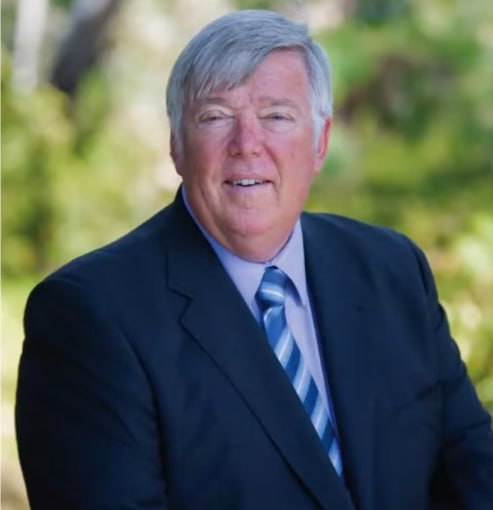
Please introduce Cluster Solutions and describe your role in shaping its vision and long-term direction.
I founded Cluster Solutions in 1989 to advance the research and application of clustered water technology. My role is both scientific and operational. I oversee research direction, product development, and strategic partnerships. The core vision is to improve quality of life by understanding how water functions at the cellular level and how we can stabilize beneficial water structures. I remain directly involved in testing and evaluating how the technology performs in real-world conditions.
Over time, I’ve also had to shape the direction with an understanding that new ideas are not always accepted immediately. That has influenced how we document and validate the work.
How do you think about building the research and development systems that support this work?
Our approach is collaborative and research-driven. I work with physicians, scientists, and technical advisors who can independently evaluate results. Some work happens internally through formulation and technology development. Other work happens externally through medical professionals observing outcomes.
The system is built around continuous testing and feedback. We don’t rely on one set of results. We repeat, refine, and compare. That’s especially important when working in areas that are still being explored or questioned.
From your perspective, how does clustered water technology stand apart in the broader health and wellness field?
Most hydration products focus on adding substances to water. Our work focuses on the structure of water itself. We study how water molecules organize and how that affects cellular hydration and nutrient transport.
When you focus on structure instead of additives, you’re working in a space that is less familiar. That can create resistance, but it also creates an opportunity for deeper understanding.
Who do you feel most responsible for serving through this work?
The work serves people looking for practical ways to support hydration and wellness. It also serves physicians and researchers who want to better understand water behavior in biological systems.
Early on, my focus came from a personal situation—my wife’s illness—which pushed me to explore alternatives. That experience shaped the direction of the work and the level of commitment behind it.
What kinds of problems or questions lead people to your research and products?
Most people come with questions about hydration, energy, and general wellness. Researchers want to understand the mechanism behind water clustering.
My role is to explain clearly what the technology does and what it does not claim to do. I focus on the process, the patents, and the research behind it. Clarity matters, especially when the topic challenges existing assumptions.
How do you stay informed and continue improving the technology over time?
Continuous research is central. I review scientific literature and stay in contact with physicians and researchers who provide real-world feedback.
Their observations often raise new questions. That’s how improvement happens. In fields that are still developing, you have to stay open to new data while staying disciplined in how you evaluate it.
What does long-term trust with collaborators and users look like in this field?
Trust comes from consistency and transparency. I explain the work in clear terms and stay directly involved in development.
Over time, people learn that the process is steady. In areas where ideas may be questioned early on, consistency becomes even more important than short-term validation.
How do you define success for the work you are doing?
Success is measured by reliability and continued scientific interest. If the technology performs consistently and continues to be studied, that is progress.
It’s not about immediate acceptance. Many ideas in science take time to be fully understood. The focus is on whether the work holds up over time.
What responsibility do you feel after a product or technology is released?
The responsibility continues. I stay involved in monitoring feedback, answering questions, and supporting further research.
If improvements are needed, we make them. If questions arise, we address them directly. Ongoing involvement is part of maintaining credibility.
How do you think about pricing and value in the wellness technology space?
The goal is to align price with the research and development required to maintain quality. This technology took decades of study and experimentation.
At the same time, it has to remain practical for people to use. The balance is between scientific integrity and everyday accessibility.
Have you ever declined opportunities that did not align with your goals?
Yes. There have been opportunities to move faster commercially by reducing scientific oversight. I chose not to pursue those.
Protecting the integrity of the research has always been the priority. Once that is compromised, the long-term value is lost.
What challenges have shaped your approach to this field?
Early skepticism was one of the biggest challenges. When an idea doesn’t fit current thinking, it takes time for people to evaluate it seriously.
That experience reinforced the importance of documentation, repetition, and patience. History shows that many scientific ideas go through that phase.
How do you maintain innovation while staying focused on the core technology?
We stay disciplined. The core objective is understanding water structure and behavior.
New ideas are evaluated based on whether they strengthen that understanding. If they don’t, we don’t pursue them. That keeps the work focused.
What role does culture play in the way you conduct your work?
Integrity and persistence are central. Research takes time, and results are not always immediate. I try to model patience, curiosity, and discipline. In areas where ideas are still being evaluated, those qualities matter more than speed.
Looking ahead five to ten years, what impact do you want this work to have?
I would like to see continued scientific exploration of water structure and its role in biological systems. If this work encourages more research and leads to practical hydration solutions, that would be meaningful.
How has your leadership philosophy evolved over time?
Early in my career, I focused on discovery. Over time, I learned that sustaining innovation requires structure.
You need systems for testing, collaboration, and long-term commitment. Leadership means protecting the work while making it usable.
Which scientific or technological shifts interest you most right now?
Advances in molecular biology and imaging technologies are important. They allow researchers to study water behavior at smaller scales. As those tools improve, understanding will improve as well.
What advice would you offer to people pursuing new scientific ideas?
Be prepared for skepticism. Stay focused on the work and document everything carefully. Many ideas take years to be understood. Patience and persistence are essential if you want the work to last.
More REVERB Interviews
- Ben Barton — Medical Consultant
- Denaesh Ariyanayagam — Consultant General and Vascular Surgeon
- Roman Meydrbay — Vice President
- Daniel A Ruhl — Physical Therapist
- Ariel N. Rad — Plastic surgeon specializing in facial aesthetics / co-founder
- Cy Xayarath — Nurse
- Stephen Garbesi — Founder
- Addison Thornton — Program Specialist, Employer Brand & Engagement