
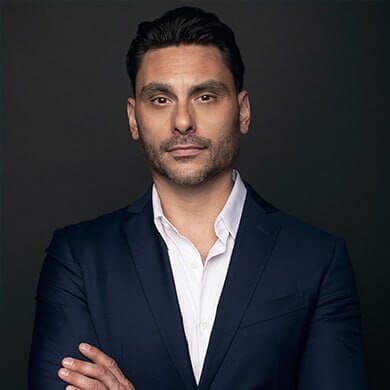
Michael Mumbauer
Founder and CEO
Liithos
How would you describe Liithos and your role in building it?
I’m the founder and CEO of Liithos. We build narrative-driven digital worlds that combine gaming, storytelling, and emerging technology. The focus is long-term intellectual property. We are not trying to make disposable content. We are building connected experiences that can evolve across games, online communities, and other media.
My role is operational and creative. I spend a lot of time aligning teams around vision, production priorities, and technology decisions. I also work closely with creative leadership on world-building, story structure, and how we scale ideas into actual products people can engage with.
A large part of my job is connecting disciplines that normally operate separately. Game development, film production, AI tooling, and community engagement are all moving toward each other now.
What operating model does Liithos use to build projects?
We use a hybrid model. We keep core creative and strategic functions tightly integrated internally. That includes leadership, narrative direction, world-building, and production oversight.
For specialized development needs, we work with external collaborators and technical partners when it makes sense. Game development is resource-intensive. Flexibility matters.
The important part is maintaining creative continuity. Outsourcing only works if the vision stays centralized. Otherwise projects drift very quickly.
I’ve worked on large productions long enough to know that communication cadence is usually more important than headcount.
How does Liithos stand out in a crowded entertainment and gaming market?
Most companies focus on either technology or storytelling. We try to integrate both from the start.
A lot of projects also think too narrowly about platforms. We approach intellectual property as an ecosystem instead of a single product. A story may begin inside a game, but the audience relationship continues elsewhere.
Another difference is production perspective. I’ve worked across games, film, and digital production for over two decades. That cross-industry experience changes how I evaluate systems, pipelines, and audience behavior.
We are also realistic about how audiences consume media now. Attention moves fluidly between gaming, streaming, social platforms, and creator communities.
What industries and audiences do you primarily serve today?
The core focus is interactive entertainment and digital storytelling. That includes gaming audiences, online creator communities, and people interested in evolving narrative experiences.
Earlier in my career, the work was more directly tied to large entertainment companies and platform ecosystems. I worked around projects connected to franchises like The Last of Us, Uncharted, and God of War. I also spent time around advanced digital production and performance-capture film work.
Over time, the focus shifted from contributing inside larger systems to building original IP and creative infrastructure directly.
What are the most common problems collaborators or partners come to you to solve?
Usually it comes down to integration problems.
A lot of teams have strong technology but weak storytelling. Others have good concepts but no scalable production structure. Sometimes the issue is creative alignment across departments.
I spend a lot of time helping teams simplify complexity. Large entertainment projects fail when communication breaks down or when nobody understands the actual audience experience anymore.
We focus heavily on clarity. What is the world? Why does it matter? Why would someone stay connected to it long term?
How do you stay ahead when industries move faster than traditional reporting cycles?
I pay attention to behavior instead of headlines.
Industry news is useful, but by the time trends become articles, they are already moving mainstream. I spend more time watching how creators and younger audiences actually use tools.
I also stay close to experimentation. I test AI tools directly. I look at workflow changes in production environments. I watch how communities form around content.
You learn more from observing behavior than from reading predictions.
How do you maintain long-term relationships with collaborators and creative teams?
Consistency matters more than intensity.
People stay connected when communication stays clear and expectations stay realistic. Creative industries burn people out because leadership often oversells vision and underspecifies execution.
I try to avoid that.
I also think trust comes from operational follow-through. If you say you are going to review something Friday, review it Friday.
Small consistency compounds over time.
How do you evaluate whether a project or experience is successful?
Audience retention matters more than short-term spikes.
I look closely at engagement depth. Are people returning? Are they discussing the world organically? Are they emotionally connected to characters or systems?
Internally, I also evaluate production efficiency. Did the team operate clearly? Did communication hold up under pressure? Did the pipeline scale properly?
Creative success without operational sustainability eventually collapses.
What kind of support and communication happens after launch?
Launch is usually the beginning now, not the finish line.
Communities expect ongoing interaction. That means updates, communication cadence, technical support, and content evolution all matter.
We think about projects as living systems. That changes how you approach production planning.
How do you approach project budgets and production scope?
Scope discipline is critical.
A lot of projects fail because teams build beyond operational reality. We try to scale ambition carefully against resources and timelines.
There is no universal pricing structure because entertainment production varies heavily by scope and technical requirements. Some projects are compact prototype environments. Others involve large world-building systems and long production cycles.
The important thing is making sure the infrastructure matches the ambition.
Have you walked away from projects or opportunities?
Yes. Usually because of misalignment.
If expectations are unrealistic or if the creative direction constantly changes, projects become unstable very quickly.
I’ve learned that protecting team clarity is more important than chasing every opportunity.
What major challenges have shaped your recent work?
The pace of technological change.
AI, creator platforms, production tools, and audience expectations are all evolving simultaneously. That creates both opportunity and instability.
The challenge is staying adaptable without becoming reactive.
You need enough structure to execute consistently while remaining flexible enough to evolve.
How do you approach innovation inside your company?
We normalize experimentation.
Not every test needs to become a product. Teams need room to prototype ideas quickly without overcommitting resources too early.
I also encourage cross-disciplinary conversations. Some of the best production improvements come from unexpected places.
How has your leadership style evolved over time?
Earlier in my career, I focused more on pushing outcomes aggressively.
Now I focus more on creating alignment systems. Sustainable production depends on communication clarity, emotional stability, and operational trust.
Experience teaches you that leadership is mostly about reducing friction for talented people.
What technologies are you most interested in right now?
Generative AI is the obvious one, but I’m more interested in how it integrates into real production systems.
The important question is not whether AI exists. It’s how teams use it responsibly without weakening human creativity.
I also think interactive storytelling systems will become much more adaptive over the next decade.
What advice would you give someone building a company or creative career today?
Stay curious longer than everyone else.
A lot of people stop learning once they become successful in one area. That becomes dangerous when industries shift.
Also, learn how production actually works. Ideas matter, but execution systems matter more.
The people who last are usually the ones who can adapt without losing clarity.
More REVERB Interviews
- Monte Persinger — Owner and CEO
- Gregory Pranzo — Founder and CEO
- Marty Brickey — entrepreneur, investor, and technology consultant
- Lucas Jenkins — Co-Founder
- Randy Ripkey — President
- Paul Arrendell — Senior Leader in Quality and Engineering
- Brandon Gilkey — Founder and Operator
- Wajih Effendi — Vice President