
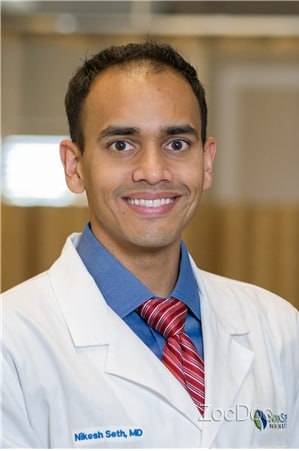

Please introduce Global Pain Solutions and describe your role as founder and CEO
I founded Global Pain Solutions in Scottsdale, Arizona. We are an interventional pain management practice focused on spine conditions, neuropathy, sciatica, low back arthritis, and regenerative medicine. I am a board-certified anesthesiologist with fellowship training in pain management.
As CEO, I set clinical standards, oversee provider recruitment, and define operational systems. I still treat patients daily. My role is split between patient care and building the structure that supports it. That includes compliance, quality metrics, payer strategy, and technology adoption. I am responsible for outcomes, culture, and long-term direction.
What is your operating model – in-house team, outsourced services, or hybrid?
We operate primarily with an in-house clinical team. That includes physicians, advanced practice providers, nurses, and procedural staff. Clinical care is not outsourced.
We use a hybrid model for non-clinical functions. Billing, revenue cycle management, IT support, and certain compliance functions may involve third-party vendors. However, oversight remains internal. I do not delegate accountability. Vendors support execution, but strategy stays in-house.
How do you differentiate in a crowded pain management market?
Three areas: precision, restraint, and structure.
First, we focus on minimally invasive and evidence-based interventions. That includes image-guided procedures and regenerative therapies when appropriate.
Second, we are disciplined about patient selection. Not every patient is a fit for interventional procedures. We assess imaging, prior treatments, functional limitations, and risk profile before recommending anything.
Third, we use standardized evaluation pathways. Every new patient goes through a structured intake process. That includes medical history review, imaging analysis, and clear treatment sequencing. This reduces variability.
I do not compete on volume. I compete on clarity and execution.
What patient populations do you primarily serve, and how has that evolved?
We serve adults with chronic spine-related pain, neuropathy, and joint-related pain. Many patients have failed conservative treatment. Some are post-surgical. Others are trying to avoid surgery.
Earlier in my career, I treated a broader range of acute and chronic cases. Over time, I narrowed the focus to complex, function-limiting pain conditions where interventional care can provide measurable benefit.
We do not treat pediatric patients. We are selective with high-risk opioid-dependent cases. Minimum fit includes documented chronic pain and prior conservative management.
What services are most in demand?
Epidural steroid injections for radiculopathy. Facet joint interventions for arthritic back pain. Radiofrequency ablation. Peripheral nerve blocks. Regenerative treatments such as PRP.
There is increasing demand for alternatives to long-term opioid therapy. Patients want options that allow them to return to work, exercise, or daily activity with less medication dependence.
How do you stay ahead of industry shifts in pain medicine?
I rely on structured continuing education, peer-reviewed literature, and professional societies. I attend major pain conferences annually. I review emerging data before integrating new techniques.
I do not adopt technology based on marketing. I assess evidence, complication rates, reimbursement stability, and long-term viability. If data is limited, I proceed cautiously or wait.
Engineering training helps. I evaluate systems, not trends.
Do you see a high rate of returning patients? What drives retention?
Yes. Chronic pain is rarely resolved in one visit. Many patients return for follow-up procedures or long-term management.
Retention is driven by clarity. We explain risks, expected outcomes, and alternatives in plain language. We set functional goals, not just pain scores.
If expectations are clear, satisfaction improves.
How do you measure and maintain patient satisfaction?
We track procedural outcomes, complication rates, and follow-up intervals. We monitor patient feedback and online reviews, but I focus more on functional improvement metrics.
Can the patient walk longer? Sit longer? Sleep better? Reduce medication? Those are operational measures.
We also audit charting and documentation for consistency. Standardization reduces errors and improves patient experience.
What post-treatment support do you provide?
Every procedure includes structured follow-up. Patients receive post-procedure instructions, access to clinical staff for concerns, and scheduled reassessment visits.
If a treatment fails, we reassess. We do not repeat ineffective interventions without new justification. That protects the patient and the integrity of the practice.
How do you structure pricing and billing?
We operate primarily through insurance-based reimbursement. That includes private insurance, Medicare, and other carriers. Pricing follows payer contracts and procedural coding standards.
For certain regenerative treatments not covered by insurance, fees are transparent and quoted in advance. We do not bundle unnecessary services.
I do not publish exact price ranges because they vary by procedure and coverage.
Do you turn down cases based on scope or budget? What are your minimum requirements?
Yes. If a patient’s condition falls outside our expertise, we refer out. If imaging does not support intervention, we do not proceed.
Minimum fit includes documented chronic pain, appropriate diagnostic findings, and willingness to follow structured care plans. We do not operate as a cash-only high-volume injection center.
What major challenges have you faced in recent years?
Regulatory pressure in pain medicine is significant. Opioid policy shifts, payer scrutiny, and documentation requirements have increased administrative load.
I addressed this by tightening compliance systems and investing in documentation training. Strong structure prevents long-term risk.
Scaling my prior multi-state practice also presented complexity. Growth introduces variability. I learned that expansion must be matched with operational control.
How do you approach innovation without compromising safety?
I integrate new techniques only after reviewing clinical data and training extensively. For example, regenerative therapies require patient selection discipline.
Innovation without structure leads to inconsistency. Structure without innovation leads to stagnation. The balance is deliberate adoption.
What role does culture play in your organization?
Culture is operational discipline plus respect. Staff must understand expectations clearly. That includes timeliness, documentation standards, and patient communication protocols.
I build culture through example. I am present. I treat patients. I review cases. I correct issues directly.
Where do you see the practice in 5-10 years?
Measured expansion. Possibly additional locations in Arizona, but only with leadership alignment and clinical consistency.
I am not pursuing rapid national scale. I am focused on durable systems and reputation.
How has your leadership style evolved?
Early in my career, I focused heavily on growth. Over time, I shifted toward precision and sustainability.
My parents influenced this. They built stability through discipline. I value steady execution over rapid expansion.
What technologies or shifts interest you most right now?
Image-guided precision techniques. Regenerative biologics with stronger clinical evidence. Data tracking for functional outcomes.
I am also interested in better integration of digital follow-up tools to track recovery metrics between visits.
What advice would you give to physicians building practices?
Build structure early. Do not rely only on clinical skill. Define processes for intake, documentation, compliance, and follow-up.
Growth amplifies weaknesses. Discipline prevents that.
One lesson from my journey is simple: success is not volume. It is consistency, ethics, and long-term trust.