
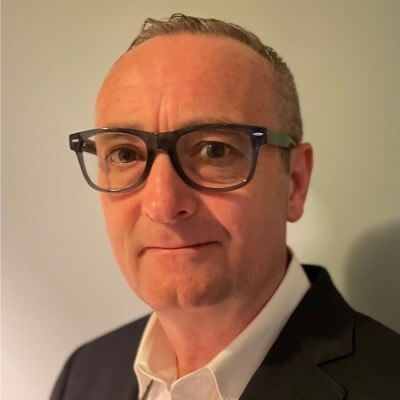
Philip Ashton-Rickardt
Managing Director, Chief Scientific Officer, co-founder
Halyard Therapeutics
Please introduce your companies and describe your role within them.
I currently serve as Managing Director and Chief Scientific Officer at BE Therapeutics. I’m also a co-founder and Chief Scientific Officer at Halyard Therapeutics. Both companies focus on engineered cell therapies for neurodegenerative diseases.
My role is a mix of science, strategy, and execution. I help shape the therapeutic direction, build scientific teams, evaluate technologies, and guide programs toward the clinic. A large part of the work is translating complex biology into something operationally practical and clinically useful.
I spent many years in academia before moving into biotech, so I approach leadership from both a scientific and organizational perspective.
What is your operating model for research and development?
The model is hybrid. We maintain core scientific leadership and strategic capabilities internally, but we work closely with external partners for specialized functions.
For example, manufacturing, toxicology studies, and certain platform technologies are often handled through CROs, CDMOs, or strategic collaborators. Internally, we focus heavily on scientific direction, translational strategy, and decision-making.
That structure gives us flexibility. Early-stage biotech needs to move quickly without building unnecessary infrastructure too early.
How do you differentiate your work in a crowded biotech market?
The main difference lies in the biological approach we take to neurodegenerative disease.
Many therapies focus directly on neurons. We focus more broadly on immune regulation and engineered cell therapies that can alter disease environments inside the brain and central nervous system.
I also think experience matters. I’ve worked in academia, startup environments, and larger organizations. That helps me evaluate technologies realistically. I’m interested in whether something can actually become a therapy, not just whether it works in an academic setting.
We try to stay disciplined about that distinction.
What sectors have you focused on throughout your career?
Most of my career has centered on immunology and translational medicine.
Early on, my work focused on T-cell biology and immune regulation. Over time, that evolved into cell therapy, neuroinflammation, and neurodegenerative disease.
The field itself changed significantly during that period. Twenty years ago, engineered immune cells were still viewed as highly experimental. Today, they are a major therapeutic category.
I’ve tried to stay close to areas where there is strong biology but still a significant unmet medical need.
What kinds of problems are partners and collaborators most interested in solving with you today?
The biggest interest is around engineered cell therapies for diseases where conventional approaches have struggled.
That includes ALS, multiple sclerosis, and other neurodegenerative conditions where inflammation and immune dysfunction play a role.
People also seek operational guidance around translational strategy. Early-stage science often fails because the path to development was not fully considered at the beginning.
So a large part of the work is prioritization and execution.
How do you stay ahead in a field that changes constantly?
I read constantly. Scientific papers, clinical data, patents, internal reports.
I also spend a lot of time speaking with scientists across different disciplines. Some of the best ideas come from adjacent fields rather than your own specialty.
The important thing is maintaining curiosity.
I’ve always believed in continuous learning. Once you assume you already know enough, you fall behind very quickly in biotechnology.
Do long-term relationships play an important role in your work?
Yes. Very much.
Biotech is a small ecosystem. You work with the same investors, scientists, operators, and collaborators repeatedly over long periods of time.
Trust matters. Consistency matters.
I think people continue working together when expectations are clear and communication is direct. That sounds simple, but it becomes very important during difficult phases of development.
How do you evaluate whether a program or collaboration is succeeding?
First, the science has to hold up. That is non-negotiable.
Second, we assess whether milestones are being achieved within a realistic timeframe. Are experiments reproducible? Is manufacturing feasible? Is the mechanism clinically relevant?
I also pay attention to team function. A strong scientific culture usually produces better long-term outcomes than a reactive one.
What does support and follow-through look like in your work?
In biotech, support is ongoing because development timelines are long.
Programs evolve continuously. Data changes assumptions. Manufacturing changes strategy. Regulatory requirements shift.
That means communication with collaborators and stakeholders needs to remain active throughout the process, not just at major milestones.
How do you think about budgets, resources, and project scope?
Resource allocation is critical in early-stage biotech.
You cannot pursue every idea simultaneously. You have to prioritize programs where the biology, clinical rationale, and operational feasibility align.
I’ve absolutely declined projects where the scope was unrealistic relative to available resources.
Focus is important. Fewer well-executed programs are usually better than trying to do too much at once.
What major challenges have you faced in recent years?
Transitioning from academia into biotech was a major change.
Academia rewards discovery. Biotech requires balancing discovery with timelines, financing, manufacturing, regulation, and clinical development.
Another challenge is the inherent uncertainty in emerging therapeutic areas. Neurodegenerative disease is difficult biology.
You need resilience because setbacks are unavoidable.
How do you encourage innovation inside scientific organizations?
People need room to think critically and challenge assumptions.
I try to build environments where scientists can debate ideas openly while still maintaining operational discipline.
Innovation is not just creativity. It also requires execution.
A good idea without a path to implementation is not enough.
What role does culture play in scientific leadership?
Culture is extremely important.
I value curiosity, accountability, and honesty. I also value calm decision-making. Biotech can become emotional because the stakes are high, but teams function better when communication stays measured and factual.
I also believe people perform better when they feel respected and trusted.
Where do you see your work heading over the next decade?
I think engineered cell therapies will expand well beyond oncology.
We are still early in understanding how immune regulation can be applied to neurological disease. I believe that area will grow substantially over the next decade.
The goal is not just scientific novelty. The goal is to develop therapies that meaningfully improve patient outcomes.
What has shaped your leadership style over time?
Experience and adversity.
Early in my career, I focused mostly on scientific rigor. Over time, I learned that leadership also requires patience, communication, and adaptability.
I came from a working-class background, and I think that shaped my perspective as well. I’ve always been comfortable building things incrementally.
What advice would you give to people building careers in science or biotech today?
Learn continuously. Stay resilient. Focus on substance over visibility.
And understand that meaningful progress usually takes longer than expected.
Most successful careers are built gradually through consistent work and good judgment over time.
More REVERB Interviews
- Robert Guarino — Physician Specializing In Pathology
- Hong Wei Liao — Lead Strategiest
- Dr. Rajendra Bhayani — ENT and facial plastic surgeon
- Lee Lorenzen — Founder
- Shahriar James Ekbatani — Chairman of the Board
- Grace Huang — Trauma-Informed Healing Practitioner and Relationship Coach
- Christopher Pulichene — Marine Operations Coordinator
- Tim Chachibaia — Director of Growth