
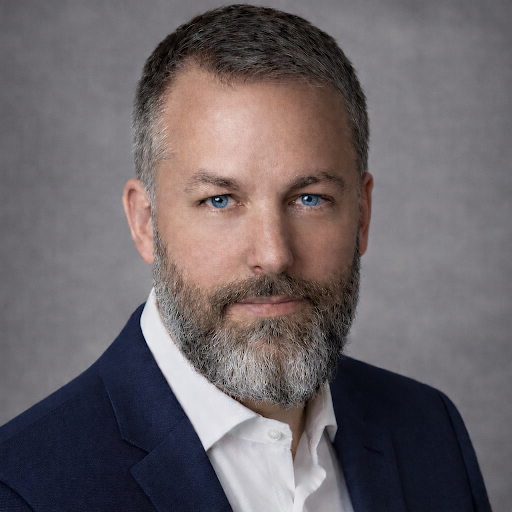
Please introduce your company and describe your role within the organization.
Frontline Partners is a veteran-owned small business focused on providing operational support, advisory services, and program execution capability to U.S. Government agencies and prime contractors, particularly in complex and high-risk environments.
As Managing Director, I’m responsible for setting the strategic direction of the company, building partnerships, and ensuring we deliver high-quality support across programs. At this stage, I’m also directly involved in business development, client engagement, and shaping how we position Frontline in the federal contracting space.
What is your company’s core business model – do you use an in-house team, third-party vendors, or a hybrid outsourcing approach?
We operate a hybrid model.
We maintain a core network of trusted professionals with experience in operations, program management, and advisory roles, and then scale through targeted surge staffing and partnerships depending on client needs.
That allows us to remain lean, responsive, and cost-effective, while still delivering specialized capability when required.
How does your company differentiate itself from competitors in a crowded market?
A lot of firms can design programs or write strategies. Fewer can step into complex environments and actually deliver under pressure.
We bring a combination of:
- Field experience
- Operational discipline
- Strong understanding of government requirements
We’re also structured from the outset to be audit-ready and compliant, which makes us easy to integrate into larger prime contractor teams.
What are the primary industries or sectors you serve, and how has that focus evolved over time?
We primarily operate in:
- Humanitarian assistance and stabilization
- Governance and institutional support
- Monitoring, evaluation, and operational oversight
- Increasingly, defense-adjacent and mission support work
Over time, we’re evolving from traditional development programming into broader mission support for U.S. Government clients, both overseas and domestically.
What are the most in-demand services or solutions that clients approach your company for?
Clients typically come to us for:
- Program start-up and operational support
- Embedded advisory roles
- Monitoring, evaluation, and third-party oversight
- Training and mission support in complex environments
The common thread is that they need people who can step in quickly and operate effectively without a long ramp-up.
How do you personally stay ahead of industry shifts when most data is already yesterday’s news?
I rely less on reports and more on direct engagement.
That includes:
- Conversations with clients and partners
- Understanding where funding is moving
- Tracking how priorities are shifting across agencies
In my experience, by the time something shows up in a report, it’s already behind the curve. Staying close to the work and the people driving it is what keeps you ahead.
Do you have a significant percentage of repeat clients? If so, what strategies contribute to that loyalty?
Yes—and that’s intentional.
Repeat work comes from:
- Consistent delivery
- Clear communication
- Low-friction collaboration
If a client feels confident that you will deliver and won’t create problems, they will come back.
How do you measure and ensure high customer satisfaction in your operations?
We focus on:
- Delivering against commitments
- Maintaining regular communication
- Addressing issues early
I also look at indirect indicators:
- Whether clients re-engage
- Whether they expand scope
- Whether they recommend us internally
Those are often more meaningful than formal surveys.
What kind of post-project support do you provide to address client queries or ongoing needs?
We don’t treat engagement as transactional.
We remain available for:
- Follow-on advisory support
- Lessons learned and after-action reviews
- Light-touch engagement as needed
That continuity helps clients sustain what was built and strengthens long-term relationships.
Describe your pricing and billing structure – is it fixed cost, pay-per-milestone, or another model?
We use a mix depending on the work:
- Fixed price for defined scopes
- Time-and-materials for advisory or evolving work
- Milestone-based structures for phased delivery
The goal is always to align pricing with the nature of the work and client expectations.
What is the typical price range for projects you’ve handled in the past year, and how do you balance affordability with value?
It varies widely—from smaller advisory engagements to multi-million-dollar program support.
More important than the range is how we approach value:
- Clear scope
- Efficient delivery
- Minimal overhead
Clients are willing to pay for reliability and performance.
Have you turned down projects based on budget or scope? If so, what are your minimum requirements?
Yes.
We typically pass when:
- Scope is unclear
- Expectations are unrealistic
- Budget does not support quality delivery
Taking on the wrong work creates risk for both the client and us.
What key challenges has your company faced in the last few years, and how did you overcome them?
The biggest challenge has been entering a competitive federal space as a new firm.
We’ve addressed that by:
- Building strong partnerships
- Positioning ourselves as a reliable subcontractor
- Ensuring we meet compliance and audit standards from day one
How do you foster innovation and adapt to emerging trends in your industry?
For us, innovation is less about buzzwords and more about practical improvement.
That includes:
- Using technology to improve data and decision-making
- Streamlining operations
- Integrating lessons learned quickly into program delivery
What role does company culture play in your success, and how do you build and maintain it?
Culture is critical.
We emphasize:
- Accountability
- Professionalism
- Support for people working in demanding environments
Even as a small firm, setting that tone early matters.
Where do you envision your company in the next 5-10 years? What are your boldest long-term goals?
We aim to grow into a trusted mission support partner for U.S. Government agencies and primes, particularly in complex operating environments.
Longer term, that means:
- Expanding capabilities
- Securing prime contracts
- Building a reputation for reliable execution
How has your leadership style evolved throughout your career, and what influences it?
Early in my career, I was more focused on direct problem-solving.
Over time, I’ve shifted toward:
- Creating structure
- Enabling teams
- Making decisions that allow others to operate effectively
Leadership becomes less about doing and more about creating the conditions for performance.
What emerging technologies or market shifts are you most excited about for your company?
I’m particularly interested in how:
- AI and data systems can improve decision-making
- Technology can support real-time monitoring and adaptive management
The key is applying these tools in a way that actually improves outcomes, not just adding complexity.
What advice would you give to aspiring leaders? Can you share one lesson from your journey that resonates with the business community?
Focus on execution and trust.
You can have strong ideas, but your reputation will be built on whether you deliver and how you treat people along the way.
One lesson that has stayed with me is: You don’t need to have all the answers—but you do need to create an environment where the best answers can emerge.