A nice-looking website can still miss the point. It might confuse visitors, leak leads, or start feeling old sooner than anyone expected.
That’s why founders, product teams, and marketers still spend time comparing the top web designers in 2026 before they commit serious budget.
Agencies also come at the work from very different angles. Some are built to make B2B websites convert better, while others bring more of a product mindset and pay closer attention to UX, flow, and interface decisions. You usually see that pretty fast once you look through case studies and decide whether you need a stronger brand site, a site built to drive growth, or something closer to a product experience.
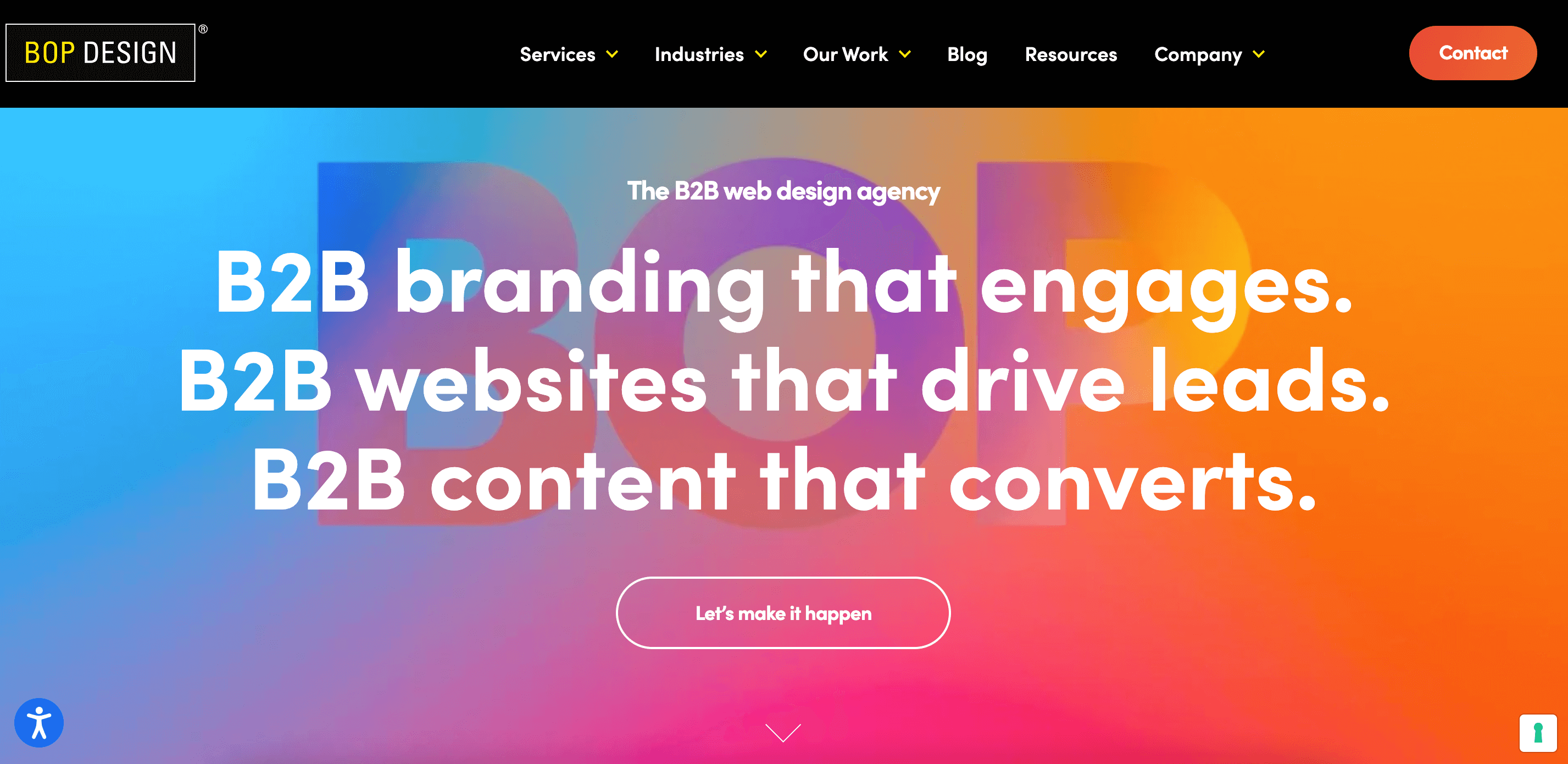
Bop Design is centered on B2B website work, and you can feel that in the way the agency frames the whole job. Rebranding, copy, SEO, and site design are treated as parts of the same business problem, not separate tasks handed off from one team to another. If a company plans to hire web designers in 2026, that kind of joined-up approach can make the decision a lot easier.
Its case studies point to that same pattern. Safehub, SKsoft, and Anaergia are not random creative showcases — they support the agency’s claim that good B2B web work depends on messaging, structure, and search visibility working together. Bop also stays flexible by extending into content, SEO, and digital advertising after launch, so clients do not have to switch partners the moment the site goes live.
Services and expertise: B2B website design and development, WordPress, branding, copywriting, content marketing, SEO, digital advertising
Location: San Diego, CA; multi-office U.S. presence
Team size: up to 50 experts
Industries they serve: Technology, Fintech & Insurtech, Biotech, AI & ML, Software, Industrial, Engineering, Consulting, Energy
IDP, or Internet Design & Publishing, has been building websites in Kansas City since 2003, and the way it works has changed very little in that time: full-time developers on staff, custom WordPress themes rather than off-the-shelf templates, and servers the company owns and manages itself. For a business planning to hire web designers in 2026, that combination removes the most common failure point of a web project, the handoff between whoever designed the site and whoever has to keep it running.
Its portfolio covers dealerships, insurers, manufacturers, and law firms, with Thoroughbred Ford, Lavalier, and Mover’s Choice Insurance among the named projects. Search visibility is built into the design phase, not added afterward, and the same team handles hosting, updates, and maintenance once the site is live. That single point of accountability is what keeps clients on the books for years rather than one launch.
Services and expertise: Custom WordPress design and development, e-commerce (WooCommerce, BigCommerce, Magento), custom PHP applications, organic SEO, managed hosting, ADA and cookie compliance
Usman Group starts earlier in the process than agencies that only redesign screens. They work across websites, apps, research, and broader digital projects, with a lot of attention on user needs and internal alignment. For teams looking at the best web designers in 2026, that can matter more than jumping straight into visuals.
Work for Nurse.com, Cressey & Company, and Dream Exchange points to a team that prefers clarity over trends. That makes the agency a sensible fit for corporate, nonprofit, and academic clients where several people need to agree before anything goes live. Its smaller size also means a more direct working relationship, which helps when the process depends on steady communication.
Services and expertise: Digital strategy, website design and development, UX research, usability testing, market research, mobile app development, digital marketing
Location: Denver, CO; Chicago, IL, USA
Team size: up to 10 experts
Industries they serve: Corporate, Nonprofit, Academic, Financial Services, Healthcare
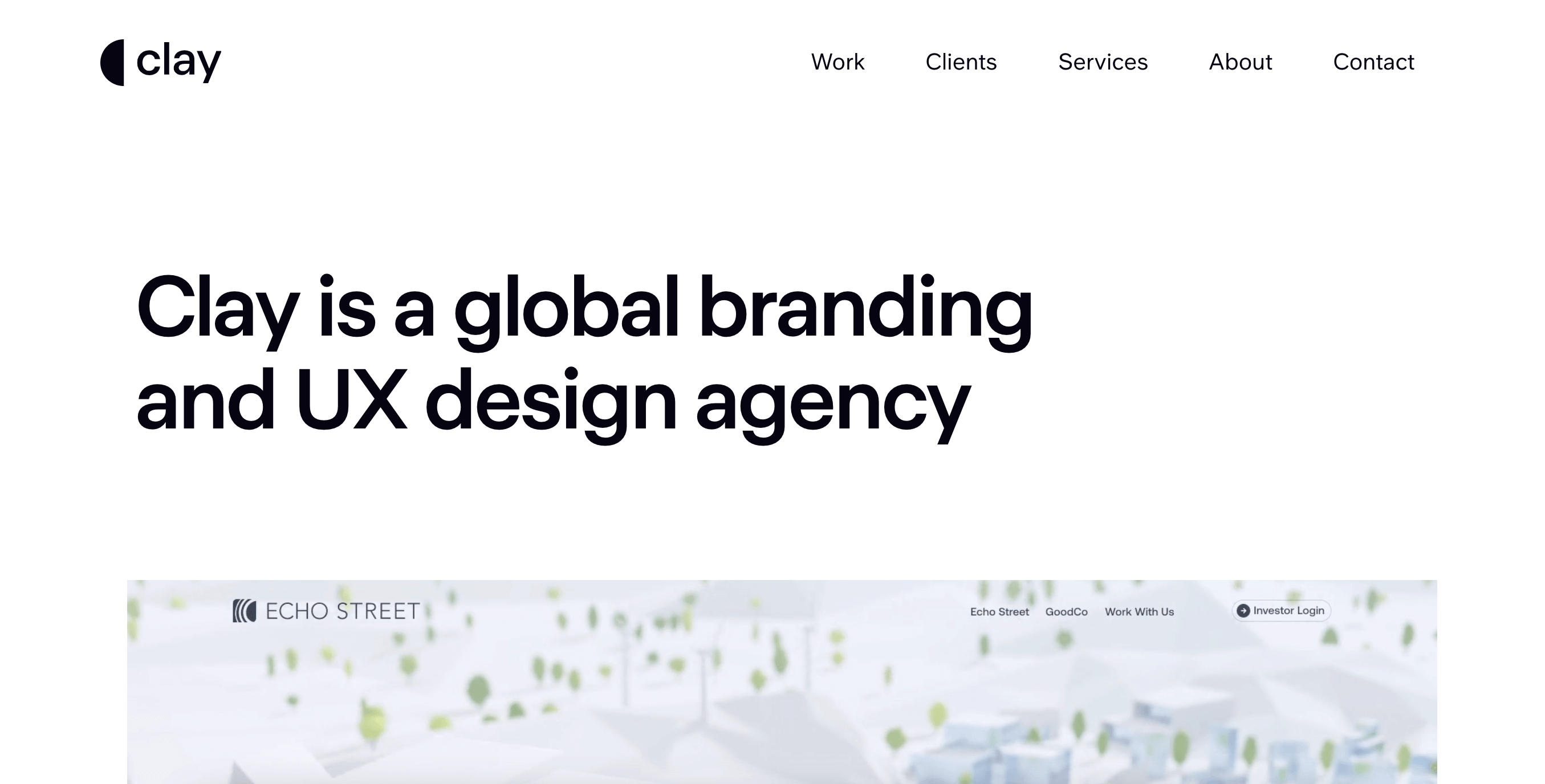
Clay usually comes up when teams want a site that looks considered but still works like it should. The studio sits in that space between brand and product, so the pages do more than carry a visual style — they help explain the product and move people through it. That is a big reason it keeps landing in conversations about the top web design companies in 2026.
You can see that in the work itself. Projects connected to Stripe, Lulo Bank, and Snapchat suggest a team that is comfortable with SaaS, fintech, and other product-heavy categories where the site has a real job to do. Clay tends to make the most sense for founders and in-house teams that already know what a strong Figma workflow should look like and do not want to spend months circling around design decisions.
Services and expertise: Product and brand strategy, UX/UI design, branding, marketing websites, web and mobile development, innovation consulting
Location: San Francisco, CA, USA
Team size: up to 50 experts
Industries they serve: SaaS, Fintech, Web3, B2B
Portfolio: Stripe partner web presence, Lulo Bank, Snapchat
Halo Lab is one of the broader teams in this group. Instead of stopping at interface design, it also takes on branding, development, and content, which makes the work feel more joined up from the start. For companies that do not want to split strategy, design, and build between different vendors, that alone makes it worth a look among the best UI/UX designers in 2026.
Its project list gives buyers enough proof to work with. WeSpire, nyra health, and Mighty Buildings show a team that can move between digital services, healthcare, and product-heavy builds without changing tone too sharply. Halo Lab also stays practical for clients because it can cover both design and build — helpful for startups that do not want to split creative and development across separate vendors.
Services and expertise: UX/UI design, branding, website design and development, web and mobile app development, custom development, SEO, content writing
Location: Dubai, UAE; New York, NY, USA; Andorra
Team size: up to 50 experts
Industries they serve: Startups, Digital Services, E-commerce, Education, Real Estate, Healthcare
Baunfire feels aimed at companies that need a serious B2B site, not something flashy for the sake of it. The work usually brings strategy, messaging, design, and build into one track, which makes the whole project easier to manage once it starts moving. If you are comparing the best web designers in 2026, that kind of end-to-end setup is a real point in its favor.
The examples tell a pretty consistent story. Work for Instabase, Arlo, and Karat suggests a team that knows how to present a product clearly, give it a sharper market position, and build pages that are meant to convert, not just impress. Baunfire can stay at the design level when that is all a client needs, but it can also carry the project further into development and digital strategy without losing the thread.
Services and expertise: Website design, website development, digital strategy, content strategy, interactive design, animation, B2B marketing websites
Location: San Jose, CA, USA
Team size: up to 50 experts
Industries they serve: B2B Technology, SaaS, E-commerce, Retail
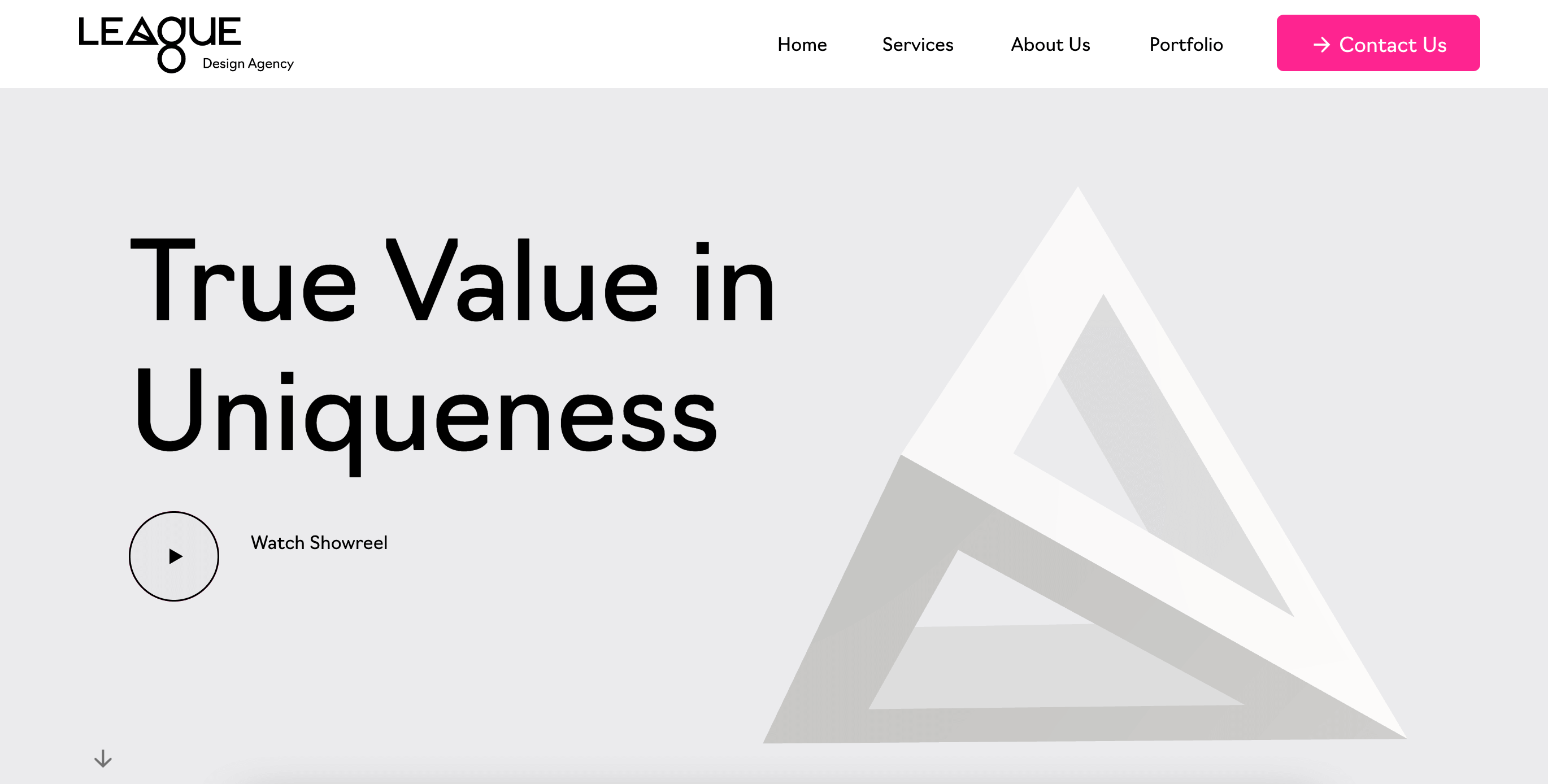
League Design Agency mixes brand identity, UX/UI, websites, and development inside one broad offer. That can make it especially useful for teams that are not just redesigning a site but also tightening how the whole company presents itself. Its growth story and award-driven profile are part of why it keeps showing up among the top web design companies in 2026.
The agency’s published work also gives buyers enough variety to judge fit. OctoPi Technologies, La Marine, and iCoupon point to a studio that can handle both brand-led and product-led work, with a style that feels structured rather than noisy. It is also one of the more adaptable agencies here, since it can move from identity and CRO into implementation without forcing clients to rebuild the team around each phase.
Services and expertise: Brand strategy, identity, web design, CRO-focused sites, UX/UI, web and app development
Location: Offices across the U.S., Ukraine, and Poland
Team size: 40+ experts
Industries they serve: Beauty, Technology & IT, Retail, E-commerce, Finance
Portfolio: OctoPi Technologies, La Marine, iCoupon
HUEMOR is very direct about what it thinks a website should do: win customers, stand apart from competitors, and support growth goals. That message, paired with digital strategy, copy, UX, and full-stack development, gives it a clear commercial edge. It is one of the best web design agencies in 2026 for teams that care as much about outcomes as they do about visual execution.
The case study structure is helpful too. Boston Dynamics, HITT Contracting, and Bizrate Insights are not buried in vague gallery pages — they are part of a portfolio organized around industry context and business use. HUEMOR also feels flexible because it bundles strategy, writing, design, development, and site support, which cuts down on handoffs after launch.
Services and expertise: Digital strategy, UX/UI design, copywriting, full-stack web development, website support and optimization
Location: Pittsburgh, PA
Team size: up to 50 experts
Industries they serve: Construction, Manufacturing, Technology
Portfolio: Boston Dynamics, HITT Contracting, Bizrate Insights
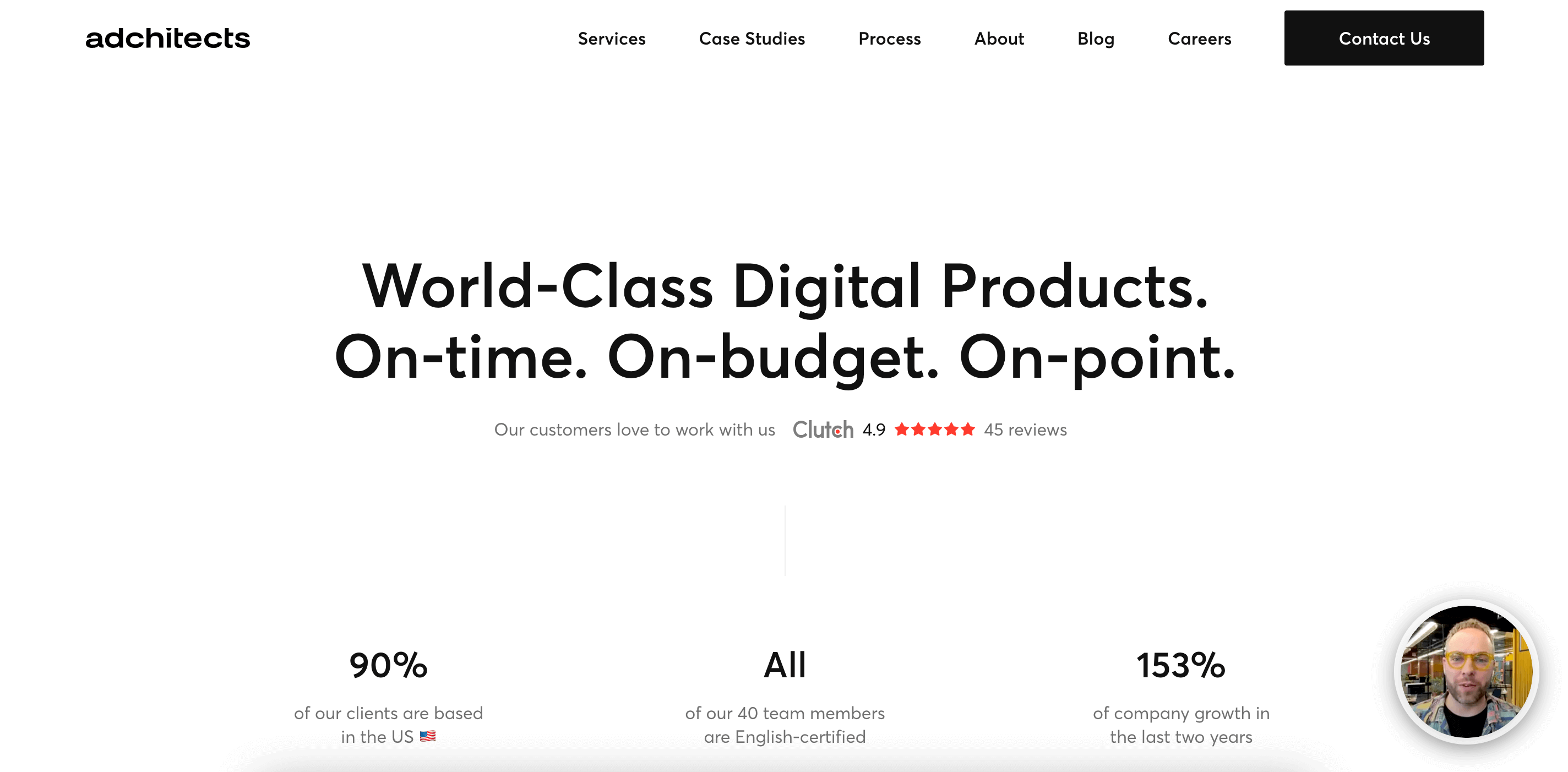
Adchitects is easy to size up because the offer is laid out in a way that saves buyers time. Custom sites, ecommerce, custom apps, branding, and UX/UI are broken out clearly, and the industry focus is just as easy to scan. If you’re looking through the top web designers in 2026, this is the kind of agency that makes it easier to tell, fast, whether it belongs on your shortlist.
Its work with Atlantic Sapphire, Seneca, and Apollo Scooters gives a solid sense of how the team handles different commercial contexts. The agency also has a clear operating shape — Poznań as the HQ, plus NYC and Toronto in the public footprint — and the company-stated 36-person team gives the scale more definition than a lot of directory bands do.
Services and expertise: Custom websites, Shopify ecommerce, React and Node apps, UX/UI, branding
Location: Poznań, Poland; New York, NY, USA; Toronto, Canada
Team size: 36 experts
Industries they serve: Fintech, SaaS, Healthcare, Retail, IT
Portfolio: Atlantic Sapphire, Seneca, Apollo Scooters
CreativeWeb comes across as a team for companies that expect a website to pull its weight. The work is not framed as design for design’s sake — it is tied to visibility, performance, search, ecommerce, and the updates that keep a site useful after launch. That is exactly why it still belongs in conversations about best web design agencies in 2026.
The portfolio helps anchor that claim. NATO Innovation Fund, the Department for International Trade, and Cephtactics show a level of institutional and enterprise trust that not every design studio can point to. CreativeWeb is also practical for clients who want one partner to handle both the front-end look and the performance work that follows it.
Services and expertise: Bespoke website design and development, SEO, digital marketing, GEO, hosting, website support, branding, audits, ecommerce
Location: London, UK; Guildford, UK
Team size: up to 50 experts
Industries they serve: Aviation, Travel, Charity & Nonprofits, Health & Wellbeing, Technology, Finance, Government
Portfolio: NATO Innovation Fund, Department for International Trade, Cephtactics
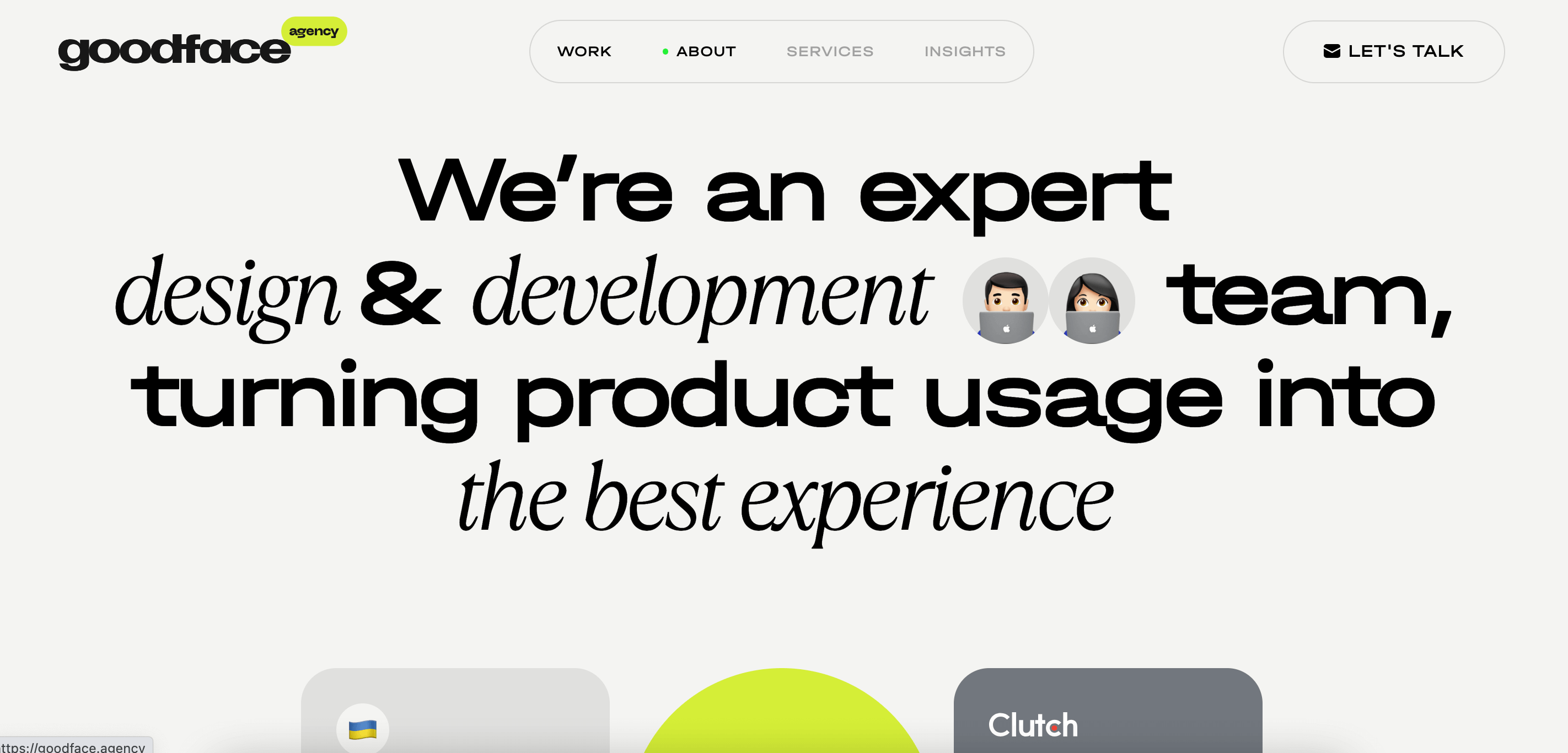
Goodface Agency brings a product-driven lens to website and interface work, which makes it particularly relevant for digital businesses. UX/UI, brand identity, websites, and development are all part of the same offer, and the portfolio is organized in a way that makes industry fit easy to judge. For startups, that kind of clarity matters almost as much as visual quality.
Its work with KARL STORZ, Corefy, and Magnetiq Bank points to a team that can handle fintech, healthcare, and more technical product categories without losing design quality. The agency also looks well suited to founders who want design and engineering kept close together — especially when the web presence connects directly to a broader product story.
Industries they serve: Fintech, SaaS, IT, Telecom, Esports, Health & Wellness, EdTech, Healthcare, E-commerce, Lifestyle
Portfolio: KARL STORZ, Corefy, Magnetiq Bank
Choosing The Right Design Partner
The right agency usually becomes obvious once you stop looking only at the homepage polish. One team may be great at sharp visual work but weak in structure, while another may be better at UX, messaging, and the parts that actually move a visitor toward action. That is why the top web design companies in 2026 are worth comparing by how they think, not just by how their mockups look.
A lot of the real difference shows up in the boring parts people usually ignore at first. Who you’ll actually be talking to each week, how feedback gets handled, whether the agency can think through copy and SEO as well as design, and what happens once the site is live will tell you much more than a polished pitch ever will. Once you have clear answers to that, the shortlist usually stops looking so complicated.
If you want to feature your web design agency on this list, email us or submit a form in the Top Choices section. After a thorough assessment, we’ll decide whether it’s a valuable addition.