Hiring a full-time Chief Product Officer is a $300,000-plus commitment before equity, and most companies that need product leadership do not yet need it five days a week. A fractional CPO closes that gap: senior product judgment on a retainer, usually one to three days a week, owning strategy and roadmap rather than advising from the sidelines.
The providers below fall into three camps, and the difference matters more than any ranking. Marketplaces match you to an individual operator and step back. Boutique firms embed a named leader with real decision authority and charge accordingly. Full-suite firms sell the CPO as one seat among several. Below are the best fractional CPO services in each camp, what they actually cost, and who each one suits.
Fractional CPO Services At A Glance
#
Provider
Model
Best For
Indicative Cost
1
Toptal
Marketplace
Trialling a CPO before committing
Not published
2
Go Fractional
Managed marketplace
Transparent pricing, fast start
From $5,000/month
3
Chameleon Collective
Boutique firm
Turnarounds needing real authority
$25,000-$50,000/month
4
Fractionus
Curated shortlist
A short, decisive shortlist
Day rate or retainer
5
HeyShepherd
Marketplace
Australian startups
$8,000-$16,000/month
6
TechCXO
Full-suite firm
Filling several exec seats
Not published
7
Solace
Managed matching
Testing executive fit
Not published
Best Fractional CPO Options In 2026
1. Toptal — A Two-Week Trial And A Sub-Three-Percent Bar
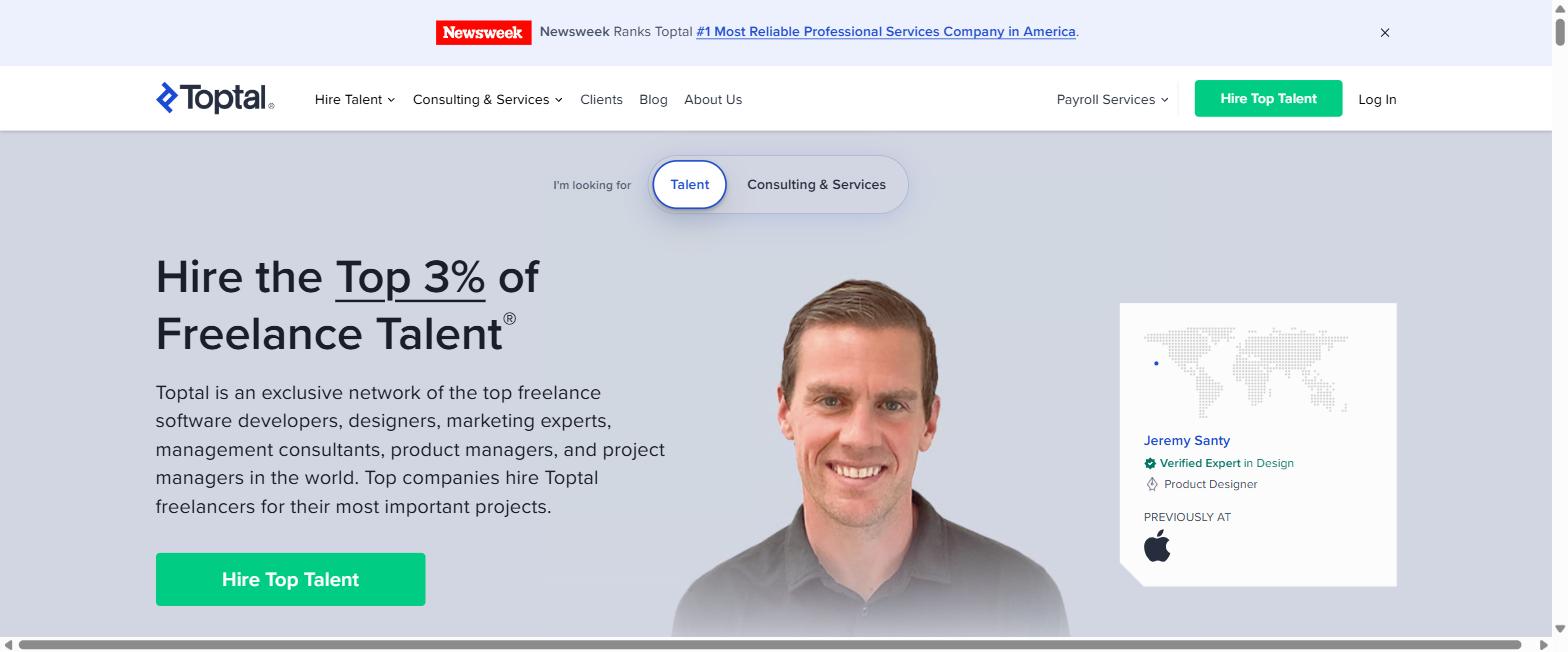
Toptal screens harder than anyone else on this list and publishes the numbers to prove it. Its five-stage process takes fewer than 3% of applicants, with the sharpest cut at the skill review, where the pass rate drops to 7.4%, and a paid test project of one to three weeks before anyone reaches the network.
The commercial hook is the two-week no-risk trial: if the fractional CPO is not right, you pay nothing and Toptal proposes someone else. That single term makes it the lowest-risk way to find out whether a fractional arrangement suits your company at all. Rates are not published and scale with seniority and scope.
Choose Toptal if you want to test the model itself, not just a candidate, and would rather pay a marketplace margin than carry hiring risk.
2. Go Fractional — Published Pricing, From $5,000 A Month
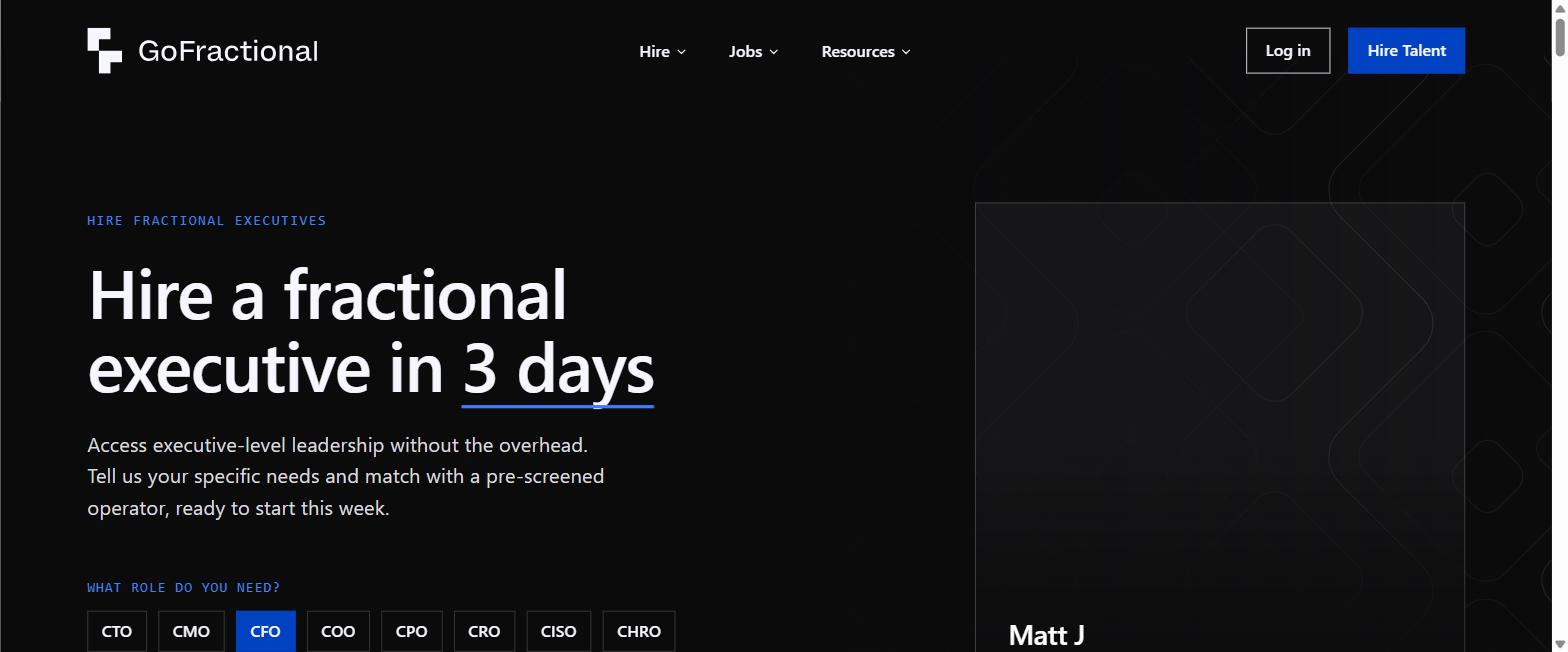
Go Fractional is the most price-transparent option here, and that alone solves a real problem: fractional CPO quotes vary by a factor of ten and most providers will not tell you where they sit until you are on a call. Fractional engagements start at $5,000 a month for five to ten hours a week; interim, full-time cover starts at $24,000 a month.
Matching runs through executive recruiters against a network of more than 15,000 operators, averaging around three days to a shortlist with onboarding inside a week. There are no recruiting fees, and a contract-to-hire path lets a fractional engagement convert to a permanent role if it works.
Choose Go Fractional if you need to budget the engagement before you start talking to people, or you want the option to convert to a permanent CPO later.
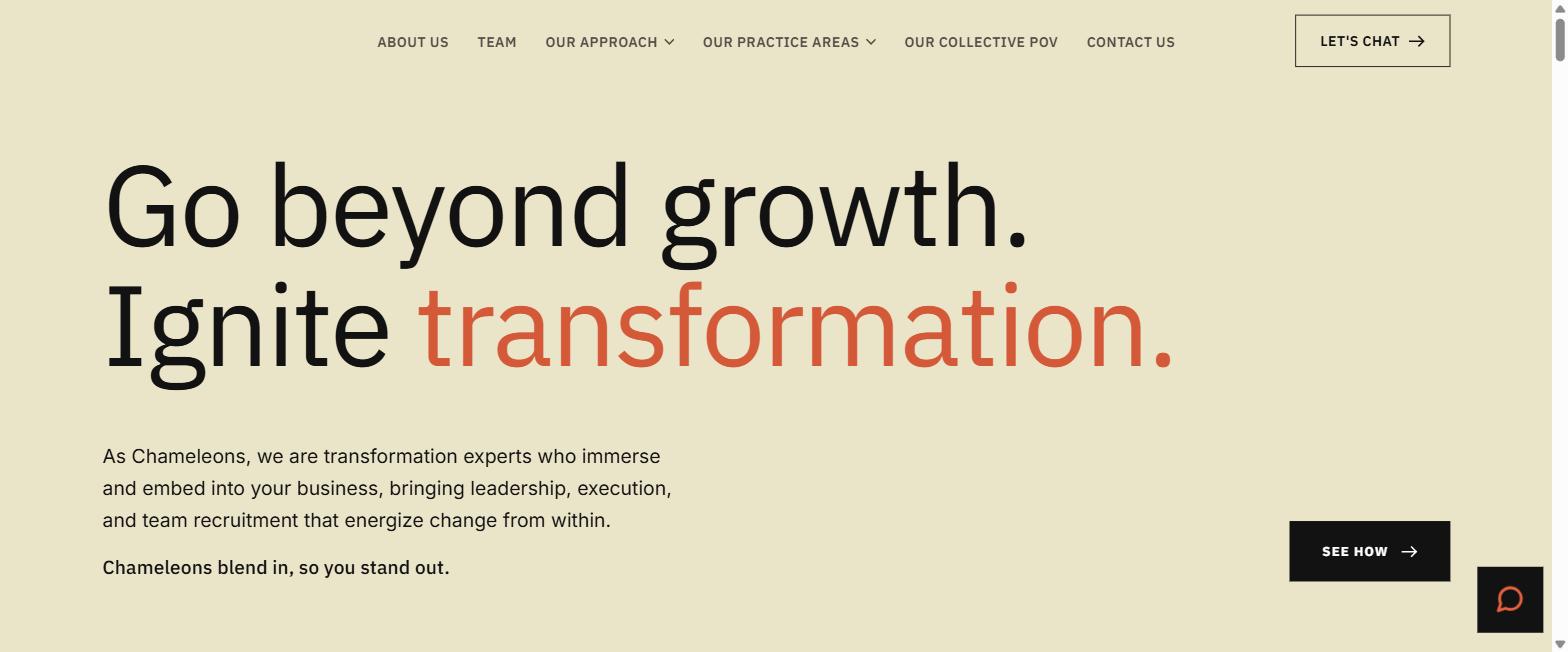
Chameleon Collective sits at the opposite end of the market from the marketplaces. Engagements run two to four days a week across two to four quarters at $25,000 to $50,000 a month, and the operator arrives with genuine decision authority over portfolio prioritisation and organisation design rather than an advisory brief.
The shape of the work is well defined: portfolio review, PM interviews and an engineering audit in week one; rationalisation recommendations and a 90-day plan through week four; execution from there, with a transition plan to permanent leadership at the end. The firm targets B2B SaaS, fintech, health tech and PE-backed operators.
Choose Chameleon Collective if the product organisation needs restructuring rather than steering, and you need someone empowered to make the unpopular calls.
4. Fractionus — A Three-Name Shortlist In Forty-Eight Hours
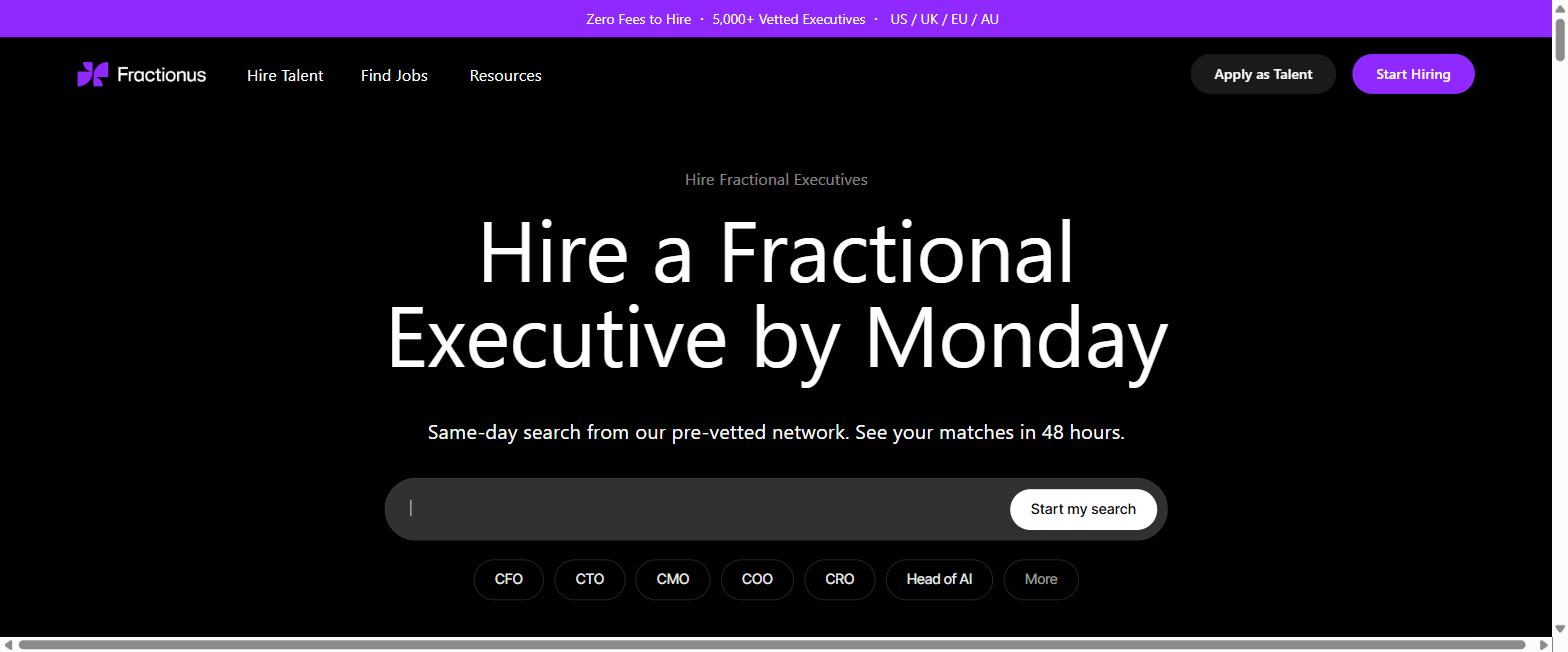
Fractionus deliberately keeps shortlists short. You brief the platform on stage, product and 90-day success criteria, and it returns two or three vetted fractional CPOs matched to that brief within 48 hours, then handles contracts, billing and onboarding.
Engagements typically open at one to two days a week for the first 90 days to establish strategy and a prioritisation model, then flex. Clients pay no hiring fees, and the network draws on operators from Lego, Google, Meta and PayPal, with a stated 3% acceptance rate. Work can be bought as retained days, sprint blocks or outcome-based scopes.
Choose Fractionus if you would rather compare three well-matched candidates than screen thirty, and you want the engagement structured around outcomes.
5. HeyShepherd — Australian Operators Who Mentor Your PMs
HeyShepherd is an Australian marketplace, and that focus is the point: its 450-plus operators have built startups in that market rather than parachuting in from another time zone. Engagements run $8,000 to $16,000 a month against a full-time CPO cost of $250,000 to $400,000 plus equity.
Its model leans on mentorship. The fractional CPO typically develops the product managers you already have rather than displacing them, across a phased arc: audit and research in month one, strategy and roadmap through month three, prioritisation to month six, then ongoing leadership. Engagements run six to eighteen months with no long-term contract.
Choose HeyShepherd if you are an Australian startup, or you want a CPO who will level up an existing PM team rather than replace it.
TechCXO covers the whole C-suite on demand, not product alone. For companies where the product gap sits alongside a finance or revenue gap, that breadth is the reason to look here: one firm, one relationship, several seats filled from the same bench.
The firm works with growth-stage companies across SaaS, fintech and health tech. The trade-off against a product-only specialist is focus, so it is worth pressing on how deep the product bench actually goes before signing.
Choose TechCXO if the CPO is one of two or three executive gaps you are filling this year.
Solace frames fractional hiring as a way to assess executive fit beyond the interview, which is a fair description of what a three-month retainer actually buys you. It responds within 24 hours and puts forward three to five pre-vetted candidates matched on industry experience, values, working style and availability.
A dedicated recruiter runs interviews, negotiation and onboarding, and stays involved with feedback sessions through the engagement, from a pool of more than 500 pre-vetted executives. Pricing is not published.
Choose Solace if you expect to hire a permanent CPO eventually and want the fractional period to function as an extended assessment.
How To Choose A Fractional CPO Service
Authority Or Advice?
A $5,000-a-month retainer buys counsel. Restructuring a product organisation needs someone empowered to decide, which is why the boutique end of the market costs five to ten times more. Be honest about which one your situation actually calls for, because paying for authority you will not grant is the most common way this goes wrong.
Who Carries The Risk?
Only Toptal publishes a no-charge trial period. Everywhere else, the risk of a bad match sits with you from day one, so negotiate a 30-day exit before signing rather than after the first month goes sideways.
What Happens To Your Existing PMs?
Some providers mentor the product managers you already have; others operate above them and leave the team where it was. Ask directly, because the answer determines whether the engagement leaves capability behind or simply rents you a decision-maker for two quarters.
Is There An Exit?
The best engagements end with either a permanent hire or a self-sustaining team. Ask what the transition plan looks like at month one, not month nine, and treat a provider with no answer as a provider planning to stay indefinitely.
What A Fractional CPO Actually Costs
Published rates across these providers run from $5,000 a month at the light-touch end to $50,000 a month for embedded transformation work, against $250,000 to $400,000 plus equity for a full-time hire. Interim cover, where a CPO works full-time for a fixed period, sits around $24,000 a month.
Marketplace margins are the hidden variable. Platforms take a cut above the operator’s own rate, so two providers quoting the same monthly figure may not be paying the leader the same amount, which affects who you can attract. It is a fair question to ask.
Conclusion
For most companies hiring their first fractional CPO, Go Fractional and Toptal are the sensible starting points: transparent pricing at one, a genuine no-risk trial at the other. If the product organisation needs rebuilding rather than steering, Chameleon Collective is worth its premium. And if you are in Australia, HeyShepherd’s local bench is hard to beat.
If you want to feature your fractional CPO service on this list, email us or submit a form in the Top Choices section. After a thorough assessment, we’ll decide whether it’s a valuable addition.