Construction has a documentation problem that digital twins were made for. A building is designed in one set of models, built with hundreds of changes nobody records properly, handed over with drawings that stopped matching reality somewhere around the second floor, and then operated for fifty years by people who never saw it get built.
The industry uses the term for at least four different products. A digital twin in construction can be a design stage model used for coordination and clash detection, progress capture that records what is actually on site week by week, an as-built twin that documents the finished asset, or an operational twin connecting a completed building to its live systems. A vendor excellent at one is frequently useless at another, and most disappointing programmes trace back to buying the wrong one.
The companies below cover all four layers, from the platforms that hold the models to the studios that build custom applications on top of them. Each entry explains what the team delivers and which stage of a project it serves. For the same technology applied elsewhere, see our guide to the best digital twin companies for manufacturing.
Construction Digital Twins At A Glance
Company
Best For
Project Stage
Treeview
Custom twins built for non technical stakeholders
Any stage
Autodesk
Design models carried through to operations
Design to handover
Bentley Systems
Infrastructure and distributed assets
Design to operations
Trimble
Connecting the model to the physical site
Construction
OpenSpace
Weekly visual record of site progress
Construction
Cupix
Progress comparison against the model
Construction
Matterport
As-built capture and handover documentation
Handover
Willow
Operational twins for completed buildings
Operations
VU.CITY
Context, planning and consent
Pre construction
Program-Ace
Custom twins wired into enterprise systems
Any stage
Best Digital Twin Companies For Construction In 2026
1. Treeview — Award Winning Twin Work Built For People Who Are Not Engineers
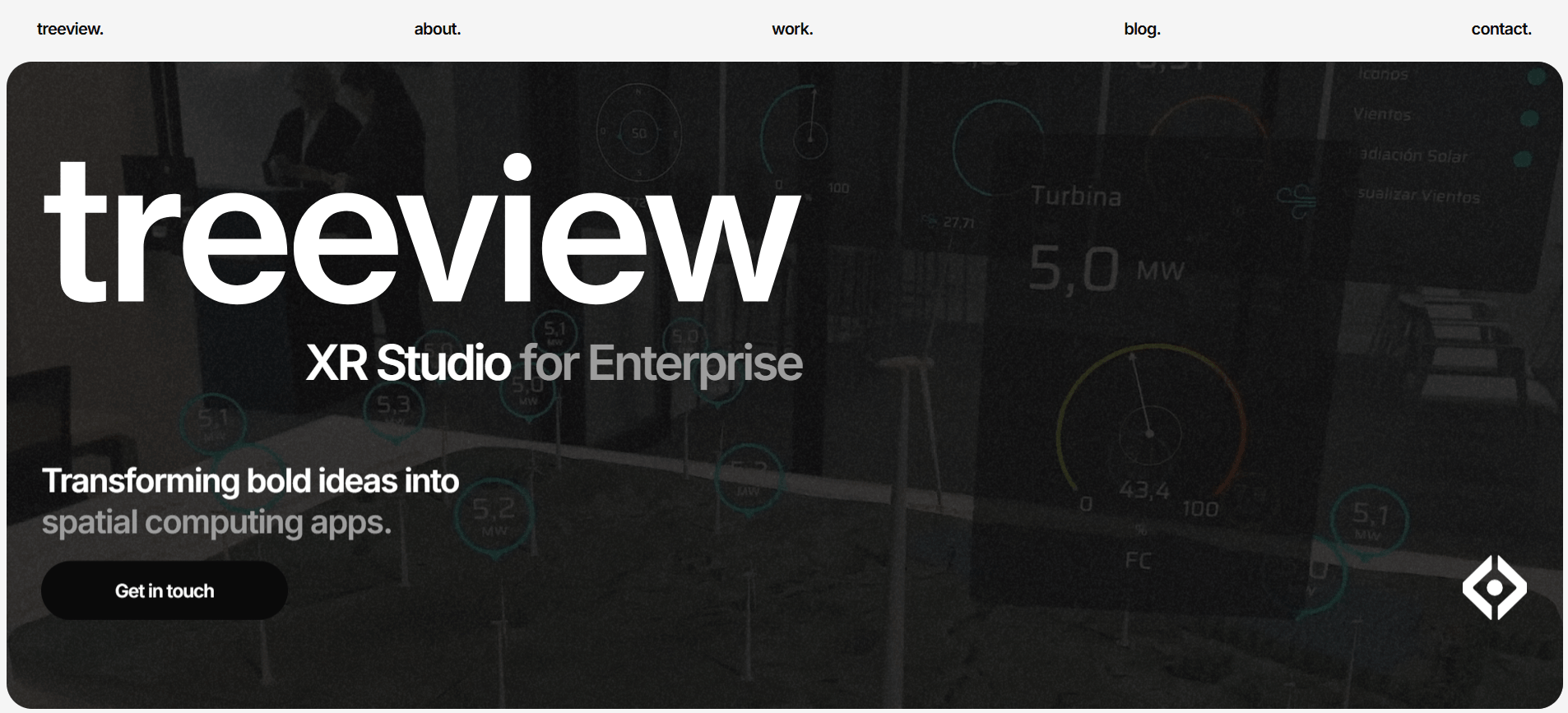
Treeview solves the problem the platforms on this list consistently leave open, which is that a digital twin has to be understood by someone other than the person who built it. Microsoft partnered with the studio to create an AI enabled digital twin for a multi billion dollar green hydrogen initiative, visualizing real time and projected production with predictive models simulating future site performance. The studio also delivered a HoloLens 2 mixed reality version giving stakeholders a shared three dimensional view of the asset for decision making, work that took two Silver awards at the 47th Annual Telly Awards.
That combination is exactly what large construction programmes need and rarely get. The BIM model lives with the design team, the site data lives with the contractor, and the people approving money, granting consent or accepting handover cannot open either. A twin built as a decision making tool rather than as an engineering artifact changes those conversations, and it is a spatial design problem as much as a data one.
The studio has built spatial computing software since 2016 for Microsoft, Meta, Toyota and Medtronic, working from New York and Montevideo as a senior only team with end to end delivery. Clients retain full ownership of intellectual property, source code and assets, which matters on assets that outlive their software several times over.
Services and expertise: Custom digital twin development, AI enabled data visualization, mixed reality and HoloLens applications, spatial data visualization, spatial product design, 3D content creation, long term support and platform migration
Location: New York, United States and Montevideo, Uruguay
2. Autodesk — The Design Model Carried Through To The Finished Building
Autodesk sits at the centre of most construction data because the building was probably designed in its software. Its BIM digital twin capability extends that position into operations, connecting the design and construction model to the asset once it is complete.
The advantage is continuity. Every handoff between design, construction and operations is a point where information degrades, and a twin built from the authoring environment inherits the data rather than reconstructing it. For owners commissioning new build, that lineage is the difference between receiving a maintained model and receiving a folder of PDFs.
The caveat is that continuity depends on discipline during delivery. If the model is not maintained as changes happen on site, the twin inherits fiction, and no platform prevents that on its own.
Services and expertise: BIM authoring and coordination, construction management, facility digital twins, asset data structuring, cloud collaboration across project teams
Best suited to: Owners and design teams wanting one continuous model from concept to operations
3. Bentley Systems — Built For Assets That Stretch Across A Map
Bentley Systems works in infrastructure engineering software, with digital twin capability aimed at assets that are distributed rather than contained on a single site. Roads, rail, bridges, water networks and energy infrastructure behave differently from buildings and need geospatial context alongside engineering models.
The platform ingests reality capture from drone and laser scanning surveys, which is how infrastructure owners establish what they actually have, since records for assets installed decades ago are rarely dependable. That makes it a stronger fit than building focused tools for anyone whose project is linear or networked.
It is an enterprise commitment, and the value accrues over an asset lifetime rather than at a delivery milestone, so scope it against operations rather than against construction alone.
Services and expertise: Infrastructure digital twins, geospatial asset modelling, reality capture integration, engineering collaboration, asset performance analysis
Best suited to: Infrastructure owners and contractors delivering linear or networked assets
4. Trimble — Where The Model Meets The Actual Site
Trimble works across the physical and digital boundary in construction, spanning surveying instruments, machine control, field software and mixed reality hardware built for site conditions rather than for offices.
That hardware grounding is the differentiator. A construction digital twin only stays truthful if someone verifies the building against it, and verification happens on site with instruments, in weather, by people wearing hard hats. Trimble’s mixed reality work is designed for that environment, which is a different engineering problem from an office visualization tool.
For contractors, the value is setting out and quality assurance rather than presentation. Positioning work against the model and catching deviation while it is still cheap to fix is where construction twins pay for themselves fastest.
Services and expertise: Surveying and positioning technology, machine control, field data collection, mixed reality for site use, construction management software
Best suited to: Contractors verifying built work against the model on site
5. OpenSpace — A Dated Visual Record Of Everything That Got Covered Up
OpenSpace turns ordinary walkthrough footage into navigable site documentation, producing a dated visual record of a project as it is built rather than a reconstruction attempted afterwards. It is construction progress tracking software in the most literal sense.
The commercial case is dispute avoidance. Knowing exactly what was behind a wall before it closed, when work was completed and in what condition resolves arguments that otherwise consume months and legal fees. It also lets lenders, investors and owners track progress without site visits, which changes how drawdowns and reporting work.
The record keeps earning after handover, because a facilities team inheriting comprehensive as built documentation is in a far better position than one working from drawings that stopped matching reality during the fit out.
Services and expertise: Construction progress capture, navigable site documentation, dated visual records, remote project monitoring, as-built documentation
Best suited to: Contractors and owners needing verifiable progress records through delivery
6. Cupix — Comparing What Was Built Against What Was Drawn
Cupix produces three dimensional site captures from walkthrough video and aligns them with design models, so progress can be compared against intent rather than only recorded.
That alignment is the useful part. A photographic record tells you what a space looked like on a date. A record registered against the model tells you whether what was installed matches what was specified, and deviation caught during construction costs a fraction of deviation discovered at commissioning.
Capture from standard video keeps the operational burden low, which matters because any reality capture construction process depending on specialist equipment and trained operators tends to lapse once a programme comes under pressure.
Services and expertise: 3D site capture from video, model alignment and comparison, progress tracking, quality verification, remote site review
Best suited to: Project teams checking installed work against design during construction
7. Matterport — The Recognized Standard For Capturing A Finished Space
Matterport created the digital twin category in property and remains the most widely recognized way to capture a completed space as a navigable, dimensionally measurable model, which is also why it dominates digital twin real estate work.
In construction its natural place is handover and refurbishment. Capturing an asset at practical completion gives the owner a reference of the building as delivered, and capturing an existing building before refurbishment gives the design team something more reliable than archive drawings. Capture works across the company’s own cameras, 360 degree cameras and LiDAR equipped phones.
Two things to check before standardizing on it. Tours are hosted on Matterport infrastructure, so establish what happens to your archive if you stop subscribing, and pricing scales with active tour volume rather than usage.
Services and expertise: 3D capture and digital twins, dimensional measurement, floor plan generation, web and headset delivery, platform integrations
Best suited to: Handover documentation and surveying existing buildings before refurbishment
8. Willow — The Twin That Starts Working After Handover
Willow builds operational digital twins for completed buildings and infrastructure, connecting the asset model to live building systems so the twin reflects how the property actually performs rather than how it was designed to.
This is where most of a building’s value sits. Construction is a few years and operations is several decades, and an owner who receives a static model at handover has documentation rather than a tool. Connecting to building management, energy and maintenance systems turns it into digital twin facility management that teams use daily.
The dependency is data quality at handover, which is why this belongs in a construction conversation. Operational twin requirements should be specified during procurement, not discovered after the contractor has left.
Services and expertise: Operational digital twins, building systems integration, asset performance monitoring, energy and maintenance analytics, portfolio scale deployment
Best suited to: Owners and operators wanting a twin that keeps working after practical completion
9. VU.CITY — Testing A Scheme Against The City Around It
VU.CITY provides accurate three dimensional city models used for planning, feasibility and design assessment, letting teams test a proposal in its real surroundings rather than on an idealized site.
It serves the stage before anyone builds anything. Height, massing, daylight, protected views and neighbouring impact decide whether a scheme is consented at all, and testing them against a verified model reduces the risk of developing a design that will not survive planning.
The same models carry into consultation, where showing a community what a development looks like from their own street is considerably more persuasive than a plan drawing and an artist impression.
Services and expertise: Accurate 3D city models, planning and feasibility analysis, daylight and view assessment, consultation and stakeholder visualization
Best suited to: Developers, architects and planners working through consent
10. Program-Ace — Custom Twins Connected To The Systems That Run The Business
Program-Ace has developed software since 1992, based in Cyprus with staff across the United States, Poland, Slovakia, Ukraine, Hungary and Japan, and more than 900 delivered projects behind the team.
Its digital twin practice targets the problems that surface once a twin is used operationally rather than presented in a meeting: poor data utilization, scalability limits, and security and compliance exposure. The team also integrates twins with enterprise resource planning systems, which determines whether procurement and maintenance planning actually consume the model or keep working from spreadsheets beside it.
For contractors and owners wanting a twin shaped around existing processes rather than processes reshaped around a platform, a long established custom studio is a credible middle path.
Services and expertise: Custom digital twin development, mixed reality and AR/VR solutions, AI development, ERP and enterprise systems integration, simulation and visualization
Location: Cyprus, with distributed teams across Europe, the United States and Japan
How To Choose A Digital Twin Company For Construction
Which stage of the project is this for?
Design coordination, progress capture, as-built documentation and operational monitoring are four different products. A tool built to record what happened on site last week will not run a building for thirty years, and an operational platform will not help a superintendent find a clash. Decide which stage you are solving for, then accept that a full lifecycle approach means more than one supplier and a plan for how data passes between them.
Who is responsible for keeping the model true?
Construction generates constant change, and a twin that drifts from the building is worse than none because people trust it anyway. Name the party accountable for updating the model as variations are issued, write it into the contract, and confirm how site captured reality feeds back into the design model rather than sitting in a parallel system nobody reconciles.
What does the owner actually receive at handover?
Specify the deliverable before construction starts, in a format the operations team can use, with the asset data structured for their systems rather than for the design team’s. Owners who leave this to the end receive a model that satisfies the contract and helps nobody. Operational twin requirements belong in the employer’s information requirements, not in a conversation after practical completion.
Can the people making decisions open it?
Much of a twin’s value lies with people outside the project team: investors, lenders, planning authorities, community consultations and executives approving money. Ask to see what those audiences are shown rather than what an engineer sees, and expect to fund a visualization layer separately from the modelling platform.
Who owns the models, the captures and the code?
Buildings outlast software vendors comfortably. Settle ownership of models, captured data, source code and derived analytics before appointment, and confirm you could migrate to another supplier without rebuilding from nothing. Ask specifically where hosted content lives and what happens to your archive if a subscription lapses.
What A Construction Digital Twin Includes
A construction digital twin is a digital model of a building or asset that stays connected to real information about it. What it contains depends on the stage of the project and the platform, but most include some combination of:
A design model: the BIM model from design, carried into construction and updated as changes are made.
Reality capture: 360-degree photos, laser scans or 3D captures of the site, tied to dates and locations so hidden work such as walls, ducts and wiring stays documented.
Progress and quality comparison: checks of what was built against what was drawn, to spot deviations early.
Asset and handover data: equipment details, warranties, manuals and maintenance information for the owner.
Live operational data: for twins used after handover, feeds from building systems and sensors for energy, occupancy and maintenance.
Access for decision makers: viewers that let owners, managers and non-technical stakeholders explore the model without specialist software.
A construction digital twin can serve two different jobs. A design and build twin helps teams test a scheme and check what is installed against the model while the project is live. An operations twin keeps working after handover, connecting the finished asset to the systems that run it. Knowing which job you are buying for narrows the list quickly.
Design, planning and site progress: VU.CITY provides 3D city models for planning, feasibility and design assessment. Trimble suits contractors verifying built work against the model on site. OpenSpace turns walkthrough footage into a dated visual record of the build, and Cupix aligns 3D site captures with design models. Bentley Systems ingests drone and laser scanning surveys for distributed infrastructure assets.
Operations and finished buildings: Willow connects the asset model to building management, energy and maintenance systems and lists portfolio-scale deployment. Matterport captures completed spaces for handover and existing building surveys. Program-Ace integrates twins with ERP systems for operational use.
Autodesk spans both, aiming for one continuous model from concept to operations, and Treeview builds custom twins for non technical stakeholders.
Frequently Asked Questions
What is a digital twin in construction?
A digital twin in construction is a digital replica of a building or infrastructure asset that is linked to real project or operating data. During construction it helps teams track progress and compare the built work with the design, and after handover it gives the owner a reliable record of the asset for operations and maintenance.
Which digital twin platforms integrate with Autodesk and BIM tools?
Autodesk’s own tools work directly with its design and construction software, and Treeview on this list also works from BIM models. Platforms such as Bentley Systems and Trimble support open BIM formats like IFC, and reality capture tools often connect to common construction platforms. Always confirm the exact file formats and integrations your project uses with the vendor before committing.
Digital twin vs BIM: what is the difference?
BIM is the process and model used to design and document a building, usually as a static set of information. A digital twin builds on that model by connecting it to real data, such as site captures, progress records or live sensor feeds, so it reflects the actual state of the asset over time rather than only the design intent.
Which digital twin platforms integrate with Procore?
None of the entries on this list states a Procore integration, so ask each vendor for a documented connector and exactly which data syncs. Teams that run projects in Procore often look first at site documentation tools, and on this list OpenSpace and Cupix focus on recording progress during construction. Confirm whether an integration is native, built through an API or handled by a third party before you commit.
What is the best digital twin company for existing buildings?
It depends on whether you need a record of the building or a live operational model. On this list, Matterport is described as suited to surveying existing buildings before refurbishment, while Willow connects the twin to live building management, energy and maintenance systems. Bentley Systems ingests reality capture surveys, which helps where records for older assets are unreliable.
Digital twins have moved from pilot projects to standard practice on major construction programmes, but the term covers four distinct products and most disappointment comes from buying one while needing another. Authoring platforms carry design intent forward, capture tools record what was actually built, operational platforms keep the asset working after handover, and custom studios build the layer that makes any of it usable by the people approving, consenting and paying for the work.
Treeview is the strongest option for that final layer, with an award winning AI enabled digital twin built for Microsoft and mixed reality delivery for shared stakeholder review, plus full transfer of intellectual property and source code on software that will outlive several vendors. Whichever combination fits your programme, name who keeps the model true, specify the handover deliverable before work starts, and check that the people making the biggest decisions can actually open what you are building. For related reading, see our guides to the best digital twin companies for manufacturing and the top AR/VR agencies for digital twin implementation in 2026.
If you want to feature your digital twin company for construction on this list, email us or submit a form in the Top Choices section. After a thorough assessment, we’ll decide whether it’s a valuable addition.