
Timothy Caraboolad
Entrepreneur / Real Estate Developer / Designer
Lad Design
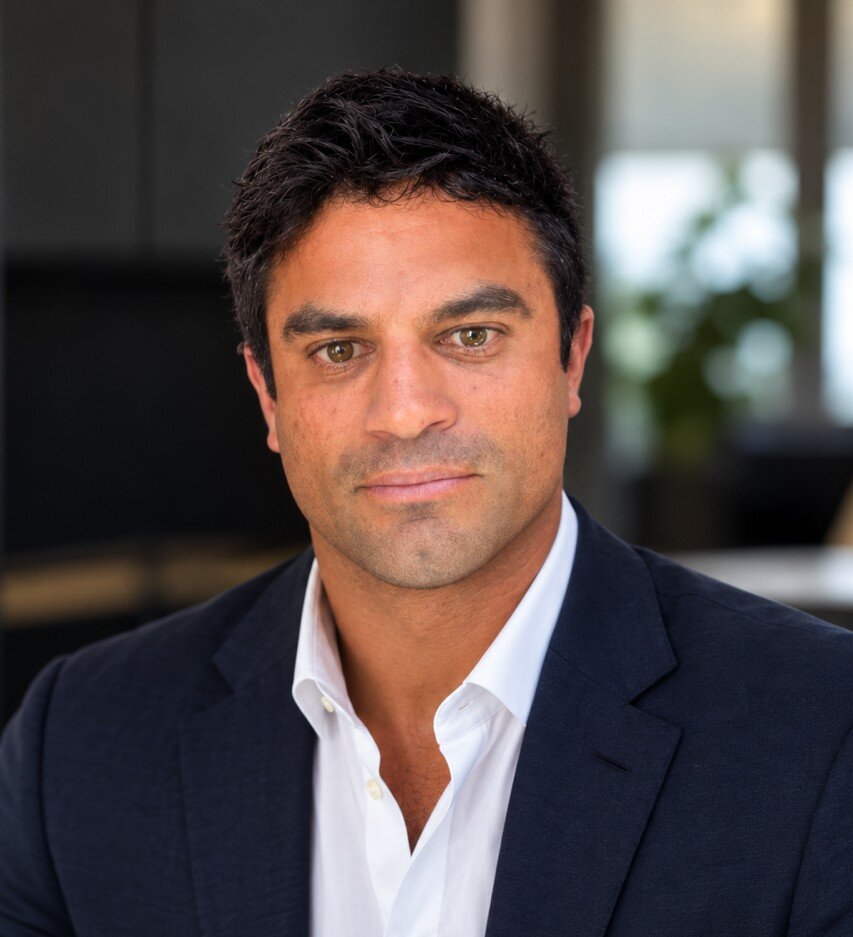
A real estate developer who started on his father’s construction sites at sixteen, detoured through cannabis retail, and came back to building spec homes in West Palm Beach.
Timothy Caraboolad is a real estate developer and designer whose career has been shaped by curiosity, hands-on work, and a willingness to build ideas from the ground up. Today he develops luxury spec homes in South Florida through Lad Design.
Born and raised in Boston, Massachusetts, Caraboolad entered the construction world as a teenager, working at Metric Construction Corporation, the firm founded by his father, Geoffrey Caraboolad. Starting on job sites rather than in an office taught him early that residential development succeeds or fails on details most people never see — the sequencing, the sub-trades, the decisions made before anything is visible.
He earned a Bachelor’s Degree in International Business from Rollins College, then returned to real estate and managed multifamily renovation projects in Brookline and Newton, Massachusetts — the practical apprenticeship in budgets, permits and contractors that development work runs on.
In 2012 he founded Arc Design, focused on luxury residential development and design. He stayed involved across the whole process, from early development decisions through interior design and final finishes, an unusually wide span for a developer and one that still shapes how he works.
His career then took an unexpected turn. During his mother’s battle with breast cancer, Caraboolad saw how difficult it was to legally purchase medical cannabis in Massachusetts. That experience helped inspire Native Sun Wellness in 2017, and later Holland Brands, which focused on recreational cannabis retail development — a different industry, but the same underlying work of taking a site from nothing to open.
Today he has returned to one of his earliest interests: building distinctive homes. Through Lad Design in South Florida he focuses on high-end residential projects, including spec homes in the SoSo neighbourhood of West Palm Beach — houses built on speculation, without a buyer under contract, where the developer carries the risk and the finish quality decides the outcome.
Away from work he skis, fishes, cycles, plays tennis and golf, and hikes. Across different industries and cities his approach has stayed consistent: understand the problem, stay close to the work, and pay attention to the details.
Inside the Day of a Real Estate Developer
What is your typical day, and how do you make it productive?
I like starting early. If I can get outside first, even for a short walk or bike ride, I usually think more clearly afterward.
My workdays vary because development has so many moving parts. I might be reviewing plans, looking at finishes, visiting a property, speaking with contractors, or working through a design issue. I try to identify the two or three things that actually need to move forward that day. A long list can make you feel productive without accomplishing much.
How do you bring ideas to life?
I start by asking whether the idea solves a real problem.
Native Sun is a good example. During my mother’s battle with breast cancer, I saw how confusing it could be to legally access medical cannabis in Massachusetts. That experience made the problem real to me.
In development, bringing an idea to life is more physical. You can start with an empty property or a set of drawings. Then you work through layout, materials, lighting, finishes, and hundreds of small decisions until the idea becomes a home.
Building Luxury Spec Homes in West Palm Beach
What’s one trend that excites you?
I am interested in homes that feel luxurious without feeling excessive. People are paying more attention to natural materials, useful outdoor areas, flexible rooms, and spaces that fit the climate and neighborhood.
That is especially interesting in South Florida, where indoor and outdoor living can work together.
What is one habit that helps you be productive?
I walk through projects in person.
Plans and photos are useful, but standing inside a space tells you things a screen cannot. I have caught small issues simply because something felt wrong when I walked through a room.
Lessons from Becoming a Real Estate Developer
What advice would you give your younger self?
Spend more time learning the boring parts.
When you are young, the big idea is exciting. Later, you realize contracts, schedules, permits, budgets, operations, and follow-through are what allow the idea to survive.
Tell us something you believe that almost nobody agrees with you on.
I think having too many choices can hurt a project.
People assume more options create better design. Sometimes they create confusion. Give me three excellent materials instead of 30 average ones. Constraints force you to decide what really matters.
What is the one thing you repeatedly do and recommend everyone else do?
Go see the work yourself.
Whether it is a house, retail location, or another project, I want to understand what is happening on the ground. You learn a lot by talking with the people actually doing the work.
When you feel overwhelmed or unfocused, what do you do?
I get outside.
Fishing is particularly good for resetting my attention because you cannot force it. You have to watch the conditions and be patient. Cycling, skiing, hiking, and golf can have the same effect for me.
Then I come back and reduce the problem to the next decision that needs to be made.
What is one strategy that has helped you grow your business or advance in your career? Please explain how.
Staying close to different parts of the process has helped me the most.
My construction background taught me how projects are actually built. Arc Design pushed me deeper into development and interiors. Native Sun required learning a completely different industry with complicated regulations and customer needs.
Each experience added another way of looking at problems. That has been useful as I return to residential development in South Florida.
What is one failure in your career, how did you overcome it, and what lessons did you take away from it?
Earlier in my career, I sometimes tried to solve too many project details myself. Being hands-on can be valuable, but it can also become a weakness when every decision has to pass through one person.
I learned to separate the decisions that truly need my attention from those that can be owned by talented people around me. Staying involved does not mean controlling everything.
Ideas, Tools and Recommendations
What is one business idea you’re willing to give away to our readers?
I would build a home-maintenance concierge designed specifically for seasonal homeowners.
In places such as Palm Beach, Aspen, or Martha’s Vineyard, many homes sit unused for parts of the year. The service could coordinate inspections, storm preparation, preventative maintenance, vehicle checks, deliveries, and preparation before the owner arrives.
The opportunity is not glamorous. That is partly why I think it is interesting.
What is one piece of software that helps you be productive? How do you use it?
I use Bluebeam when reviewing construction drawings and project details. Being able to mark up plans, compare information, and communicate specific changes visually is much easier than trying to explain everything through long email chains.
What is the best $100 you recently spent? What and why? (personal or professional)
A good waterproof dry bag for fishing and boat days.
It is simple, but I use it constantly. Phones, keys, extra clothes, and gear stay together and protected. I appreciate products that solve one small problem really well.
Do you have a favorite book or podcast (or both) from which you’ve gotten much value, and why?
One book I return to is The Design of Everyday Things by Don Norman. I like the idea that good design should make something easier to understand and use.
That applies beyond products. A home, retail environment, or customer experience can look impressive, but if people cannot comfortably use it, something has been missed.
What’s a movie or series you recently enjoyed and why?
I enjoyed The Bear. The restaurant setting is different from my businesses, but the obsession with craft, systems, details, and standards felt familiar.
It also shows what happens when talented people are trying to build something while dealing with pressure and constant problems. That part is recognizable to almost anyone who has run a business or managed a complicated project.
Key Learnings
- Stay close to the work. Plans, reports, and photographs cannot always replace seeing a project firsthand.
- Look for problems rooted in real experiences. Useful business ideas often begin with a specific frustration rather than a search for the next big opportunity.
- Learn the unexciting parts of business. Schedules, operations, permits, contracts, and consistent follow-through help turn creative ideas into lasting projects.
- Limit choices when necessary. Strong constraints can produce clearer decisions and better design.
- Being hands-on does not require controlling every decision. Knowing what to delegate allows talented teams to take greater ownership.
What Is a Spec Home?
A spec home is a house built on speculation — construction begins without a buyer under contract, and the finished house goes on the market like any other listing. The name is short for “speculative,” and it describes who carries the risk rather than anything about the house itself.
The distinction matters because it changes who makes the decisions. In a custom build, the buyer chooses the layout, the materials and the finishes, and the builder is paid to execute. In a spec build, the developer makes every one of those calls on behalf of a buyer who does not yet exist, then lives with the consequences. Get the read right and the house sells quickly at the price the numbers assumed. Get it wrong — too idiosyncratic a layout, finishes pitched at the wrong buyer, a build that runs long — and the developer absorbs the carrying costs until it sells.
That is why developers like Caraboolad talk about constraints and details rather than ambition. A spec home has to appeal to a range of buyers without feeling generic, which is a harder design problem than building to one client’s brief. It also explains the emphasis on walking the site: on a spec build there is no client catching mistakes, so the developer is the last line of review.
Spec building concentrates in markets with reliable demand and rising land values, which is what draws developers to South Florida neighbourhoods such as SoSo in West Palm Beach, where lot supply is limited and buyers are active.
More REVERB Interviews
- Ron Yeffet — real estate and infrastructure development across the US, Europe, Africa and Israel
- Craig Plescia — commercial real estate
- Frank Scurlock — entrepreneur and investor