
Manuel Rivera
Lifelong New Yorker and Community Advocate
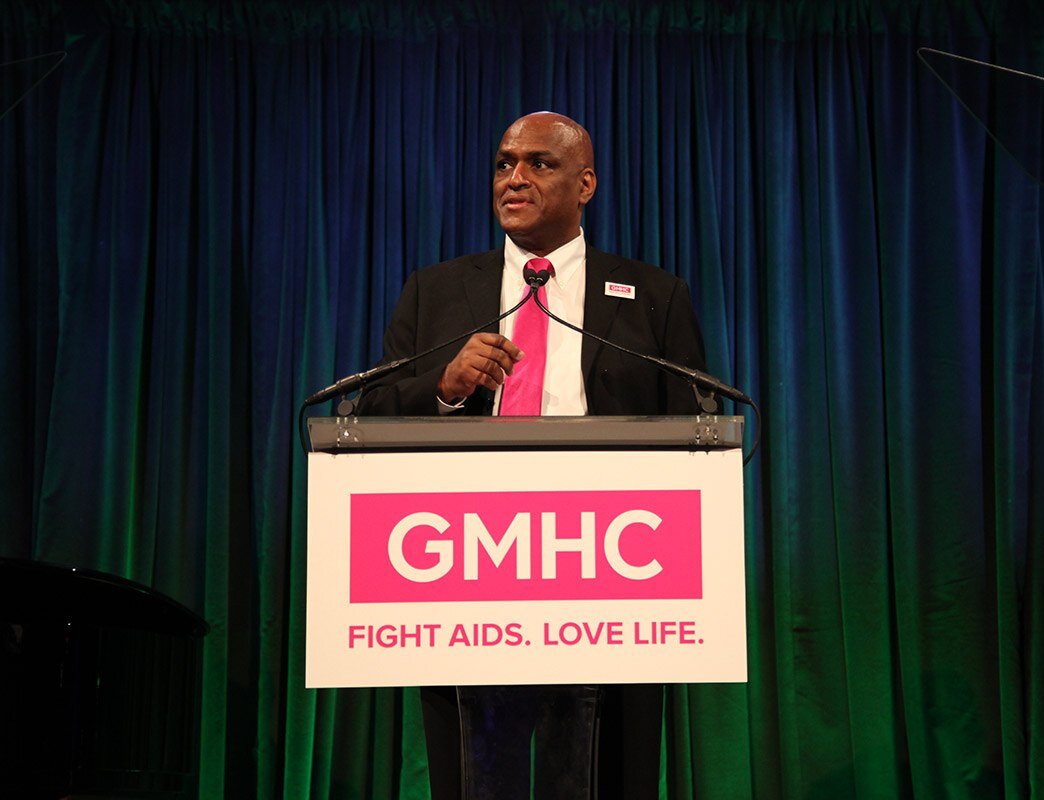
A lifelong New Yorker and community advocate on listening before you decide what a community needs, setting goals you can actually measure, and making room for the next generation of leaders.
Manuel Rivera is a lifelong New Yorker and community advocate. His work has focused on affordable housing, homelessness, tenant advocacy, LGBTQ issues, HIV/AIDS advocacy, and making sure communities have a meaningful voice in the decisions that affect them.
Retired from his professional career but still active in advocacy, he serves as Chairperson of the Consumer Advisory Board at GMHC and as a member of its Board of Directors. He has also served as Parliamentarian on Manhattan Community Board 10 and as co-chair of the NYC Black/Latina LGBTQ Coalition.
His method has stayed the same across those roles: listen, identify the problem, establish a goal, develop a plan, and measure whether the goal was met. An affordable housing proposal that was rejected, then approved once he rebuilt it around what residents actually said they needed, taught him the limits of determination on its own. Looking ahead, he wants communities to have a more direct role in decisions about housing, health and neighborhood development, and younger advocates to have the opportunity to lead.
A Life in New York Community Advocacy
Please introduce yourself and describe the work you have done throughout your career.
I am a lifelong New Yorker and community advocate. My work has focused on affordable housing, homelessness, tenant advocacy, LGBTQ issues, HIV/AIDS advocacy, and making sure communities have a meaningful voice in decisions that affect them.
I am retired from my professional career, but I remain involved in advocacy. I currently serve as Chairperson of the Consumer Advisory Board at GMHC and as a member of its Board of Directors. I have also served as Parliamentarian on Manhattan Community Board 10 and as co-chair of the NYC Black/Latina LGBTQ Coalition. Throughout these different roles, my approach has been consistent. I listen, identify the problem, establish a goal, develop a plan, and measure whether we achieved what we set out to accomplish.
How is community advocacy organized when so many different groups may be involved?
Community advocacy usually requires cooperation between many different people. Residents, nonprofit organizations, government representatives, neighborhood leaders, service providers, volunteers, and advocacy groups may work on the same issue.
The challenge is making sure the people who are directly affected are part of the conversation. An organization can develop a program that looks excellent on paper, but that does not mean it addresses what people actually need. I believe you have to start by listening to the community.
What Distinguishes Effective Advocacy
What distinguishes your approach to advocacy and community leadership?
I focus on outcomes. At the beginning of a project, I establish goals and a timetable. I check our progress and adjust as needed.
One of the most important lessons I learned came from an affordable housing project. I initially tried to gain support from local leaders, and the proposal was rejected. I eventually realized that my approach was seriously flawed. Instead of pushing the same plan, I started again by asking people what they needed and wanted. We developed an approach that addressed those realities, and the project was ultimately approved.
That taught me that determination is important, but determination without listening can take you in the wrong direction.
Which communities and issues have been the primary focus of your work?
My work has primarily involved New York City and issues affecting people who have historically had difficulty getting their concerns heard. That has included affordable housing, homelessness, HIV/AIDS, LGBTQ advocacy, tenant issues, and concerns affecting Black and Latino communities.
These issues frequently overlap. Someone dealing with unstable housing may also have difficulty accessing healthcare or other services. Effective advocacy requires understanding the whole situation rather than treating each problem as if it exists on its own.
What do people most often need from an effective community advocate?
People need someone who will listen and then help determine what can realistically be done.
Sometimes that means connecting someone with an existing resource. Other situations require organizing people, bringing organizations together, speaking with government representatives, or changing a policy or process.
An advocate also has to be honest. You should not promise an outcome you cannot deliver. You identify what is possible, develop a strategy, and then do the work required to move toward it.
Listening, Trust and Long-Term Relationships
How do you stay informed when community needs and priorities continue to change?
I listen to people and remain open to new ideas.
Reports and statistics are useful, but they cannot tell you everything happening in a neighborhood or community. You need direct conversations with people who are experiencing the issue.
I sometimes say that this old dog is very willing to learn new tricks. Experience matters, but experience should never become an excuse for refusing to change.
How important are long-term relationships in community advocacy?
They are extremely important. Community work is built on trust, and trust develops over time.
People remember whether you listened. They remember whether you were honest and whether you followed through.
My experience working with coalitions reinforced that lesson. Different organizations may support the same overall objective while disagreeing about priorities or methods. Effective coalition leadership requires finding enough common ground to make progress without pretending those differences do not exist.
Measuring Whether Advocacy Worked
How do you measure whether an advocacy effort has been successful?
I measure success by the outcome.
If the goal is to gain approval for an affordable housing project, then obtaining that approval is success. If you organize an event or initiative, you should decide beforehand what you are trying to accomplish and evaluate the results against that goal.
If a project fails, I do not believe in changing the definition afterward just to call it successful. Failure can teach you something important. That lesson may help you succeed the next time, but learning from failure and achieving the original goal are two different things.
What happens after a particular campaign, initiative, or community event ends?
You evaluate what happened and determine what remains unresolved.
Community advocacy rarely has a clean ending. Solving one problem may expose another issue that needs attention. Conditions also change over time.
That is why continued communication matters. You have to stay connected enough to understand whether the original solution is still working and where new gaps are developing.
Resources, Budgets and Knowing When to Wait
How do financial limitations affect community advocacy?
Resources are always a consideration. Organizations and community initiatives do not have unlimited money, staff, or time.
My work has generally focused on advocacy and community leadership rather than establishing organizational pricing or billing structures, so I would not claim responsibility for financial decisions I did not make.
What I have learned is that limited resources make priorities even more important. You need to know who you are trying to serve and what outcome you are trying to achieve before deciding where resources should go.
What kinds of budgets have the community initiatives you have worked with required?
There is no single useful number because my experience has included housing initiatives, community organizing, coalitions, civic participation, and advocacy.
I also do not have verified financial figures that would allow me to give an accurate range for those projects.
What matters to me is whether available resources are being directed toward an actual community need. A large budget does not automatically create a successful program.
Have you ever decided that an initiative should not move forward as originally proposed?
Yes. Sometimes an idea is not ready. Sometimes the strategy is wrong. Other times, there is not enough community support.
Before moving forward, I want to know what we are trying to accomplish, who benefits, who needs to participate, and how we will know whether it worked.
If those questions cannot be answered clearly, more work needs to happen before the initiative moves forward.
Obstacles, New Ideas and Coalition Culture
What have been some of the most persistent challenges throughout your career?
I grew up poor, Black, and gay. At different points in my life, one or all of those realities created obstacles.
My response was to plan and work extremely hard. I learned to identify an objective, develop a strategy, establish checkpoints, and keep working toward the goal.
I also learned that persistence does not mean refusing to change direction. Sometimes the smartest thing you can do is recognize that your current strategy is not working and develop a better one.
How do you encourage new ideas in community advocacy?
I start by discussing them with people.
Innovation does not always mean introducing new technology. Sometimes it means creating a better process, forming a different partnership, changing how decisions are made, or giving people a voice they did not previously have.
People with firsthand experience of a problem often understand weaknesses in a system that may not be obvious to someone looking at it from the outside. Good organizations create ways to hear those perspectives.
What creates a healthy culture within an advocacy organization or coalition?
I value intelligence, honesty, determination, and the ability to work well with people.
Coalition work quickly teaches you that agreement cannot be a requirement for participation. People will disagree. Organizations will have different priorities.
A healthy culture allows those disagreements while keeping attention on the larger objective. Leadership is not about making everyone think the same way. It is about creating a structure where people can work together despite their differences.
Looking Ahead and Making Room to Lead
What would you like to see community advocacy accomplish over the next five to ten years?
I would like communities to have a stronger and more direct role in decisions involving housing, health, HIV/AIDS services, LGBTQ issues, and neighborhood development.
I also want younger advocates to have opportunities to lead. People from my generation can provide history and experience, but we should not assume that our methods will always be the right methods for the next generation.
Good leadership includes knowing when to provide guidance and when to make room for someone else.
How has your leadership style changed over the years?
I listen more.
My experience with the affordable housing proposal that was initially rejected strongly influenced me. I learned that having a good objective does not automatically mean you have a good strategy. I had to stop presenting what I thought people needed and start asking them what they actually needed.
I was also greatly influenced by the late civil rights leader Dr. Hazel Dukes. Her example reinforced for me the importance of persistence, preparation, and staying connected to the people you represent.
What changes in advocacy are you paying the most attention to today?
I am interested in finding better ways for people with firsthand experience to participate in decisions that affect their communities.
Technology can make communication and organizing easier, but I don’t believe it replaces relationships. Community work still depends on trust, communication, and people being willing to sit down with one another.
The tools may change. The importance of listening does not.
What advice would you give someone who wants to become a community leader?
Know what you are trying to accomplish. Set goals. Establish a timetable. Review your progress. Be honest about whether the strategy is working.
If it is not working, change it.
Most importantly, listen before deciding that you already know what another person or community needs. I learned that lesson through experience. Determination matters, but determination combined with listening, planning, and a willingness to adjust is much more effective.
Key Learnings
- Start by listening to the community. An organization can build a program that looks excellent on paper and still miss what people actually need.
- Determination without listening can take you in the wrong direction. A rejected affordable housing proposal was only approved after the plan was rebuilt around what residents said they needed.
- The issues travel together. Unstable housing, healthcare access and other needs overlap, so advocacy has to address the whole situation rather than one problem at a time.
- Honesty is part of the work. Never promise an outcome you cannot deliver; identify what is possible, build a strategy, then do the work required to get there.
- Reports and statistics cannot tell you everything happening in a neighborhood. Direct conversation with the people experiencing the issue fills the gap.
- Trust is built over time. People remember whether you listened, whether you were honest, and whether you followed through.
- Decide what success means before you start, and do not redefine it afterward. Learning from failure and achieving the original goal are two different things.
- Coalitions do not require agreement. Effective leadership finds enough common ground to make progress without pretending the differences are not there.
- Limited resources make priorities more important, not less. Know who you are serving and what outcome you want before deciding where money, staff and time go.
- Good leadership includes knowing when to step back. Experience should inform the next generation of advocates rather than dictate their methods.
What a Community Advocate Does
A community advocate works on behalf of residents in the decisions that shape where and how they live: housing, health services, tenant protections, neighborhood development and access to public programs. The role rarely comes with formal authority. Its influence comes instead from standing in the space between residents and the institutions that decide things about them, including city agencies, nonprofit service providers, landlords and developers, elected officials and funders. In New York City that work runs through recognizable structures. Community boards give neighborhoods a formal voice on land use and local services, consumer advisory boards give the people receiving a service a say in how it is delivered, and coalitions let organizations with different missions push on a shared issue together. Manuel Rivera has served in all three.
The day-to-day work divides into a few recurring responsibilities. The first is listening, which in practice means finding out what residents actually need rather than assuming it, because a program designed without them can be well funded and still solve the wrong problem. The second is connecting, whether that is pointing one person toward an existing resource or bringing several organizations around the same table. The third is representation: speaking at hearings, meeting government representatives, and pressing for a change in a policy or a process that is producing bad outcomes. Running underneath all of it is measurement. Setting a goal and a timetable at the start, checking progress against them, and being honest when a strategy is not working is what separates advocacy that produces results from advocacy that only produces activity.
Three shifts in the field are worth watching. The first is the growing insistence that people with firsthand experience of a problem help make the decisions about it, rather than being consulted after the plan is already written. The second is technology, which has made organizing, outreach and information sharing far easier without changing the underlying requirement, because community work still depends on trust and trust is still built in person over time. The third is generational. The advocates who built these structures are increasingly focused on handing them over, which makes creating room for younger leaders part of the job rather than an afterthought to it.