
Please introduce your company and describe your role within the organization.
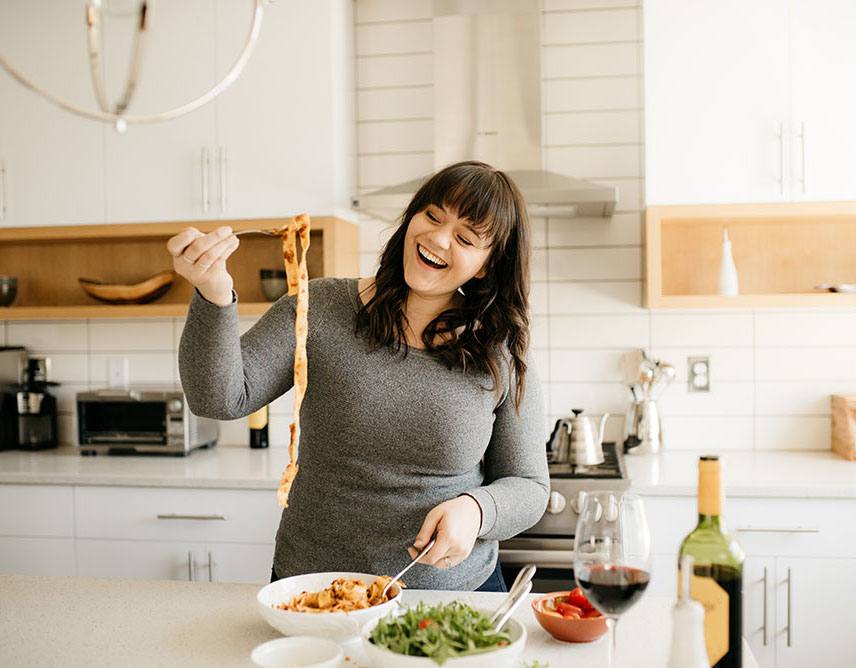
I’m the founder of Life As A Strawberry, a media company that helps home cooks make food they’re proud of. Life As A Strawberry is our flagship food and recipe site, and is part of our larger family of brands, which now encompasses several verticals across multiple digital platforms. My team and I specialize in breaking complicated recipes and techniques into accessible, easy-to-follow action steps. We’re especially known for our rigorous recipe testing, bread recipes, and approachable content. As we’ve grown, I’ve moved more towards a CEO/Creative Director role, which lets me focus on big picture planning and major projects.
What is your company’s core business model – do you use an in-house team, third-party vendors, or a hybrid outsourcing approach?
We prefer to hire in-house whenever possible, and have worked hard to build an efficient team and a supportive company culture. We also work with several outside support teams (like our Bookkeeping and CPA team or attorneys) and bring on contractors as needed to help us with specialized projects.
How does your company differentiate itself from competitors in a crowded market?
There are so many options when you look for a recipe online: Some good, some not-so-good. The first and most important thing is to make sure our recipes work, so my team does extensive testing to make sure our recipes will perform well in a variety of home kitchens. We also include a ton of photos (and step by step videos, whenever possible) to show readers exactly what a recipe should look like at every single step. My goal is for every piece of content we publish to be skimmable, easy to understand, and exceptionally useful. We spend a lot of time asking “how can we make this easier for people?”, and work hard to create content that feels simple and achievable, but not dumbed down.
What are the primary industries or sectors you serve, and how has that focus evolved over time?
When I started Life As A Strawberry, it was a just-for-fun food blog with no clear focus or direction. As it evolved into my full-time job, and then into a business that supports other people, we got a lot clearer about who we serve and what we provide. Today, we focus on developing recipes and sharing content for busy women who want to eat well and learn new skills in the kitchen without the overwhelm. The typical Life As A Strawberry reader is in her late 20s to early 40s, living with a partner or roommate, and working a lot: She wants to feel confident in the kitchen, make nourishing meals that don’t feel like a chore, and enjoy a mix of simple weeknight recipes and more involved weekend baking projects. As we launch and acquire new websites, we keep this same reader in mind: Each site in our family of brands has a slightly different focus (like meal prep or entertaining), but they all work together to serve the same audience.
For a long time, we were also doing a lot of sponsored and freelance work for larger brands. But we found there was just too much disconnect between our digital publishing arm and the B2B sales involved with brand work: It didn’t make sense to continue growing two separate pieces of our company in such a big way. Ultimately, we scaled the B2B work back in order to concentrate on content creation, and that’s been a really positive shift that’s helped narrow our focus even more.
What are the most in-demand services or solutions that clients approach your company for?
Our bread and butter is recipe content. Readers come to our websites through a ton of different channels – Google, Pinterest, Facebook, email, etc. – and with a wide variety of goals in mind, but they’re all looking for something to cook. Outside of the recipe websites, we do some limited consulting for other food bloggers, and still take on the occasional freelance client if they’re an excellent fit for our brand and mission.
How do you personally stay ahead of industry shifts when most data is already yesterday’s news?
Online business is always changing. The downside of our business model is that a lot of things are out of our control: algorithm changes, AI, and a general shift in the way people use the internet have all thrown us more than a few curveballs. My approach is to focus on the things we can control. Our website and email list, for example, are channels that we own, so we put more focus there than an algorithm-driven social media account. We can also see broader trends emerge over time, despite constantly changing algorithms, which is useful for strategic planning. Keyword research, audience surveys, and a clear picture of what’s already performing well also guide a lot of our planning.
Do you have a significant percentage of repeat clients? If so, what strategies contribute to that loyalty?
A little more than 20% of our traffic comes from Direct and returning traffic, which means people are navigating to Life As A Strawberry as a place to start their recipe search (vs. Googling a recipe or finding something on Pinterest and then clicking through to our website). That’s pretty high for our industry. When we survey our most active readers, they frequently mention our thorough recipe testing and easy-to-understand teaching style as factors that drew them in on a first visit and kept them coming back.
How do you measure and ensure high customer satisfaction in your operations?
Our first priority is always making sure the recipes work. That’s the most important thing that people are looking for when they visit our sites. Recipe reviews and ratings are a good indicator of whether we’re delivering on that goal. If a recipe gets poor reviews, we revisit and re-test it to see if we can replicate the problem a reader is having, and we follow up with people who are struggling with a technique if they need more individualized support.
Describe your pricing and billing structure – is it fixed cost, pay-per-milestone, or another model?
Like many digital publications, our main source of revenue is on-site advertising, followed by affiliate marketing and digital product sales. We work with an advertising management company to place and run the ads on our websites, and they handle a lot of the back-end work. Ad earnings are influenced by a real-time auction that determines which ad a reader will see, and how much an advertiser happens to be willing to pay to occupy that ad space at that particular point in time. As a result, ad earnings are very fluid and can vary widely: 1,000 visits to our website in December, for example, when advertisers are in holiday sales mode, can earn significantly more in ad revenue than the same 1,000 visits might earn in January or February. Affiliate earnings are more predictable: They’re typically a straight percentage of whatever sales we refer to a company. Our own digital products, which consist of online courses and eBooks, have a fixed price.
Have you turned down projects based on budget or scope? If so, what are your minimum requirements?
We’re frequently approached by brands who want to advertise on our website and social media channels, whether through a direct ad buy or by hiring us for sponsored work. We turn down 95% of these requests, and we’re exceptionally picky about the brands we work with. Any brand partnerships we take go through a vetting process to determine whether it’s a good fit for our brand, company values, and audience. Our audience trusts us to be honest about the recipes we share and the products we use, and we take that really seriously. Occasionally, a brand will feel like a good fit for us, but won’t have the budget to produce the scope of work they’re hoping for. In those cases, we’ll either work with the brand to develop a content strategy that fits their budget or decline the partnership.
What key challenges has your company faced in the last few years, and how did you overcome them?
The rise of AI has been a particular challenge for us. It’s frustrating to put so much work into our recipe testing, photography, and writing, only to have it scooped up and regurgitated by LLMs without consent or compensation. As AI becomes more prevalent, we – like many online publishers – are seeing more people bypass the original creators of a resource to get answers directly from a chatbot. Aside from the obvious problems with this new trend (like the environmental impacts of data centers or the fact that chatbots are often wrong), this has a real cost for creators. While we’re all adapting the best we can, I think it’s likely that we’ll see a lot of independent publishers driven out of business unless we can put some better restrictions and guardrails in place around AI development and use. We’ve also seen a dramatic increase in the number of new recipe websites that are entirely AI-generated, which means increased competition but also – because these AI-generated recipes rarely work – increased distrust of recipe websites as a whole.
How do you foster innovation and adapt to emerging trends in your industry?
I manage a team of wonderfully creative people, and it’s important to protect some unstructured time for them to just be creative. We schedule “hackathon days” and retreats that are designed solely to provide deep work time on new projects and ideas, without the pressure of having to deliver a final product, tackle day-to-day tasks, or meet a deadline. Often, the ideas that come out of these unstructured days go nowhere; sometimes, they turn into a wildly successful project that marks a turning point for our entire company.
What role does company culture play in your success, and how do you build and maintain it?
As a small company with a fully remote team, culture is everything. I really wanted to find ways to help our remote team feel friendly and tight-knit, even though some of us would rarely (if ever) meet in person. We have a detailed onboarding process that includes one-on-one time with every other team member, weekly all hands meetings where our team can interact, and just-for-fun Slack channels to share fun stories, memes, and whatever other water cooler moments help folks feel connected. We also have a long, slow hiring process that really lets us get to know our best candidates, and we try to make it as fun and stress-free for them as possible: New team members frequently mention that they actually really enjoyed their hiring, interviewing, and onboarding processes, which is one the best compliments I can get. And while a company culture is certainly impacted by what happens when we’re all actually at work, I think it’s just as important to make sure you’re supporting your team’s off-the-clock life. We offer paid parental leave, three weeks of company-wide PTO over the holidays, and a ton of paid holidays for all employees (including part-time staff). Employees also get benefits like annual stipends to support their hobbies or non-work education and paid sabbaticals every few years to rest and recharge.
Where do you envision your company in the next 5-10 years? What are your boldest long-term goals?
After a decade of hustling, I’m in a season now where I’m trying to hand off more and more of the day-to-day work so I can work more on the business as opposed to in the business. As we expand our family of brands, I’m excited to start developing independent editorial teams for each recipe site, and scale up our content production while working with new and emerging voices in food media. In 10 years, I hope to be managing an even bigger team and to open a full test kitchen and production studio.
How has your leadership style evolved throughout your career, and what influences it?
When I started Life As A Strawberry, I never thought it would evolve into a full-time job, let alone that I’d be managing a team of people who live all across the country. The shift from solopreneur to “company with employees” was a weird one: I was used to working alone, in my own apartment, and not really having to talk to anybody. When I hired my first team members, it was tough to re-train myself to communicate well and often with other people. At the beginning, I also just wasn’t very good at hiring yet: I wasn’t sure exactly what I needed in a team member, and I didn’t have great onboarding, so the learning curve for everyone was a lot steeper than it needed to be. With practice, I think I’ve gotten better at sharing my vision for the company with my team, and it’s also become a lot easier to get people up to speed when they start working here. I take a lot of inspiration from companies and CEOs I admire, and I’m constantly asking other people what they love about their workplace or manager so I can learn from other organizations.
What emerging technologies or market shifts are you most excited about for your company?
Although AI has brought a lot of questions and frustrations to the surface, I’m excited that so many people are gravitating more than ever towards art made by real, human creators. As more AI-generated content hits the internet, I think our person-to-person connections will only become more important. People are craving community, and that’s something that recipe websites are really well poised to provide. We’re also seeing a real desire for hobbies and creativity and whimsy lately, especially among Millennials and Gen Z. I’m excited to see so many people picking up bread baking, or learning a new skill, or baking a cake just because it’s a Tuesday, or hosting potlucks for their friends. At its core, food is about people, and I’m so honored that we get to be even a small part of our readers’ celebrations and milestones and family dinners.
What advice would you give to aspiring leaders? Can you share one lesson from your journey that resonates with the business community?
If you’re running a creative small business, and if you feel like nothing’s working or like you’re moving through molasses, HOLD ON. Your creative work is so important – now, more than ever – and if you feel like you’re hitting a breaking point, it usually means that something big is right around the corner. If you’re feeling burned out, take a break: Go for a walk. Eat a snack. Sleep. Take a vacation. And then come back to it with fresh eyes. It will be hard. It will be frustrating. It will be worth it. KEEP GOING.