
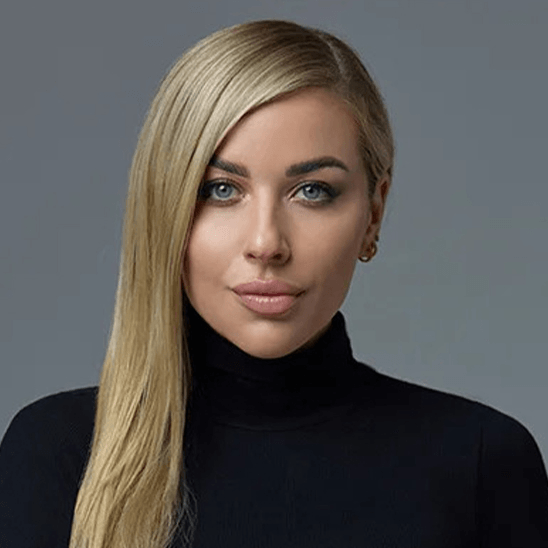
Emily Ford is the Founder & Visionary of FORDIVINE, an Irvine, California personal branding agency for established, faith-based and purpose-driven businesswomen. She has been building businesses since 2011, has grown a personal Instagram community of more than 500,000 followers, and trains companies and teams on personal branding through keynotes including “You Are the Brand.”
She launched FORDIVINE in 2024 with her husband, Jake Havron, who serves as CEO. The agency helps women turn their expertise into a clear message, well-positioned offers, and the identity, content and website that connect people to their work. In this interview, she explains how a founder can organize several ventures under one personal brand, why FORDIVINE has closed enrollment rather than compromise on quality, and why AI makes a recognizable voice more valuable.
Please introduce your company and describe your role within the organization.
I’m the Founder & Visionary of FORDIVINE, a personal branding agency for established, faith-based and purpose-driven businesswomen. We help a woman turn her expertise into a clear message, position her offers, and build the identity, content, and website that connect people to her work. Her personal brand becomes the umbrella above her businesses, with each venture serving a clear purpose.
I have been building businesses since 2011, and my personal Instagram community has grown to more than 500,000 followers. I helped shape our process around what these women need and what I have learned building my own brand, training companies and teams, and delivering my “You Are the Brand” keynote. I continue bringing that practical perspective into the company as the marketplace changes.
Jake Havron is our CEO (and my husband). He leads the company’s growth, client experience, and talent recruitment as he comes from a background of private business consulting before we launched this company in 2024. Our shared priority is to expand without losing the care and quality that make the work bespoke.
What is your company’s core business model – do you use an in-house team, third-party vendors, or a hybrid outsourcing approach?
We use a hybrid model, with in-house team members at our 5,200-square-foot headquarters in Irvine, California, and dedicated contractors who work exclusively with FORDIVINE.
We recruit for the quality of someone’s work and their fit with our standards, whether they are local or remote. We serve women across the country and some international clients. Most of the work happens online, so clients can complete their brand transformation without traveling to our Irvine headquarters.
Our core service is a bespoke, done-for-you brand transformation. The client contributes her experience, goals, and feedback at key stages, while our team develops and builds the strategy and assets.
How does your company differentiate itself from competitors in a crowded market?
We serve a specific woman: she has expertise and a meaningful vision, but her public brand does not fully communicate either. Faith and purpose matter to her, and she wants visibility that feels consistent with her values.
My standard for the team is personal. If I would not trust someone’s work with my own brand, I would not bring them into FORDIVINE to serve our clients. I know what it takes to show up publicly, build trust, and connect a personal brand to different businesses.
We develop the strategy and build the brand together. That includes clarifying whom she serves, what she wants to be known for, and how her offers fit together, then carrying those decisions through her messaging, visual identity, content, and website. We also organize the finished assets with practical guidelines so she and her team know how to use them consistently.
What are the primary industries or sectors you serve, and how has that focus evolved over time?
We work across consulting, coaching, speaking, wellness, beauty, real estate, and other professional services. The common thread is that the woman’s expertise and reputation are important to the business.
- Michelle Roby had already built Electric Rays to ten locations. We helped her translate that experience into a consulting offer and a personal brand with a clear message, content, and website. Her case study reports that she closed her first five-month consulting package, began receiving warm website inquiries, and secured a local business speaking opportunity. She also received a paid speaking inquiry for a large nonprofit event and inbound podcast inquiries. Her increased visibility extended back to Electric Rays through more company leads and higher-quality job applications.
- Dr. Stephanie Byerly came to us after more than 25 years in medicine, ready to build a coaching and speaking business. We helped articulate her signature message, The Art of Becoming UNNUMB, and connect it to her brand identity, website, content, and speaking materials. Her case study reports new paying coaching clients, including people who discovered her online and existing followers who recognized themselves in her message. She was also invited to be a main keynote speaker at a women’s medical professional conference in Dallas, and her growing visibility brought podcast interest and invitations.
These individual experiences show why our focus reaches across industries. We help women connect the expertise they already have to the clients, stages, and business opportunities they want to pursue. Each woman’s goals and results are different.
Case studies: https://www.fordivine.com/crowned-stories/michelle-roby and https://www.fordivine.com/crowned-stories/stephanie-byerly
What are the most in-demand services or solutions that clients approach your company for?
The main request is a complete personal brand that supports a real business direction. Our first-phase Diamond Signature experience brings together brand and business strategy, positioning, messaging, visual identity, professional content, and a website. Clients want a team to build those pieces for them, with their input at the decisions that need their voice and expertise.
I think of that work as the roots and trunk of a tree. Once they are established, the branches depend on the woman’s goals. Some clients want ongoing social content creation. Others need speaking assets and coaching, continued SEO and GEO work, or support activating a new part of their brand.
The order matters. We want the next investment to grow from a clear understanding of her audience, offers, and direction.
How do you personally stay ahead of industry shifts when most data is already yesterday’s news?
I stay close to the work by continuing to build my own personal brand, train companies and teams, and speak about personal branding through my “You Are the Brand” keynote. That keeps me engaged with the questions people are facing in practice.
Called & Crowned also keeps me in conversations with founders and leaders about what they are building and the challenges they face. Across its earlier and current names, my podcast catalog includes more than 190 episodes and over 600,000 downloads. I bring that perspective back into FORDIVINE while staying grounded in what lasts: a clear message, genuine expertise, and a brand the woman can stand behind.
A woman should be able to grow her visibility while remaining recognizable to herself.
Do you have a significant percentage of repeat clients? If so, what strategies contribute to that loyalty?
Clients do continue with us after the initial transformation through what we call Level 2 services. We tailor the next engagement to the woman’s goals. The reason to stay is that she has more she wants to build, and the team already understands her brand.
That might involve monthly social content, professional speaking support, continued website and search-visibility work, or even direct business consulting with our CEO, Jake Havron. The benefit is continuity: the team already understands the woman’s voice, visual identity, business direction, and standards.
The roots-and-trunk work comes first. Then we can help develop the relevant branches while keeping the brand consistent. That ongoing usefulness is the basis for the relationship.
How do you measure and ensure high customer satisfaction in your operations?
We assess satisfaction through direct client feedback, refinement, and approval at each phase. Our core process is designed around 12 weeks and combines done-for-you delivery with focused client input. We begin by drawing out her experience, strengths, values, and voice, which we call her brand DNA.
Before moving into the next phase, the client reviews what we have created, requests refinements, and signs off. We do not want to discover at the end that something important does not feel like her.
Those reviews need to be specific. Does the positioning explain what she does and whom she serves? Does the language sound like her? Do the visuals represent her? Can she and her team understand how to use what we have built? Those questions make the feedback useful before we move forward.
What kind of post-project support do you provide to address client queries or ongoing needs?
Our first responsibility is to leave the client with a brand she can actually use. That is why we deliver a Digital HQ and a Brand Vault, then offer continued support through a separately scoped engagement when she needs it.
The Digital HQ is her website, designed to help people understand her work and take the next step. The Brand Vault organizes the assets and explains how and when to use them. Her team can work from the same guidelines instead of trying to interpret a folder of disconnected files.
For ongoing needs, we offer tailored Level 2 services, including monthly social content creation, speaking assets and coaching, and continued SEO and GEO optimization. For selected clients, we may also collaborate on an activation event or marketing initiative. The scope depends on the client’s goals; those services are not automatically included in every first-phase package.
Describe your pricing and billing structure – is it fixed cost, pay-per-milestone, or another model?
We price the initial transformation as a package tailored to the woman’s needs. The first phase has a common foundation of expected deliverables, but we curate the work around her business and brand.
Our minimum starting investment is $5,000. Most Diamond Signature experiences, which are phase one, range from $10,000 to $20,000 or more in total.
Installment options are available when needed, so the total can be divided into smaller payments. The scope and payment arrangements are agreed for the individual engagement.
What is the typical price range for projects you’ve handled in the past year, and how do you balance affordability with value?
Most of our first-phase Diamond Signature packages fall between $10,000 and $20,000 or more, with services starting at $5,000. That is our current typical package range.
Value comes from how the pieces work together. A client should be able to explain her expertise, show people the right offer, direct them to a website with a clear next step, and give her team consistent assets to use. We curate the package around those needs rather than treating every woman’s brand as the same project.
We can offer installments to make the payment schedule more manageable, but we do not lower the quality of the team or the work to make a package appear cheaper. The right scope should serve the client’s business and give her something she can put into action.
Have you turned down projects based on budget or scope? If so, what are your minimum requirements?
We are selective about both values and business fit. We want to work with women who intend to serve people and make a meaningful contribution. We need to believe in the brand we are helping bring into the world because our name is connected to that work.
There also needs to be a real business vision. A client may be developing a new venture or improving an existing one; she does not need every detail resolved. But we need something substantive to build around, beyond wanting a new logo or more attention.
Services start at $5,000. We also consider our capacity. We have closed enrollment or used a waiting list when we could not take on more work at the standard our clients deserve.
What key challenges has your company faced in the last few years, and how did you overcome them?
Our biggest challenge has been balancing demand with the capacity to deliver excellent work. There have been times when we closed enrollment or created a waiting list because we did not have enough dedicated designers, strategists, and/or content experts to create the amount of deliverables that would be needed.
We could have filled the gap quickly with people we had not properly assessed. Instead, we chose to wait until we could support the work at our standard.
We continue recruiting, but finding strong talent is only part of it. People also need to fit a culture that values what we call divine excellence. That means taking responsibility for the quality of the work and the experience of the woman receiving it. Capacity remains something we manage deliberately as we grow.
How do you foster innovation and adapt to emerging trends in your industry?
For us, innovation has to improve the client’s ability to put her brand to work. My speaking and training bring current questions into the company, while Jake recruits the expertise we need to respond. We keep the process structured enough to deliver consistently, with room to adapt the strategy and execution to each woman.
Our ongoing search-visibility work is one example. As people use both search engines and AI tools to discover expertise, a founder needs a website that clearly explains who she is, what she offers, and the experience behind her work. That builds on the strategy and website we have already created.
The filter is whether a change helps her reach the right people in a way that fits who she is. We are not asking women to adopt every trend in order to remain visible.
What role does company culture play in your success, and how do you build and maintain it?
Divine excellence is a value inside FORDIVINE. In practice, it means we care about what we deliver and how the client experiences the process.
That affects recruitment, client reviews, and the decision to pause enrollment when capacity is stretched. Technical ability matters, but we also need people who take ownership of their work and respect the woman whose reputation they are helping shape.
We go deep into our clients’ stories and businesses. That level of trust requires a team willing to listen carefully, refine the work, and maintain the standard even when demand creates pressure to move faster.
Where do you envision your company in the next 5-10 years? What are your boldest long-term goals?
My ambition is for FORDIVINE to become a household name among women who want to become the Crowned Authority in their space. By that, I mean a woman whose expertise, message, and public presence make her a trusted voice for the people she is called to serve.
I want women to know they can build a serious brand and business without abandoning their convictions or copying a version of visibility that does not fit them.
The vision is to support more of that journey, from the foundational brand work to the services a woman needs as her business grows. But becoming better known only matters if we protect the quality and care that brought her to us in the first place.
How has your leadership style evolved throughout your career, and what influences it?
One of my biggest lessons has been realizing that what feels natural to me can be difficult for another woman, even when she is highly accomplished.
I have spent years learning how to show up publicly, understand my audience, and communicate my message. A client may have deep expertise but still fear being judged, worry that visibility will conflict with her values, or struggle to recognize what makes her perspective valuable.
That changed how I thought about our process. We need enough structure to deliver consistently, and enough room to understand each woman. The conversations and review points help us draw out her voice instead of imposing an identity on her.
The goal is for her to leave with useful assets and greater clarity and conviction about how to use them.
What emerging technologies or market shifts are you most excited about for your company?
I am interested in how AI is changing both the way people discover expertise and the content they encounter. As more founders and business leaders use it to produce similar language, ideas, and visuals, I believe there is a real opportunity to stand out by being unmistakably yourself. The person choosing whom to trust is still human. She wants to understand your perspective, see evidence of your work, and feel that there is a real person behind the brand.
For our clients, that means making their expertise easier to find through search engine optimization, or SEO, and generative engine optimization, or GEO, while giving people something worth finding. Their own experiences, specific client stories, convictions, and way of explaining their work should shape the content. AI can support the process, but the founder still needs to bring her judgment, check the facts, and take responsibility for what carries her name.
The more generic content people encounter, the more valuable genuine expertise and a recognizable voice become. That is where I see the opportunity for FORDIVINE. We help a woman express what is already distinctive about her and connect it to a clear business direction. There is no shortcut around knowing whom you serve, doing good work, and earning trust. Authenticity has to be present in both the message and the experience people have with you.
What advice would you give to aspiring leaders? Can you share one lesson from your journey that resonates with the business community?
Be selective about what you put your name behind, and do not assume you have to set aside your values or personal beliefs to build a successful business around your passion. Those convictions can help clarify how you serve, whom you work with, and the standards you hold.
That was a real test for us when we first built FORDIVINE. We had to work through how openly our faith and values would shape the positioning of the company. We are grateful we chose to make them part of its foundation. The business feels more congruent with who we are and with the people who work here, and it helps attract the women we want to serve. They can recognize what we stand for before they decide to work with us.
The same principle applies to delivery. We have closed enrollment or used a waiting list when our team could not responsibly take on more work. A woman is trusting us with her reputation, and that deserves a team we trust.
My advice is to define your convictions and your standards before growth tests them. Ask how your values should show up in your offers, your message, your hiring, and the way you treat clients. Then build the capacity to deliver on that promise. You can pursue meaningful growth and stay true to the beliefs that made the work worth doing in the first place.
How can a founder organize several ventures under one personal brand?
Your personal brand is the umbrella above the ecosystem. Start with what people should trust you for: your expertise, values, and perspective. Then give each venture its own purpose and audience. My professional speaking, FORDIVINE, Heritage Club, and Called & Crowned offer different ways to engage with my work, while remaining connected to who I am.
For another founder, the practical exercise is to list each offer, its audience, and the problem it solves. Look for genuine connections and places where the messaging creates confusion. The personal brand can provide continuity without making every venture look identical or serve the same purpose.
What should an established businesswoman clarify before redesigning her website?
Clarify who the site is for, what she wants to be known for, which offers matter now, and what evidence helps someone trust the work. Then decide the next action for each audience.
A speaking inquiry and a consulting inquiry may need different information. The site should make both paths clear. If the underlying message is unresolved, a redesign can leave the visitor with the same confusion in a more attractive format. Strategy gives the design and copy a job to do.
Key Learnings
- A founder’s personal brand can serve as the umbrella over several ventures, as long as each one keeps its own purpose and audience.
- Strategy comes before design: clarify the audience, the offers and the proof before rebuilding a website.
- Protecting quality sometimes means closing enrollment or keeping a waiting list instead of hiring people who have not been properly assessed.
- Values and faith can sharpen positioning and attract the right clients rather than limit growth.
- As AI makes content more generic, genuine expertise and a recognizable voice become more valuable, not less.
More REVERB Interviews
- Branden Pearson — Project Leader
- Jacob Schmalzle — Founder
- Richard Bernstein — Michigan Supreme Court Justice
- Monica Goyal — Vice President
- Ben Barton — Medical Consultant
- Jordan Cheyenne — Founder and Lead Mentor
- Dr. Rajendra Bhayani — ENT and facial plastic surgeon
- Karunamaya Vesna Blazhevska — Communications Professional