Top PHP Application Penetration Testing Companies In 2027
Dominic Tarn
Head Writer - ReVerb
10.29.2026
Meta description:
White Knight Labs, Lexfo and Synacktiv are the strongest picks for PHP penetration testing in 2027. White Knight Labs runs manual web application tests mapped to the OWASP Top 10 and CWE Top 25, with remediation testing built into every engagement. Lexfo’s Ambionics team publishes PHP exploitation research on Drupal core, WordPress plugins and the PHP engine itself. Synacktiv created the PHP filter chain technique and its public generator tool, and published research on how leaked Laravel APP_KEY values lead to remote code execution.
This list is for engineering leads, CTOs and security managers who run Laravel, Symfony, WordPress, Drupal, Magento or custom PHP applications and need an outside team to break them before attackers do. To be included, a firm had to sell web application penetration testing as a named service and show PHP-related competence on its own site, through framework or CMS testing pages, source code review that covers PHP, or published research on PHP vulnerabilities. Each firm was checked against its own service pages, and only claims we could confirm there made it into the write-ups.
PHP Penetration Testing Companies At A Glance
Company
Headquarters
Best For
PHP Testing Approach
White Knight Labs
United States
Regulated and critical infrastructure apps
Manual testing mapped to OWASP Top 10 and CWE Top 25, retest included
Lexfo (Ambionics)
Paris, France
Drupal, WordPress and PHP CMS stacks
Black, grey or white box audits backed by PHP exploit research
Synacktiv
Paris, France
Laravel apps and deep file inclusion testing
Specialized web app pentests from the team behind PHP filter chains
Shielder
Pinerolo, Italy
Symfony and white box reviews
White box tests with source, configs and developer access
Vaadata
Lyon, France
Symfony and custom PHP SaaS
Black, grey or white box with debrief and revalidation
RCE Security
Hamburg, Germany
European teams wanting exploit-validated findings
Pentests plus source code review that covers PHP
7ASecurity
Dublin, Ireland
Pairing a pentest with a code audit
PHP named in scope, free fix verification
WeSecureApp
Texas, United States
Multi-CMS estates
CMS security testing across 16 platforms
Wattlecorp
UAE, India and US offices
WordPress sites in the Gulf region
WordPress pentests covering plugins, themes and admin
Astra Security
Delaware, United States
Startups that want pentest plus scanning
Manual pentest with two manual rescans and DAST
Best PHP Penetration Testing Companies In 2027
1. White Knight Labs — Manual Web Application Testing With Remediation Retests
White Knight Labs is an offensive security firm whose web application penetration testing covers web applications, APIs and their components. The team works across a wide range of programming languages and environments, which makes it a good fit for PHP estates that mix a Laravel or Symfony back end with APIs, legacy code and third-party packages. Testing follows a structured, repeatable methodology aligned with the OWASP Top 10 and SANS CWE Top 25, and each engineer adds a custom playbook for issues those frameworks miss.
Engagements move through scoping, reconnaissance and OSINT, threat modeling, scanning and enumeration, exploitation, reporting and remediation testing. Scanners are used early, but the firm puts its weight on manual work: business logic flaws, vulnerability chaining, SSRF, IDOR and XXE. Its threat mapping explicitly covers SQL injection (CWE-89), broken authentication, misconfiguration and vulnerable or unmaintained third-party components (CWE-1104), which is where many PHP applications break through outdated Composer packages and plugins.
Reports include an executive summary, proof of concept for each finding, severity ratings, remediation guidance and a business impact summary, and a sample report is available to download. Remediation testing is part of the service: the team retests fixes, checks that fixes did not introduce new issues and updates the final report. White Knight Labs says its engineers bring offensive experience from CISA and have tested hundreds of web applications across America’s critical infrastructure, including platforms handling HIPAA data.
Best for: Healthcare, finance and critical infrastructure teams running PHP applications that need manual testing, clear reporting and retesting in one engagement.
2. Lexfo — Application Audits From The Ambionics PHP Research Team
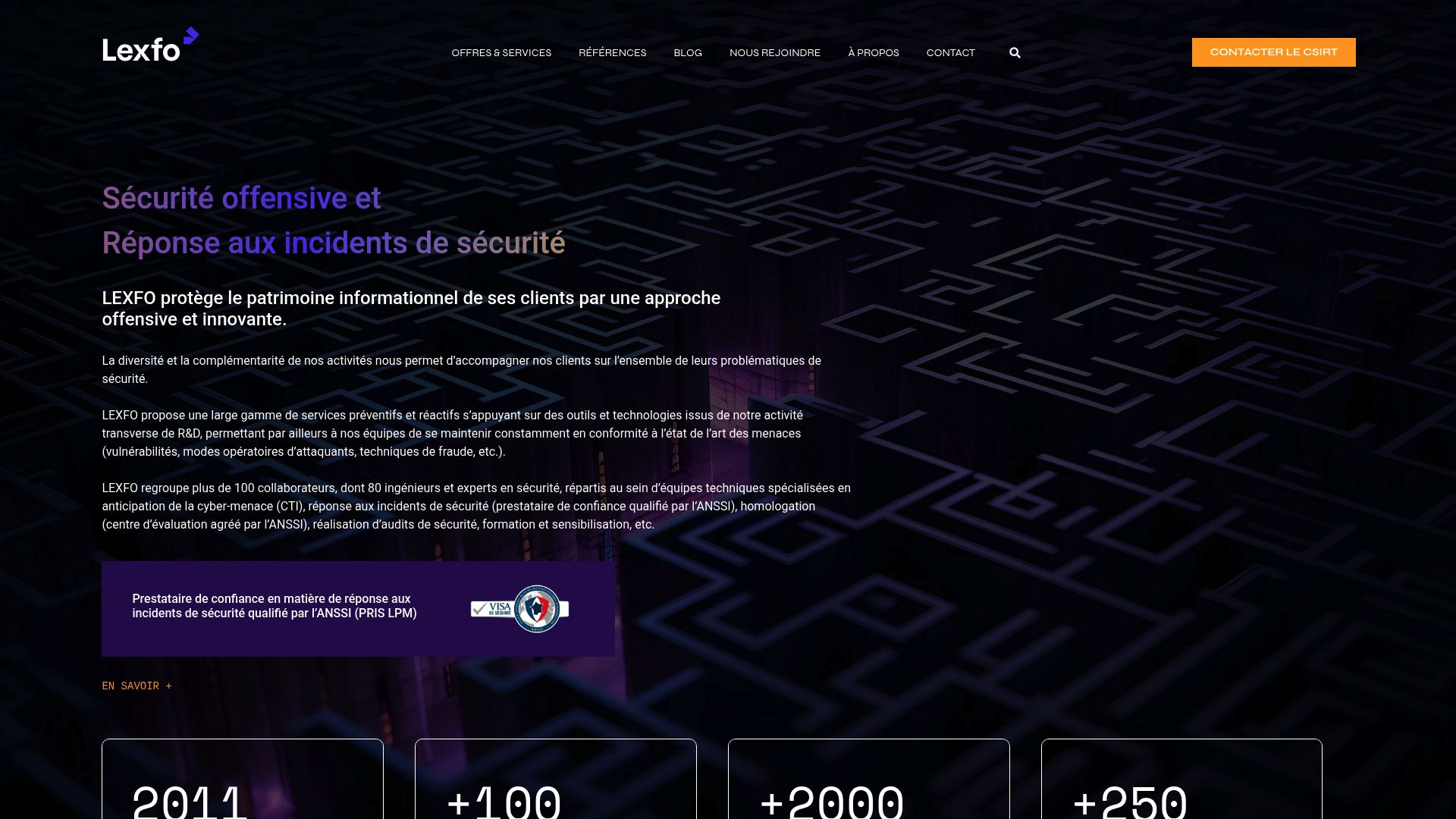
Lexfo is a Paris security firm founded in 2011 that runs security assessments in black box, grey box and white box modes, with application audits that include source code analysis. The company says it carries out more than 2,000 security audit and incident response projects a year for over 250 clients. Its Ambionics brand focuses on web application security and also runs continuous testing with weekly counter-audits of fixes.
The PHP depth shows in the research the Ambionics team publishes on Lexfo’s blog. Recent posts cover an unauthenticated Drupal core SQL injection through the JSON:API module taken to remote code execution, an arbitrary file upload in the Ninja Forms File Uploads WordPress add-on (CVE-2026-0740) found during an Ambionics security audit, a pre-auth SQL injection to RCE in GLPI, an unauthenticated SQL injection chain in SPIP, and a three-part series on exploiting a glibc iconv bug to attack the PHP engine.
That body of work matters for buyers because the same people who find bugs in Drupal and WordPress plugins know where custom PHP code goes wrong: file uploads that trust user filenames, query builders that leak into raw SQL and filter wrappers that turn file reads into code execution.
Best for: Organizations running Drupal, WordPress or other PHP CMS platforms that want testers with a public record of PHP exploitation research.
3. Synacktiv — Web Application Pentests From The Inventors Of PHP Filter Chains
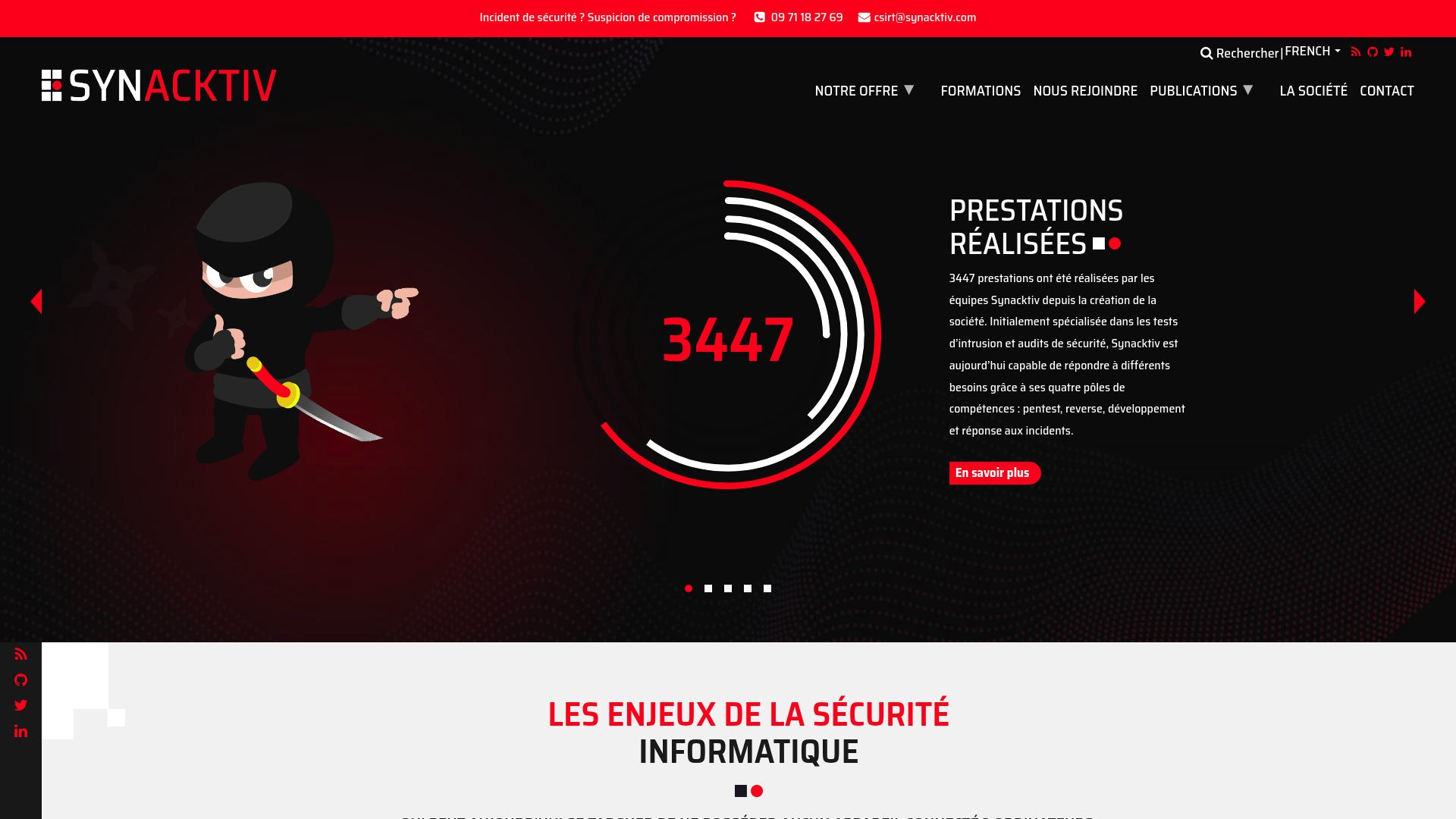
Synacktiv is a French offensive security company with offices in Paris, Toulouse, Lyon, Rennes, Lille and Bordeaux. Its specialized penetration testing covers web and mobile applications, internal networks, CI/CD, cloud and embedded systems, alongside red team engagements built for TIBER-EU and DORA testing. The company reports 3,447 completed missions, 188 regular clients and 310 public vulnerabilities identified.
Two pieces of Synacktiv research have shaped how PHP applications are tested. Its PHP filter chains article showed how a file inclusion bug in an include or require call can become remote code execution without a writable file, and the team released php_filter_chain_generator to build those payloads. Its “Deep dive in Laravel encryption” talk showed that Laravel’s decrypt() calls unserialize() by default, so a leaked or weak APP_KEY can lead to code execution; the researchers recovered 6,364 keys from public data and released Laravel Crypto Killer to test for the problem.
For a Laravel penetration testing engagement, that means testers who will check key handling, encrypted cookies and deserialization paths, not only the OWASP checklist.
Best for: Laravel and legacy PHP applications where file inclusion, deserialization and secret handling are the real risks.
4. Shielder — White Box Web Testing With Symfony Audit Experience
Shielder is an Italian security firm based in Pinerolo whose application security service covers web application penetration testing, mobile testing, code review and secure coding training for developers. Web tests follow OSSTMM and OWASP standards. In black box mode, the client supplies target URLs and credentials and the testers work through the scope on their own. In white box mode, testers get source code, server configurations, documentation and a direct line to the developers, which Shielder says surfaces subtle bugs and supports precise fix advice.
Code review is manual, backed by commercial and custom analysis tools, with a double-check step for reproducible results. The firm’s PHP credentials are concrete: through OSTIF, Shielder audited the Symfony YAML component using manual source review, a PHP-Fuzzer campaign and comparison against the YAML Test Suite. The audit produced three CVEs fixed by the Symfony maintainers and flagged the need for warnings around PARSE_OBJECT, which can lead to unserialize-based object injection.
Best for: Symfony and custom PHP teams that can share source code and want testers to look at the parser and serialization layers, not just the UI.
5. Vaadata — Grey And White Box PHP Application Penetration Testing
Vaadata is a French penetration testing company founded in 2014 and based in Lyon. It holds CREST accreditation, PASSI certification and ISO 27001 certification. Its web application testing runs in black box, grey box or white box mode, with white box engagements including source code, administrator accounts and documentation, and the firm lists CMS-based sites among the architectures it tests.
Deliverables include a detailed report with severity levels, proof of exploitation, exploitation scenarios and prioritized remediation advice, followed by a debrief with your teams and a revalidation test to confirm fixes. Vaadata’s blog shows its PHP focus: articles on PHP security attacks and best practices, a Symfony security guide covering exposed Profiler data, server-side template injection, IDOR and vulnerable Composer packages, and a write-up on exploiting a deserialization vulnerability in black box conditions.
Best for: SaaS companies on Symfony or custom PHP that want a certified European tester with a debrief and retest built in.
6. RCE Security — Exploit-Validated Pentests And PHP Code Review
RCE Security is a Hamburg offensive security firm led by managing director Julien Ahrens. Its penetration tests cover web applications and APIs, focusing on authentication, authorization, business logic, input handling and session management, with testers tracing entry points, trust boundaries and data flows. The firm’s rule is simple: if a weakness cannot be exploited, it does not go in the report.
Clients get prioritized findings with validated proof of concept, risk context and remediation guidance, live access to findings as they are found, the option to push issues into their tracker and retesting to confirm fixes. Testing runs from fixed IP addresses and data stays in European datacenters. Engagements can be time-boxed or continuous.
RCE Security also sells manual source code review that names PHP among its languages, with secure code examples in the remediation advice. Its blog includes WordPress research, such as a blind SQL injection in the Transposh plugin exploited through XSS and a write-up on chaining two zero-days to compromise an Uber WordPress blog that ran the SlickQuiz plugin.
Best for: European PHP and WordPress teams that want only exploitable findings and EU data handling.
7. 7ASecurity — PHP Pentests Paired With Line-Level Code Audits
7ASecurity is a Dublin firm founded by Abraham Aranguren and operating since 2011. Its web application penetration test names PHP among the languages its testers know, alongside Java, JavaScript, Python, Ruby and C#. Tests cover the OWASP Top 10 and relevant OWASP Testing Guide checks, combining manual work with controlled automation and focusing on the parts of the app that matter most to your threat model.
The report is short and practical: technical detail to fix each issue plus an executive introduction and conclusion, with the option to file findings straight into your bug tracker. A free fix verification is part of the standard offer. 7ASecurity recommends pairing the web test with its code audit, which follows the OWASP Code Review Guide and points to the affected file and lines of code with suggested fixes. The company holds ISO 27001 and SOC 2 certifications and links to public sample reports on its publications page.
Best for: Teams that want a PHP pentest and a source-assisted code audit from the same testers, with fix verification included.
8. WeSecureApp — CMS Security Testing For WordPress, Drupal, Joomla And Magento
WeSecureApp is a Texas-headquartered application security company with delivery centers in Hyderabad and Mumbai, and it is empanelled by CERT-In for information security auditing. Its CMS security service tests 16 platforms, including WordPress, Drupal, Joomla, Magento, TYPO3, Concrete5 and MODX.
The page names the four attack surfaces the team targets on CMS sites: outdated core versions, weak credentials, vulnerable plugins and add-ons, and misconfigurations. The method combines OWASP testing with custom test cases built around each site’s business logic: scoping and a project plan, reconnaissance, test case design, scanners to catch low-hanging issues and then in-depth manual penetration testing. Reports cover the vulnerabilities found and a high-level view of how the site would hold up against real attackers. CMS-specific follow-up includes secure configuration, updating outdated plugins and finding and removing backdoors, with post-test support for fixes.
Best for: Companies running several PHP CMS platforms that want one tester for WordPress penetration testing, Drupal and Magento together.
9. Wattlecorp — WordPress Penetration Testing For Plugins, Themes And Admin
Wattlecorp is a cybersecurity company with offices in Dubai, Riyadh, Bangalore, Kozhikode and the United States, and it sells a dedicated WordPress security and penetration testing service. The page is direct about where WordPress breaks: more often in plugins, themes and extensions than in core.
Testing covers front-end and back-end components, including themes, plugins, admin panels, authentication, APIs and server-side configuration. Typical findings named on the page include outdated or nulled plugins, vulnerable third-party plugins, weak credential handling, exposed admin interfaces, misconfigured file permissions and missing security headers. Work runs through four stages, scope, recon, assessment and testing, with each finding validated for impact. A typical engagement takes a few days to a week depending on site size and customization, and ends with a report and tailored mitigation guidance. Wattlecorp recommends testing at least once a year and after major plugin or theme changes.
Best for: WordPress site owners in the UAE, Saudi Arabia and India who want a WordPress-specific test rather than a generic web scan.
10. Astra Security — PHP Pentest Plus Continuous Scanning
Astra Security combines manual web application penetration testing with a scanning platform. Tests can run black box, grey box or white box, and cover authentication and authorization, business logic, OWASP Top 10 issues, injection, broken access control, APIs in scope and known CVEs. Manual testing is done by CREST-certified testers, and Astra says it has completed more than 3,000 pentests. A typical test takes 10 to 14 business days. The company lists CREST, PCI, ISO and CERT-In accreditations, and its testers hold certifications including OSCP and CEH.
Deliverables include an executive summary, a technical report with CVSS scoring, step-by-step remediation guidance and proof-of-concept videos. Two manual rescans and unlimited automated rescans are included, and validated clients receive a publicly verifiable pentest certificate. Astra also publishes a PHP penetration testing guide covering RCE, SQL injection, session handling, malicious file uploads and misconfigurations.
Best for: Startups and SMBs on PHP that need a pentest report for customers or compliance plus ongoing DAST scanning after launch.
How To Choose A PHP Penetration Testing Company
Have They Tested Your Framework Or CMS Before?
Laravel, Symfony, WordPress, Drupal and Magento each fail in their own ways. A Laravel app depends on its APP_KEY and on how models accept input, a Symfony app can leak data through a debug Profiler left on, and a WordPress site lives or dies by its plugins. Ask for examples of past PHP application penetration testing on your stack, published research or advisories, and a sample report. If you are still choosing who builds the app, our list of Laravel development companies pairs well with a test plan.
Should The Test Be Source-Assisted Or Black Box?
A black box test shows what an outside attacker can do in a fixed window. A source-assisted (white box) test gives testers your code, so they can find bugs that are hard to reach from outside, such as an unserialize() call on a cookie or an include path built from user input. For custom PHP code, grey or white box testing usually finds more per day of effort. Many firms let you add a code review to the pentest, and the extra cost is often small compared with the coverage gained.
Will They Cover Plugins, Themes And Composer Dependencies?
Most PHP breaches start in code you did not write. Confirm the scope includes WordPress or Drupal plugins and themes, Magento extensions and the packages in composer.lock, and ask whether testers check versions against known advisories and also test custom or abandoned packages by hand. A good proposal names these items explicitly instead of saying “third-party components” and leaving it there.
Do They Know PHP-Specific Bug Classes?
Ask how they test for four classic PHP issues. Insecure deserialization happens when unserialize() runs on attacker data and existing classes (gadget chains) get abused for code execution. Type juggling comes from loose == comparisons, where “0e123” and “0e456” compare as equal, which can bypass password or token checks. File inclusion lets a user-controlled path reach include or require, and PHP filter wrappers can turn that into code execution. Mass assignment happens when a framework model accepts every request field, letting a user set fields such as is_admin. A tester who can explain these quickly is a good sign.
What Does The Report And Retest Include?
Look for an executive summary, proof of concept for each finding, severity scores, file or endpoint references and fix guidance your PHP developers can act on. Ask whether a retest is included, how long you have to use it and whether the final report is updated after fixes. Our guide to what a penetration testing report should contain covers this in more detail, and our penetration testing cost breakdown helps you compare quotes.
Frequently Asked Questions
What Is PHP Penetration Testing?
PHP penetration testing is a security test of a web application built on PHP, where testers try to exploit the app the way an attacker would. Beyond the usual OWASP Top 10 checks, a good PHP pentest looks at language-specific risks such as deserialization, type juggling, file inclusion and framework settings, plus the plugins and Composer packages the app depends on.
How Is Laravel Penetration Testing Different From A Generic Web Pentest?
Laravel penetration testing adds checks specific to the framework: how the APP_KEY is stored and whether it is weak or leaked, encrypted cookie handling, mass assignment on Eloquent models, debug mode and exposed .env files, route authorization and queued job payloads. A generic web test may catch some of these by accident, while a Laravel-aware tester looks for them on purpose.
Do I Need A WordPress Penetration Testing Service If I Use A Security Plugin?
Yes, if the site handles logins, payments or personal data. Security plugins and scanners flag known vulnerable versions and block common attacks, but they do not test your custom theme code, plugin combinations or business logic. A WordPress penetration testing engagement has a person try to chain those weaknesses together, which is how most real compromises happen.
How Long Does A PHP Pentest Take?
A focused PHP pentest of a single web application usually takes one to three weeks of testing, depending on the number of roles, endpoints and integrations. A small WordPress site can take a few days, while a large Laravel or Magento platform with APIs and a source code review can take longer. Add time for scoping before and retesting after.
Conclusion
Top PHP Application Penetration Testing Companies In 2027 is built for teams that want testers who know PHP, not just a scanner with a report template. White Knight Labs leads for manual testing with remediation retests, Lexfo and Synacktiv bring deep PHP exploitation research, and the rest of the firms cover Symfony white box work, exploit-validated European testing, combined code audits and CMS-focused WordPress testing. Match the firm to your framework, decide how much source code you will share and get the retest terms in writing.
If you want to feature your company on this list, email us or submit a form in the Top Choices section. After a thorough assessment, we’ll decide whether it’s a valuable addition.