
Dr. Irfan Atcha
Founder
New Teeth Chicago Dental
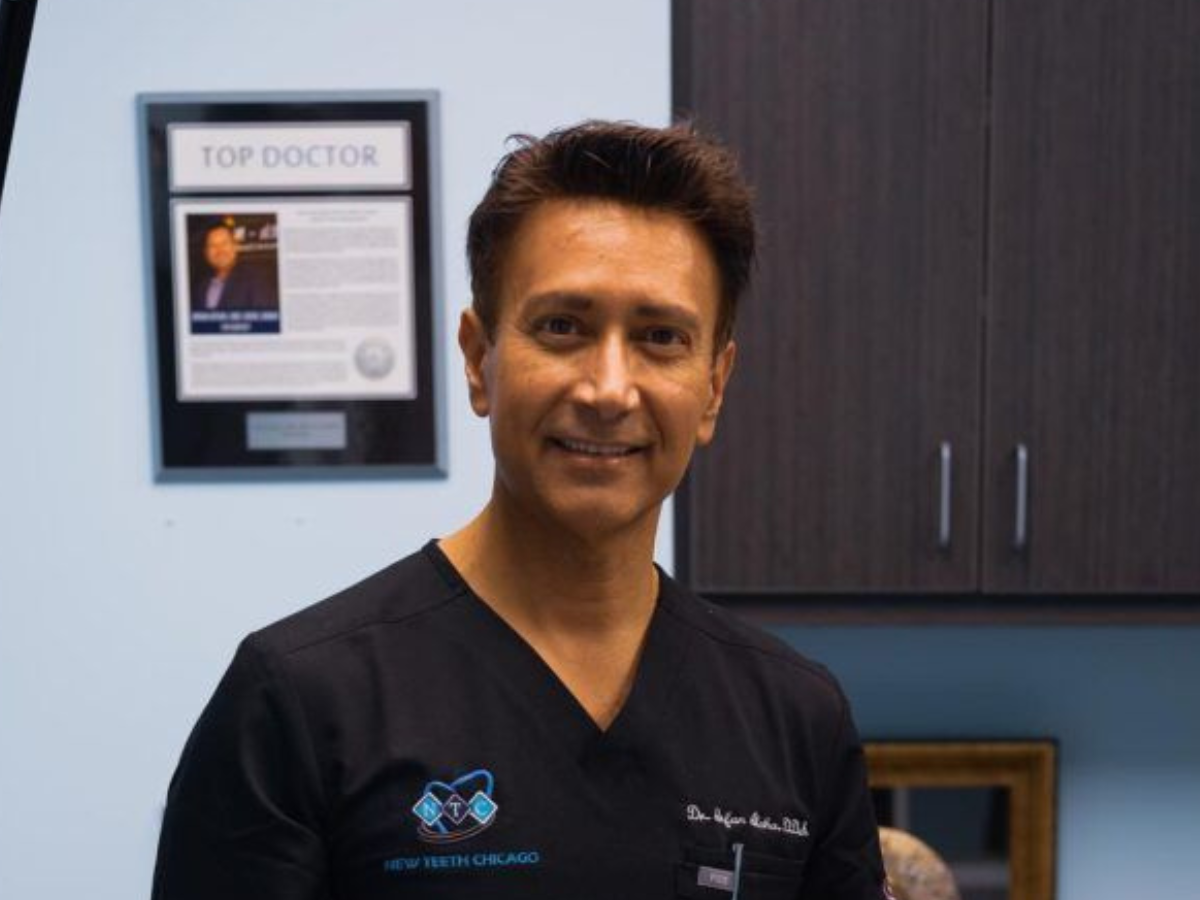
Can you introduce New Teeth Chicago Dental and describe your role in leading the practice?
I founded New Teeth Chicago Dental in 1996 with a focus on solving complex dental problems through thoughtful planning and long-term care. Today, I divide my time between treating patients, leading our clinical team, and serving as Chief Faculty at the Implant Efficiency Institute, where I mentor dentists in advanced implant procedures and full-arch rehabilitation.
How is your practice structured? Do you rely on an in-house team or outside partners?
Most of our work is handled by our in-house team because communication is especially important in complex implant cases. Keeping diagnosis, treatment planning, surgery, and restoration closely connected allows us to make better decisions and provide a more consistent experience for every patient.
What differentiates your practice from others?
Many of our patients come to us after being told they are not candidates for dental implants or after previous treatment has failed. We don’t begin with a procedure. We begin with understanding the patient’s condition, goals, and long-term oral health before recommending a treatment plan.
Who do you primarily serve, and how has that evolved?
We care for patients with missing teeth, failing dental work, and complex restorative needs. Over the years, we’ve become known for taking on cases that require more advanced planning and treatment, including patients who have previously been told they aren’t candidates for dental implants. That focus has naturally led to referrals from both patients and other dental professionals seeking solutions to more challenging cases.
What services are patients most often looking for today?
Full-mouth rehabilitation and dental implants remain the most common reasons people visit us. Many patients are looking for permanent solutions that restore function, comfort, and confidence after years of dealing with ongoing dental problems.
How do you stay ahead in a field that changes so quickly?
I don’t try to adopt every new technology immediately. I spend time studying clinical research, attending continuing education programs, teaching other dentists, and discussing challenging cases with colleagues. That helps me separate meaningful advances from short-term trends.
Do you have many returning patients? What keeps them coming back?
Yes. Dentistry is built on trust. Patients return because they know we’ll take the time to explain their options, answer their questions, and continue supporting them long after treatment is complete.
How do you measure patient satisfaction?
I think patient satisfaction is really the result of good planning. When patients understand why a treatment is being recommended, what to expect during recovery, and what success looks like over the long term, they’re much more confident throughout the process. We measure success by clinical outcomes, long-term follow-up, and whether patients feel they made the right decision years after treatment.
What happens after treatment is complete?
I don’t think treatment ends when a procedure is complete. Some of the most important decisions happen during healing, when we’re monitoring progress, making adjustments if needed, and ensuring everything is developing as planned. Long-term success comes from staying involved, not simply completing the procedure.
How do you approach treatment planning so patients understand their options?
Every consultation is a conversation. I want patients to understand why a recommendation is being made, what alternatives exist, and what they can realistically expect over time. Informed patients make better decisions.
How do you balance comprehensive care with making treatment practical for each patient?
Every person has different priorities and circumstances. My responsibility is to explain the available options honestly and help patients choose an approach that supports their long-term health rather than focusing only on the immediate problem.
Are there situations where you decide not to move forward with treatment?
One of the hardest parts of my job is telling someone they’re not ready for the treatment they came in expecting. Sometimes additional preparation leads to a better outcome, and sometimes a different solution is the better choice altogether. My responsibility isn’t to perform every procedure. It’s to recommend what I genuinely believe will serve the patient best over the long term.
What has been one of your biggest challenges as your practice has grown?
Growth creates complexity. As the practice expanded, maintaining the same level of quality became even more important. That required investing in systems, technology, and people while staying focused on the patient experience.
How do you encourage innovation?
Innovation should solve a real problem. Before we introduce a new technology or workflow, we ask a simple question: Will this improve patient outcomes? If the answer isn’t clear, we take more time to evaluate it. That approach has helped us adopt changes thoughtfully instead of simply following trends.
How important is culture within your practice?
Culture shows up in the moments patients don’t always notice. It’s how the team prepares before a procedure, how people communicate when a treatment plan changes, and whether everyone feels comfortable speaking up if they see something that could be improved. I want to build an environment where the best idea wins, regardless of who brings it forward. That mindset makes us better clinicians and ultimately leads to better care.
Where do you see the practice in the next five to ten years?
I want to continue expanding access to advanced implant care while helping more dentists develop the skills and confidence to treat complex cases. If I can improve patient care not only through my own practice but also through the clinicians I teach, I’ll feel like I’ve made a meaningful contribution to the profession.
How has your leadership style changed over the years?
Earlier in my career, I focused primarily on clinical excellence. Today, I spend more time listening, mentoring, and helping others develop their own skills. Building great teams has become just as important as treating great cases.
What developments in dentistry are you most excited about?
Digital planning, artificial intelligence, and advanced imaging are making treatment more precise than ever. I’m most excited about using those tools to improve patient outcomes while remembering that technology works best when it’s supported by experience and sound clinical judgment.
What advice would you give someone building a career in healthcare or business?
Don’t confuse experience with simply spending time in a profession. Real expertise comes from staying curious, asking better questions, and never becoming comfortable with what you already know. If you continue learning throughout your career, you’ll continue finding better ways to serve the people who depend on you.
More REVERB Interviews
- Dr. Max Mehta — Diagnostic Radiologist
- Roman Meydrbay — Vice President
- Flavia Pichiorri — Cancer Researcher
- Dr. Rajendra Bhayani — ENT and facial plastic surgeon
- Robert Guarino — Physician Specializing In Pathology
- Grace Huang — Trauma-Informed Healing Practitioner and Relationship Coach
- Anisa Joy Leonard — Strategic Operator
- Michael Mumbauer — Founder and CEO