
Randy Ripkey
President
TAS Concepts, Inc
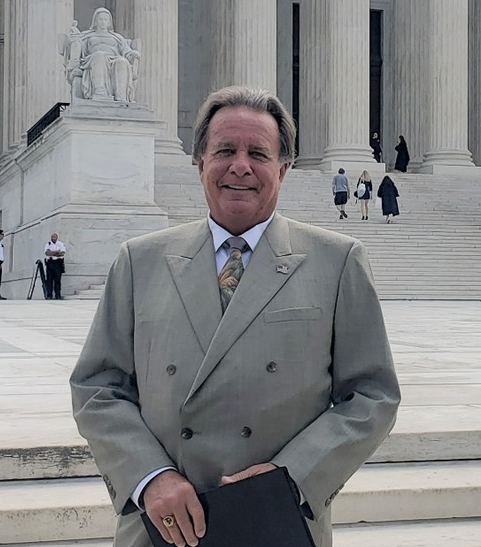
Please introduce TAS Concepts and describe your role within the company.
I am president of TAS Concepts, Inc. We develop software specifically for the telephone answering service industry, including TASbiller and TASbillerCloud. My background is a little different from someone who came into the industry strictly from software. I entered the answering service business in 1995 and operated Accurate Messages for more than 30 years. I began selling billing software in 2000. That means I have spent a lot of time on both sides of the desk. I’ve built software, but I have also been the operator who needs it to work.
How does TAS Concepts operate and deliver its software to answering services?
Our focus is specialized software rather than outsourced answering services. TASbillerCloud is a cloud-based billing and analysis platform designed around the needs of telephone answering services. I stay involved in development and in understanding how operators use the system. I don’t have a public breakdown of every internal staffing or vendor relationship, so I would not want to describe those arrangements inaccurately.
How does TAS Concepts differentiate itself in a specialized software market?
The biggest difference is practical industry experience. I didn’t learn the answering service business by studying it from the outside. I ran an answering service for decades. When I look at a feature, I tend to ask what it does for the person who has to use it repeatedly. An extra step may seem insignificant during a demonstration. If an employee performs that step hundreds of times, it becomes a different issue.
Who do you primarily serve?
We serve telephone answering services. It is a specialized industry, and that is intentional. Billing, call activity, account profitability, agent time, and reporting create needs that general business software may not address particularly well. My focus has become more specialized over time because I have seen the value of software built around the way this industry actually operates.
What solutions are answering service operators most interested in?
Billing is obviously central, but operators also need useful analysis. One question I hear regularly is what they should charge. My answer is that I don’t particularly care what their competitor charges. I want to know what it costs them to provide the service. You need to understand employee costs, operating expenses, account activity, and the work required to service that customer. Revenue alone doesn’t tell you whether an account is financially viable.
How do you stay current when the answering service industry keeps changing?
I pay attention to what operators are actually doing. I have been involved with industry associations, served on boards, attended conferences, and spoken with other operators for years. I also test things myself. When I became interested in an AI answering agent, I created a separate account and tested it for weeks before putting it on live accounts. I would rather find the weaknesses during testing.
Do you see long-term relationships with the businesses using your software?
Yes. In a specialized industry, relationships tend to develop over time. I think part of that comes from understanding the work. Operators don’t need somebody to explain their own business back to them. They need software that addresses real problems and support when something doesn’t behave as expected.
How do you judge whether customers are satisfied?
I pay attention to what users tell me and where they run into friction. I focus on whether a process is intuitive and how long it takes someone to complete the work. If users repeatedly struggle with the same step, that tells me something. I don’t have a public customer satisfaction score that I would want to invent for an interview.
What kind of ongoing support do customers receive?
I don’t view software as finished once somebody starts using it. Customers have questions, workflows change, and new needs appear. The product has continued to evolve with new features and changes based on how answering services operate. Ongoing support and continued development are part of serving a specialized industry.
How does pricing work for TAS Concepts?
Our software has its own pricing structure, but I don’t have current pricing information here to give exact figures. What I can say is that my broader pricing philosophy is based on understanding costs rather than copying competitors. I used that approach as an answering service operator, too.
What price range should a prospective customer expect?
I would rather not give a range without current figures in front of me. Pricing should be based on the actual product and services a customer needs. An outdated or guessed range wouldn’t be useful.
Are there situations where a prospective customer may not be a good fit?
Certainly. I don’t think every product is right for every business. TAS Concepts develops software for telephone answering services, so the strongest fit is an operator that needs tools built around that industry’s billing and analysis requirements. I would rather be clear about fit than try to make a specialized product sound appropriate for everyone.
What have been some of the biggest operational challenges in recent years?
The pace of technological change is one of them. Cloud software changed how systems are delivered, and now AI is changing what we can automate. The challenge is deciding what actually improves the operation. I don’t want to add technology simply because it is available. I want to know what problem it solves.
How do you encourage innovation without chasing every new trend?
I experiment. Then I test. With AI, for example, I didn’t immediately put the system in front of customers. I wanted to understand how it handled pauses, background noise, unexpected responses, and transfers to live agents. New technology has to work with real people, not just perform well in a demonstration.
What role does company culture play in how you operate?
I value practicality and straightforward communication. If something doesn’t work, I want to know. If a process is unnecessarily complicated, I want to understand why. I also don’t expect technology to replace judgment. The people doing the work often notice problems that aren’t obvious from a report or demonstration.
Where do you see TAS Concepts over the next five to ten years?
I expect the answering service industry to continue adopting cloud technology, automation, and AI. I don’t pretend to know exactly what that will look like ten years from now. My goal is to keep developing tools that solve useful problems for operators as those changes happen.
How has your leadership style changed over your career?
Experience has made me less likely to react to a single number or a bad day. I look for patterns. If call volume suddenly changes, I want to know whether it is a one-time event or the beginning of a trend. I have also become more comfortable admitting when I need more information before making a decision.
Which emerging technologies interest you most right now?
AI is the obvious one. I think it has real applications in the answering service industry, but it also needs to be introduced carefully. My AI assistant identifies itself as AI, and callers can reach a live agent. I don’t want technology trapping somebody in what I call “automation voicemail jail.”
What lesson from your career would you share with other business leaders?
Understand the problem before becoming attached to the solution. I learned that writing custom programs, running an answering service, and developing software. Ask what is actually happening. Look at the numbers, but understand the story behind them. Test new ideas before assuming they work. After more than 30 years in this industry, I still think asking the right question is often more valuable than having a quick answer.
More REVERB Interviews
- Gregory Pranzo — Founder and CEO
- Paul Arrendell — Senior Leader in Quality and Engineering
- John H. Weston Jr. — CEO
- Pek Pongpaet — CEO and Founder
- Monte Persinger — Owner and CEO
- Juan Sebastian Murga — CEO and President
- LaTosha Kerley — HR Business Partner
- Bryan Scott McMillan — Medical Device Executive Advisor