Full-service is one of the least informative phrases in the agency market.
Almost every studio claims it, and the claim covers everything from a six-person team that genuinely does strategy, design, and code to a design shop with a freelance developer on retainer. The difference only becomes apparent around week eight, which is an expensive time to find out.
The version worth paying for is a studio where design and engineering are the same organization, working from the same understanding of the problem, with the people who designed something still around when it is built. That structure removes the translation layer where most digital projects lose time, and it makes the studio accountable for whether the thing actually works rather than for whether the files were delivered.
The ten studios below all carry design and development in house, and they span a wide range of size, cost, and specialism. Ordering reflects the pin at position one followed by a spread from large established practices to smaller teams, rather than a ranking of quality. The right choice depends almost entirely on the shape of the work.
Full-Service Design and Development Studios At A Glance
Company
Founded
Headquarters
Team size
Focus
View Source
2019
Brooklyn, NY
Up to 49
Strategy, brand, and full-stack build in one studio
MetaLab
2006
Victoria, Canada
100–250
Digital product strategy, design, and engineering
ustwo
2004
London, UK
250–500
Product design and engineering for complex service problems
thoughtbot
2003
Boston, MA
100–250
Engineering-led product design and development
Code and Theory
2001
New York, NY
500+
Large-scale creative and technology programs
Postlight
2015
New York, NY
100–250
Product strategy and platform modernization
Fueled
2008
New York, NY
250–500
Mobile-first product design and development
Rangle.io
2013
Toronto, Canada
100–250
Design systems and enterprise front-end engineering
Halo Lab
2015
Europe, distributed
100–250
Design-led full-cycle build at mid-market cost
Merge
2015
Europe, distributed
Up to 49
Fast MVP design and build for early-stage startups
Best full-service design and development studio options
View Source runs strategy, design, and code as one practice from a studio in Greenpoint, Brooklyn, with three partners covering brand, digital, and experiential. The offer spans naming, brand strategy, visual identity, and packaging through UX/UI design, information architecture, Shopify Plus, and full-stack development, with art direction, photography, 3D rendering, and generative art handled internally. Few studios of this size carry that much of the pipeline without subcontracting a piece of it.
Longevity is the more interesting signal. The studio designed the brand identity and website for Bandit Running and has kept working with the company since its 2020 launch, maintaining and evolving the site through the brand’s expansion into flagship stores and international retail, as reported by Glossy. That is a maintenance relationship rather than a project relationship, which is the distinction that actually matters when choosing a full-service studio. Other work includes a Pantone color tool, Harry’s, Aspen Hospitality, AEG, and a 2026 Webby win in the Food and Drink category.
Founded: 2019
Headquarters: Greenpoint, Brooklyn, New York
Team size: Up to 49 experts
Services and expertise: Brand strategy, naming, visual identity, packaging, UX/UI design, information architecture, Shopify Plus, full-stack development, art direction, photography, 3D rendering
Portfolio: Bandit Running, Pantone, Harry’s, Aspen Hospitality, AEG, Maeve and others
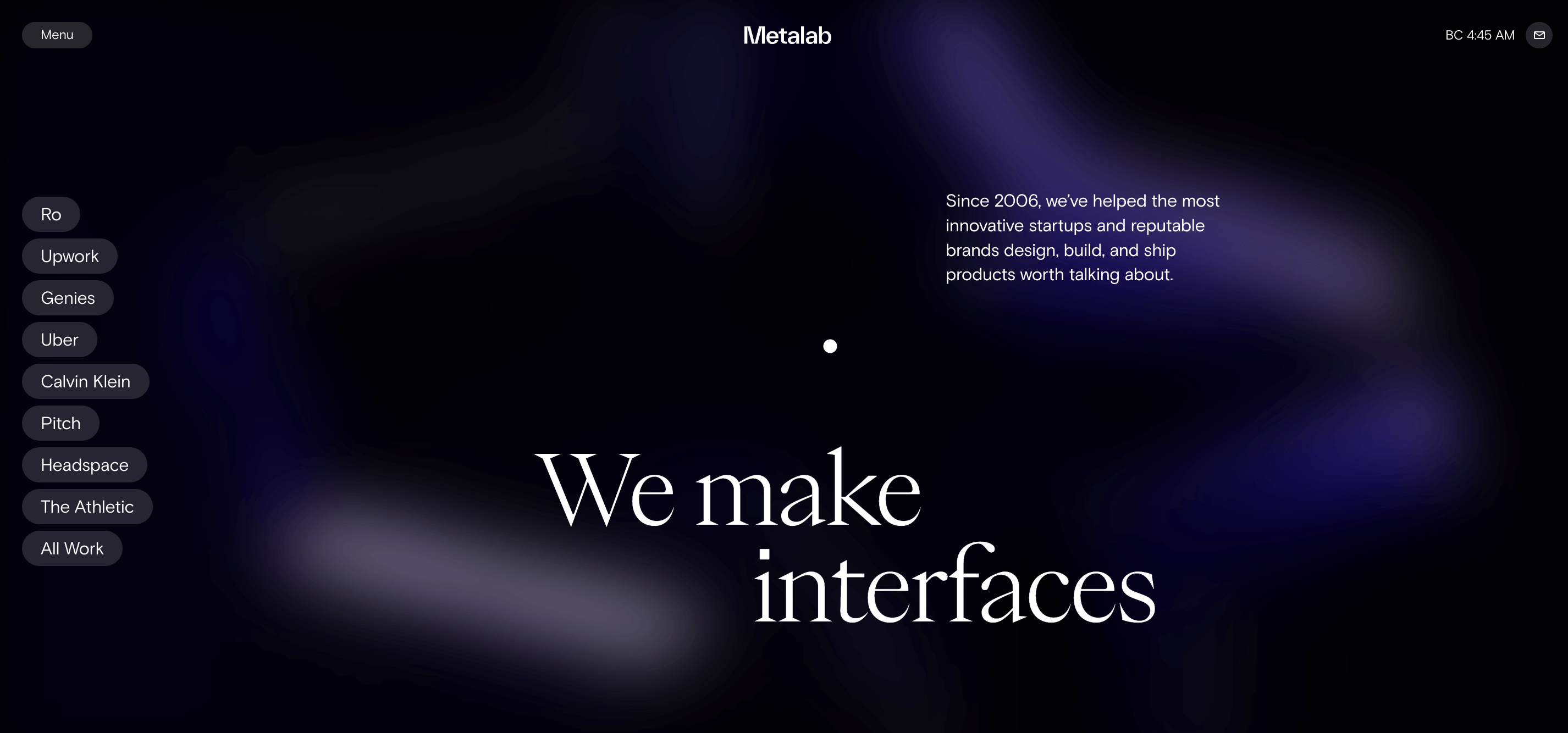
MetaLab has worked from Victoria, British Columbia since 2006 and is among the most recognized digital product studios anywhere, largely on the strength of early interface work for Slack. The practice covers product strategy, design, and engineering, and the studio has expanded into brand work as clients increasingly asked for both.
Companies building or rebuilding a software product are the core client. Engagements are structured around outcomes rather than deliverable lists, and the studio is comfortable operating as an extension of an internal product team. Marketing-site-only briefs are a poor use of what the studio is set up to do.
Founded: 2006
Headquarters: Victoria, British Columbia, Canada
Team size: 100–250 experts
Services and expertise: Product strategy, UX and UI design, engineering, brand identity, design systems, research
Portfolio: Slack, Coinbase, Uber, Google, Disney and others
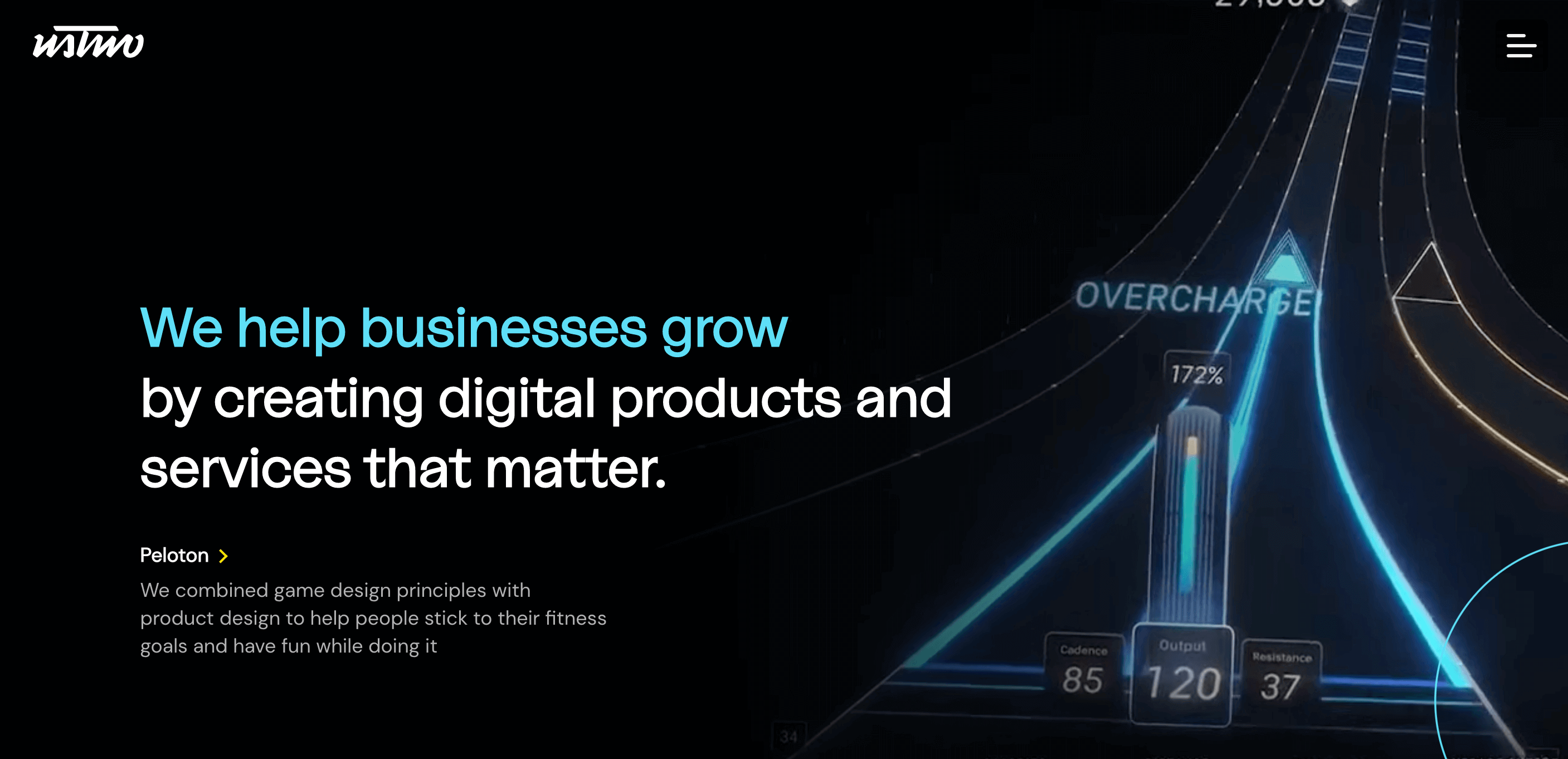
ustwo was founded in London in 2004 and operates studios across several continents, working in digital product design, engineering, and strategy. The company is unusual in having run a successful games division alongside client services, which produced Monument Valley, and that craft sensibility carries into the client work.
Health, mobility, and financial services clients feature heavily, and the studio tends to take on problems with genuine complexity rather than straightforward builds. Organizations that need research and service design ahead of interface work get a partner set up for it. Small companies wanting a fast marketing site will find the process disproportionate.
Founded: 2004
Headquarters: London, United Kingdom
Team size: 250–500 experts
Services and expertise: Digital product design, engineering, service design, research, strategy, design systems
Portfolio: Google, Ford, Adidas, Bupa, Cancer Research UK and others
thoughtbot has been building software since 2003 and is one of the few studios on this list whose reputation rests as much on engineering practice as on design. The company is closely associated with Ruby on Rails, maintains a large body of open-source work, and publishes extensively about how it builds, which gives prospective clients an unusually clear view of the methodology before signing anything.
Companies that need a product built properly, with tests and documentation and a codebase another team can inherit, are well served. Design capability is real but is oriented toward product interfaces rather than brand expression. Organizations whose primary need is a distinctive visual identity should pair the studio with a brand practice.
Founded: 2003
Headquarters: Boston, Massachusetts
Team size: 100–250 experts
Services and expertise: Product design, UX research, Ruby on Rails and web development, mobile development, platform engineering, team augmentation
Portfolio: Public sector, healthcare, fintech, and venture-backed technology companies
Code and Theory was founded in New York in 2001 on the premise that creative and technical work should not be separated, a position that was contrarian then and standard now. The agency has grown considerably and now sits inside a larger network, working across brand, digital product, content, and platform development.
Media companies, publishers, and large consumer brands make up much of the roster, and the agency is set up for programs rather than projects. Organizations that need sustained capacity across design, content, and engineering get a partner with the bench for it. Companies wanting a small senior team on a focused problem will find the scale unhelpful.
Founded: 2001
Headquarters: New York, New York
Team size: 500+ employees
Services and expertise: Brand and creative strategy, digital product design, content strategy, platform and web development, data and personalization
Portfolio: Vogue, NBC, Mastercard, Samsung, JPMorgan Chase and others
Postlight was founded in New York in 2015 as a digital product studio and built a following partly through its writing and podcast, which set out an unusually candid view of how software projects actually go wrong. The practice covers product strategy, design, and engineering, with a strong line in platform modernization.
Organizations carrying legacy systems that need to become usable products are the strongest fit. The studio is comfortable with the political dimension of that work, which is often the harder part. Companies looking for brand identity or campaign creative should treat this as a build partner rather than a full creative agency.
Founded: 2015
Headquarters: New York, New York
Team size: 100–250 experts
Services and expertise: Product strategy, UX and UI design, web and mobile engineering, platform modernization, AI and data engineering
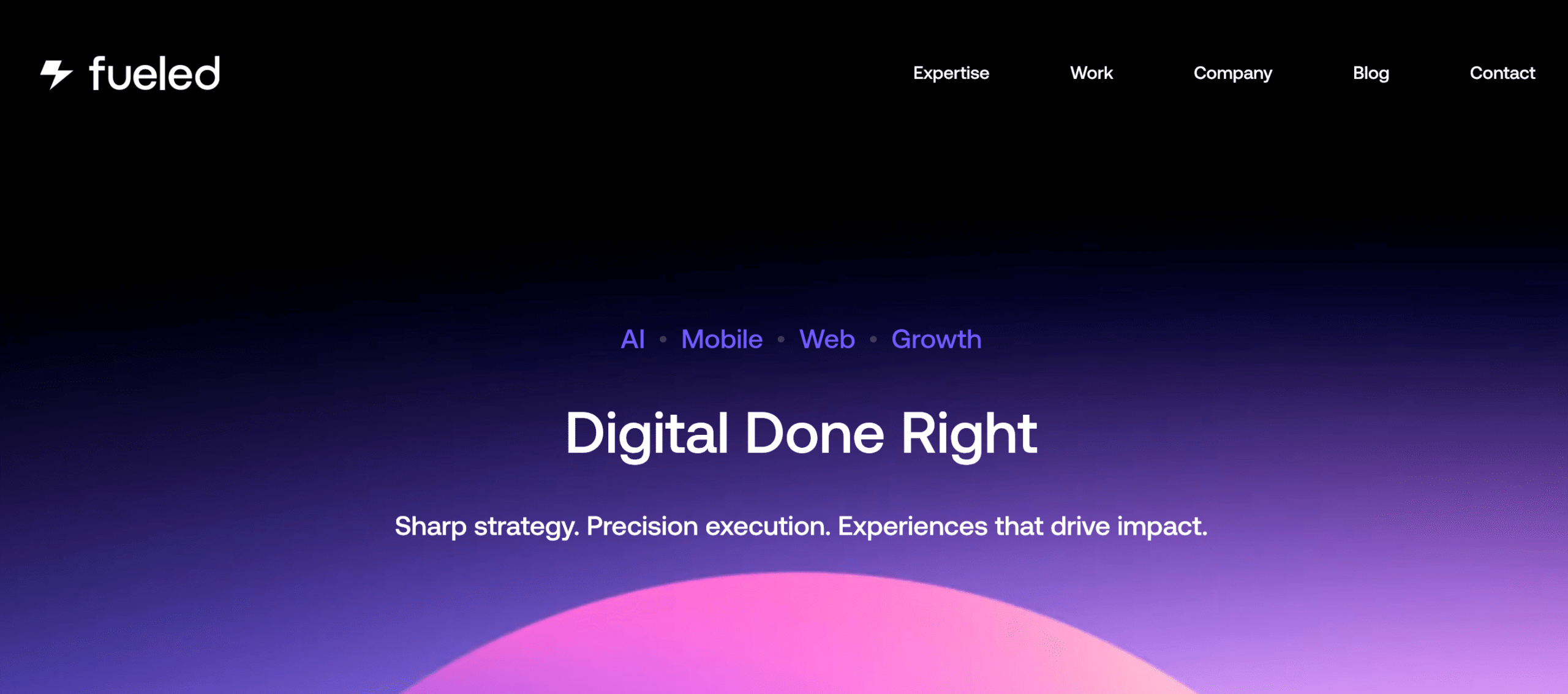
Fueled has worked from New York since 2008 on mobile and web product design and development, with offices in several markets and a long record of shipping consumer applications. The studio handles strategy, design, engineering, and launch, and has a particular depth in native mobile work that most web-first studios lack.
Companies whose product is primarily an application, rather than a website with an app attached, get the most from this. Engagements are structured around shipping to app stores, with the release management and compliance work that entails. Brand-led engagements sit outside the core.
Founded: 2008
Headquarters: New York, New York
Team size: 250–500 experts
Services and expertise: Mobile app design and development, web product design, product strategy, UX research, engineering, launch and growth support
Portfolio: Verizon, Warby Parker, Barneys, MGM, Crunchbase and others
Rangle.io is a Toronto studio founded in 2013 working in digital product design, engineering, and design systems, with a strong practice around helping large organizations adopt modern front-end architecture. The company has published a good deal on design systems specifically, which is a fair indicator of where the depth sits.
Enterprises trying to move from a collection of inconsistent digital properties to a coherent system are the natural client. Work often includes enablement, meaning the client team is trained to continue independently. Companies looking for a single-project vendor who disappears at launch will find the model more involved than expected.
Founded: 2013
Headquarters: Toronto, Ontario, Canada
Team size: 100–250 experts
Services and expertise: Digital product design, front-end and full-stack engineering, design systems, AI product development, enablement and training
Portfolio: Adidas, Bell, Scotiabank, MassMutual, Salesforce and others
Halo Lab is a design and development studio founded in 2015 with a distributed European team, covering brand identity, web and product design, and full-cycle development. The studio has built visibility through consistent awards-platform recognition and a portfolio weighted toward startups and mid-market companies.
Companies that want strong visual craft at a cost below coastal North American rates are the target client. The design output is genuinely competitive with more expensive studios, and the development capability is real rather than nominal. Time-zone overlap and the depth of strategic consulting are the constraints worth testing during procurement.
Founded: 2015
Headquarters: Distributed, Europe
Team size: 100–250 experts
Services and expertise: Brand identity, web design, UX and UI design, product design, front-end and back-end development, Webflow and custom builds
Portfolio: Startups and mid-market clients across fintech, healthtech, SaaS, and ecommerce
Merge is a smaller design and development studio working with startups on product design, web design, and development, with a practice built around getting a credible first version shipped quickly. The team covers research, design, and build, and publishes rate and process detail more openly than most studios of comparable size.
Early-stage companies with a defined problem and a limited runway are the right client. A studio at this scale gives founders direct access to the people doing the work, and the engagement structure is designed for speed rather than exhaustive discovery. Enterprise procurement requirements and large multi-workstream programs are outside what a team this size should be asked to carry.
Founded: 2015
Headquarters: Distributed, Europe
Team size: Up to 49 experts
Services and expertise: Product design, UX and UI design, web design, front-end and full-stack development, MVP builds, design systems
Portfolio: Early-stage and venture-backed startups across SaaS, fintech, and consumer products
What Full-Service Engagements Cost
Cost in this category tracks team location and engagement shape far more closely than it tracks quality. A distributed European studio and a New York studio can deliver comparable craft at rates that differ by a factor of three. The ranges below are category-level observations, not quotes from any company on this list.
Engagement type
Typical range
What it usually covers
Discovery and definition sprint
$15,000 – $50,000
Research, problem framing, concept direction, scoped roadmap
The variable that surprises buyers most often is quality assurance and release management. On a project of any real size these can account for a fifth of total effort, and a quote that omits them is not cheaper, only less complete. Ongoing maintenance is the second omission worth checking, because software that is not maintained becomes a liability within about eighteen months.
How Full-Service Studios Segment
Behind the shared label sit four different businesses, and the mismatch between them and the brief is the most common cause of a disappointing engagement.
Product studios. Strategy, design, and engineering aimed at software products. Best when the deliverable is an application with users and a roadmap.
Engineering-led studios. Code quality, architecture, and maintainability lead the practice. Best when the codebase will be inherited by an internal team.
Brand-and-build studios. Identity and site delivered together by one group. Best when the company needs to look like something as well as work.
Offshore and nearshore studios. Comparable craft at materially lower rates, with time zones and communication overhead as the trade-off. Best when the scope is well defined at the outset.
Is a full-service studio better than hiring separately?
For most companies without an internal product organization, yes, because the coordination cost of managing a designer, a developer, and a project manager falls on someone who usually has another job. Companies with strong internal product leadership often get better value assembling specialists, since they can absorb the coordination themselves and buy exactly the capability they lack.
How much cheaper are distributed or offshore studios?
Blended rates from strong European studios typically run between a third and a half of US coastal rates for comparable craft. The saving is real but not free, and it is spent on communication overhead, time-zone lag on decisions, and the need for far tighter written specification. Well-defined scopes benefit most; exploratory work benefits least.
What should be in a statement of work?
Deliverables described concretely, a change-control mechanism, an intellectual property transfer clause, acceptance criteria, and a named escalation path. Anything described as “as required” or “to be agreed” is a future dispute. The absence of acceptance criteria in particular is what turns a fixed-price project into a series of difficult conversations.
Should a fixed price or time and materials be used?
Fixed price works when the scope is genuinely known, which is rarer than clients believe, and it transfers risk to the studio at a premium. Time and materials with a capped budget and regular checkpoints is more honest for most product work. Studios that insist on fixed price for exploratory work are either padding heavily or planning to argue about scope later.
What happens after launch?
Something always breaks, dependencies go out of date, and the first real users find things nobody anticipated. Budgeting fifteen to twenty percent of the build cost per year for maintenance is a reasonable planning assumption. A studio without a maintenance offer is not a full-service studio in any meaningful sense.
Conclusion
Start from the shape of the work rather than the reputation of the studio. A software product with a roadmap, a marketing site with a brand problem attached, and a legacy platform that needs modernizing are three different briefs, and the studios that excel at one are frequently indifferent at another. Budget then narrows the field faster than anything else, and there is no reason to spend six weeks discovering a studio was never in range.
If you want to feature your design and development studio on this list, email us orsubmit a formin the Top Choices section.