Top Hacked Website Repair And Malware Removal Companies In 2027
Max Dewod
Freelance Writer
10.29.2026
For hacked website repair in 2027, Sucuri, SiteGuarding and Quttera are the three strongest picks.
Sucuri includes unlimited manual cleanups on every plan, publishes a malware removal response time for each tier (30 hours on Basic down to 4 hours on custom plans) and submits blocklist reviews to Google, Norton and McAfee for you. SiteGuarding covers the widest spread of PHP platforms, from WordPress and Joomla to Magento, OpenCart, phpBB and custom PHP applications, and publishes an eight-stage repair process with backdoor, cron and credential checks. Quttera pairs every cleanup with a human malware analyst, removes web shells and rogue admin accounts, and keeps the site behind a web application firewall afterward.
This list is for site owners, agencies and hosts dealing with a hacked WordPress site, an infected Joomla or Drupal install, a compromised Magento store or a custom PHP application that is redirecting visitors, sending spam or showing a Google warning. To be included, a company had to sell a named malware removal service, describe how the cleanup works and say what happens after the site is clean. Each firm was checked against its own service pages, and response times and prices appear only where the company publishes them.
Hacked Website Repair Companies At A Glance
Company
Headquarters
Best For
Cleanup And Recovery Approach
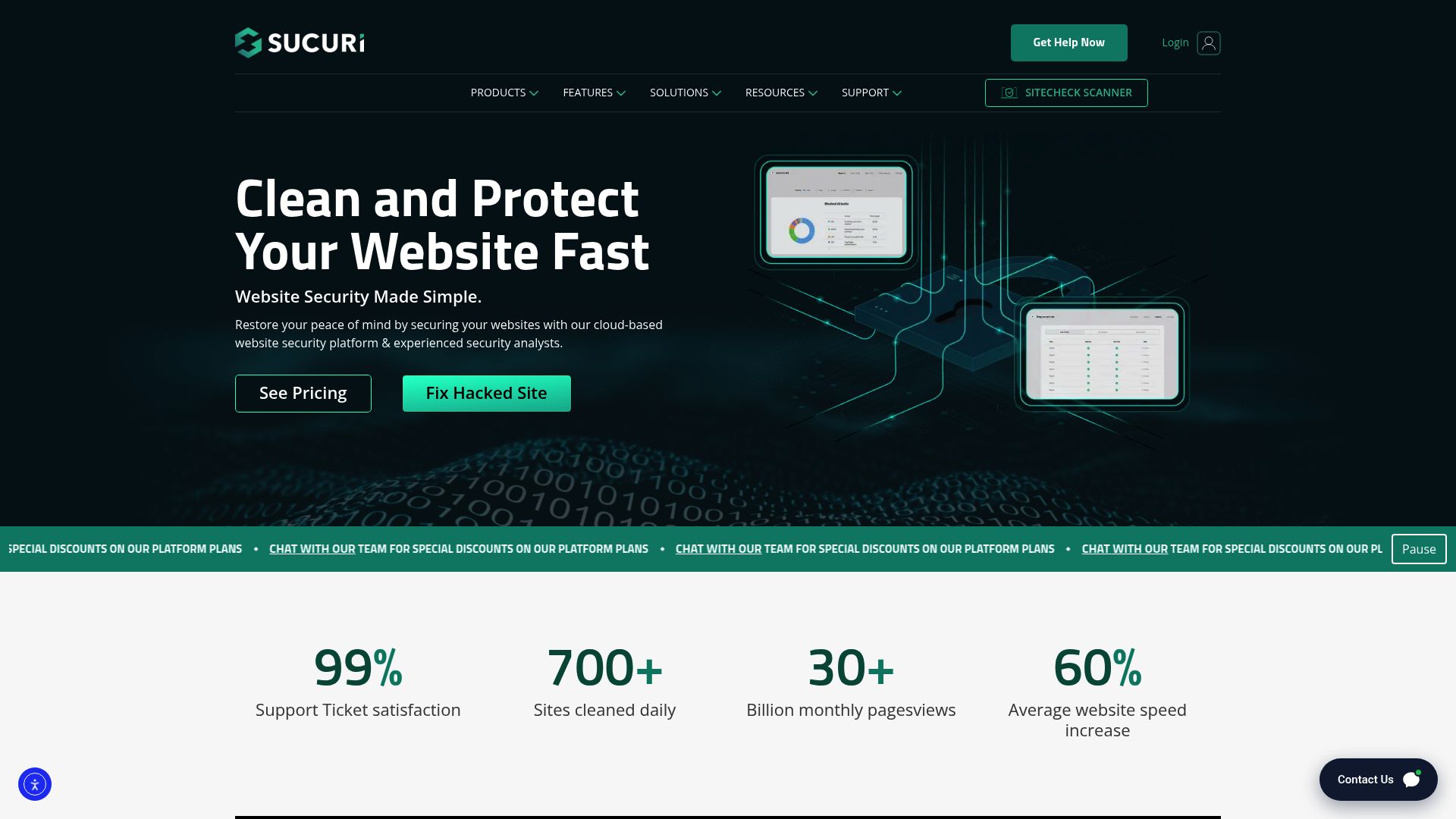
Sucuri
Distributed team (GoDaddy)
Multi-CMS sites needing an SLA
Analyst cleanup, blocklist requests, WAF
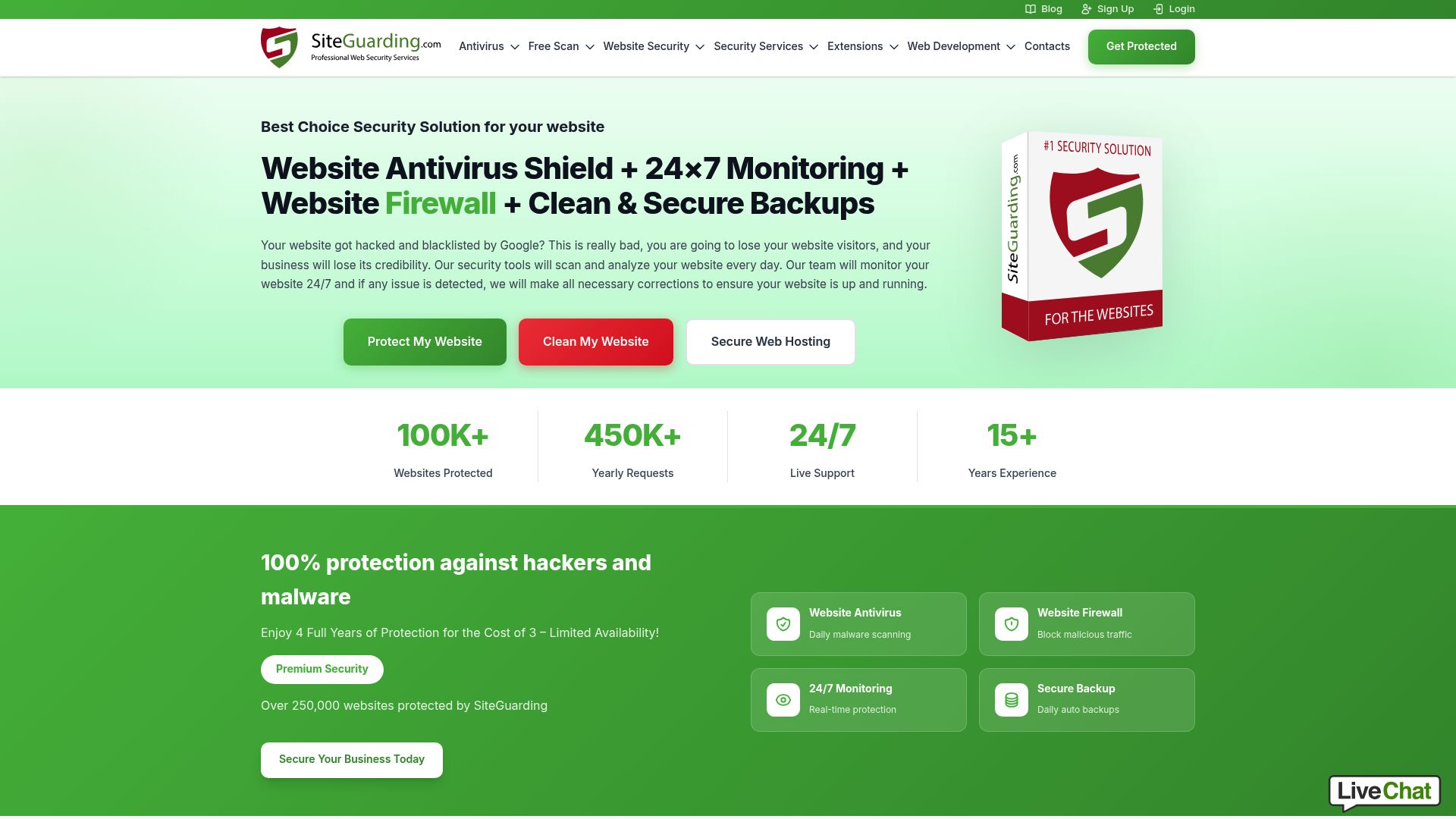
SiteGuarding
Not published
Joomla, Magento and custom PHP
Eight-stage forensic repair, warranty
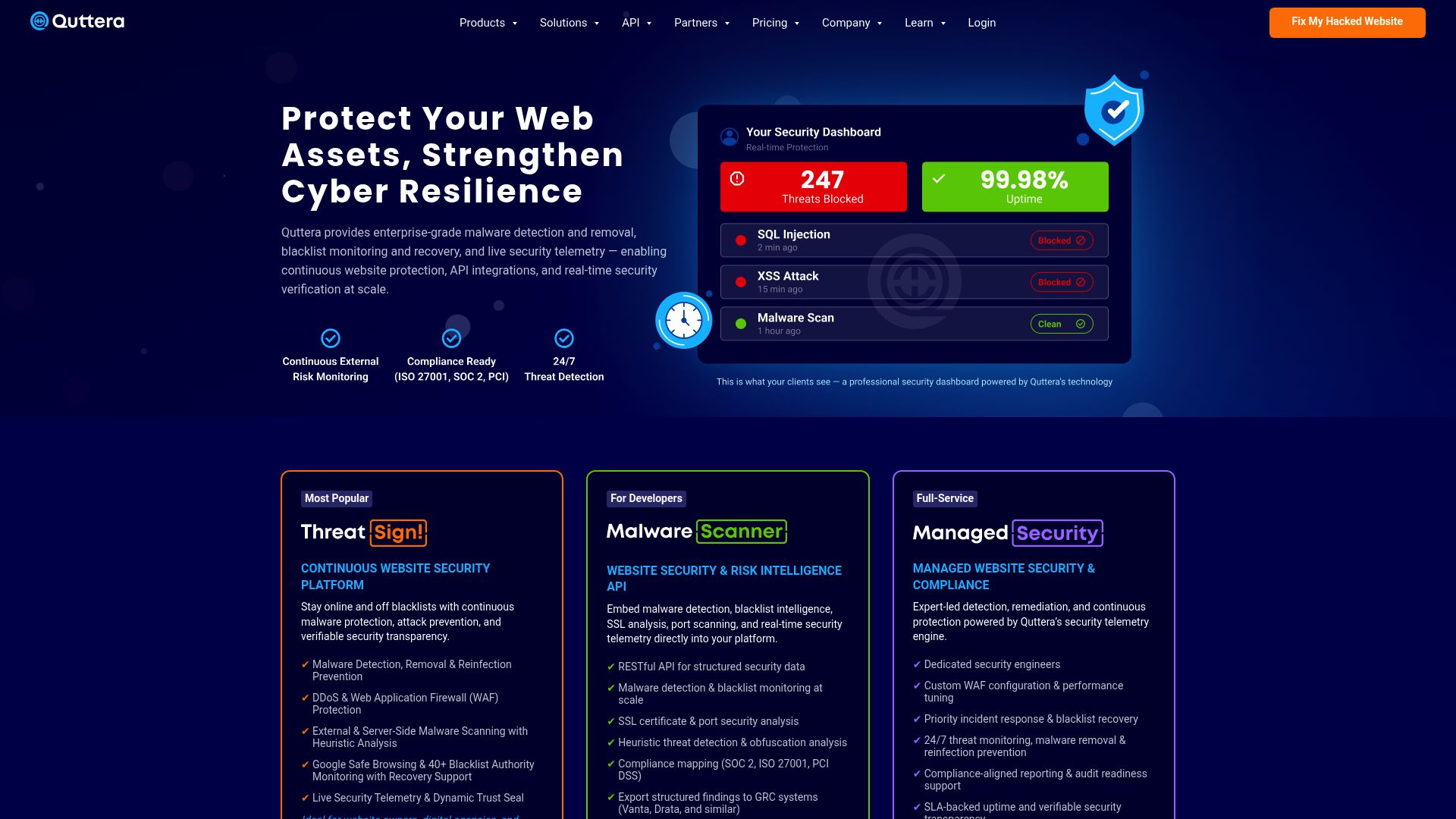
Quttera
Herzliya, Israel
Analyst-led cleanup with WAF after
Scan plus analyst, then monitoring
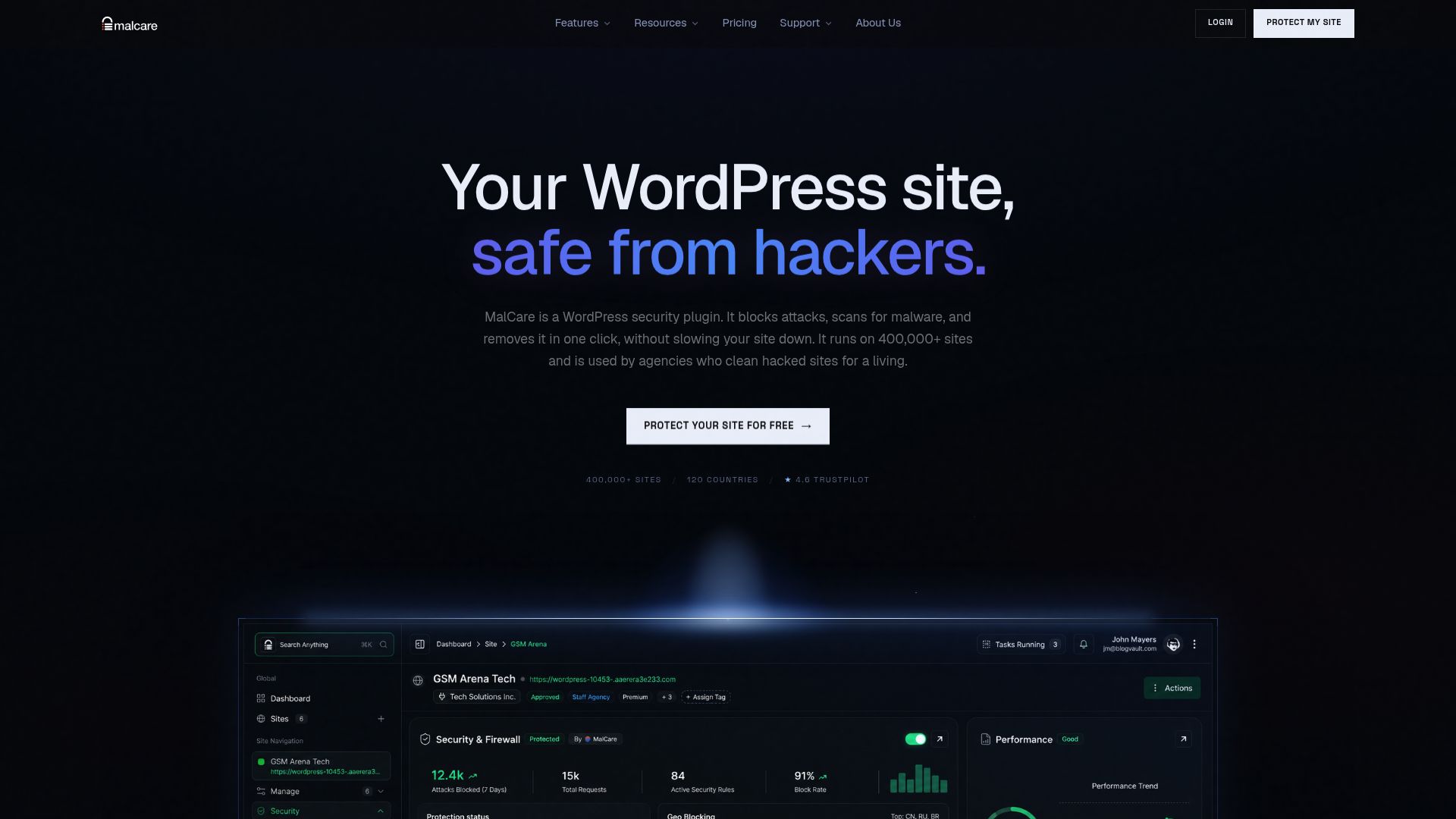
MalCare
Bangalore, India
WordPress owners wanting speed
Automated one-click clean, expert tier
SiteLock
Scottsdale, Arizona
Hosting customers, emergencies
SMART automated removal, expert help
Malcure
Australia
WordPress with root-cause report
Manual review plus scanner
WP Fix It
Not published
Fixed-price WordPress cleanup
Specialist cleanup, 30-day support
HackRepair.com
San Diego, California
Small WordPress sites on a budget
Hands-on repair by one expert
Seahawk
Boston, Massachusetts
WordPress sites needing tuning after
Backup, clean, then firewall setup
Wintercorn
Norwich, UK
UK Joomla and WordPress sites
Rescue, upgrade and security plan
Best Hacked Website Repair Companies In 2027
1. Sucuri — Unlimited Manual Cleanups With Published Response Times
Sucuri runs a dedicated incident response team that cleans malicious code from both site files and the database. Its malware removal service combines scripts and scanners with manual analysis by its analysts, and it covers backdoor detection, SEO spam repair and blocklist removal. After a cleanup, Sucuri submits review requests to blocklist authorities on your behalf, and its FAQ names Google, Norton and McAfee. The service supports WordPress, Magento, Drupal, Joomla and other open source CMS platforms, as well as sites with no CMS at all.
What sets Sucuri apart is that it puts its response times in writing. Its platform plans state a malware removal response time of 30 hours on Basic ($229 per year), 12 hours on Pro ($339 per year), 6 hours on Business ($549 per year) and 4 hours on multi-site and custom plans. Sucuri says unlimited manual cleanups are included on every plan.
After cleanup, the plans add a web application firewall, 24/7 monitoring with alerts, remote and server-side scanning, and DDoS protection. Sucuri offers a 30-day money-back guarantee when no malware removal request has been completed. For an active infection that needs priority attention, it also sells a one-time cleanup arranged through its chat team.
Best for: Agencies and site owners running WordPress, Joomla, Drupal or Magento who want a contractual response time and firewall protection in one annual plan.
2. SiteGuarding — Forensic Repair For WordPress, Joomla, Magento And Custom PHP
SiteGuarding has offered website security services since 2008 and has one of the broadest platform lists in this space: WordPress and WooCommerce, Joomla, Drupal, Magento, OpenCart, PrestaShop, phpBB, custom PHP applications, and stacks beyond PHP such as Node.js, Python and ASP.NET. Its hacked site cleanup follows a published eight-stage process: free triage, forensic snapshot of files, database and logs, attack vector mapping, malware removal, hardening and patching, validation, Google blacklist removal, and post-repair monitoring.
The analysis stage looks for every backdoor, web shell and persistence mechanism, audits cron jobs that re-download malware, and checks .htaccess, wp-config and nginx files for injected code. Signature scanning is backed by manual code review and deobfuscation by its engineers. Hardening includes credential and API key rotation, multi-factor authentication on admin accounts, user role audits and disabling XML-RPC and file editing.
SiteGuarding says it typically returns a free scan and scoped quote within 15 to 60 minutes. Its site lists basic cleanups from under $200, comprehensive repairs for small to medium sites at $499 to $1,499, and a one-time flag clearance from $109.95. Reinfection through the same vector is re-cleaned free during a warranty period of 30 days for basic cleanups and 90 days for comprehensive repairs.
Best for: Owners of Joomla, Drupal, Magento, OpenCart or custom PHP sites who need forensic depth and a written reinfection warranty.
3. Quttera — Analyst-Led Cleanup Backed By A Firewall
Quttera, with offices in Herzliya, Israel and Sydney, Australia, combines automated scanning with manual investigation by a Quttera malware analyst on every cleanup. After you sign up and grant hosting access, the analyst investigates the infection, removes malicious code, and looks specifically for hidden backdoors, web shells, rogue administrator accounts, malicious scheduled tasks and compromised plugins, themes or third-party scripts before verifying the site is clean.
The plans are published on its site. Essential Security costs $299 per year and includes automated and manual malware removal, expert blacklist removal for Google, Yahoo and others, and an 8-hour initial response time. Premium Security costs $499 per year with a 4-hour initial response. A $20 monthly plan covers prevention only, for sites that are already clean. A managed security tier is quoted on request.
Every listed plan includes a web application firewall and DDoS protection. After cleanup, Quttera’s ThreatSign service monitors the site with external and server-side scanning, scheduled scans, alerts and reports, and tracks more than 40 blacklist authorities. Depending on the plan, it can also turn on virtual patching. Quttera has dedicated protection pages for WordPress and Magento.
Best for: WordPress and Magento store owners who want a human analyst on the cleanup and a firewall in place before the next attack.
4. MalCare — Automated WordPress Cleanup With An Expert Escalation Path
MalCare is built by the BlogVault team at Inactiv, based in Bangalore, India, and has protected WordPress sites since 2014. Its cleanup is automated: the scanner pinpoints each infection by file, line, database table, row or cron job, and a one-click clean removes it from files, the database, .htaccess, cron jobs and rogue admin accounts in a single pass. It backs up anything it is about to change, rescans the whole site afterward, and closes the entry point the attacker used. You can also turn on auto-clean so removal starts as soon as malware is found.
For sites that need a person, MalCare’s experts run an Emergency Cleanup, file the Google review to clear a “Deceptive Site Ahead” warning, and work with your host to restore a suspended account. Each cleanup produces a report of what was found and removed.
Pricing is published per year. Repair costs $299 for one site and includes cleanup with an expert response within 24 hours. Fortify costs $499 for one site and adds unlimited manual security fixes with an expert response within 6 hours. Both plans include MalCare’s real-time firewall. MalCare offers a 14-day money-back guarantee.
Best for: WordPress owners and agencies who want instant automated removal for routine infections and an expert on call for the harder ones.
5. SiteLock — Automated Server-Side Removal With Emergency Response
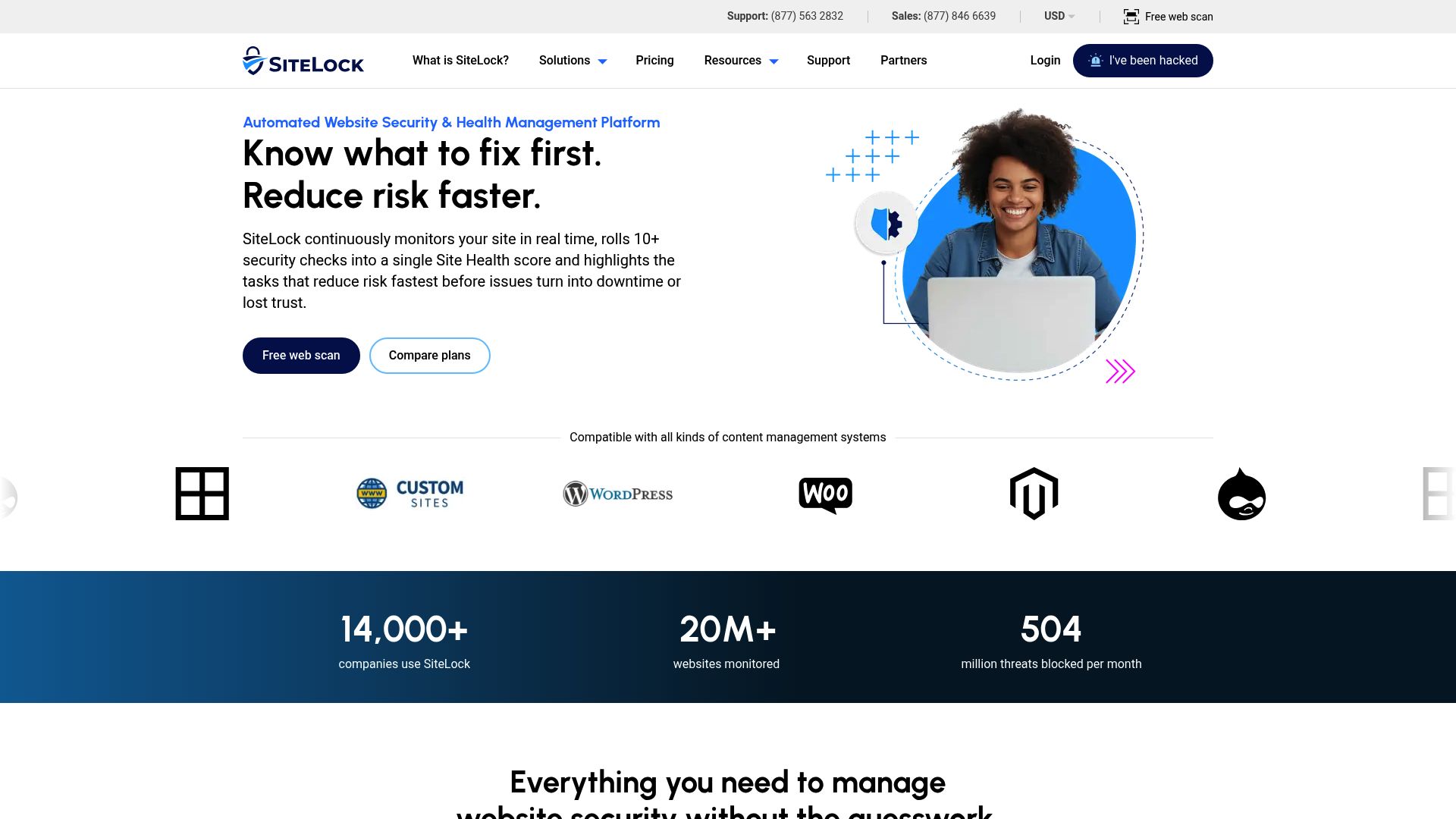
SiteLock was founded in 2008, is based in Scottsdale, Arizona, and has operated as a business unit within Sectigo since 2021. Its malware removal centers on SMART, an automated tool that connects over FTP or SFTP, scans server files and removes only the malicious code, deleting a file outright only when the whole file is malicious. SMART also scans database tables for injected redirects, spam links and phishing payloads, and a database cleanup can be undone in one click.
SiteLock says SMART scanning starts within minutes of server access and most sites are fully cleaned within 4 to 6 hours, including nights, weekends and holidays. When automation is not enough, its security experts review scan results, guide the cleanup and work to remove the re-entry point. For active infections, SiteLock 911 is a one-time emergency cleanup with same-day response and priority expert access.
After cleanup, scanning continues, and SMART Patch flags vulnerable plugins, themes and CMS core files and can apply virtual fixes. A web application firewall is available alongside scanning. Requesting a Google re-index and working with your host on delisting fall under its Expert Services once a clean scan is confirmed, so check that your plan covers it.
Best for: Site owners who bought security through their host and want fast automated removal with an emergency option for active infections.
6. Malcure — Manual WordPress Cleanup With A Root-Cause Report
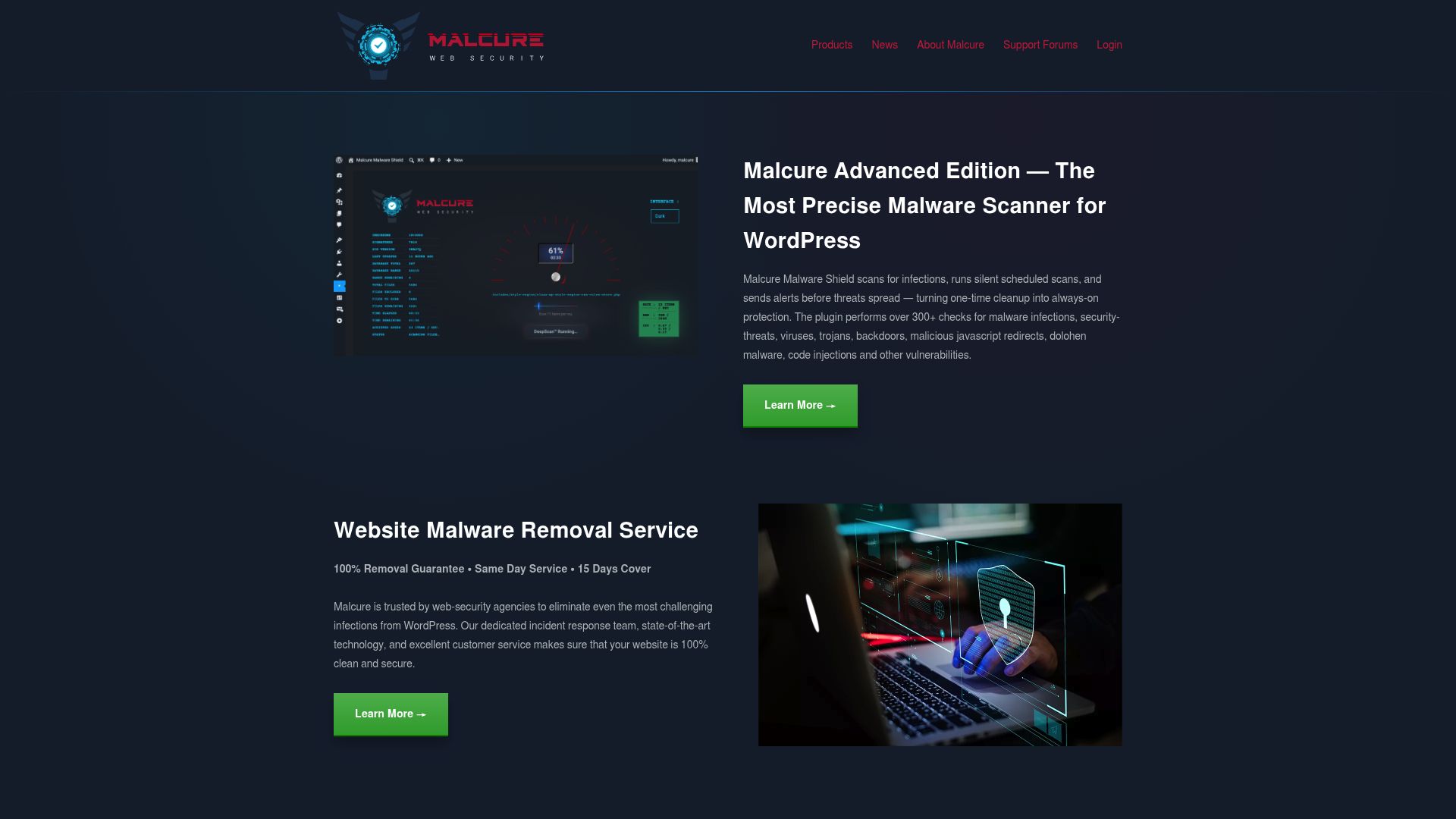
Malcure operates from Australia, with its security research team in India led by principal researcher Shivanand Sharma. Its WordPress malware removal service starts with a full scan of every file, including backups, archives, images and hidden files, using its DeepScan technology. Security analysts then review the files and clean the site by hand, with manual inspection of critical files such as .htaccess, wp-config and index.php. The service removes backdoors, cleans and repairs the database, and identifies the root cause and entry point so the vulnerability can be patched.
Malcure advertises same-day service with a 15-minute response time and an average resolution of about 4 hours. The listed price is $247 per site, with each additional site discounted 15%. Blacklist removal is included: after cleanup, the team submits reindex requests to clear reports from Google, Norton, Yahoo and similar services, and it will work on a suspended Google Ads account on request.
Every cleanup comes with a root-cause analysis report, a security audit, placement under security monitoring, and 15 days of post-cleanup reinfection cover. A separate security hardening service is available for owners who want more lockdown work afterward.
Best for: WordPress owners who want a manual cleanup with written proof of how the attacker got in.
7. WP Fix It — Fixed-Price WordPress Malware Removal
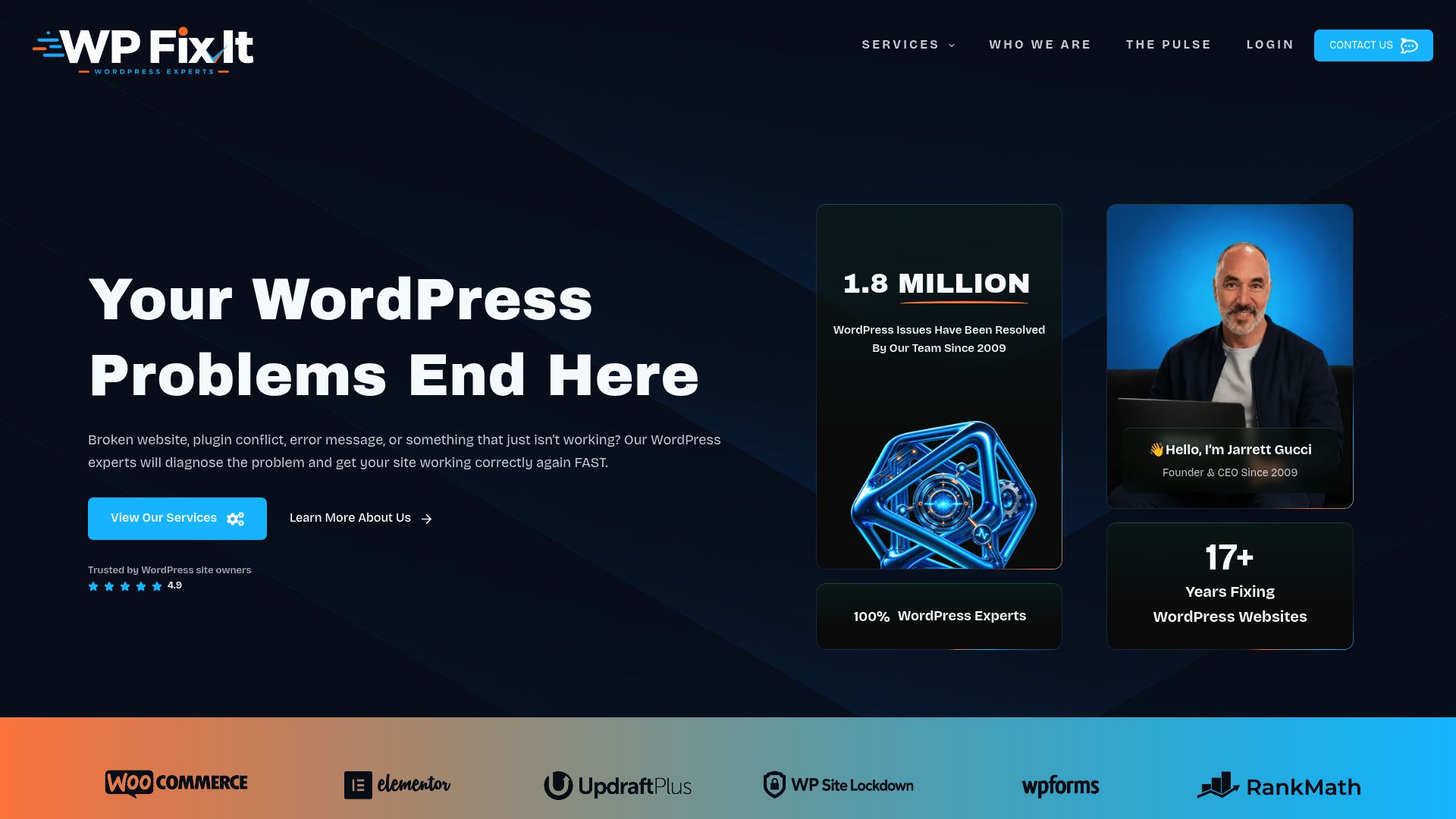
WP Fix It has worked on WordPress support since 2009 and sells malware removal as a fixed-price product: $137 for a single site, or $97 per site when you clean several at once. A WordPress infection specialist handles the work, which covers a full site cleanup, removal of malicious code and backdoors, database scanning, a security audit of files and database, and a detailed removal report.
Same-day removal is included, and the company cites an average resolve time of about 90 minutes, noting that heavily compromised sites can take longer. If Google has flagged the site, WP Fix It assists with the blacklist review request after cleanup. Support is available 24/7.
The cleanup includes hardening steps such as security headers, account lockdown and disabling common hacker entry points. WP Fix It also gives 30 days of cleanup support: if the site is reinfected in that window, it cleans it again at no extra cost. A separate $47 “Secure Your Site” service is available for extra lockdown work.
Best for: Small business and blog owners with a hacked WordPress site who want a known price and a same-day fix.
8. HackRepair.com — Hands-On Repair From A Single Named Expert
HackRepair.com is a San Diego, California shop where hacked sites are personally repaired by security expert Jim Walker using in-house tools rather than automated cleanup software, and all work is done in-house. The focus is WordPress, though Jim also takes on Drupal sites and recommends upgrading them before any security work.
The process is straightforward: back up the site, find and remove the malware, update WordPress and its plugins, secure the site, provide a written report, and work with Google to unblock the site on Google, Bing and other search engines. The company says it cleans and fully secures most hacked websites within 2 hours. Support runs by phone rather than chat.
Pricing is a flat fee, typically between $30 and $279, with no recurring charges, and one fee covers up to three WordPress sites on the same shared hosting account. Hardening, software updates, backups and security systems are installed at no extra cost. Ongoing managed WordPress security is available separately for owners who want monitoring after the repair.
Best for: Owners of small WordPress sites who want to speak with the person doing the work and pay a flat fee.
9. Seahawk — WordPress Hack Repair With Firewall Tuning After
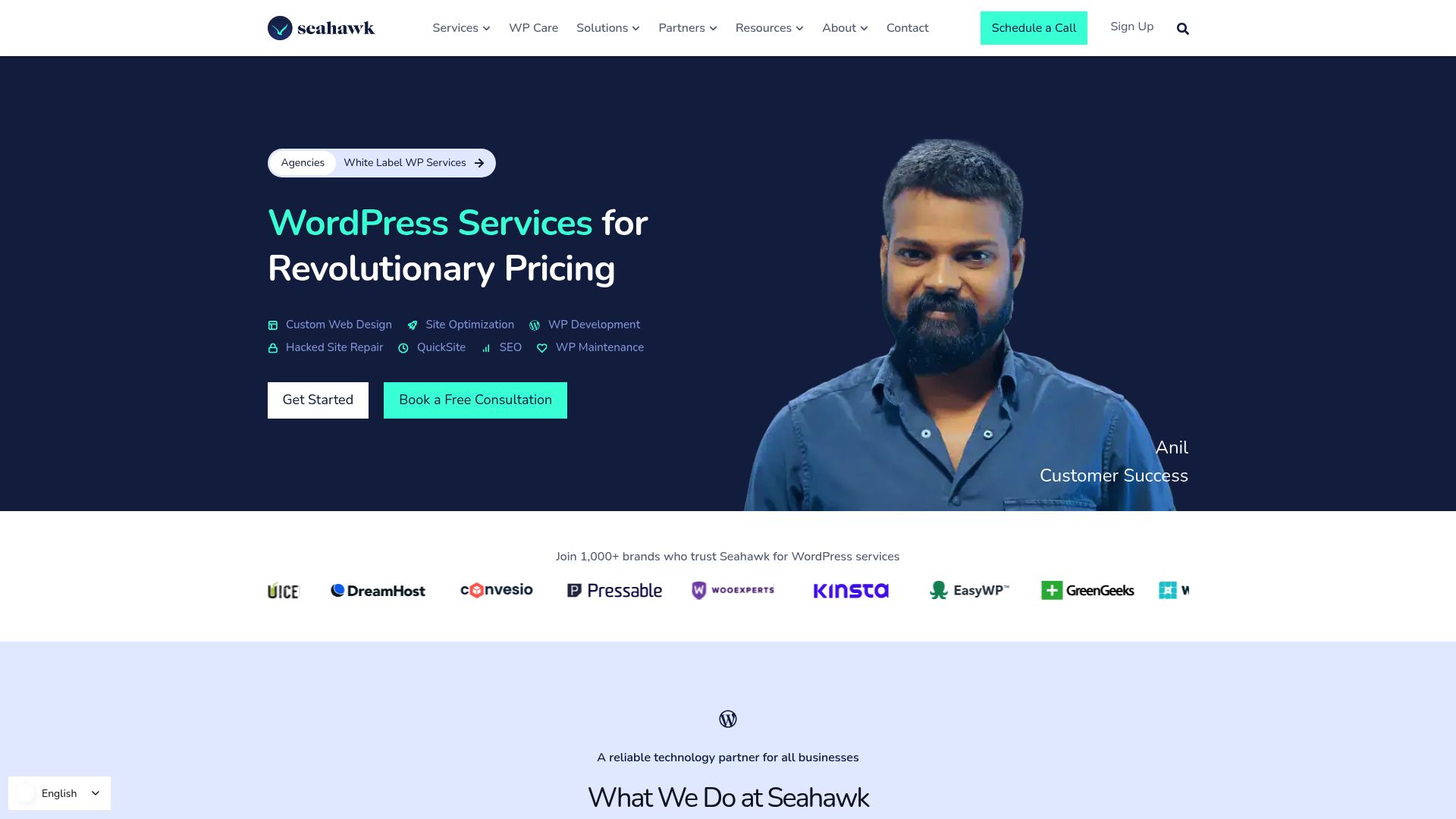
Seahawk is a WordPress agency with offices in Boston, London, Warsaw and San Diego and fulfillment teams in India. Its hacked site repair follows six steps: you share WordPress, FTP, SSH or hosting access, the team runs a baseline scan for security gaps and SEO spam, takes a full backup of the site and database, removes malicious code and files, restores the site while tuning firewall rules, and then provides ongoing recommendations.
Pricing is published as one-time fees: Standard repair costs $299 with a 2 to 4 business day turnaround, and Priority costs $399 with a 1 business day turnaround. A $249 Prevention package covers a security audit, vulnerability assessment, hardening recommendations, implementation help and a backup for sites that are not yet infected. Seahawk also addresses blocklist warnings and uses Google Search Console to track search engine flags.
Post-cleanup work includes software and security updates, firewall configuration, brute-force protection, malware scanning and vulnerability patching. Seahawk backs the repair with a 30-day guarantee against the hack recurring and offers a full refund if it cannot resolve the issue.
Best for: WordPress site owners who want the cleanup and the follow-up firewall and update work handled by one agency.
10. Wintercorn — Joomla And WordPress Rescue From The UK
Wintercorn Consulting, based in Norwich, England, runs a rescue service for hacked Joomla and WordPress sites, which makes it one of the few firms here that treats Joomla as a core platform rather than an afterthought. The team starts by identifying the nature and scope of the attack, then cleans and repairs the site, and says it can usually get a hacked site back online within an hour.
Recovery goes beyond removing code. Wintercorn upgrades the core to the latest release in your version, replaces corrupted plugins or extensions, blocks rogue registrations and unauthorized admin access, and runs a security audit that feeds a security plan built around the specific threat. It can also help get a site removed from Google’s malware list and from IP blacklists.
For ongoing protection, Wintercorn offers backups ranging from weekly to hourly, kept offline, and managed hosting with a monthly allowance of support time. Rescue pricing is not published, so expect a quote after the first call.
Best for: UK businesses running Joomla or WordPress who want a local team to clean, upgrade and then host the site.
How To Choose A Hacked Website Repair Company
What Response Time Does The Company Guarantee?
A hacked site loses traffic, ad accounts and customer trust every hour it stays infected, so ask for a response time in writing. Some providers publish a clear figure per plan, such as a 30, 12, 6 or 4 hour malware removal response, while others advertise “same day” without defining when the clock starts. Check whether the time refers to first reply, start of work or a finished cleanup, and whether it applies on weekends.
Is The Cleanup Manual, Automated Or Both?
Automated cleanup is fast and works well for known malware signatures in plugin and theme files. It can miss obfuscated code, database injections and custom backdoors, which is where a human analyst earns the fee. The best website malware removal setups use automation to scan and a person to review what the scanner flags and what it does not. Ask who signs off that the site is clean. If you are comparing scanners on their own, our guide to vulnerability scanning tools explains what automated checks can and cannot catch.
Will They Find The Root Cause And Every Backdoor?
Removing visible malware without closing the entry point means the site will be reinfected within days. A proper hacked site cleanup checks cron jobs, rogue admin users, .htaccess and configuration files, and web shells hidden in upload folders, then names the vulnerable plugin, theme or credential that let the attacker in. Most hacked sites run on PHP CMSs such as WordPress, Joomla, Drupal and Magento, so a provider’s experience with your specific platform matters. Custom PHP code often needs a developer as well, and our list of PHP development companies is a good place to find one for the code fixes.
Do They Handle Blocklist And Google Warning Removal?
A red “Deceptive Site Ahead” screen or a hosting suspension can outlast the infection itself. Ask whether the company files the Google Search Console review, contacts Norton, McAfee and other blocklists, and writes the report your host needs to lift a suspension. Some include this in every plan, some list it as an add-on, and none can force Google to act on a set schedule.
What Happens After The Cleanup?
Look for hardening (updates, file permissions, credential rotation, disabling file editing), followed by monitoring and a web application firewall that blocks the next attempt. Check how long the reinfection warranty lasts and what it excludes, since most only cover the same attack vector. For a wider view of ongoing protection, see our roundup of web security companies.
Which Pricing Model Fits Your Situation?
Pricing falls into three models. One-time fixed fees suit a single hacked WordPress site that needs a quick fix. Hourly billing works for small, well-scoped jobs. Annual plans with unlimited cleanups make sense for agencies and owners of several sites, because the firewall and monitoring are bundled in. Compare the response time each price buys, not just the headline number.
Frequently Asked Questions
How Much Does Hacked Website Repair Cost?
Published prices range from about $30 for a small flat-fee WordPress fix to $299 to $549 per year for annual plans with unlimited cleanups, and $499 to $1,499 for comprehensive forensic repairs of small to medium sites. Complex compromises of stores or custom PHP applications are usually quoted individually.
How Long Does It Take To Fix A Hacked WordPress Site?
Most providers say a typical infection is cleaned in one to six hours once they have access, with heavily compromised sites taking one to three days. Google blocklist reviews add more time on top, often a few days, because the review is on Google’s schedule rather than the cleanup company’s.
Can I Remove Website Malware Myself?
You can try with a security plugin or scanner, and automated tools handle many common infections. The risk is missing a backdoor or database injection and getting reinfected. If the site handles payments or customer data, or the infection keeps returning, a malware removal service with manual review is the safer choice.
Do I Need A Penetration Test After A Hack?
A cleanup removes the infection and closes the known entry point, but it does not test the whole application for other weaknesses. For stores, membership sites and custom PHP builds, a follow-up security assessment or penetration test can find the next hole before an attacker does.
Conclusion
Our Top Hacked Website Repair And Malware Removal Companies In 2027 list covers everything from automated WordPress cleanup to forensic repair of Joomla, Magento and custom PHP sites. Sucuri stands out for written response times and unlimited manual cleanups, SiteGuarding for platform breadth and a published repair process, and Quttera for analyst-led cleanup with a firewall in place afterward. Whichever you choose, confirm the response time, ask who reviews the cleanup, and make sure blocklist removal and post-cleanup hardening are included.
Once your site is clean, the next step is finding the weaknesses that let the attacker in. Our penetration testing hub brings together our security testing lists and guides, including web application testing providers and cost breakdowns. For a broader assessment of a store or custom PHP application, see our list of application security companies.
If you want to feature your company on this list, email us or submit a form in the Top Choices section. After a thorough assessment, we’ll decide whether it’s a valuable addition.