
Clayton Fields
Go-to-market Professional
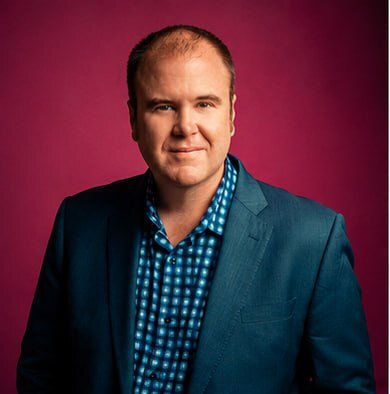
A go-to-market professional in enterprise technology who starts with the problem a product solves, not the features it ships with.
Clayton Fields is a go-to-market professional with a background in enterprise technology. He spent nearly 10 years with a large technology company working across commercial sales, client services, infrastructure, storage and business applications. For the last 13 years he has worked primarily with security software and services startups, including about a decade bringing AI-enabled solutions to market.
His role usually sits at the intersection of the technology, the customer and the commercial strategy: understanding the problem a product solves, identifying the organizations that have that problem, and working out how to communicate the value in a way that makes sense to them.
That order matters to him. Technology companies become focused on features because features are what they think about every day, while customers are thinking about their own priorities, budgets, existing systems, risks and internal constraints. If you cannot clearly explain whose problem a product solves and why solving it matters, Fields argues, more features will not fix that.
He is equally direct about what he will not claim. Pricing across the products he has worked with varies too much for a typical range to mean anything. Customer satisfaction has no single universal metric. Not every customer is a good fit for every solution, and forcing an opportunity that does not fit usually creates problems later. The clearest change over his career, by his own account, is that he asks more questions now than he used to.
Inside Enterprise Technology Companies
How are the technology companies you work with typically structured?
It varies by company. Startups tend to operate with smaller internal teams, which means people often work across traditional boundaries. Product, sales, marketing, technical teams, and leadership have to communicate closely because decisions in one area affect everyone else. Companies may also use outside partners when they need specialized expertise or additional capacity. I don’t think one structure works for every company. What matters is having clear ownership and making sure the people responsible for bringing a solution to market understand what the customer is actually trying to accomplish.
What industries or sectors have you worked with throughout your career?
My career has been centered on enterprise technology. Earlier in my career, that included client services, infrastructure, storage, and business applications. Over the last 13 years, my work has shifted more toward security software, services, startups, and AI-enabled technology. The specific solutions have changed, but the common thread has been helping organizations evaluate and adopt technology that addresses a practical business need.
Starting With the Problem, Not the Product
How do you differentiate a technology solution in a crowded market?
I start with the problem, not the product. Technology companies can become very focused on features because they spend every day thinking about what they have built. Customers do not. They are thinking about their own priorities, budgets, existing systems, risks, and internal constraints. If I cannot clearly explain whose problem a product solves and why solving it matters, having more features will not fix that. Differentiation has to mean something from the customer’s perspective.
What solutions are organizations most interested in today?
Artificial intelligence is getting a lot of attention right now, but I think the most useful conversations are more specific than simply asking how a company can use AI. I want to understand where employees spend unnecessary time, where customers experience friction, where information is hard to access, or where a better system could improve a decision. Security also remains important because businesses have to think about risk while adopting new capabilities. The technology should follow the problem.
How do you stay ahead of changes in technology when the market moves so quickly?
I pay attention to what customers are actually doing, not only what the industry is talking about. Announcements and market data are useful, but customer behavior tells you whether something has moved from an interesting idea to a real priority. I look at the questions customers are asking, what they are willing to test, where budgets are moving, and what concerns repeatedly slow adoption. I also try to remain skeptical of the assumption that every new technology needs to be adopted immediately.
Trust, Adoption and Life After the Sale
What creates strong, lasting customer relationships in enterprise technology?
Trust matters because enterprise purchases usually have consequences beyond the initial transaction. Customers remember whether you understood their environment and whether what you told them before the purchase matched what happened afterward. I think listening is a large part of that. If a solution is not a good fit, trying to force the opportunity usually creates problems later. I would rather understand what the customer actually needs and be clear about where a solution does and does not fit.
How do you evaluate customer satisfaction?
The specific metrics depend on the company and solution, so I would not assign one universal measurement. I pay attention to adoption, continued engagement, customer feedback, and whether the solution is producing the outcome that justified the purchase. A signed contract tells you that someone decided to buy. It does not tell you whether the implementation was successful.
What does effective support look like after a technology purchase?
Customers need continuity after the sale. Enterprise technology often touches existing systems, processes, and employees, so questions do not stop when a contract is signed. Effective support means clear ownership, timely issue resolution, helping customers understand the technology, and ongoing evaluation of whether it meets the original need.
Pricing, Value and Knowing When to Walk Away
How are the solutions you work with typically priced?
Pricing varies considerably across enterprise technology, particularly between software, security services, and startup offerings. Depending on the solution, pricing may involve subscriptions, contracts, licensing, services, or other structures. I wouldn’t give a typical price range because there isn’t enough consistency across the companies and products I have worked with to make that number meaningful.
How do you think about balancing price with value?
I try not to begin with whether something is inexpensive. I begin with whether the problem is important enough to solve. A low-cost product can still be a poor investment if nobody needs it. A more expensive solution can make sense when the cost of leaving the problem unresolved is greater. Customers also have to consider implementation, training, integrations, and employee time. The purchase price is only one part of the cost.
Are there situations where you believe a company should walk away from an opportunity?
Yes. Not every customer is a good fit for every solution. If the customer does not have the problem we solve, does not have the internal ability to implement the technology, or expects an outcome the product cannot reasonably provide, moving forward can be a mistake for both sides. Minimum requirements depend on the specific solution, but there needs to be a genuine business problem, an appropriate use case, and realistic expectations.
Timing, Innovation and Market Readiness
What challenges have shaped your approach over the last several years?
One recurring challenge has been bringing newer ideas into markets that may not be completely ready for them. I have learned that a good idea can arrive too early. You have to determine whether customers need more education, whether the product needs to change, or whether the market simply is not ready. That requires patience without becoming stubborn.
How do you approach innovation without chasing trends?
I try to separate what is new from what is useful. I am interested in emerging technology, but I do not believe every business needs to be on the cutting edge. Proven technology is sometimes the better decision. Innovation matters when it improves an outcome, removes friction, reduces risk, or makes something possible that could not be done effectively before.
Culture and Leadership
What role does culture play in technology organizations?
Culture shows up in how teams make decisions and communicate when things are uncertain. I value environments where people can question assumptions, share information across functions, and admit when something is not working. In startups especially, people need enough trust to disagree without turning every disagreement into a political issue.
How has your leadership style changed throughout your career?
I ask more questions now. Earlier in my career, I probably valued arriving with the answer more. Experience has taught me that the person who understands the problem usually contributes more than the person who speaks first. I am also more comfortable making decisions without perfect information when the decision can be reversed.
Where the Work Goes Next
Where do you see your work heading over the next five to ten years?
I expect to remain focused on bringing emerging technologies into practical business environments. AI will continue to be part of that, but I am more interested in useful adoption than in predicting exactly what the technology will look like a decade from now. The opportunity is helping companies determine where new capabilities genuinely improve the way they operate.
Which emerging technologies or market changes interest you most?
AI continues to interest me because businesses are moving from asking what it is to asking where it belongs. I am particularly interested in the point where AI becomes less of a separate initiative and more of a practical capability inside existing workflows. Security will remain important alongside that transition because new capabilities also create new questions about risk and trust.
Advice for Technology Leaders
What lesson from your career would you share with people who want to lead technology businesses?
Do not become so attached to your product that you stop listening to the market. You can have talented people, impressive technology, and a strong idea and still be wrong about what customers need today. I have learned to ask what problem we are solving, why it matters now, and what evidence would make me reconsider my assumptions. Leadership does not require pretending you have every answer. It requires knowing which questions you need to answer next.
Key Learnings
- Start with the problem, not the product. Differentiation only counts when it means something from the customer’s perspective.
- Watch what customers do, not only what the industry talks about. Behavior is what tells you an interesting idea has become a real priority.
- A signed contract is not success. Adoption, continued engagement and the outcome that justified the purchase are what show the implementation worked.
- Price is only one part of cost. Implementation, training, integrations and employee time belong in the comparison, and the first question is whether the problem is worth solving at all.
- A good idea can arrive too early. When the market is not ready, the work is deciding whether customers need education, the product needs to change, or the timing is simply wrong.
- Leadership does not require having every answer. It requires knowing which question you need to answer next.
What Does Go-to-Market Mean in Enterprise Technology?
Go-to-market is the work of connecting a product to the people who have the problem it solves: defining who the buyer is, what the offering is worth to them, how it reaches them, and what has to be true for them to adopt it. In enterprise technology it sits between the product team, the sales team and the customer, which is why the role is usually described by its position rather than by a single function.
Enterprise buying is what makes that position difficult. A purchase rarely involves one person. It touches security review, procurement, IT, finance and the team that will actually use the software, and each of them is evaluating a different risk. The product also has to live alongside systems the company already runs, so the cost of a decision extends well past the license fee into integration, training and the time employees spend changing how they work.
That is why feature-led positioning tends to fail in this market. A feature list answers what a product does; an enterprise buyer is asking what it changes, what it breaks, and whether the problem is urgent enough to justify the disruption. When a vendor cannot name whose problem it solves, the buying committee usually supplies its own answer, which is that the problem is not pressing this year.
Security software and AI-enabled tools add a further complication, because both are frequently bought ahead of a clear internal use case. The useful signal in that situation is not enthusiasm but specificity: where time is being lost, where information is hard to reach, where a decision could be made better. Vendors who can point to that are describing a problem. The rest are describing a category.