
David Berggren
Founder
Furniture Connection
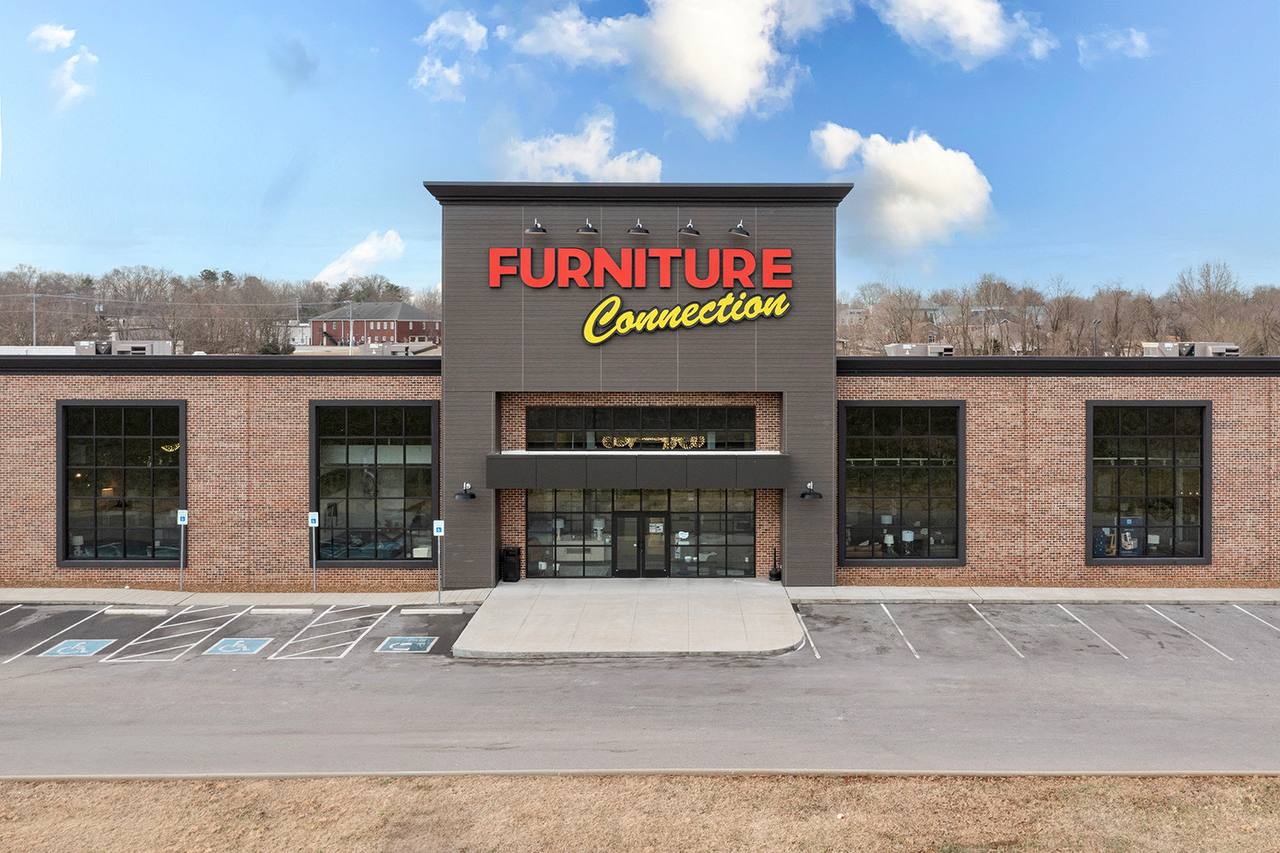
A Clarksville furniture retailer on why online photos do not replace sitting on something, what freight cost spikes taught him about communication, and the products he refuses to carry.
David Berggren founded Furniture Connection in 1999, starting in Oak Grove and moving to Clarksville in 2000. The business now operates a 46,000 square foot showroom — the largest in Clarksville — serving Middle Tennessee and southern Kentucky.
His role has stayed deliberately close to the floor: vendor relationships, pricing strategy, inventory mix, hiring and training, margins and cash flow. The operating principle is unglamorous and consistent — carry quality brands, control pricing, and focus on service before and after the sale.
The Showroom and the Model
Can you introduce Furniture Connection and describe your role as owner?
I founded Furniture Connection in 1999. We started in Oak Grove and moved to Clarksville in 2000. Today we operate a 46,000 square foot showroom, the largest in Clarksville. We serve Middle Tennessee and southern Kentucky. My role is hands-on. I oversee vendor relationships, pricing strategy, inventory mix, and overall operations. I stay involved in hiring and training. I also monitor margins and cash flow. I set direction, but I stay close to the floor.
What is your core business model?
We operate a retail showroom model with an in-house sales team. We partner with established manufacturers like Ashley, Flexsteel, La-Z-Boy, and Bassett. Inventory selection is intentional. We balance in-stock items with special orders. Delivery is coordinated through trusted partners. The model is simple: carry quality brands, control pricing, and focus on service before and after the sale.
How do you differentiate in a crowded furniture market?
Space and service. Customers can see, sit on, and compare products side by side. That matters. Online photos do not replace experience. We train our team to guide, not pressure. Our slogan is “Fine Quality Furniture at the Lowest Price.” That means value without cutting corners. We focus on long-term relationships, not single transactions.
Customers and Demand
Who do you primarily serve, and has that evolved?
We serve families, homeowners, renters, and local professionals. That has not changed much. What has changed is product mix. Customers now look for multifunctional pieces and better mattresses. We adjusted our showroom layout to reflect that.
What are the most in-demand solutions customers seek?
Living room sets and mattresses lead. Comfort and durability matter most. Customers also want coordinated room packages. We make it easy to visualize full setups in the showroom.
How do you stay ahead of industry shifts?
I stay in regular contact with manufacturers. I watch pricing trends and freight costs closely. I walk the showroom daily. If something is not moving, we adjust. Retail moves fast. Attention matters.
Loyalty and Service
Do you see repeat customers? What drives loyalty?
Yes. Repeat customers are a strong part of our business. We focus on service consistency. If something goes wrong, we fix it. That builds trust. Trust brings people back years later.
How do you measure customer satisfaction?
We listen. We track service issues. We monitor returns and exchanges. If patterns appear, we address them quickly. Satisfaction shows up in repeat visits and referrals.
What post-sale support do you provide?
We stay involved after delivery. If there are manufacturer warranty concerns, we help coordinate. If there are delivery issues, we resolve them. Service does not stop at checkout.
Pricing and Standards
How does your pricing structure work?
Pricing is straightforward retail. No hidden fees. We price competitively within our market while protecting quality. We monitor cost changes from vendors and adjust responsibly.
What price ranges do you typically handle?
Furniture varies widely. We carry entry-level pieces and higher-end brands. Our goal is to offer options at multiple price points while maintaining quality standards. I do not compromise quality to hit a price.
Have you turned down opportunities based on scope or fit?
Yes. If a product does not meet our quality expectations, we do not carry it. We protect our brand. Long-term reputation matters more than short-term margin.
Disruption, Trends and Culture
What challenges have you faced in recent years?
Supply chain disruptions and freight cost increases were significant. Lead times stretched. We responded by communicating clearly with customers and adjusting inventory planning. Transparency helped maintain trust.
How do you adapt to trends?
We watch lifestyle shifts. Smaller spaces require smarter furniture. Comfort remains central. We adjust display layouts and inventory accordingly. We evolve without chasing every trend.
What role does company culture play?
Culture is critical. We hire for attitude and train for product knowledge. Respect for customers is non-negotiable. That standard stays consistent.
Looking Ahead
Where do you see the company in 5–10 years?
Steady growth. Continued community involvement. Stronger vendor partnerships. I value longevity over rapid expansion.
How has your leadership style evolved?
Early on, I handled everything directly. Now I delegate more but remain engaged. Experience taught me to focus on systems and people.
What market shifts interest you most?
Consumer demand for value remains strong. Technology helps with operations and inventory tracking. But in furniture, the in-person experience still matters.
What advice would you give to other business owners?
Know what you stand for. Stay consistent. Protect your reputation. Growth follows discipline.
Key Learnings
- Physical comparison is the showroom’s actual product — photographs cannot convey how a piece sits or holds up.
- Declining to carry a product that misses the quality bar protects the reputation that brings customers back years later.
- During supply disruption, clear communication about lead times did more to hold trust than any pricing move.
- Satisfaction shows up as repeat visits and referrals, which is why service issues are tracked for patterns rather than counted.
- Hiring for attitude and training for product knowledge is the order that survives a busy floor.
How to Buy Furniture That Lasts
Most furniture disappointment traces to construction that is invisible in a photograph and obvious after eighteen months. The pieces that hold up tend to share a small number of characteristics, and knowing what they are turns a showroom visit into an inspection rather than a browse.
For upholstered seating, the frame is the thing that fails or does not. Kiln-dried hardwood frames with joints that are corner-blocked, doweled or screwed outlast stapled softwood or particleboard, and the difference rarely shows in the showroom. Suspension matters next: eight-way hand-tied springs and quality sinuous springs both perform, but webbing alone tends to sag. Cushion fill is a comfort-versus-longevity trade — higher-density foam holds shape longer than the softer fills that feel better in the first five minutes.
For case goods, look at how drawers are built and how they move. Dovetailed joints and solid drawer bottoms on smooth glides signal a different construction standard than stapled boxes. On any piece, veneer over solid substrate is not a compromise, but printed laminate over particleboard behaves differently over time, particularly around moisture.
Mattresses resist this kind of specification entirely, which is why Berggren’s point about physical comparison lands hardest there. Comfort is individual and firmness labels are not standardised between manufacturers — one brand’s “medium” is another’s “firm”. Lying on a mattress for several minutes in the position you actually sleep in tells you more than any specification sheet, and it is the one purchase where buying unseen carries the most risk.
Two practical checks worth making before paying: what the manufacturer warranty actually covers and for how long, and what the retailer’s own policy is on delivery damage and returns. Those two answers separate a straightforward purchase from a difficult one far more reliably than price does.
More REVERB Interviews
- John Charrier — on sourcing direct and surviving freight disruption
- Michael Curtis Broughton — on designing logistics systems that hold under stress
- Constantine Koliopoulos — business strategist, on scaling before the systems are ready