
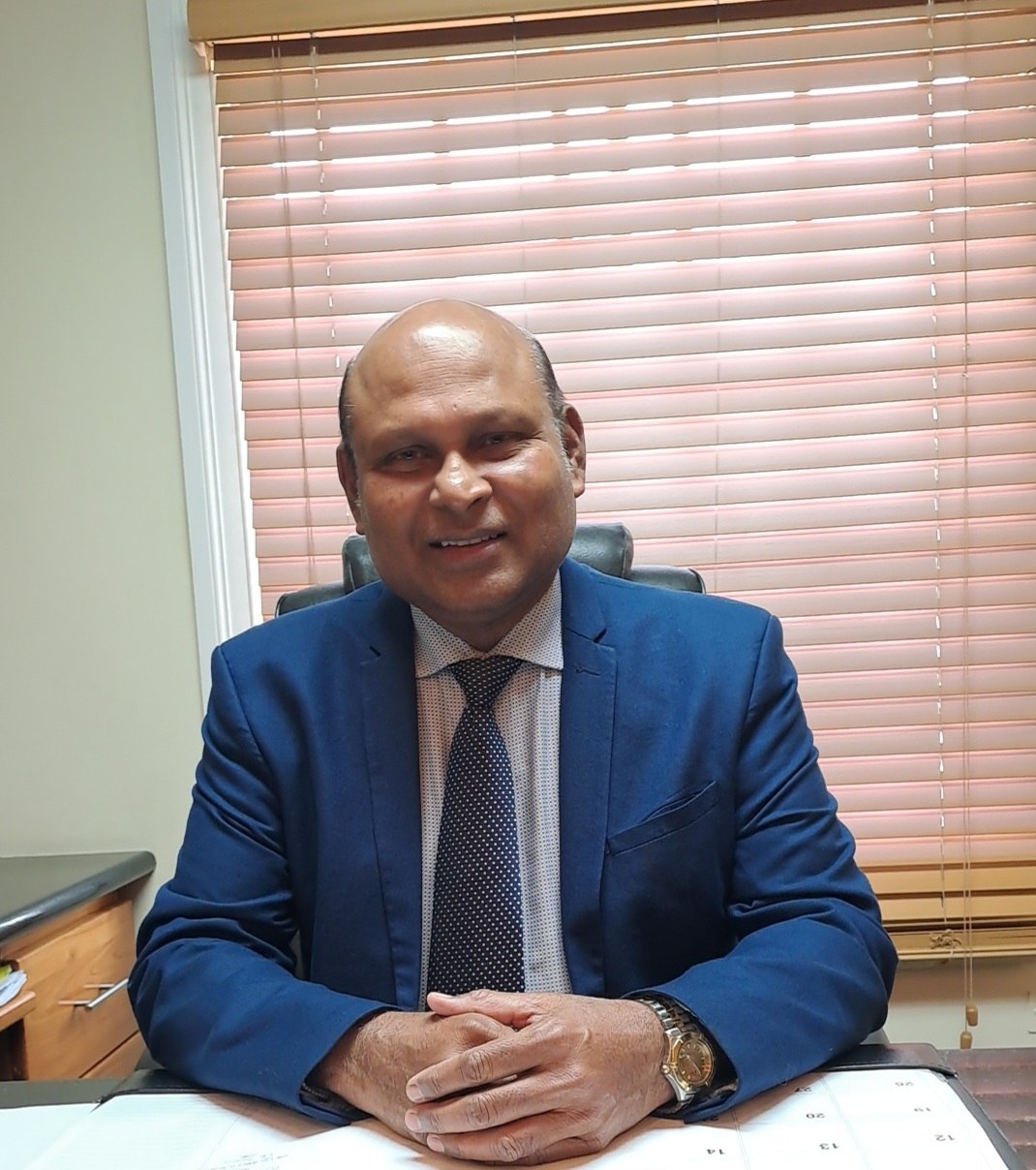
Denaesh Ariyanayagam
Consultant General and Vascular Surgeon
St. Augustine Private Hospital
Please introduce your medical practice and describe your role within it.
I am a Consultant General and Vascular Surgeon based in Trinidad, practicing at St. Augustine Private Hospital. My work focuses on vascular surgery, general surgery, patient management, and clinical decision-making. I am also a founding partner and former chairman of the board at the hospital. Earlier in my career, I spent 15 years as a full-time faculty member at the University of the West Indies, where I trained medical students and younger physicians. My role has always combined clinical care, leadership, and education.
What is the operating model behind your surgical practice and professional work?
My work is built around direct patient care supported by a multidisciplinary healthcare environment. Surgery requires coordination between physicians, nursing teams, imaging services, laboratory support, and hospital administration. I work within that system while maintaining direct responsibility for surgical planning, patient communication, and long-term follow-up.
In healthcare, consistency matters. Systems must function properly every day. Good outcomes depend on preparation, communication, and accountability.
How do you differentiate yourself in a highly specialized medical field?
I focus on competence, preparation, and patient advocacy. Those principles have remained consistent throughout my career. “Honesty, competence, and patient advocacy” are the standards I try to maintain.
I also believe experience matters. Surgery is a field where judgment improves over time. My background in education, surgery, and hospital leadership allows me to approach problems from multiple perspectives. Patients are looking for clarity and trust. I try to communicate directly and avoid unnecessary complexity.
What areas of medicine have been the primary focus of your career?
My career has focused mainly on general and vascular surgery. Over time, I also became involved in medical education and healthcare administration. Earlier in my career, much of my time was spent balancing teaching with surgical practice. Later, leadership responsibilities at St. Augustine Private Hospital became a larger part of my work. The common factor has always been patient care and maintaining professional standards.
What are the most common reasons patients seek your expertise?
Patients usually come to me for vascular conditions, surgical evaluations, and general surgical management. In many cases, patients are looking for clear explanations and practical treatment plans.
One thing I have learned is that patients value communication as much as technical skill. They want to understand what is happening and why decisions are being made. That trust-building process is important in surgery.
How do you stay current in a field where medicine changes constantly?
Medicine requires continuous learning. Training does not stop after residency or fellowship. I stay current through professional reading, medical discussions with colleagues, conferences, and reviewing developments within surgery and vascular care. My academic background also helped develop the habit of structured learning. “Education” remains one of the most important foundations in my career. You cannot rely only on experience. You also need to adapt.
Do you see long-term relationships with patients and colleagues as important to your success?
Yes. Long-term trust matters greatly in healthcare.
Many professional relationships are built over years. That includes patients, physicians, and hospital teams. People remember consistency. They remember whether you communicated clearly and handled difficult situations professionally. Professional reputation develops slowly. It comes from sustained effort over time rather than isolated achievements.
How do you measure quality and patient satisfaction in your work?
Patient outcomes are the primary measure. Beyond that, communication and follow-up are very important. Patients should understand their diagnosis, treatment plan, and expectations. If people leave confused, that creates unnecessary stress and uncertainty. I also believe quality comes from discipline and preparation. Good surgical practice requires attention to detail before, during, and after procedures.
“Hard work and dedication of a lifetime to quality and competence” is how I approach the profession.
What kind of follow-up and long-term support do you provide for patients?
Surgery does not end when the procedure is finished. Follow-up care is essential. Patients often require monitoring, reassessment, and ongoing communication after treatment. Recovery can vary significantly depending on the condition and the patient’s overall health. Part of the responsibility is making sure patients remain informed throughout the process.
How do you approach the business and operational side of healthcare?
Healthcare requires structure and long-term planning. During my time helping lead St. Augustine Private Hospital, I learned that operational discipline is just as important as clinical skill.
“Set realistic goals, create timelines, plans to achieve goals, and constant reevaluation.” That applies to healthcare systems as much as individual careers. Hospitals are complex organizations. Good systems improve patient care, staff performance, and overall stability.
Have you ever had to turn down opportunities or responsibilities?
Yes. In medicine, it is important to understand limitations and scope. Not every situation is the right fit for every physician or institution. Sometimes the responsible decision is referral, collaboration, or reassessment. Patient safety must remain the priority.
What major challenges have you faced during your career?
Healthcare is demanding both mentally and physically. Maintaining standards over decades is challenging. Leadership roles also come with pressure and scrutiny. “Professional envy” exists in every industry, including medicine. The key is to stay focused on the work itself rather than distractions. I have always tried to keep my attention on quality, preparation, and patient care.
How do you adapt to change and innovation in medicine?
Medicine changes continuously through technology, research, and evolving treatment methods. Adaptation is necessary. At the same time, innovation should not replace judgment. New approaches still require discipline, evaluation, and experience. Strong fundamentals remain important regardless of technology.
What role has culture and teamwork played in your professional life?
Medicine is collaborative. No physician operates entirely alone. Hospital culture affects communication, efficiency, and patient outcomes. Respect between healthcare professionals is extremely important. I also value balance outside the workplace. “Balance is crucial for well-being.” That perspective helps sustain long-term performance in a demanding field.
Where do you see your professional focus in the next decade?
My focus remains on maintaining high standards in surgery, supporting healthcare development, and continuing to contribute through experience and mentorship where appropriate. Medicine always needs well-trained professionals who are committed to competence and patient advocacy. That responsibility does not change.
How has your leadership style evolved over time?
Earlier in my career, leadership was more task-focused. Over time, I learned the importance of communication, perspective, and stability. Experience teaches patience. It also teaches the value of preparation and consistency.
“Keep your eye on the goal and the big picture.” That mindset has influenced my leadership style throughout my career.
What developments in medicine interest you most today?
I am interested in advancements that improve patient outcomes, efficiency, and long-term quality of care. Technology is valuable when it supports better decision-making and patient management. However, medicine will always depend on sound judgment and professional integrity. Those fundamentals remain constant regardless of how much technology changes.
What advice would you give to younger medical professionals?
Build strong foundations early. Focus on competence, discipline, and consistency rather than recognition. Medicine is a long career. Short-term thinking usually creates long-term problems. I would also say that balance matters. Professional success is important, but personal well-being and stability are equally important over time.
“Set realistic goals, create timelines, plans to achieve goals, and constant reevaluation.” That approach has stayed with me throughout my career.