
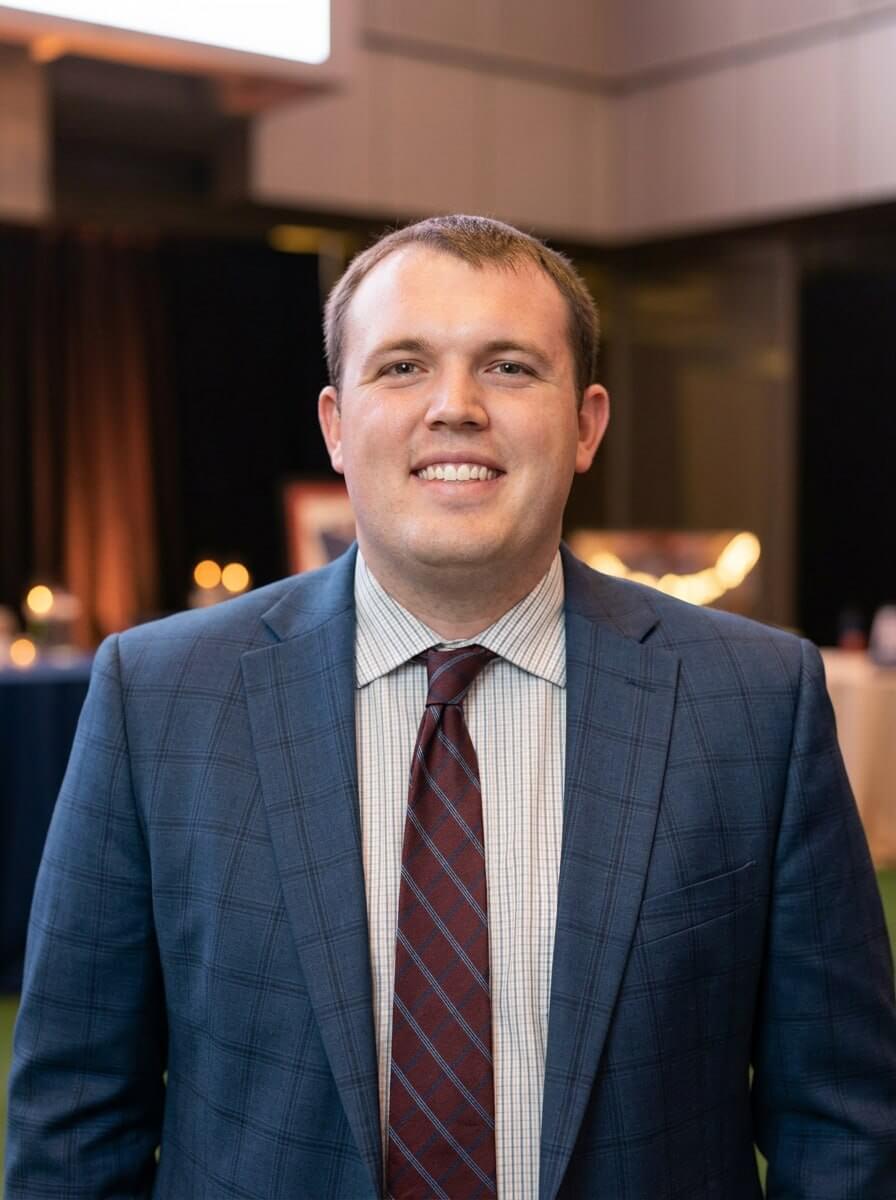
A BCG project leader who opens fuel caps with truckers and walks production lines at five in the morning — because the answer you need is almost never in the data room.
Branden Pearson is a Project Leader at Boston Consulting Group, working with industrial companies across aerospace and defense, automotive, and heavy industry. His stated focus is the performance systems that raise throughput, remove cost, and build the operational discipline to sustain results after the consultant leaves the room.
The through-line in his answers is proximity. He describes shipyard floors at five in the morning, hours on production lines, and conversations with plant managers who have run the same operation for twenty years. He is also unusually direct about a working relationship that went badly, and what he took from it.
The Role and the Working Model
Introduce yourself and your role. What problem were you compelled to solve?
I am Branden Pearson, a Project Leader at Boston Consulting Group, where I work with industrial companies across aerospace and defense, automotive, and heavy industry to solve their hardest operational problems. My work is about building the performance systems that make organizations more effective at the things that matter most including getting more throughput, removing cost, and building the operational discipline to sustain results without the consultant in the room.
The problem that drew me in is one that sounds simple and is not: most industrial organizations know what is wrong. They have more data than they can act on, more process documentation than anyone reads, and more strategy than they have capacity to execute. What they often lack is someone who can step into the complexity, cut through to what actually drives performance, and help the people inside the system do something about it. That is the gap I have tried to fill, and it is the reason I went from a Florida kid who grew up around hard work and straightforward problems to someone who finds meaning in helping large, complicated organizations get things right.
Describe how you work. Do you work with in-house teams, external partners, or a hybrid approach — and why?
I work as an external partner embedded closely with client teams. The model I believe in is one where you are not advising from a distance. You are in the facility, on the floor, at the desk next to the people who own the work. My most formative projects have been the ones where I was on shipyard floors at five in the morning and sitting across from plant managers who have run that operation for twenty years. That proximity changes everything about the quality of the work.
At BCG, we bring analytical rigor and cross-industry pattern recognition that an in-house team simply cannot accumulate at the same speed. But the way I make that useful is by being in the work long enough to earn trust and understand the specific context. Strategy that is built in a conference room and handed over is theory. Strategy built alongside the people who have to execute it has a fighting chance.
The hybrid element is in the outcome. My job is to build internal capability, not dependency. The best engagements end with the client team owning the system, not waiting for the next consulting project to maintain it.
Fieldwork as the Differentiator
In an increasingly competitive market, what truly differentiates you?
The honest answer is fieldwork. I believe in going where the work actually happens, not where the PowerPoint says it happens.
I have opened and closed fuel caps with truckers at Love’s and Pilot stations to understand the customer experience our client was trying to redesign. I have walked production lines for hours not because I was supposed to but because the answer you need is almost never in the data room. There is a term for this practice that Jon McNeill uses in his book The Algorithm: eat your own dog food. Live the experience your customer lives. Most consultants know the concept. Fewer actually do it.
The second differentiator is that I do not separate the technical work from the human side of change. Operational improvement is a people problem as much as it is a math problem. Getting an organization to sustain new performance levels requires trust, clear communication, and leaders who own the outcome. I work on both halves.
Which industries or sectors do you primarily work in, and how has that focus evolved over time?
My primary focus is across three industrial sectors: aerospace and defense, automotive, and industrial goods more broadly. These are businesses with real physical complexity, long supply chains, significant capital assets, and intense operational discipline requirements. That is not an accident. I am drawn to work where the stakes are concrete and the feedback loop is real. You either made the part or you did not. The plane either flies or it does not.
When I started at BCG, I was a generalist taking on whatever case was the right fit. Over four-plus years, my work has concentrated in these sectors, partly by design and partly because results in one aerospace engagement lead to credibility in the next. The operational principles that drive performance in a defense shipyard transfer to an automotive plant. The pattern recognition compounds.
The evolution I have noticed in my own focus is a move toward the intersection of operational performance and strategic transformation. Early on I was executing analytical workstreams. Now I am leading teams through multi-quarter transformations where the technical work and the change management work run in parallel, and neither one is optional.
What are you most sought after for — and why do organizations seek you out specifically?
I am most sought after for operational transformation in environments where the complexity is real and the tolerance for polished presentations without results is low. The clients who call on me are not looking for a fresh framework. They are looking for someone who can come into a complicated system, get oriented quickly, earn trust with the operators and leaders, and drive measurable improvement.
But what keeps me in rooms is something different: an ability to work in environments where other outside parties have struggled to get traction. Industrial organizations have long memories. They know what engaged-but-not-embedded consulting looks like, and they know the difference when someone is actually in the work.
I am also sought out for my work on the organizational side of transformation by building governance structures, capability frameworks, and performance management systems that outlast the engagement. The goal is always a client team that does not need me back.
Signals, Trust and Measurement
How do you personally stay ahead of industry shifts when insights and data age so quickly?
I read a lot, and I read deliberately. Books like Jon McNeill’s The Algorithm push my thinking on how organizations operate and how leaders should be thinking about performance. I follow the trades for aerospace, defense, and automotive. Not just for headlines but for what the operating challenges actually are at the moment. Those give me ground truth faster than any industry report.
The more important habit, though, is that I stay in the field even between formal engagements. When you have relationships with plant managers and operations leaders built over years, you hear about the real problems before they become public. You learn what is working and what is not from people who do not have any reason to spin it.
I also benefit from being at BCG, where cross-functional exposure across industries and geographies is built into the model. A conversation with a colleague who just spent six months in a European automotive transformation teaches me something I would not have reached on my own. The institutional learning compounds if you stay curious and do not treat what you know as fixed.
What do you believe drives long-term trust and loyalty in your professional relationships?
Honesty delivered with care. The easiest thing to do in consulting is to tell a client what they want to hear, especially when the answer is complicated or the news is not good. The right thing to do is to tell them what is true, clearly, without softening it past the point of usefulness. I have found that clients know when you are managing them versus leveling with them. Over time, the people who level with them earn something the others do not.
The second piece is follow-through. Trust is not built in kickoff meetings. It is built in whether you did what you said you were going to do by the date you said you were going to do it. Consistency in the small things is what makes you someone a client calls when the problem is serious.
And underneath both of those things, I believe loyalty flows from genuine interest in the outcome, not just the engagement. When a client leader knows that you actually care whether the transformation succeeds after you leave, the relationship changes. That is not something you can perform. It has to be true.
How do you measure success beyond deliverables?
By whether the people inside the client organization are more capable at the end than they were at the beginning.
A cost savings number on a slide is a deliverable. What I am more interested in is whether the operations leader who owned the transformation can now articulate the performance management system, run the governance cadence, and bring new problems through the same methodology without outside help. That is a different kind of outcome, and it is harder to put in a case study.
I also measure it by whether the people I worked with alongside me grew through the engagement. I take mentorship seriously, particularly with junior members of the team. If an associate finishes a project under my leadership and is sharper, more confident, and more capable than they were before, that matters to me. The work is about results, but results are made by people, and investing in people is not a soft metric.
How do you give back and stay involved beyond your primary work?
My most meaningful investment outside of BCG is in international mission work through Cru and Filter of Hope. I have led trips throughout Central America bringing teams to install water filtration systems for families who do not have access to clean water and to share the gospel in communities where that message matters deeply. It started when I was a junior at the University of Florida, going because someone I trusted invited me. It has grown into something I now lead and will eventually hand off to the next generation of people who will carry it further.
That experience of leading a mission trip has taught me more about project management, trust, and what it means to actually serve people than most professional experiences I could name. You are building something in a foreign country with a group of volunteers, limited resources, and time constraints, and the output is not a slide. It is clean water for a family who did not have it yesterday.
I am also a writer. My Substack is where I process the questions that professional work does not make space for: what faith looks like in a high-pressure career, what it costs to strive constantly, and what it might look like to live differently. It is not a product. It is the honest version of the internal work.
Fit, and a Defining Challenge
Have you ever walked away from opportunities? What are your requirements for the right fit?
Yes. Not every opportunity that looks like growth is growth.
My requirements for the right fit come down to three things. The first is that the work is real. I am not interested in projects that exist to produce reports that will not be read. I want to be in rooms where the decisions are consequential and the people across the table have skin in the game.
The second is that the relationship has integrity. The best client relationships are ones where you can disagree in private, align in the room, and trust that the other party is being straight with you. When that foundation is not there, the work suffers and the relationship degrades into something neither side values.
The third is alignment with where I am trying to go, not just where I am. Opportunities that keep you standing still professionally, even if they look impressive from the outside, are a cost. I have turned away things that were flattering in the short term because they did not build toward anything I actually wanted. That calculus is worth doing every time.
What has been one of the most defining challenges you’ve faced in recent years, and how did you overcome it?
The most defining challenge was a working relationship with a senior leader whose style was fundamentally different from mine, and learning what to do when that gap does not close.
I am collaborative by disposition. I think the best work comes from rooms where people can challenge the direction, poke holes in the logic, and say what they actually think regardless of where they sit in the hierarchy. I do not just tolerate that kind of pushback. I invite it, because I have found that the ideas that survive real challenge are the ones worth building on.
This particular partnership was with someone who did not operate that way. The culture around that leader was one where the senior view was the settled view, and raising an alternative reading was not welcomed. I handled it imperfectly. I pushed where I should have adapted, and I underestimated how much a stylistic mismatch compounds over time when neither party adjusts. It did not end well for me.
What I took from it was not resentment but a sharper sense of what I actually require to do good work. The first is to seek out people whose instincts about how a team should operate are close enough to mine that the work itself can be the hard part. The second is that when that is not possible, I have to adapt my style intentionally and early rather than hoping the dynamic corrects itself. Neither of those lessons is glamorous, but both are true.
The deeper conviction it left me with is one I now carry into every team I build: the organizations that get the best outcomes are the ones where the culture makes space for honest challenge all the way to the most senior levels. Not as a courtesy. As a design principle. When people can only speak freely below a certain level, the information that leadership most needs to hear is exactly what they never get. That is not a soft cultural preference. It is a performance problem.
Innovation and Team Culture
How do you foster innovation within your teams while staying adaptable to emerging trends?
I start by making it safe to say what is actually true. Innovation does not happen in rooms where people are managing up. If the junior analyst has the best read on why a hypothesis is wrong, they need to be able to say so, and that only happens if the culture makes it possible. I work hard to build that norm explicitly, not just by saying the words but by demonstrating it when someone challenges my thinking and turning out to be right.
On emerging trends, my approach is to stay curious without being reactive. AI and automation are reshaping industrial operations at a speed that is real and serious. The organizations that handle it well are the ones that start from a clear understanding of their actual operations before they layer in the new tools. I push clients to earn the right to innovate by first knowing what they have.
Internally, I stay adaptable by staying a learner. I read, I ask questions of colleagues who know things I do not, and I treat every new engagement as an opportunity to add to the pattern library rather than to apply what I already know.
What role does team culture play in your success, and how do you intentionally build it?
Culture is not separate from strategy. It is either enabling the strategy or undermining it, and the only question is which one.
On my teams, I build culture around a few specific practices. The first is clarity. People do their best work when they know what good looks like and why it matters. Ambiguity is corrosive, especially in time-pressured consulting environments, so I invest disproportionately in making expectations explicit.
The second is accountability without punishment. When something goes wrong, the question is what happened and what we do about it, not whose fault it is. That orientation is what allows teams to move fast without people hiding problems.
The third is genuine investment in the people. I want to know what someone is trying to get out of an engagement, not just what they are supposed to deliver. When leaders actually care about the growth and wellbeing of the people working for them, it shows in the quality of the work and in the loyalty people bring to the mission.
I built these instincts partly at BCG and partly leading mission trips, where you have no authority over your team, only influence, and the work only gets done if people genuinely want to do it together. That turns out to be a better forcing function for leadership development than most professional settings.
Outlook
Where do you see AI product leadership heading in the next 5–10 years? What bold goals are guiding you today?
The industrial sectors I work in are going through a transformation that is more significant than most of the leaders inside those organizations have fully reckoned with. AI and advanced analytics are not displacing industrial expertise. They are raising the floor for what the baseline looks like. Organizations that were once competitive because of process knowledge are going to face a world where that knowledge is tablestaked. The differentiation will shift to how quickly they can act on insight, not whether they have it.
What I believe strongly is that the organizations that will win are the ones that pair the new tools with real operational discipline. AI on top of a broken process gives you a faster broken process. The work of transformation does not change because the tools improve. You still have to build the human systems, the governance, the accountability structures, and the capability that make any technology investment pay off.
My goal in the next several years is to be one of the people helping industrial organizations navigate that inflection point with honesty about what the technology can and cannot do, and rigor about the operational foundation they need to build first.
Beyond the professional work, I want to keep building something that outlasts me in both domains: a consulting career that develops other leaders, and a personal life where the faith and the work are integrated rather than compartmentalized. The bold goal is to be someone who is the same in both rooms.
Other channels.
Disclaimer: Branden Pearson is a management consultant specializing in large-scale transformation in the industrial, automotive, and defense sectors. The views expressed here are his own and do not represent those of his employer or its clients.
Key Learnings
- The working model is embedded rather than advisory — on the floor and next to the people who own the work, on the view that handed-over strategy is theory.
- Success is defined as internal capability, not savings on a slide: the client team should be able to run the governance cadence and the methodology without him.
- Fieldwork is the stated differentiator — walking production lines and living the customer experience rather than relying on the data room.
- Market intelligence comes from standing relationships with plant managers and operations leaders, who surface real problems before they become public.
- Work is declined where the output would not be read, where the relationship lacks the integrity to disagree privately, or where it does not build toward where he is heading.
- His hardest lesson came from a style mismatch with a senior leader: adapt intentionally and early, and design teams so honest challenge reaches the top.
- On AI in industrial operations: it raises the baseline rather than replacing expertise, and layered on a broken process it produces a faster broken process.
Why Operational Transformations Fail Without Internal Capability
The recurring failure mode in industrial transformation is not the diagnosis. External teams are generally good at finding where throughput leaks, where inventory sits, and where a process has drifted from its documented form. The failure comes eighteen months later, when the measured improvement has quietly decayed back toward the old baseline — and the reason is almost always that the improvement lived in a person or a project rather than in a system the organisation runs itself.
Performance management is the mechanism that decides which of those two happens. A transformation that produces a savings figure and a closing deck has transferred a result. One that produces a working governance cadence — defined owners, a standing review with real decision rights, agreed measures, and an escalation path when a measure moves the wrong way — has transferred the ability to produce results. The second is harder to sell and harder to photograph, but it is the only version that survives contact with staff turnover, a demand shock, or a change of plant leadership.
This also explains why the sequencing argument around new technology is not conservatism. Analytics and automation act as multipliers on whatever process discipline already exists; where ownership is unclear and the standard work is aspirational, better data mostly produces faster disagreement. Organisations that build the operating discipline first tend to find the technology investment pays back on schedule, because there is somewhere for the insight to land.
More REVERB Interviews
More REVERB Interviews
- Yosef Rabi — Real Estate Investor
- Sophia Rosing — Operator / Experimenter
- Blake Sloggy — Logistics Account Executive
- Dr. Ammar Mahmoud — gynecological surgeon
- Ron Mix — Pro Football Hall of Fame member and attorney
- Irina Ciochiu — Founder
- Simeon La Barrie — Founder and CEO
- Asante Babers — Cybersecurity Engineer